Reviews
There are so many incredible books available at the moment that it is impossible to read them all, no matter how hard I try! Here are my thoughts about some of the books I have read and how I think they could be used in school as well as Q and A sessions with authors and illustrators.
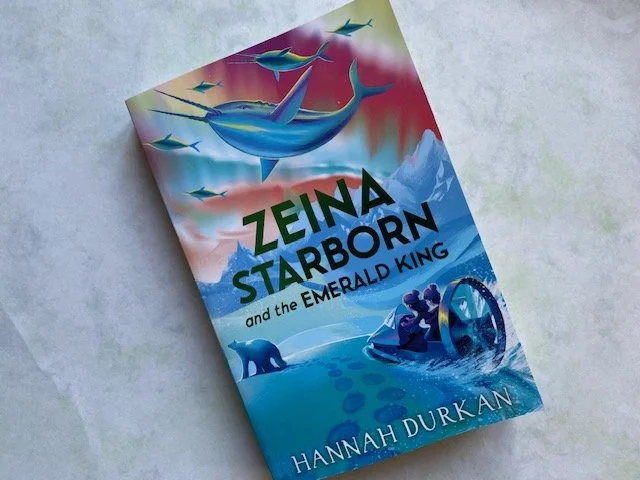
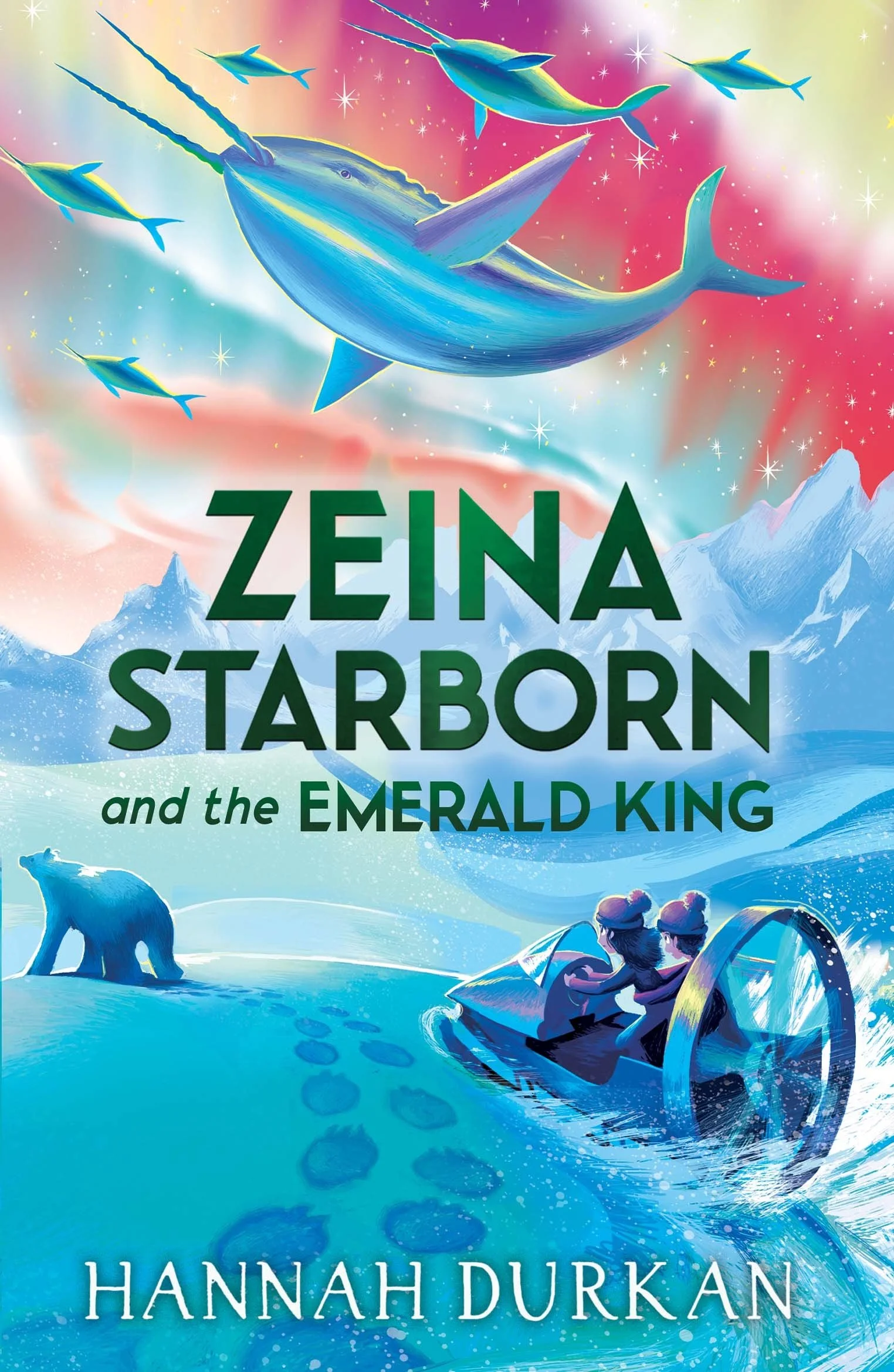
Blog Tour: Zeina Starborn and the Emerald King
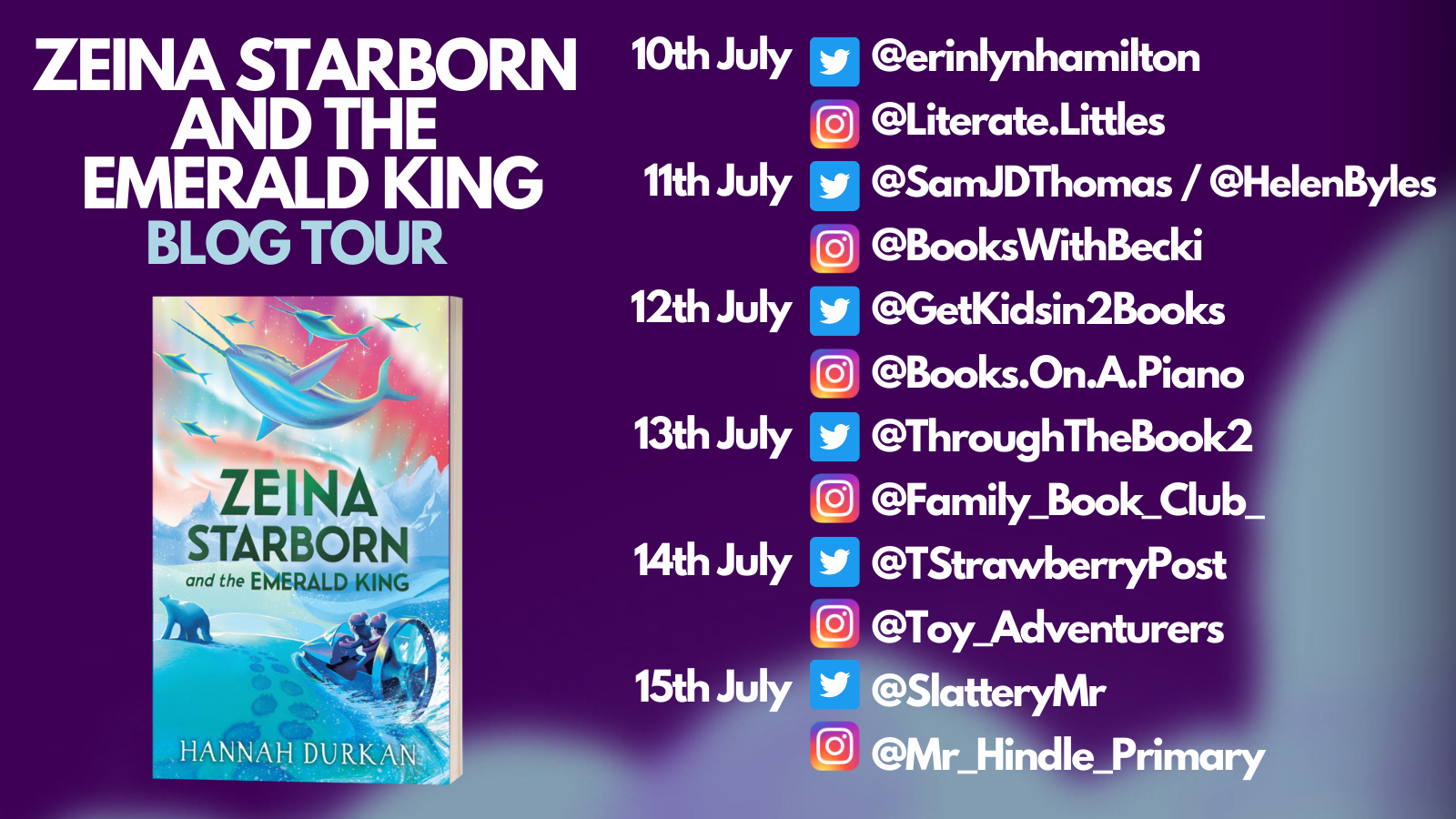
Today, I am thrilled to be taking part in the Blog Tour for ‘Zeina Starborn and the Emerald King’.
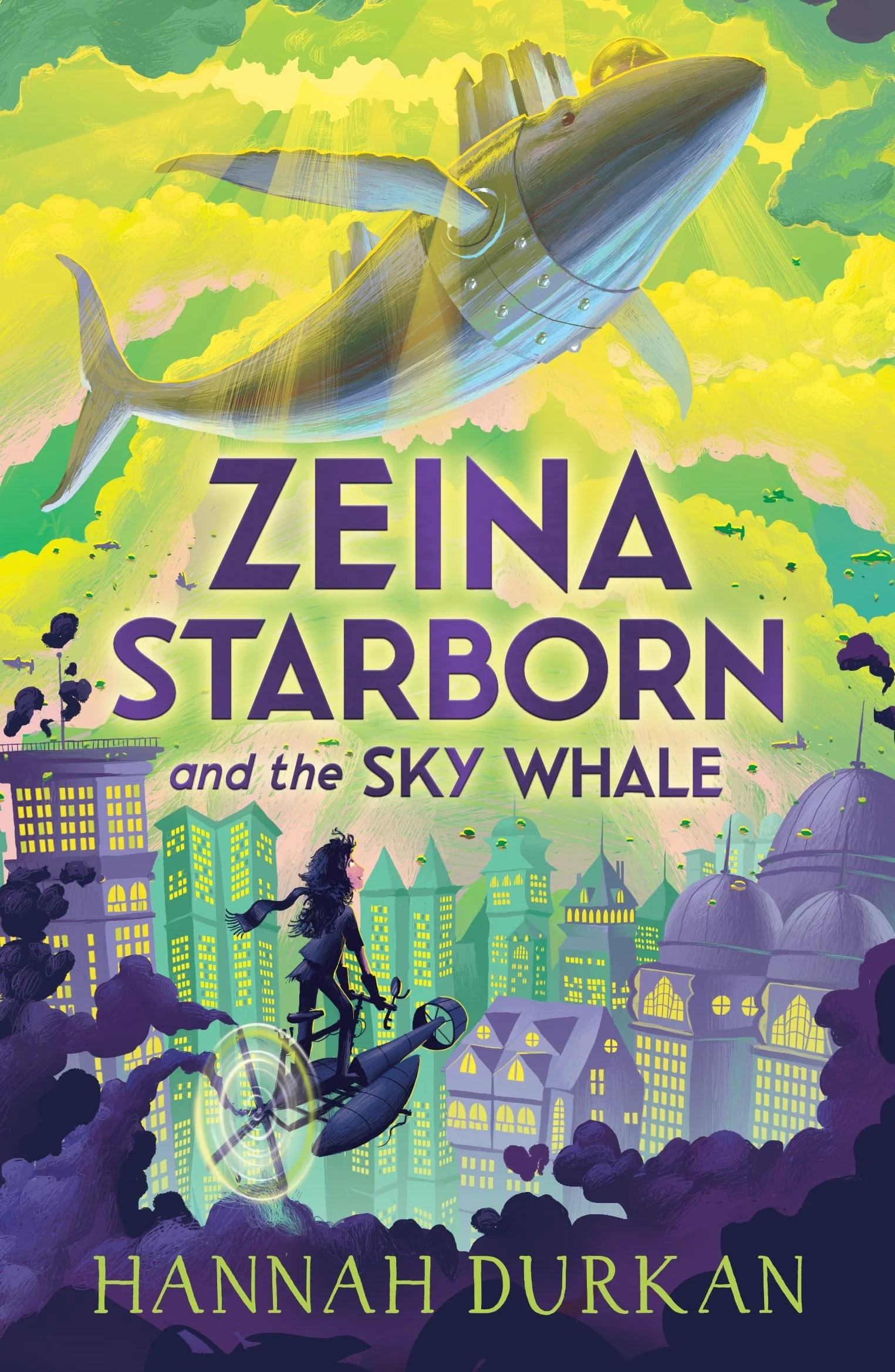
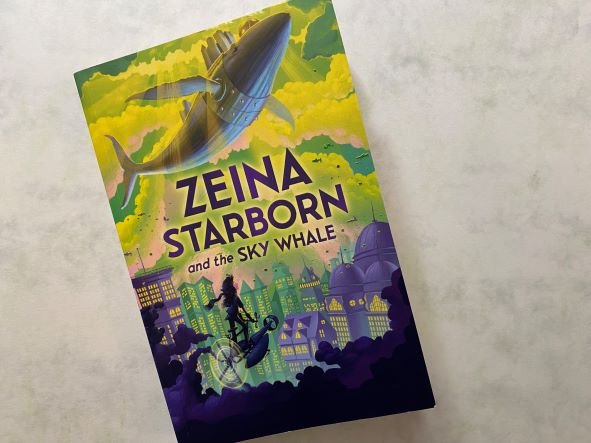
I absolutely loved ‘Zeina Starborn and the Sky Whales’. The sequel, Zeina Starborn and the Emerald King’ is every bit as excellent, offering a very satisfying continuation of the story.
From the first page, the reader is pulled back into this incredibly vivid, captivating world. The corruption of those in power and their complete disregard for the safety and wellbeing of the sky whales and other people is very relevant, making this a thought-provoking as well as enjoyable read.
Zeina is a wonderful character. Warm-hearted, trusting and kind, she is supportive of those around her and determined to see things through. Jackson really comes into his own in this story, focused on correcting the wrongs of his family and freeing all the sky whales. The reader also learns more about Sparks in this story as she increasingly finds her voice with those she trusts.
Compelling story, engaging characters, excellent writing all combine to make an excellent story. I can’t wait to see what Zeina and Jackson get up to next- and I hope we don’t have to wait too long before we find out!
Now, I am delighted to welcome author, Hannah Durkan, to the Bookshelf to share a Q and A about her wonderful books.

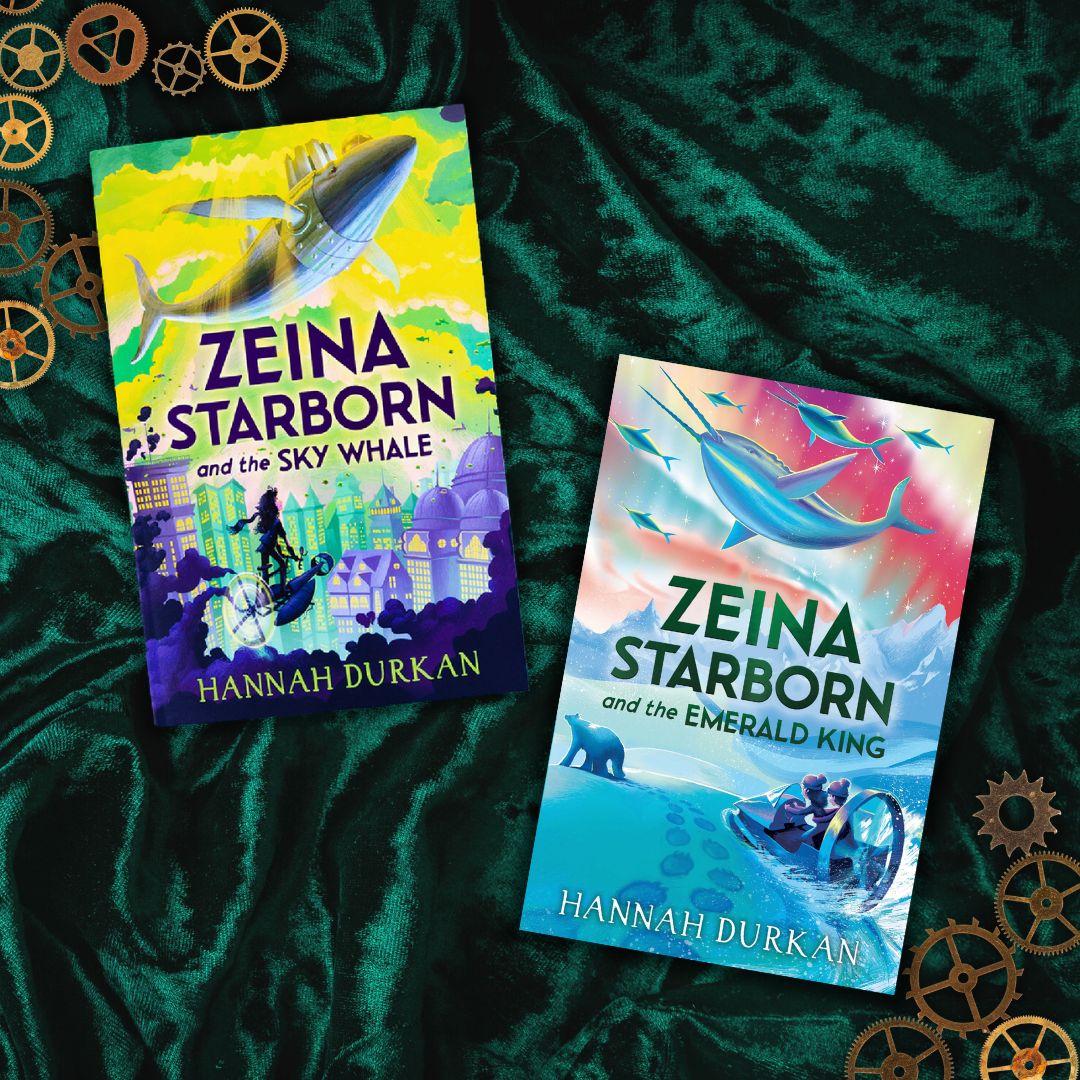
1. Please can you introduce us to your characters Zeina and Jackson?
Zeina Starborn is brave and adventurous; she knows what she wants and doesn’t worry too much about bending (breaking) rules to get it! As a Below, she should be happy to work in her polluted city for the rest of her life, yet she dreams of exploring the skies and is determined to do that, no matter the consequences. On the other hand, Jackson Willoughby can be quite sensitive and cautious. As an Above, he is destined to live a life of luxury aboard an airship or sky whale hotel, but what he really wants is to find friends and a family who cares about him. Zeina and Jackson clash completely as characters, but they must begin to trust and learn from each other if they are going to discover the hidden truths in their world.
2. Where did you get the idea for sky whales? Did you consider any other animals?
I had been dreaming of sky whales long before I started writing Zeina Starborn. I think the idea originally came from visiting the Natural History Museum as a child and seeing ‘Hope’ – the skeleton of a blue whale that now hangs high above visitors’ heads as they enter the main hall. I can remember feeling tiny in comparison and in complete wonder of how she appeared to be flying. I think there are similarities between the oceans and the skies and I can certainly imagine writing about other flying ocean-dwellers in future.
3. If you could travel anywhere in the world on a sky whale, where would you go and why?
My favourite type of holiday is when I’m exploring somewhere new, a location that I’ve never visited before. If I could choose, then I’d love to go to Sweden, as I’ve never been anywhere like that before and I have been researching ice hotels for Zeina Starborn and the Emerald King. I think watching the Northern Lights aboard a flying sky whale would be pretty special – that’s if the sky whale was ok with it, obviously!
4. As an author, do you have a specific place to write, or can you write anywhere?
I need relative peace and quiet to write. (Relative because with two small children, quiet can sometimes be hard to find!) I also get bored easily so I have to break up a full day of writing with some location changes. I might start at my desk and then move to the kitchen table, but best of all is when I make it out to a café! It doesn’t happen very often, but when it does, a cup of coffee, a slice of cake and the background hubbub is writing perfection.
5. What do you hope readers take from this series?
I hope that the series inspires its readers to be curious about the world around them, to ask big questions and to have the strength to make a stand when they don’t like the answers. Zeina, as a character, is far from perfect, but she’s brave, determined to follow her dreams, she cares for others and is learning all the time. I wrote her that way because that’s the advice I would give my children on how to best make their way in the world.
Many thanks to Hannah for sharing this and thanks to Hachette for inviting me to take part in the Blog Tour. Make sure you read this series- and enjoy the rest of the posts on the Tour!
You can read my review of Zeina Starborn and the Sky Whale here and you can find teaching resources here.
Blog Tour: The Sundae Delivery Service
Today, it is my great pleasure to be taking part in the blog tour for ‘The Sundae Delivery Service’ by Holly Rivers. Below is my review…

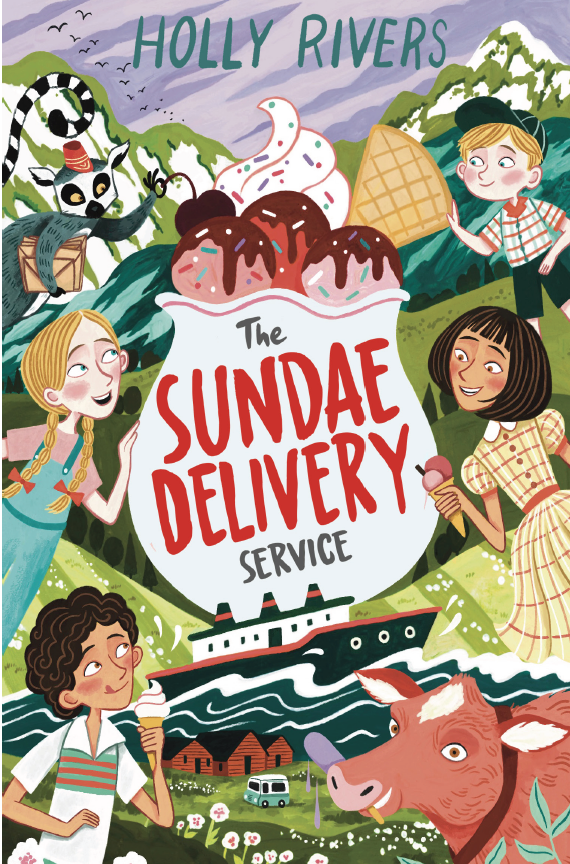
After their previous adventure, life for Orinthia and the others have settled back into life working for Grandy Brock and his animails at The Mailbox Menagerie. However, the offer of free ice cream is too much for them and this leads to a new friendship with Dotty, daughter of the owners of the ‘Penny Lick’ ice cream van and the ‘Two Scoops Creamery’. Soon, the children are helping with the ice cream parlour’s entry for the prestigious Golden Udder ice cream awards and training cows to deliver their entry to the judges. However, the world of ice cream making is more devious than they would ever have believed and they find themselves at the heart of a mystery!
With so many fabulous books around, sometimes you find you’ve missed a real goodie… and I have to confess that I haven’t read the first book in this series- ‘The Boy in the Post’- but will be rectifying this immediately! Whilst it is absolutely possible to read ‘The Sundae Delivery Service’ without having read the previous book, it seems to me I’ve missed a treat by not doing so!
Full of quirky originality and charm, the story is a joy to read. The children are very ‘real’ with their own idiosyncrasies, interests and personalities which creates a cast of engaging characters. Orinthia and new friend, Dotty, are at centre stage for this adventure, but each of the others feels like a fully formed character, not just an add on. The friendship between these two is lovely- an immediate, uncomplicated relationship which survives fallings out and comes back stronger. Both girls are resourceful, curious and determined to solve the mystery surrounding the competition- they make a great team.
The story is also very well written, full of carefully chosen vocabulary and vivid descriptions. It would make an excellent guided reading text as it offers plenty to discuss and explore whilst thoroughly enjoying the story. I very much hope there are more adventures to come for these characters.
The Sundae Delivery Service
Holly Rivers
Chicken House ISBN: 978-1912626052
Many thanks to Chicken House for inviting me to take part in this Blog Tour. There are plenty more post to go so make sure you follow on and enjoy them all!
Blog Tour: The Wall Between Us
Anja and Monika live on opposite sides of a street in Berlin. They see each other every day and are not just cousins, but best friends, sharing everything, including Otto, Anja’s cat. One night, they wake to find soldiers erecting a huge barbed wire fence down the middle of the street. Horrified, the girls realise they are to be permanently separated and the wire is replaced by a brick wall.
For Monika, life on the East side of the wall quickly becomes frightening, with spies and secret police everywhere. But Anja finds a way for them to communicate and then discovers a way to slip across the wall to see her cousin. When she finds herself trapped on the wrong side, what seemed like a harmless adventure becomes terrifying real…
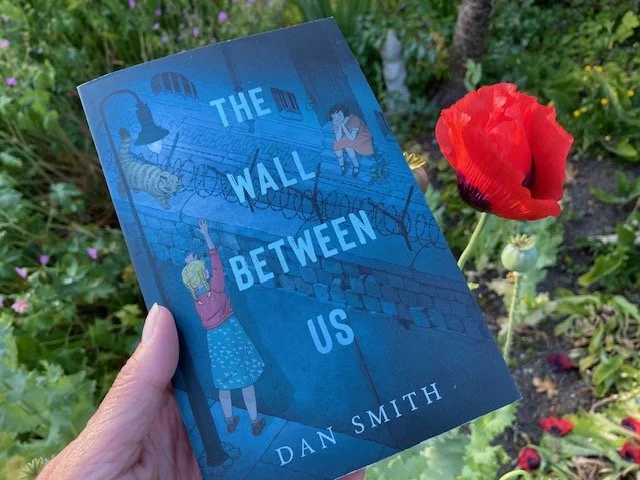
I remember when the wall fell and have visited Berlin, seeing the remains and some of the memorial sites associated with the division of a city which lasted for almost thirty years; however, I am ashamed to say that prior to visiting, I knew little of the events which led to the building of the wall or the impact it had on its citizens. Actually seeing how the city was sliced, it was evident how families and friends had been ripped apart and lives changed forever- a dark and terrifying time when many lives were needlessly lost. Dan Smith has taken this very significant historical event and has used it as the back drop for an accessible and gripping story, which allows readers to discover more about this time.
And what a story it is! Through the use of ‘official documents’, newspaper cuttings, Anja’s diary and letters from Monika, Dan Smith skilfully builds a story in which the reader understands this could have happened to anyone. The girls are very ‘normal’ children, living very normal lives- lives separated by twenty-three paces from each side of the street- and yet lives altered so drastically by this event. Twenty-three paces into the East and Monika’s life has taken a far darker turn, allowing the experiences of those living on each side of the wall to be contrasted.
By using a range of sources to tell the story, the reader feels as if they are piecing the events together much as an historian does as they build a picture of the past. The sense of tension is palpable in places, evoking feelings of the hostile presence of soldiers, the threat of faceless spies, the ominous sensation that your every move is being watched. Dan Smith does not shy away from the harsh realities of the period yet the story is perfectly pitched for its target audience.
This is historical fiction at its best where meticulous historical research, clever storytelling and compelling characters come together to engross the reader, pulling them deep into the lives of others. It may well encourage children to discover more, it might help to bring to life something being studied at school, it might inspire a trip to Berlin… Above all, it offers an excellent, satisfying read.
The Wall Between Us Dan Smith
Chicken House ISBN: 978-1912626762
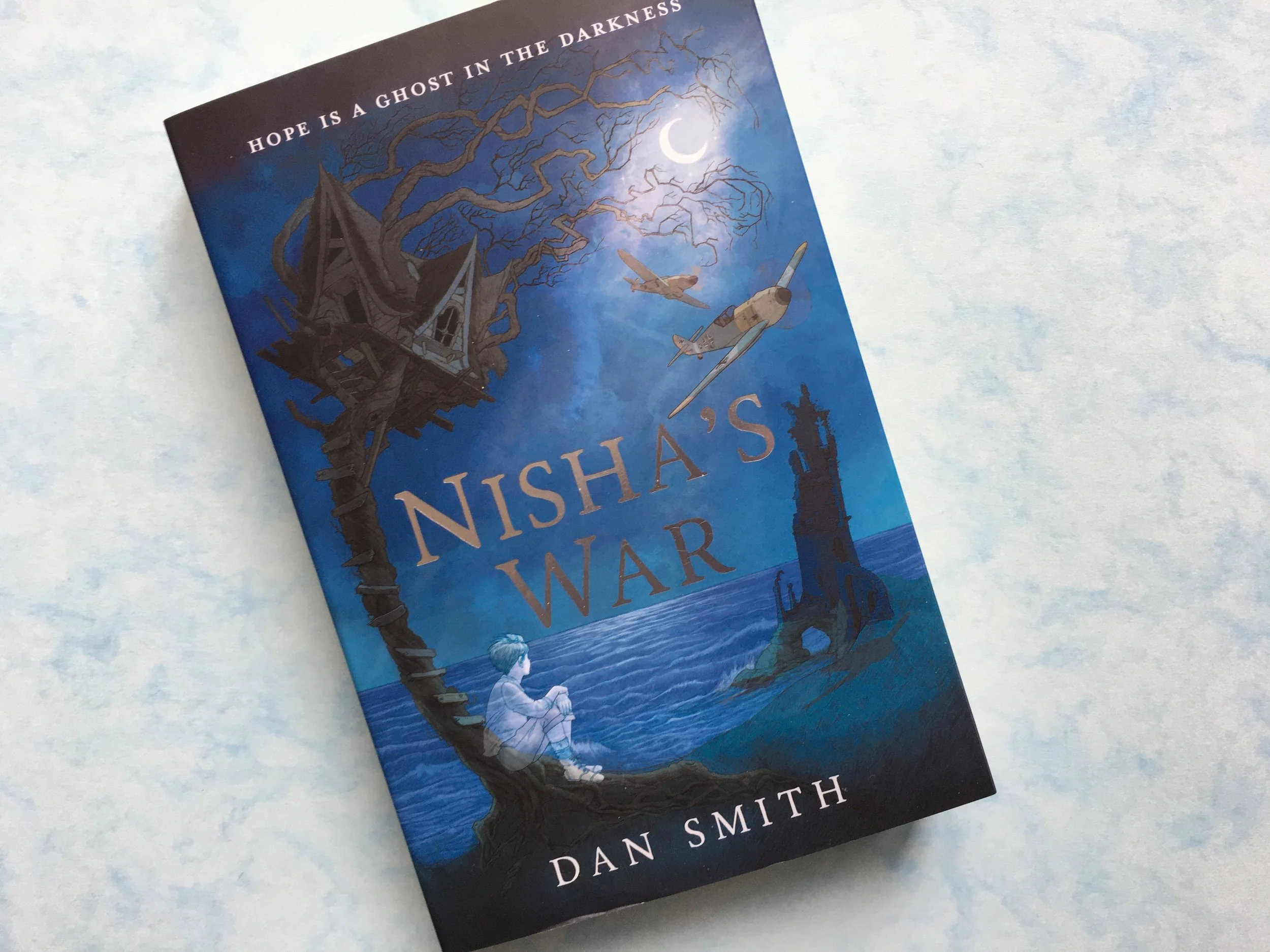
You can read my review of ‘Nisha’s War’ here.
Blog Tour: When Dad’s Hair Took Off
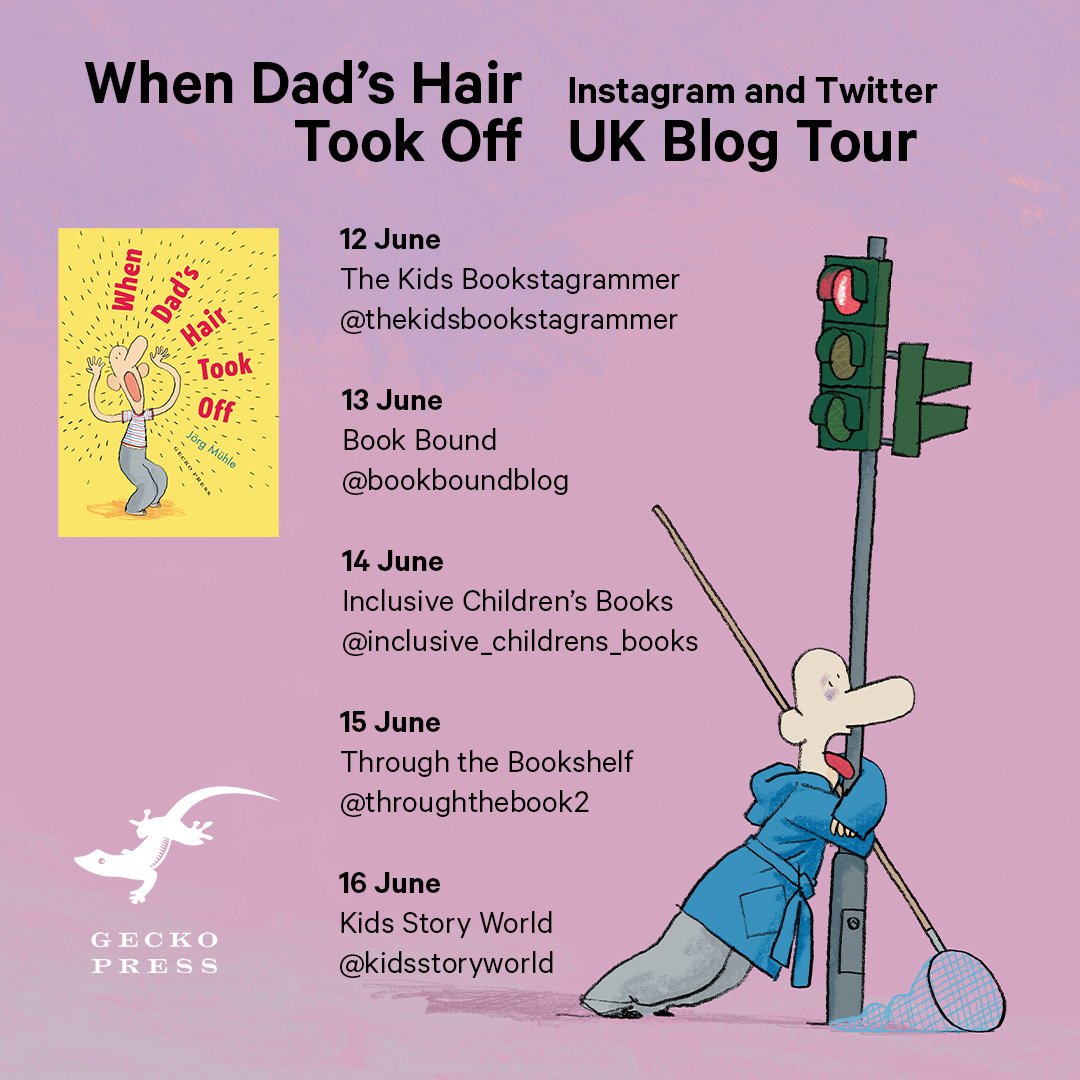
Today, I am delighted to be taking part in the Blog Tour for the wonderfully original and highly entertaining ‘When Dad’s Hair Took Off’. Translated from German by Melody Shaw, the story is quirky and perfect for sharing and for newly-independent readers!
When Dad’s hair decides it is sick of hanging around on his head, it takes off on an adventure of its own! But Dad is not one to give up easily and sets off in hot pursuit of his missing locks, determined to track it down…
This is a wonderfully fast paced, hair-lairious story for early readers! The text is packed with playful puns and jokes whilst each of the colour illustrations is joyous, offering plenty to discuss and enjoy. Children will love trying to locate Dad’s hair in each picture, working out which marks on the page might- or might not - be the missing tresses.
As Dad’s hair escapes him and sets off on its travels, it sends dad postcards from the places it visits. Once again, theses will raise endless discussions about landmarks, locations and works of art and is may well inspire children to design and write their own postcards, adding to the journey taken by Dad’s hair which could be plotted across the globe… ‘wish you were hair’ as it were!
Perfect for children with a whacky sense of humour- and their adults, of course!
When Dad’s Hair Took Off
Jorg Muhle, translated by Melody Shaw
Gecko Press ISBN: 978-1776575213
Many thanks to Gecko Press for inviting me to be part of this Blog Tour!
Blog Tour: Michael the Amazing, Mind-Reading Sausage Dog
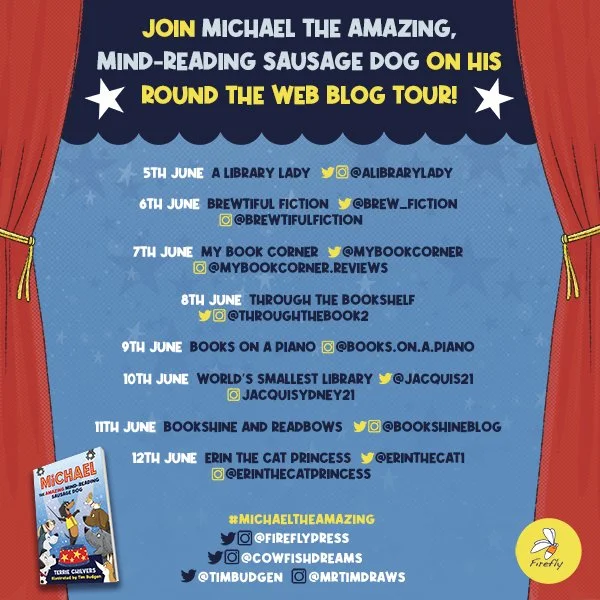
Today, I am delighted to be taking part in the Blog Tour for ‘Michael the Amazing, Mind-Reading Sausage Dog’, a fabulously funny, heart-warmingly hilarious romp of a read which is sure to be a huge hit in classrooms and homes! Laughter is so important and access to well written ‘funny’ stories is essential. Author, Terrie Chilvers, joins me today to suggest some fabulously funny reads which she has enjoyed!
My Top 5 Funny Books For Children
I’ve always been a fan of funny books and there are sooo many fantastic ones out there. Here are my top picks!
Small! By Hannah Moffatt
A hilarious story about a boy called Harvey who goes to giant school… except he isn’t a giant! Harvey (on stilts) has to avoid getting found out or he’ll get stomped into a sandwich. Totally Roald Dahl-esque and great for bedtime reading with kids. Loads of laugh out moments, plus a fantastic friendship between Harvey and his new best giant friend, Walloping Toenail that totally reminds me of Michael and Stanley Big Dog! And if you love it (which you will), there’s also a sequel where Harvey has to save the day at Vampire School.
Small! – https://www.waterstones.com/book/small/hannah-moffatt/rory-walker/9781911427278
Small Bites Back - https://www.waterstones.com/book/small-bites-back/hannah-moffatt/9781911427346
Loki. By Louie Stowell
The hilarious diary series of trickster god Loki who ends up in the body of an eleven-year-old boy when he’s banished to Earth. Super funny with excellent doodles from Loki throughout.
Loki: A Bad God’s Guide to Being Good - https://lokibooks.com/
Knight Sir Louis and The Dreadful Damsel. By The Brothers McLeod
This had me snorting throughout, it’s a quirky quest story about a knight on a mission to protect the kingdom of King Burt from all kinds of nasty threats. He’s got a trusty mechanical steed called Clunkalot and a sword called Dave. Fantastic illustrations too!
Knight Sir Louis - https://www.knightsirlouis.com/
There’s a Dog in My Brain! By Caroline Green
A super funny body-swap comedy about a boy called Danny who ends up swapping lives with his dog, Dudley. The story switches between the viewpoints of boy and dog, including some hilarious consequences when Dudley the dog (in human form) has to navigate a wedding where licking loved ones and drinking from the toilet bowl is frowned upon! If kids read Michael and love Stanley Big Dog, they’ll love Dudley too!
There’s a Dog in My Brain - https://www.walker.co.uk/There-s-a-Dog-in-My-Brain-9781406399431.aspx
Mr Gum. By Andy Stanton
A modern classic! I read Mr Gum for the first time when I first started writing for children and it really inspired me to get super creative. It’s a triumph of hilarity and proves that you can never have too much quirk!
Mr Gum - http://www.mrgum.co.uk/books/
Hope you enjoy checking out some of those! Laughs GUARANTEED.
Many thanks to Terrie for joining me today. Make sure you read ‘Michael the Amazing, Mind-Reading Sausage Dog’- and enjoy the rest of the Blog Tour!
Michael the Amazing, Mind-Reading Sausage Dog
Terrie Chilvers, illustrated by Tim Budgen
Firefly Press ISBN: 978-1915444134
Blog Tour: Bigfoot Island
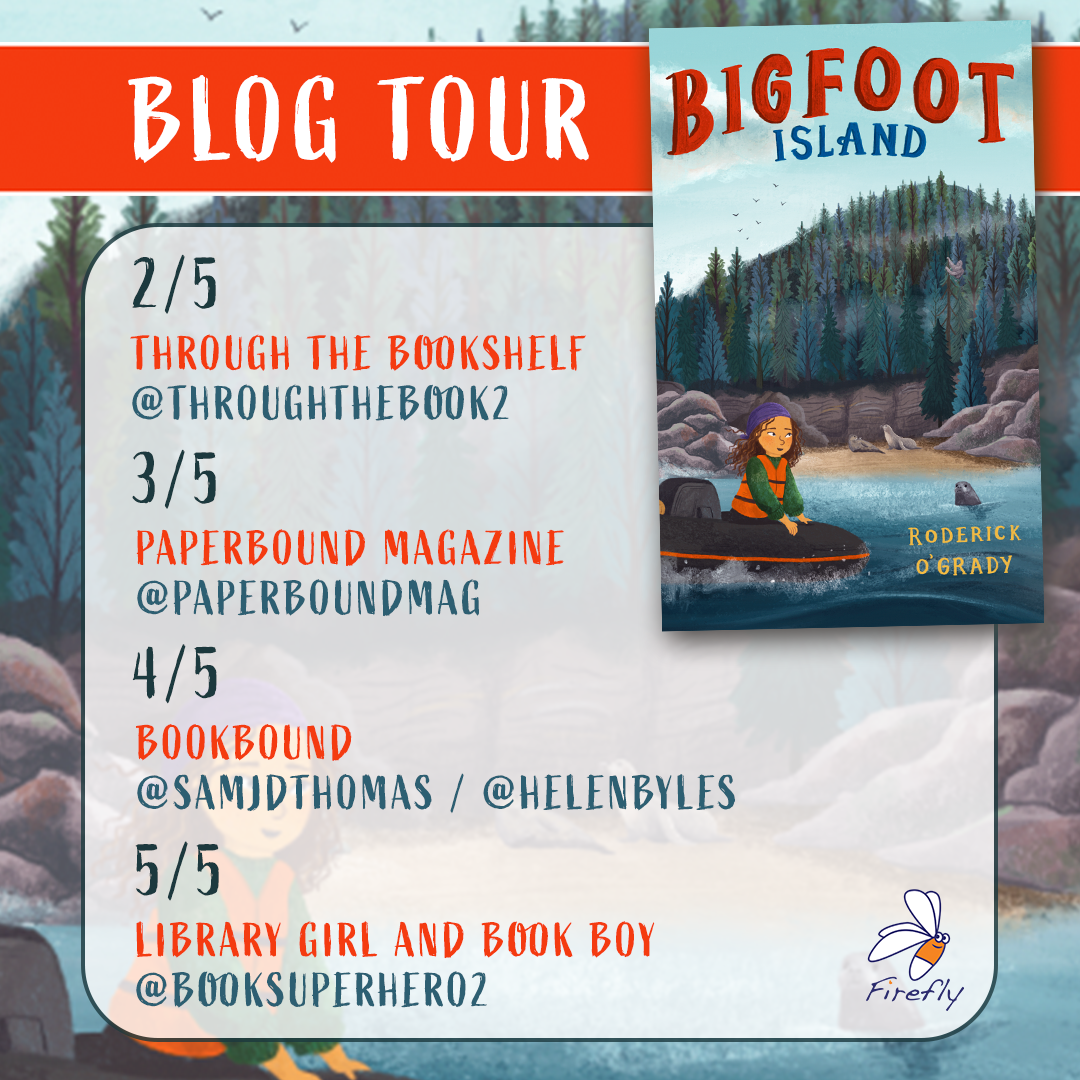
I am delighted to be the first stop of the Blog Tour for ‘Bigfoot Island’. Having loved ‘Bigfoot Mountain’, it was a real pleasure to return and find out more about Minnie and Kaayii.
When a boat brings strangers to stay in the cabins by her home, Minnie is worried. Although she and the others watched the Bigfoots leave and make their way to Echo Island (which she now thinks of as Bigfoot Island), Minnie is sure that Kaayii has stayed behind and is still living on the mountain. The last thing she wants is for the new-comers to discover them. Kaayii also has a problem as an intruder has arrived on the mountain. Somehow, they must work together to protect the home and people they love.
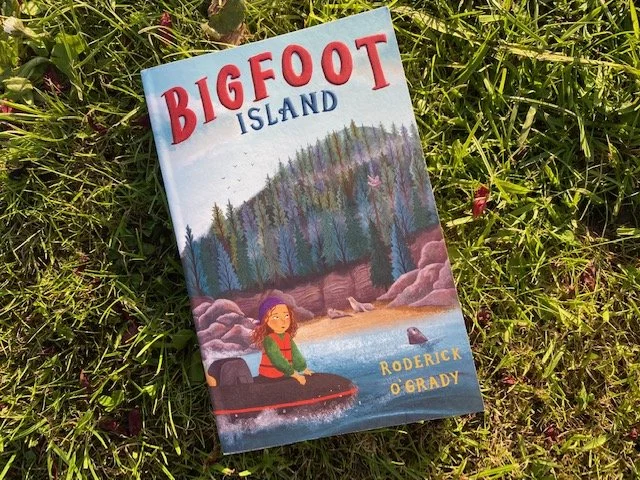
‘Bigfoot Mountain’ introduced the reader to Minnie, Dan, Connie and Billy and their idyllic lives at the foot of a remote mountain, surrounded by wildlife and nature. ‘Bigfoot Island’ continues their story after the Sasquatches leave the mountainside and head for a new home on a nearby island. Once again, the reader is treated to rich descriptions of nature and the wildlife as Minnie explores, not only the mountainside, but also Bigfoot Island. The thin line of beauty which veils the dangers of the wilderness is also evident in their lives. Even Dan, so familiar with this landscape, can mis-judge the power of nature.
The visitors- both human and Sasquatch- also pose a threat to the tranquility of Minnie’s life. When Alex, Cristy and their son, Marshal, come to stay, Dan is pleased as they will bring some much needed money with them. However, when Alex and Marshal set off up the mountains armed with a rifle, their lack of understanding of nature and the possibility of their discovering the truth of what’s living in the woods causes everyone trouble. ‘A man who thought he was a hunter, but didn’t really know what he was doing, had gone off into the forest with a gun.’ The consequences of his actions are significant for Kaayii and the Sasquatch visitor he is shadowing.
The relaxing power of nature is as key to this story as the last. Marshal arrives at the island with his clothes and attitude set against the place, his eyes barely leaving his signal-less phone. By the end of the book, he has connected with nature and learned to enjoy the solitude and peace of the mountains. Nature’s ability to heal and comfort is also shown through the actions of the Bigfoots as they accept the newcomer in their midst.
The bond between Minnie and Kaayii remains strong as each seeks to understand the other, but from a respectful distance. Minnie has a deep appreciation of, and regard for, their differences and the young Sasquatch is full of curiosity about the young human, convinced she is something special.
A ‘Bigfoot Fact file’ is included at the end of the story, offering a perfect starting point for anyone keen to discover more about these legendary creatures and there is a page of illustrations by cover artist, Jess Mason, showing some of the wildlife encountered through the story.
I hope Minnie and Kaayii are involved in another adventure together soon!
Bigfoot Island Roderick O’Grady
Firefly Press ISBN: 978-1915444097
Many thanks to the lovely people at Firefly Press for inviting me to take part in this Blog Tour. Enjoy following each stop on the tour this week!
You can read my review of Bigfoot Mountain here and my Q and A with Roderick O’Grady here.
Blog Tour: My Mummy is a Witch

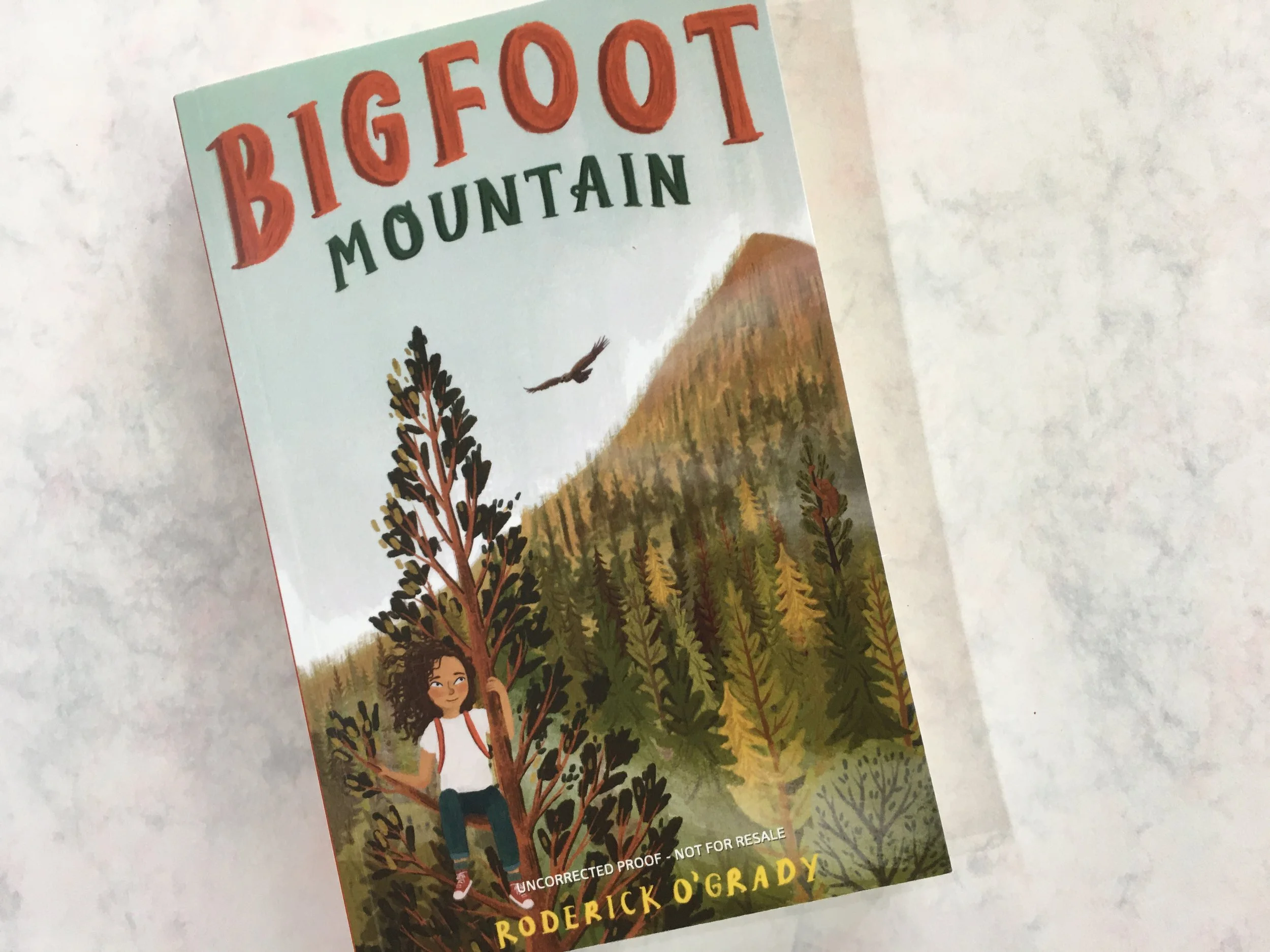
This lovely book is a glorious celebration of all the special moments shared between a mother and her daughter. Told through the eyes of the little witch, the story shows just how special spending time together can be. The illustrations clearly show the close relationship they share as the little witchling gazes at her mother in adoration.
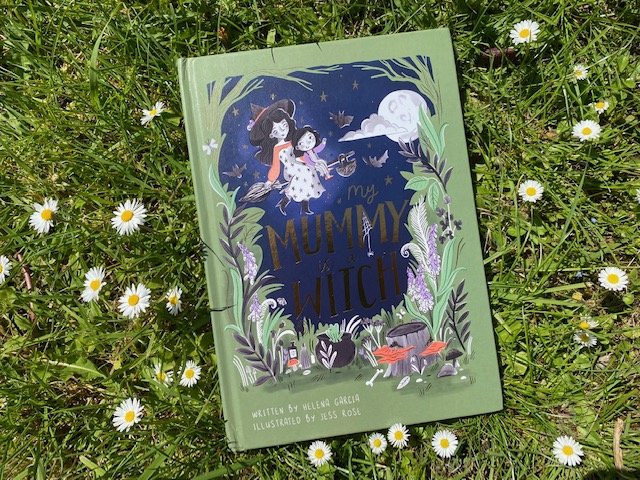
The endpapers are peppered with pumpkins and potions, bats and bottles, snails and flowers, creating a suitably spell-like feel to the story and children might enjoy spotting these objects as they read the story. Fascinating facts, such as that holly used to be known as ‘bats’ wings’ in the Middle Ages, are scattered between these pictures. Throughout the book, the illustrations are delightful as they capture the pair foraging in the woods, enjoying the fun of bath time and snuggling down for a bedtime story.
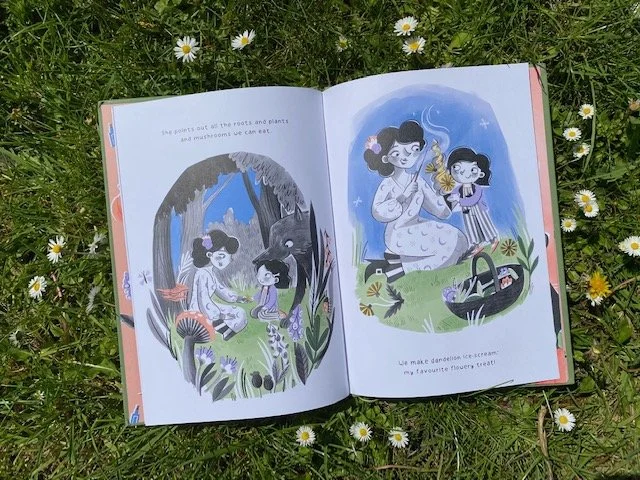
The gentle rhyming text captures all the things the little girl loves about her mummy and the things which they enjoy doing together, including cooking. A recipe for the dandelion ice-scream they make is included at the end of the book so that readers can try making their own.
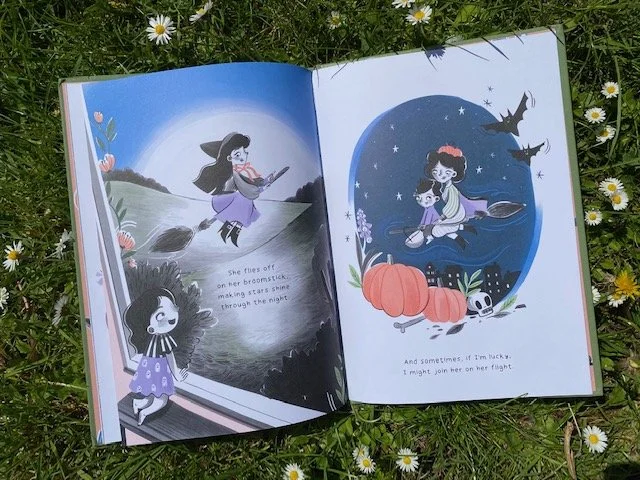
Owlet Press are well-known for their original, diverse and beautiful books and this is no exception.
My Mummy is a Witch
Helena Garcia, illustrated by Jess Rose
Owlet Press ISBN: 978-1913339463
Thanks to Catherine Ward for inviting me to join the tour and to Owlet Press for a copy of the book.
‘My Mummy is a Witch’ is out on the 27th April.
Blog Tour: The Not-So-Uniform Life of Holly-Mei
It’s great to have been asked to join the Blog Tour for this wonderful book! ‘The Not-So-Uniform Life of Holly-Mei’ is such an enjoyable read and Holly-Mei is such a relatable, likeable character that it is easy to empathise with her as she tries to navigate the changes in her ‘not-so-uniform’ life!
As her need to do the right thing has lost her class a pizza party and a hockey match win, Holly-Mei is being shunned by her classmates, including best friend, Natalie. When her mother announces the family are moving to Hong Kong, initially Holly-Mei is horrified as she will have to leave everything she knows, including her beloved Ah-ma (her grandmother) behind, but with the situation at school, she starts to view this as the perfect new start she needs.
However, Holly-Mei soon finds her new life in Hong Kong as difficult to navigate as that in Canada. Her school, Tai Tam Prep, is full of rich, privileged children and that her behaviour and interactions might have consequences for her mother’s career. When the most popular girl in her year seems to have taken a dislike to her, Holly-Mei’s new start is not going to plan.
This is a wonderful story which celebrates the importance of being true to yourself whilst exploring the trickiness of navigating friendships and difficulties of being moved away from your home. The story is told with much gentle humour as Holly-Mei tries to do the right thing by everyone, often putting unrealistic pressure on herself in the process due to the Chinese concept of guanxi, the idea of having strong relationships with people which can involve obligations or favours. The actions of both Holly-Mei and her sister, Millie, reflect upon their parents to a greater extent in Hong Kong than they did in Canada, but ultimately her mother, realising she has unwittingly put her daughter under great pressure, reassures her that all she expects is that her daughters are courteous and kind- and which parent wouldn’t want that?! Other parents in the story are perhaps not quite so understanding, reminding the reader what a close and loving family Holly-Mei belongs to. Some of her schoolmates appear, at first glance, to ‘have it all’, yet as the reader learns more, it becomes clear that this does not lead to happiness.
The story is wonderfully rich in its representation of mixed-culture families. Holly- Mei’s family is a blend of Taiwanese and English and she enjoys traditions and experiences from both. Her Ah-ma is a wonderful character, warm and wise, whose influence and love stays with her family no matter how far the distance between them. The family’s move to Hong Kong provides a wonderful backdrop to the story- a story full of heart about a young girl, who tends to blurt things out without thinking, loves hockey, wants to please her family, and be surrounded by good friends. It’s a joy!
The novel includes a glossary which also has a helpful pronunciation guide- essential for any non-Chinese speaking teacher wishing to read the book aloud to a class- a recipe for Ah-ma’s dumplings and one for Millie’s read bean creamsiciles. I have a copy of the book to give away to one lucky reader on Twitter (see post for details!).
The Not-So-Uniform Life of Holly-Mei Christina Matula
Inkyard Press ISBN: 978-1335428653
Many thanks to Tatti for inviting me to take part in the tour and for providing a book for the giveaway!
Blog Tour: Ivy Newt and the Storm Witch
Having just met Derek at the FCBG Conference, I am doubly delighted to be taking part in the Blog Tour for his new book, ‘Ivey Newt and the Storm Witch’. With illustrations by Magda Brol throughout, this is the first in a series about Ivy Newt, her familiar, Tom, and their adventures in Miracula.
It’s Ivy’s birthday and, although the worst storm in the history of Miracula has prevented her friends from flying over for Ivy’s birthday, her parents, Queen Fenella and King Lucius, are doing their best to spoil her and make the day special. As part of the entertainment, they are going to perform some birthday magic…which leads to them disappearing! Suspecting foul play, Ivy and her shape-shifting familiar, Tom, must find a way to make them reappear!
Engaging from the first page, ‘Ivy Newt and the Storm Witch’ is a pacy, entertaining story. Although a witch and a shaper-shifter, Ivy and Tom have characteristics which children will recognise and empathise with. Their friendship helps them to find the courage and determination needed to find Ivy’s parents and solve the mystery of their disappearance.
With plenty of humour, the children triumph over the wicked witch, Clawdelia, who is ‘nothing but a bully’, foil her attempt to rule over the whole of Miracula and save all the kings and queens from the caves of Grot. Having faced mild peril along the way, everything turns out well in the end and Ivy’s birthday is celebrated with cake!
Magda Brol’s lively illustrations capture the children’s antics brilliantly, adding a visual element to the story which is so enjoyable and rewarding in itself. The addition of the map and character portraits at the beginning allows children to track the adventure and supports with ‘reading’ the pictures by clarifying which character is which.
This is the first in a new series, perfectly pitched for confident readers in KS1 and into lower KS2, supporting children as they develop the stamina to tackle longer stories. I can see them adding their own characters to castle windows and plotting their own adventures for Ivy, using the map of Miracula to guide them whilst they eagerly await the next title in the series, ‘Ivy Newt and the Time Thief’.
Ivy Newt and the Storm Witch
Derek Keilty, illustrated by Magda Brol
Scallywag Press ISBN: 978-1915252180
Blog Tour: Animal FACTopia!
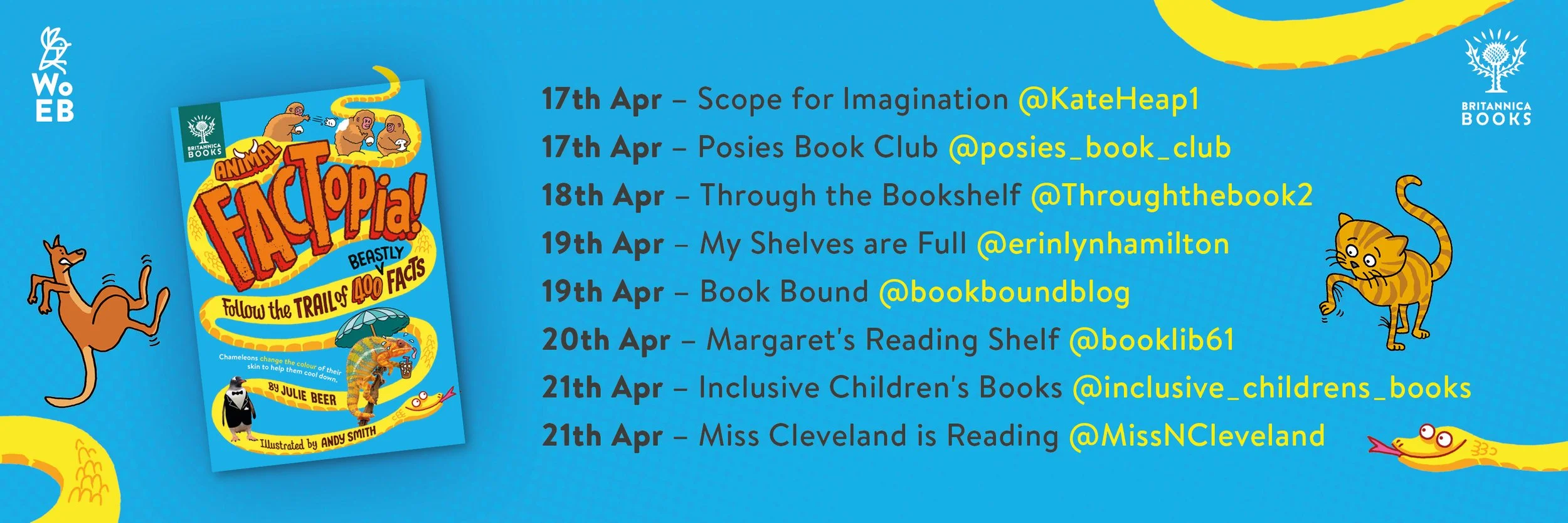
I am delighted to be taking part in the Blog Tour for the latest book in the FACTopia series. These books have been a huge hit with children I’ve shared them with and spark endless curiosity and amazing discussions!
Get ready, because things are about to get wild.
The FACTopia series is back and this time, animals are the stars of the show! As with the previous titles, each fact is linked to the next one, offering the reader many different trails to follow through the book. Information is presented in fascinating, bite-sized chunks, sure to grab the attention of the most reluctant of readers as they can follow as little or as much of each trail as they like! I had no idea that Marine iguanas sneeze out the extra salt they ingest, resulting in a white ‘wig’ or that this fact would lead me to discover that a Komodo dragon could weigh as much as a fridge.
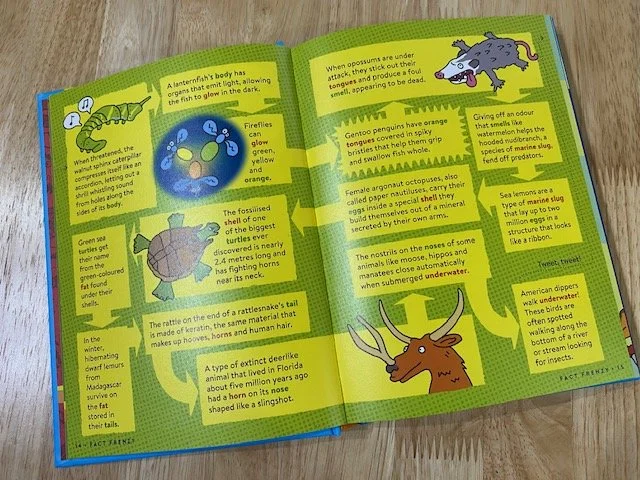
The web of information presented in the book is connected in ways which are often surprising and frequently funny! Information about microscopic crustaceans can lead you to facts about mucus; knowing what a skunk does as a warning before spraying could set you on a path to finding out about fabulous feet. Readers will return to the book again and again to see where one fact might lead them, carefully following one path or veering off on another, intrigued by a passing connection- how information about a cheetah’s tail might link to dragonflies, for example!
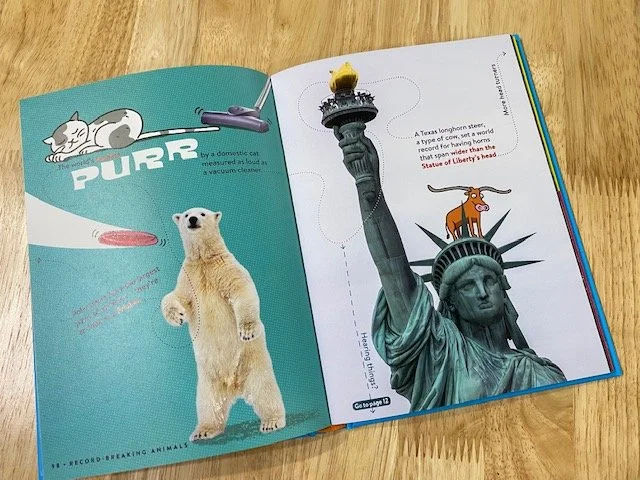
Andy Smith’s lively, colourful illustrations cleverly combine with photographs to frame the facts, making each spread really appealing. A comprehensive index makes it easy to locate specific information, but the joy of this book is that any starting point can lead you on an adventure of discovery! All the facts are verified by Britannica and it would be great fun for children to use the facts to create quizzes and games of their own, perhaps making a simplified version for younger siblings or children in younger year groups in school.
Animal FACTopia! Follow the Trail of 400 Beastly Facts
Julie Beer, illustrated by Andy Smith
Britannica Books ISBN: 978-1913750725
Many thanks to Britannica Books for asking me to join the Blog Tour for this fascinating book!
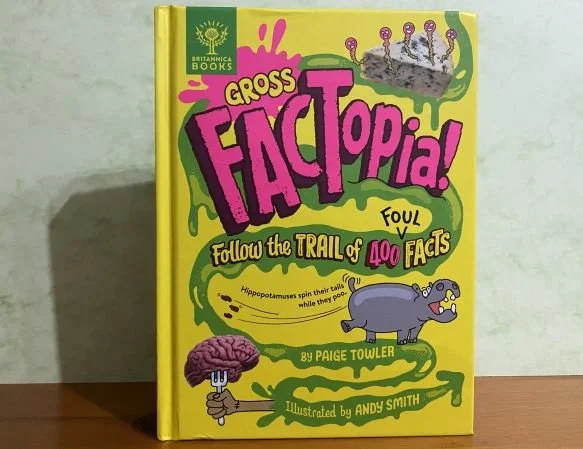
You can read my review of ‘Gross FACTopia!’ here.
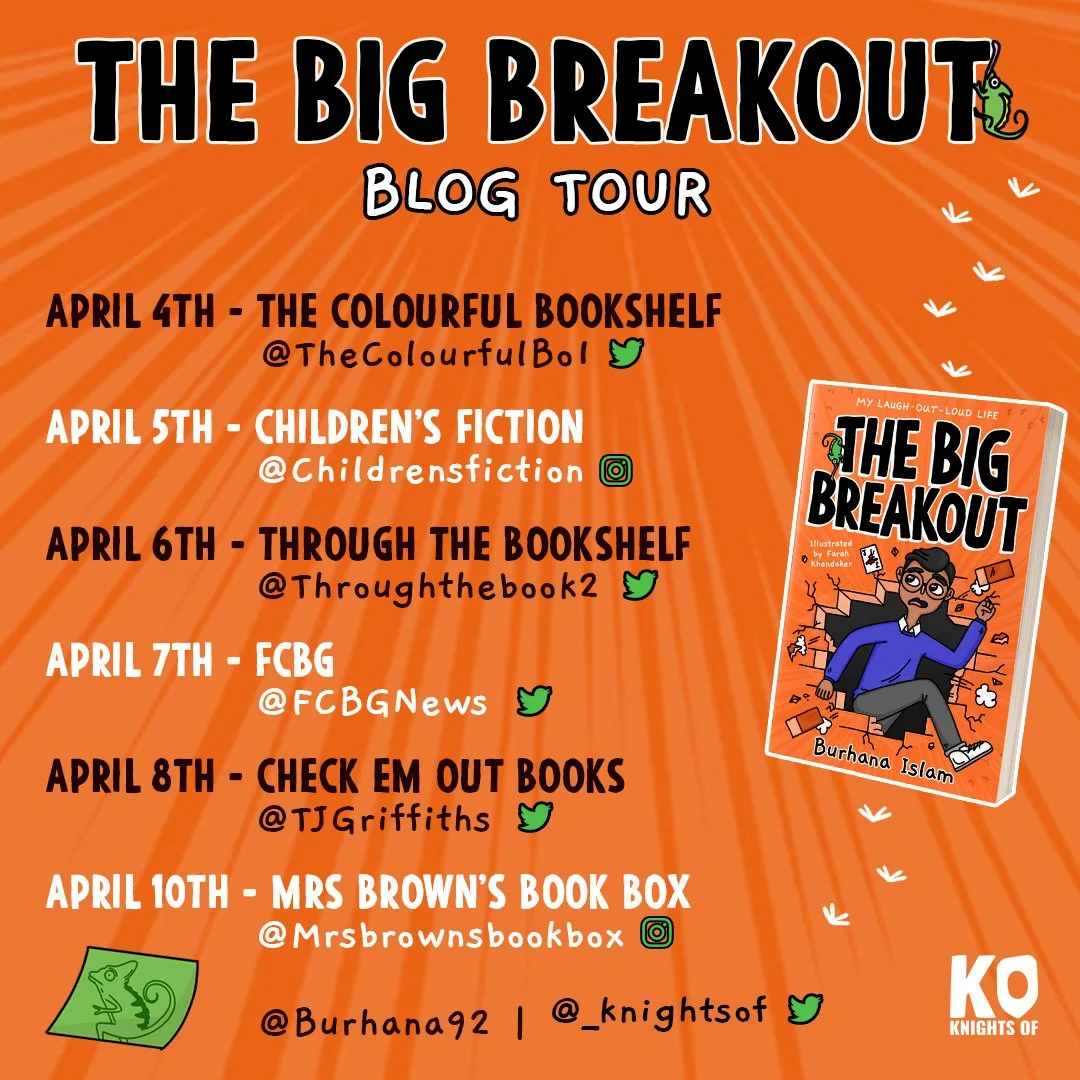
Blog Tour: The Big Breakout
Burhana Islam is a secondary school teacher and the author of Muslims Who Changed the World and the My Laugh-Out-Loud Life series of chapter books. She is a storyteller who is passionate about exploring themes of heritage, belonging, identity and faith in her work. This side-splitting illustrated trilogy for readers aged 7+ has been featured in the Read for Empathy collection and the first title, Mayhem Mission, won the Tower Hamlets Book Award. Burhana joins us as part of the blog tour celebrating publication of the third and final book, The Big Breakout.

Can you tell us a bit about the series overall?
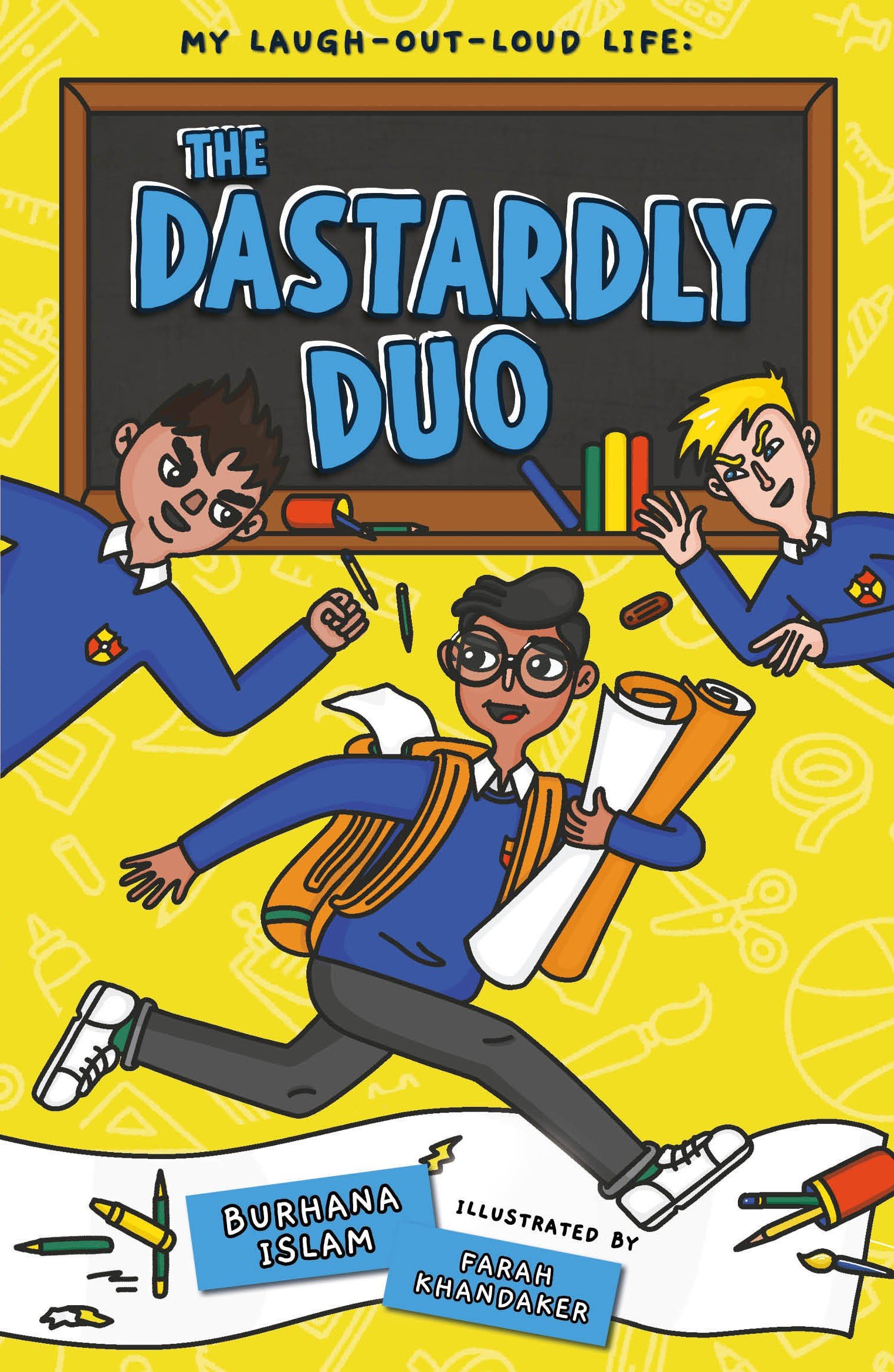
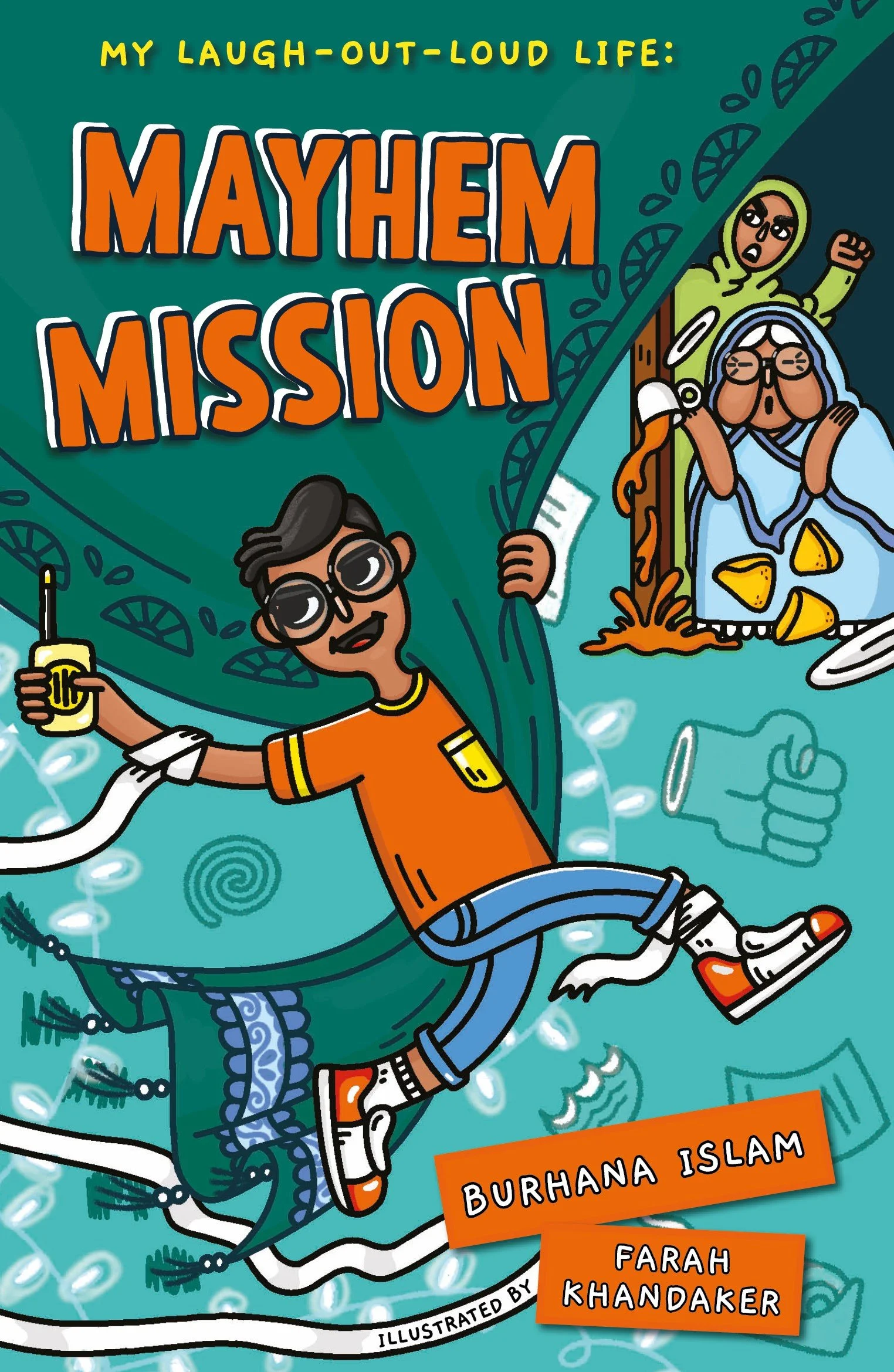
The My Laugh-Out-Loud Life series is, in essence, a collection of stories with a much-needed dose of humour and heart. It follows the life of 10 year old Yusuf Ali Khan, a typical Bangladeshi Muslim lad who seems to have chaos following him wherever he goes. His intentions might be in the right place, but his antics are always landing him in trouble (with hilarious consequences to match). Yusuf, his family and his friends all come together as a celebration of culture, laughter and unconditional love. He’s a typical Northern lad dealing with the both timely and universal themes of sibling rivalry, fake news and big feelings. Despite it being heavily influenced by my own experiences, it’s definitely inspired by the students I’ve taught and loved.
… And a bit about this new third book?
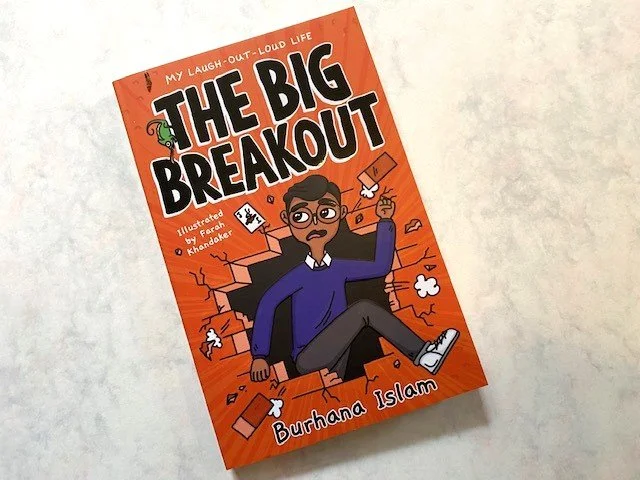
Yusuf is back in all his glory as both ‘man-of-the-house’ and Form Captain. Just when he thinks he has all the power he can possibly wield, his sister announces that she’s having a baby, changing his life forever. Determined to prove his uncle-status once and for all, Yusuf enlists the help of his friends, the school chameleon Chompy, and the infamous Masked Trickster. With an inspection at school going completely awry, a runaway Nanu on the loose, and the ultimate school/prison-break attempt, Yusuf must find a way to fix his mess before he gets himself in the biggest trouble he’s ever been in.
At the heart of it, this one’s ultimately about Yusuf dealing (not so well, may I add) with new changes in his family and what that really means for him. Growing up wasn’t exactly easy and he’s got to come face-to-face with some pretty big feelings to figure himself out.
What or who inspired the characters and the dynamics between them?
A lot of people assume that Yusuf was inspired by a real person, and I may have borrowed his name from my nephew, but I think it’s safe to say that nobody causes that much trouble in my personal life - thank God! Yusuf is actually a culmination of a few of my most memorable and erm ‘lively’ students. I genuinely knew they had the best of intentions and they just wanted to be understood, but sometimes their behaviour got the better of them. I guess Yusuf’s version of events is just more fun! His dynamics with Affa (Yusuf’s older sister) is just the typical sibling relationship I’m familiar with, particularly at Parents Evenings when the older sibling came as the surrogate parent. It’s funny because when I look back on my teaching career, a lot of the students in my community and I (as their teacher) had some form of watered-down version of this relationship. I love Yusuf and Affa’s pairing even more so because, like our family and so many others, it’s the perfect combination of chaos and love.
Nanu is based on a real person. She’s inspired by my paternal grandma who was very much Nanu-like in her prime. Growing up in our community, we all tended to have a Nanu of some sort in our lives. She’s a reflection of the typical south-Asian matriarch - again, the perfect combination of chaos and love (with a lot of fear to match!).
How did you feel when you first saw the illustrations for this series?
Like it had really come to life. I remember first seeing the characters and feeling like Farah had truly captured the essence of these characters. I think the latest book is the best version of them all. Just like my storytelling, I feel like it got better over time and now we’re at a stage where the illustrations and words tell the story perfectly. One certainly could not be without the success of the other. There are actually audiobooks now by Audible and Ali Shahalom (more widely known as Ali Official) has truly added his voice to the mix (literally) and made it even better.
What is your typical writing day like?
Typically and honestly, I stare at the screen for days on end. I snack, I procrastinate, I read books in the same genre, I discuss ideas with my nearest and dearest and the likes.
The thing is that when I’m in the ‘writing zone’, the story itself just falls out of me. It really does have a life of its own. I don’t feel like I’m constructing the plot consciously - I feel like my characters have lives of their own and dictate the words on my screen. In that sense, once I have a plan, I can put together a book within weeks. The planning side of things has been taking a lot of science lately - I used to teach Comedy at A Level, which has really helped craft my ideas. Planning is the stage where I’d consciously get across the themes I want to explore. This side is laborious and takes a lot of time. Like, a LOT of time.
The writing itself is a different experience. When I have it (whatever ‘it’ is), I get up early and finish late. I tend to shut myself up with my Jaffa cakes and the likes, and essentially ‘bash it out’. I know that this is a privilege afforded to very few people. Sometimes I’m writing until the early hours of the morning when everyone else is asleep. However, to get to that stage is a mission and a half and it’s certainly not very glamorous. Writing, for me, really does entail a lot of blank screen time with a regular dose of day-dreaming and distraction.
My Laugh-out-Loud Life: The Big Breakout by Burhana Islam, illustrated by Farah Khandaker, is published 6th April by Knights Of, £6.99 paperback.
Many thanks to Burhana for sharing this today. ‘The Big Breakout’ breaks out TODAY!
Blog Tour: Wendington Jones and the Missing Tree
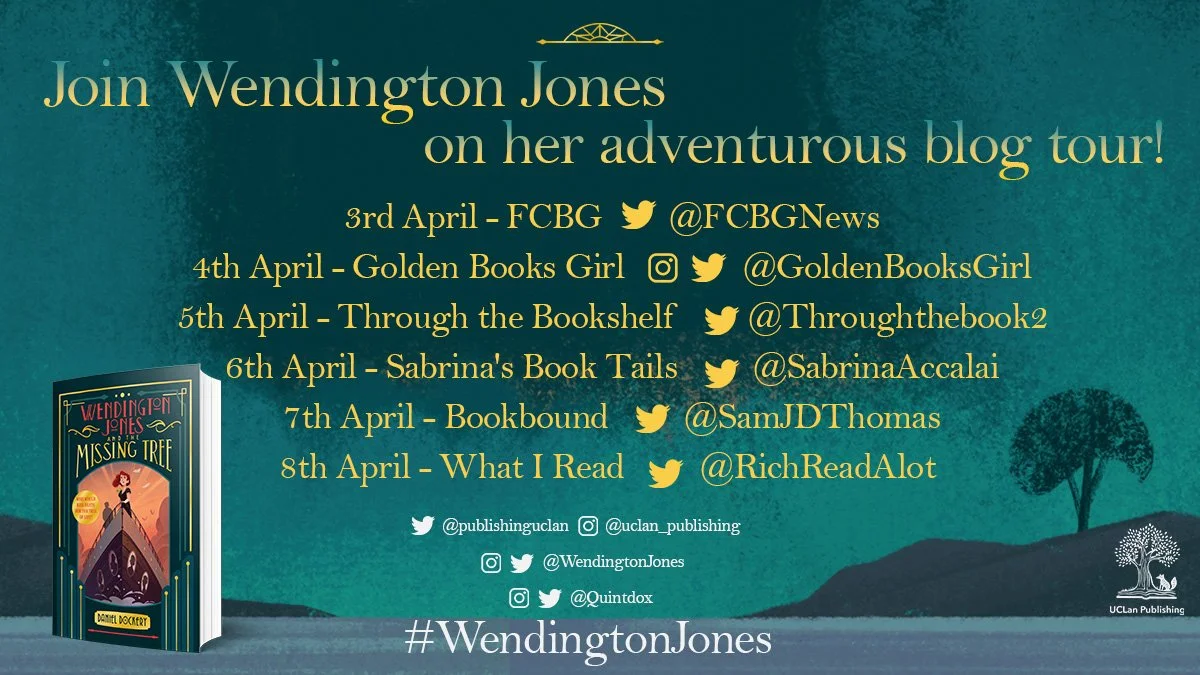
Today, I am delighted to be taking part in the Blog Tour for ‘Wendington Jones and the Missing Tree’. This story is a thoroughly enjoyable adventure with Wendington being an original, engaging protagonist. Many twists, turns and red herrings keep the reader guessing throughout whilst rooting for the young heroine as she makes her literal (and metaphorical!) journey. But who is Wendington Jones? Author, Daniel Dockery, tells us more…
Wendington Jones is an adventurer. A classic old-school, horse-riding, 1920’s boot-stomping anthropologist in training. But she’s a modern-day interpretation of what those explorers could have been in a better world. A kinder, more scientifically minded swashbuckler who’s still as daring, even if she’s a little too naïve about the way the world, and the people in it, really are. So when setbacks come, it’s up to Wendington’s indomitable spirit to get herself back up again, learn from her mistakes and forge forward. To see the world, and not destroy it in the process. The point of view, if the hero of 1999’s The Mummy had been Rachel Weisz’s bold, forthright librarian, and not Brendan Fraser’s wise-cracking, treasure hunter.
Setting it in the hopeful, if now ill-fated 1920s, puts Wendington in the age of discovery and at the forefront of Women’s suffrage. It’s a huge playground in which to throw a bold, engineering focused want-to-be adventurer. And while we don’t miss out on either the twisting plot or thrilling action, this is also a story of something else. The story of a young woman who’s lived her life entirely in the books she’s read and not the real world. Someone who thinks she’s ready for just about anything. Until her mother’s death brings Wendington’s whole world crashing down around her.
Wendington’s grief both drives and consumes her. This is also how a resilient, if bookish young woman, is forced to pick up the shattered pieces of her life and try to find a way to put them back together again. It is the same journey anyone who has been through intense grief has been forced to do so, through perhaps they had fewer people shooting at them while they did it. And like most young adults facing the tough realities of the world in front of them, Wendington has the tools to help herself, she just doesn’t quite know how to use them just yet. And it’s only through trial and error, doggedness and the kindness of others that she learns to walk again.
Courageous, analytic and practical when all else fails, Wendington’s an old school adventurer for our modern-day age. One with doggedness, brilliance and kindness running through her veins. A wit as dry as the Egyptian sands, Wendington’s got the taste for adventure, now all she has to do is survive long enough to find her next one. . .
Wendington Jones and the Missing Tree Daniel Dockery
UCLan Publishing ISBN: 978-1915235374
Published 6th April 2023
Many thanks to Daniel and the team at UCLan for inviting me to take part in this Blog Tour. ‘Wendington Jones and the Missing Tree’ is a great read- perfect for Y6 and above!
Blog Tour: Reading for Pleasure
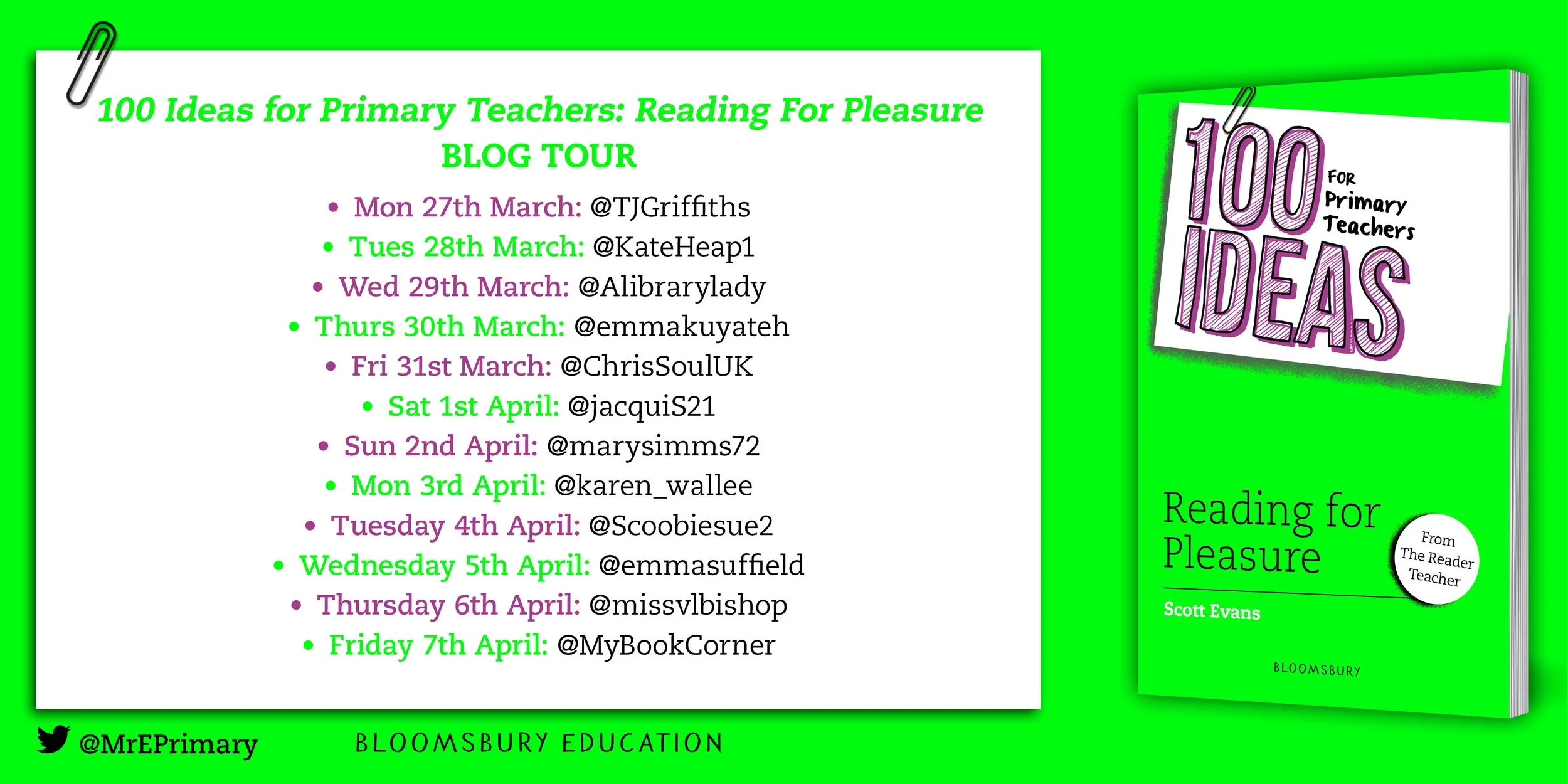
Reading- for pleasure, for learning, for escape, to share, for a million reasons- has always been a massive part of my life. The family joke is that I was born reading and am never without a book (or several!) stashed close at hand, ready for any odd moments when I can read. As a teacher, I have always delighted in sharing this with children and colleagues and over my career have seen fluctuating and fickle attitudes to daily story times, school libraries, class book corners, hearing children read and the teaching of reading. It has always been obvious to me that teachers (or any adult!) who are enthusiastic about reading (or anything!), show that it is something which they value and engage in themselves and can discuss and enthuse about their reading are far more likely to spark interest and enjoyment than those who don’t, but fortunately, research has now been done which validates this for those who need to be convinced! For those in need of guidance for how to start, this is the book for you!
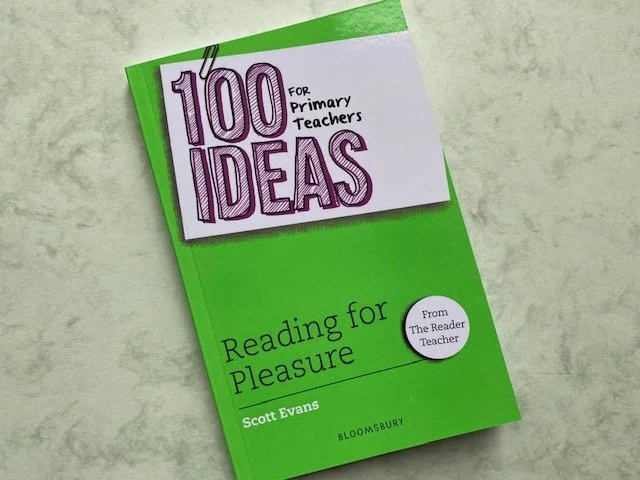
The pure joy of Scott’s book is that he has gathered together many tried and tested ideas which can easily be slotted into daily practice and culture in classrooms, whole schools and the wider community to create a constant, non-gimmicky buzz about books and reading. As Scott says, ‘…reading for pleasure cannot be left to happen by chance’ and indulging in token gestures, such as only participating in World Book Day once a year, is not enough to form life-long reading habits and the joy this brings! Many of the activities offered here are variations on a theme, allowing schools to ring the changes by re-introducing activities with a slightly different slant to stop them becoming stale or taken for granted.
The book is divided into eleven sections, each with a different focus, allowing teachers to hone in on a specific area as a starting point or to guide them through the book as a whole. Useful links are made between sections and ideas with additional suggestions (‘Taking It Further’/’Bonus Ideas’) given. Many of the ideas are sure to spark additional discussion and give birth to yet more strategies, making the book a working tool which (although I don’t normally advocate writing in books!) can be annotated and a shared staff room/ year group copy developed as suggestions arise. By ‘Topic Texts’, for example, a note could be added about displaying and sharing poems related to a theme, referring to ‘The Works 2: Poems on Every Subject and for Every Occasion’ which might be useful here for those not as confident in this area.
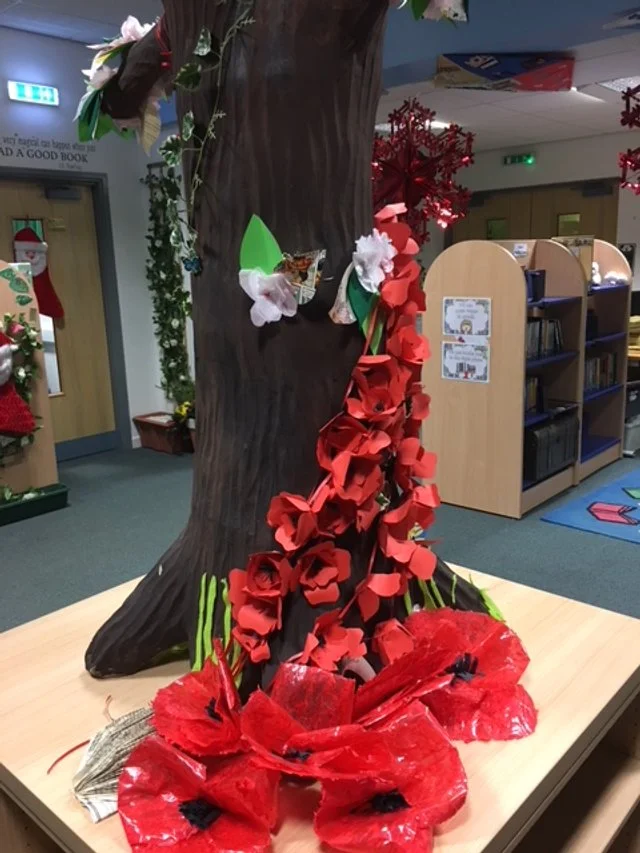
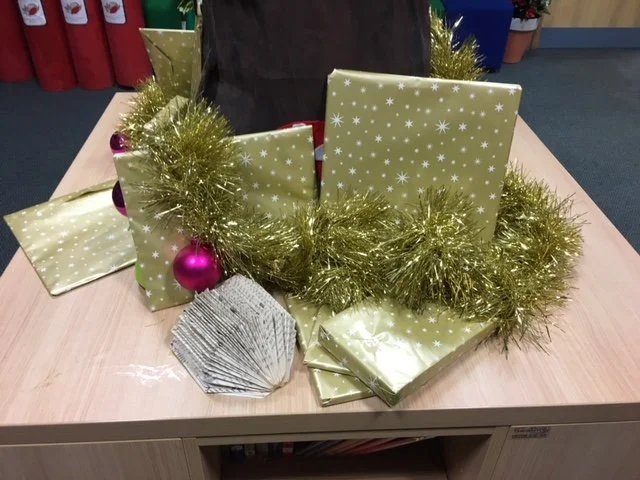
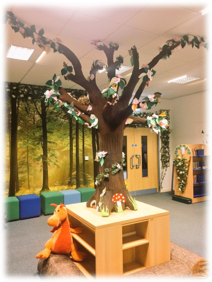
Some of the best ideas here - the ones which have the greatest impact - are the simplest to put in place, allowing schools/ teachers to develop a firm basis before choosing some of the more ambitious ones. I would like to highlight the Federation of Children’s Book Groups and their annual national initiatives here- the Children’s Book Awards, National Share a Story Month and National Non-Fiction November (mentioned in Idea 72: Face the Facts)- which are very easy to engage with and create a real buzz around books and reading. Using the local library and encouraging children to take part in the Summer Reading Challenge (and the Winter Mini Challenge) and holding book fairs are other ideas which are relatively easy to implement, offering sound starting blocks to build upon.

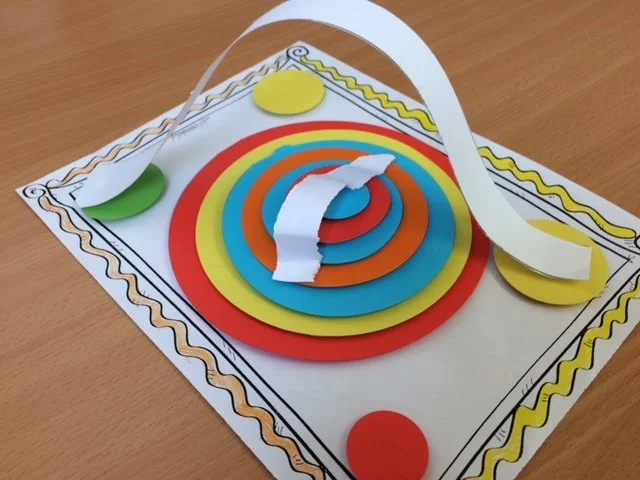

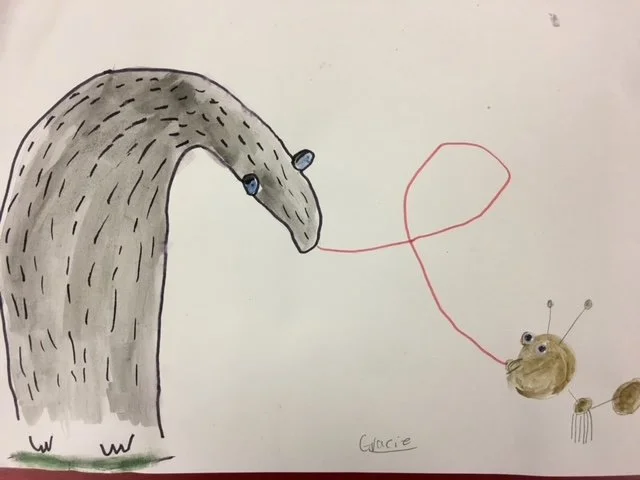
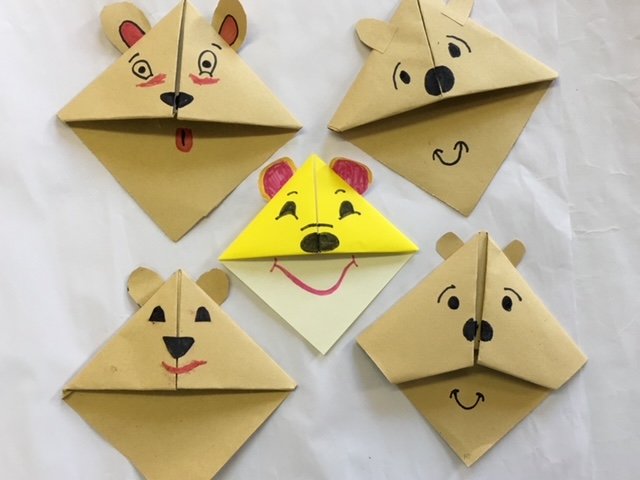
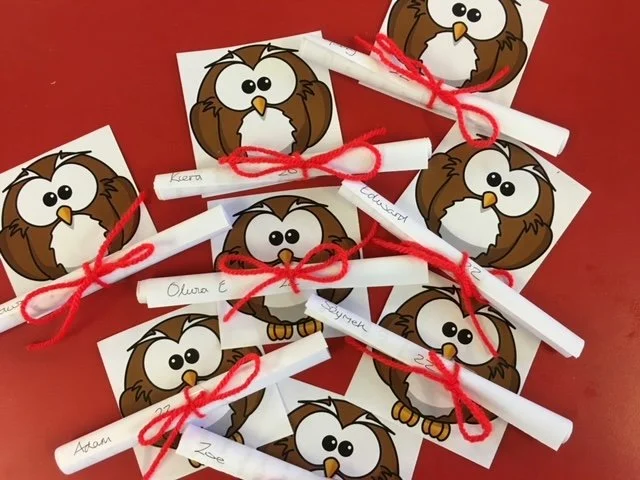
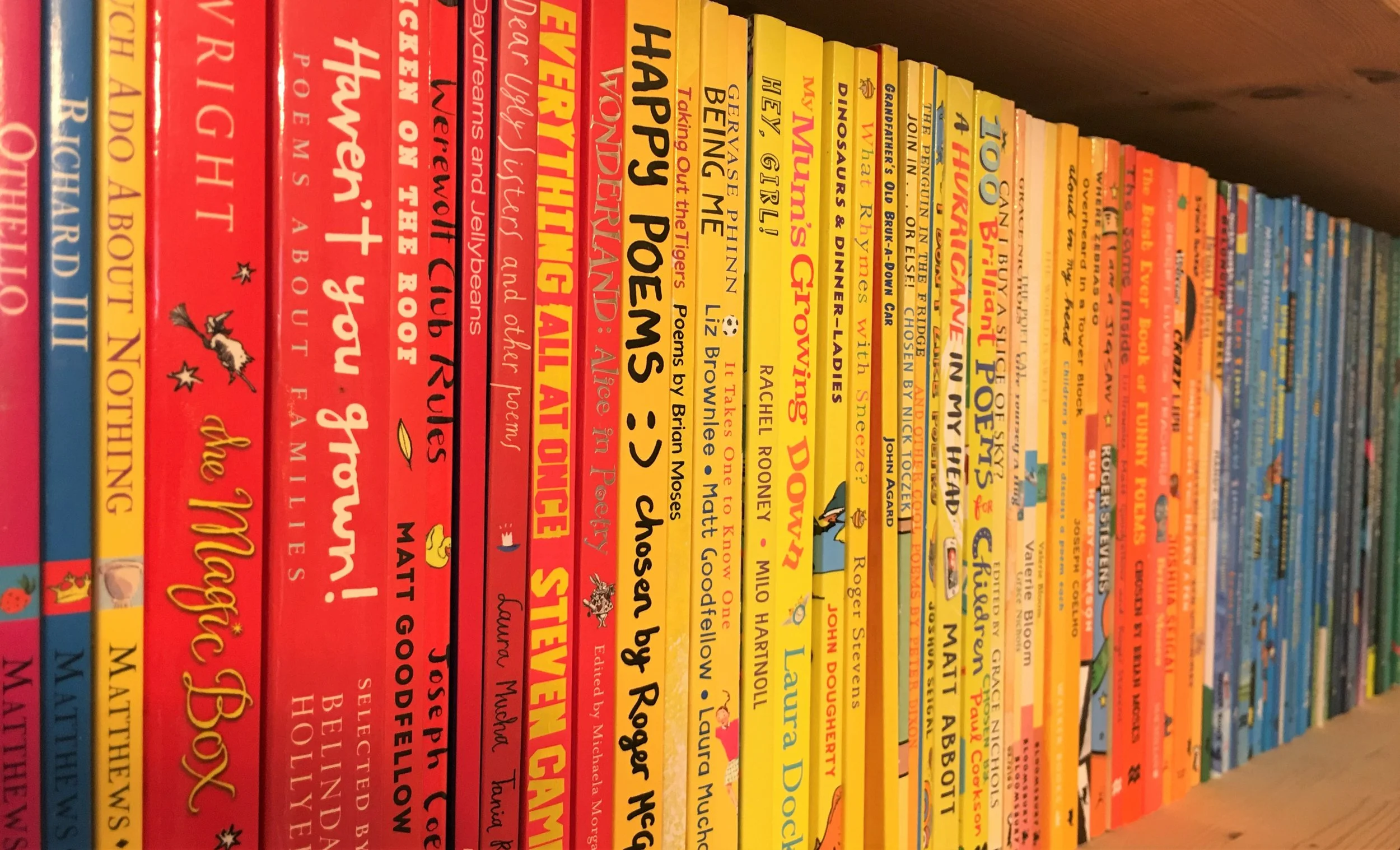
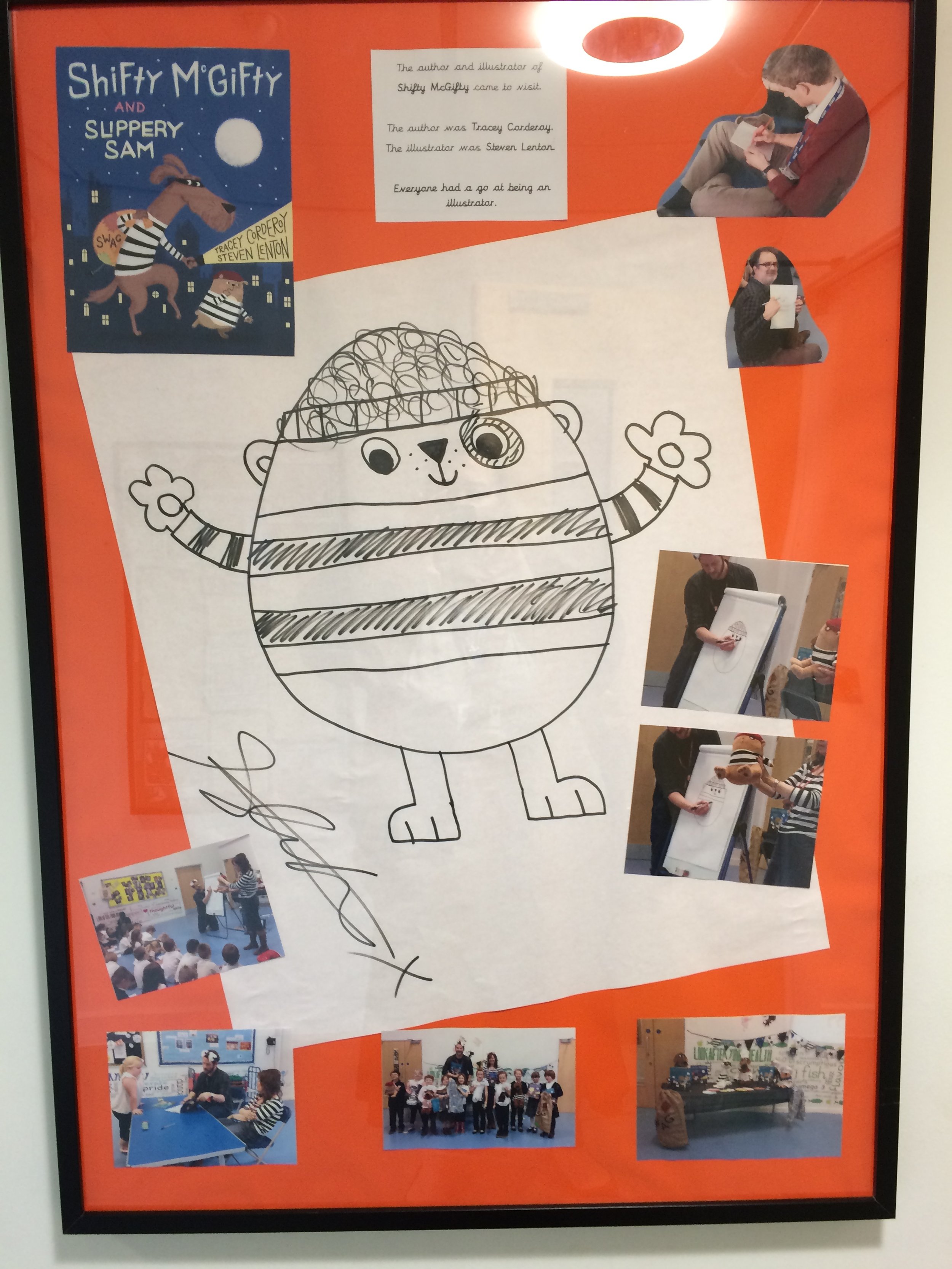
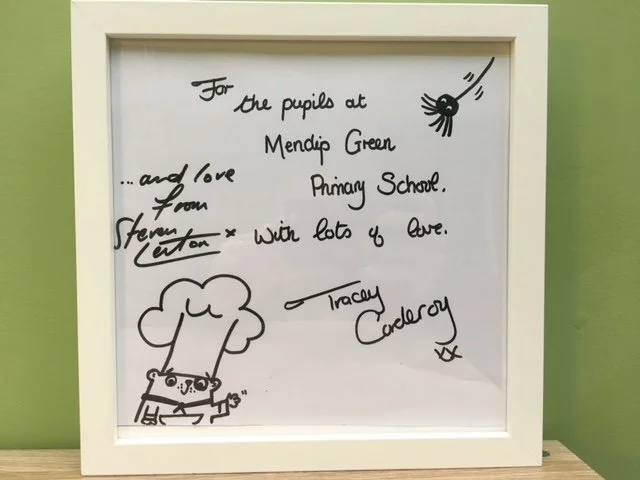
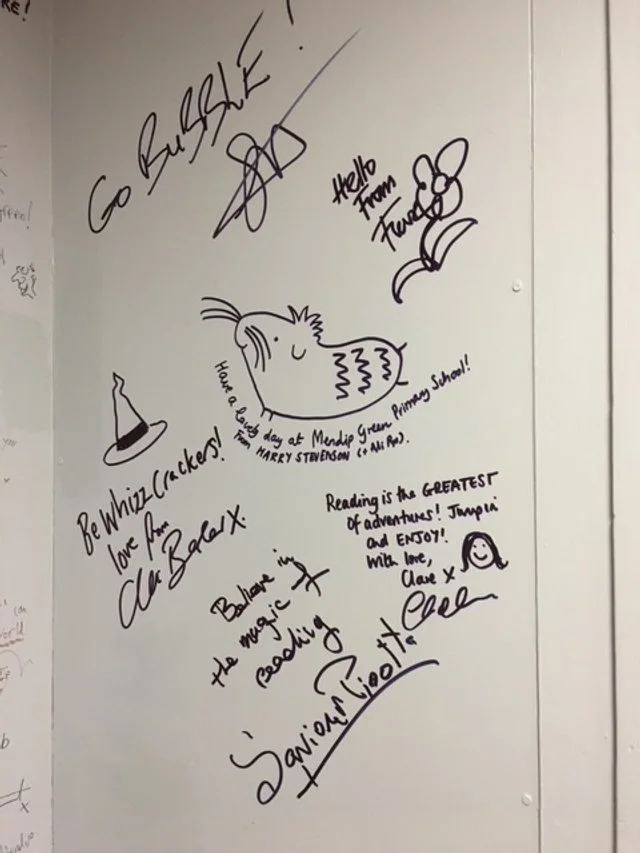
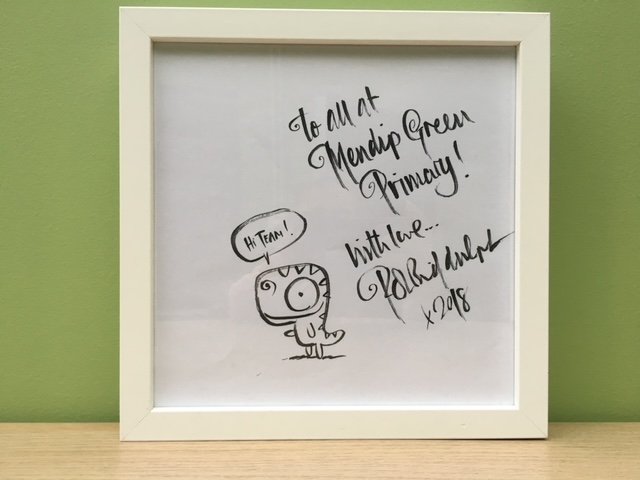
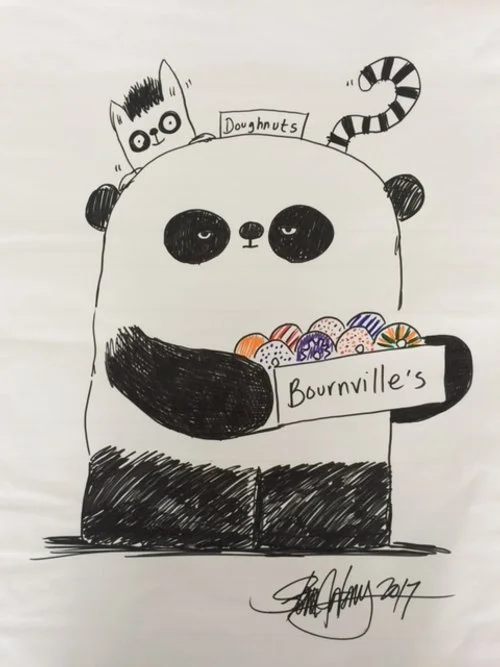
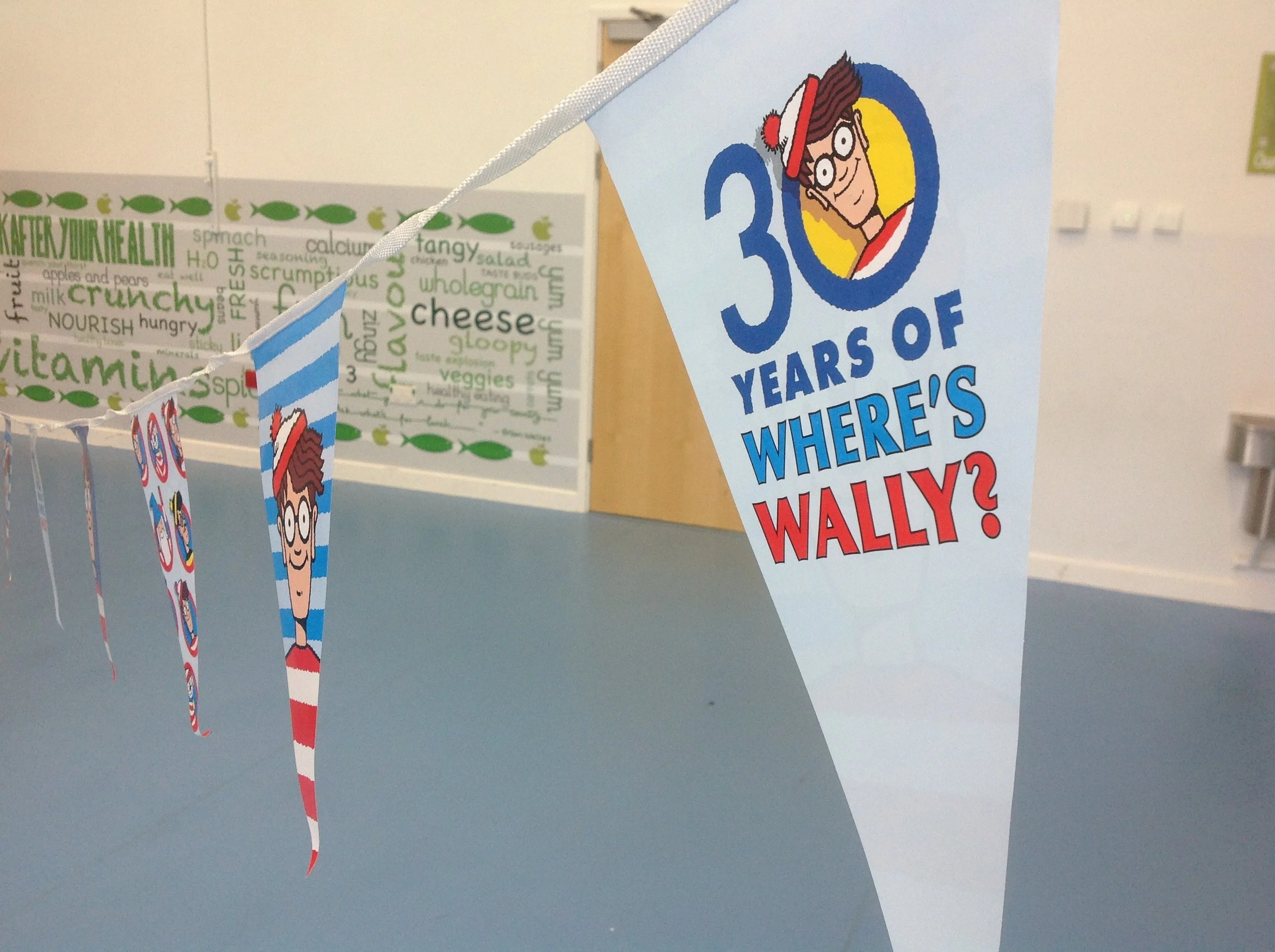
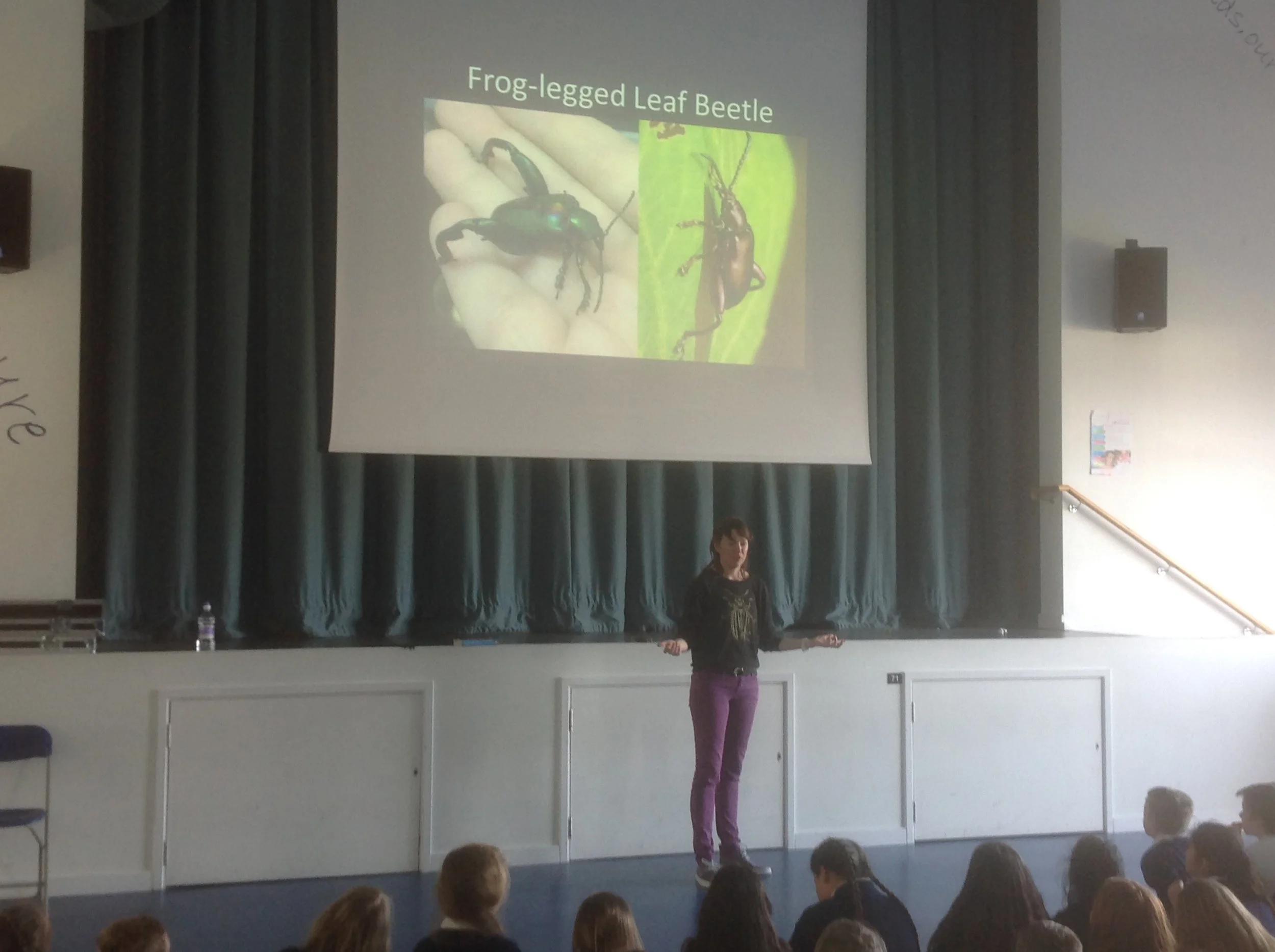
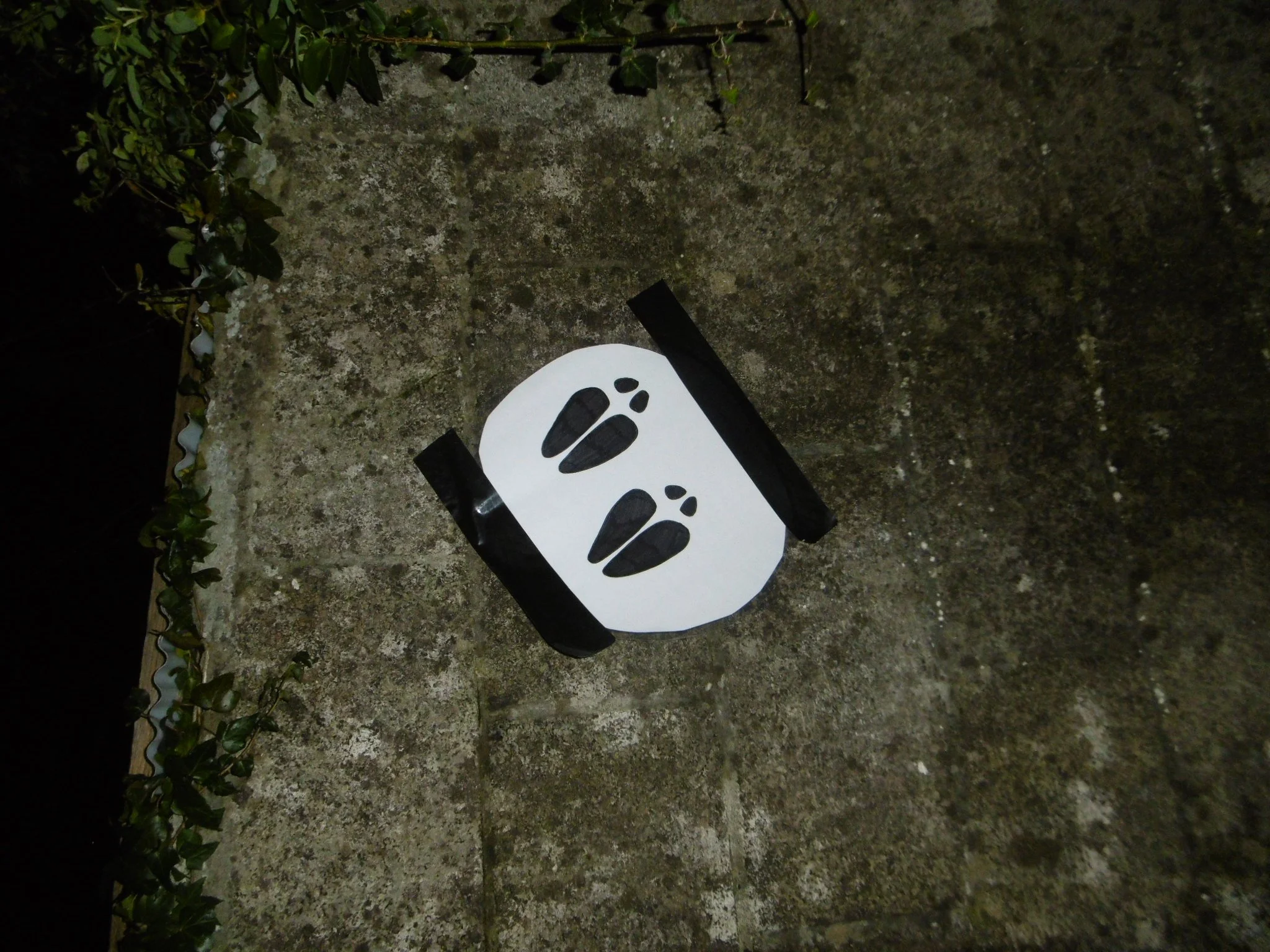
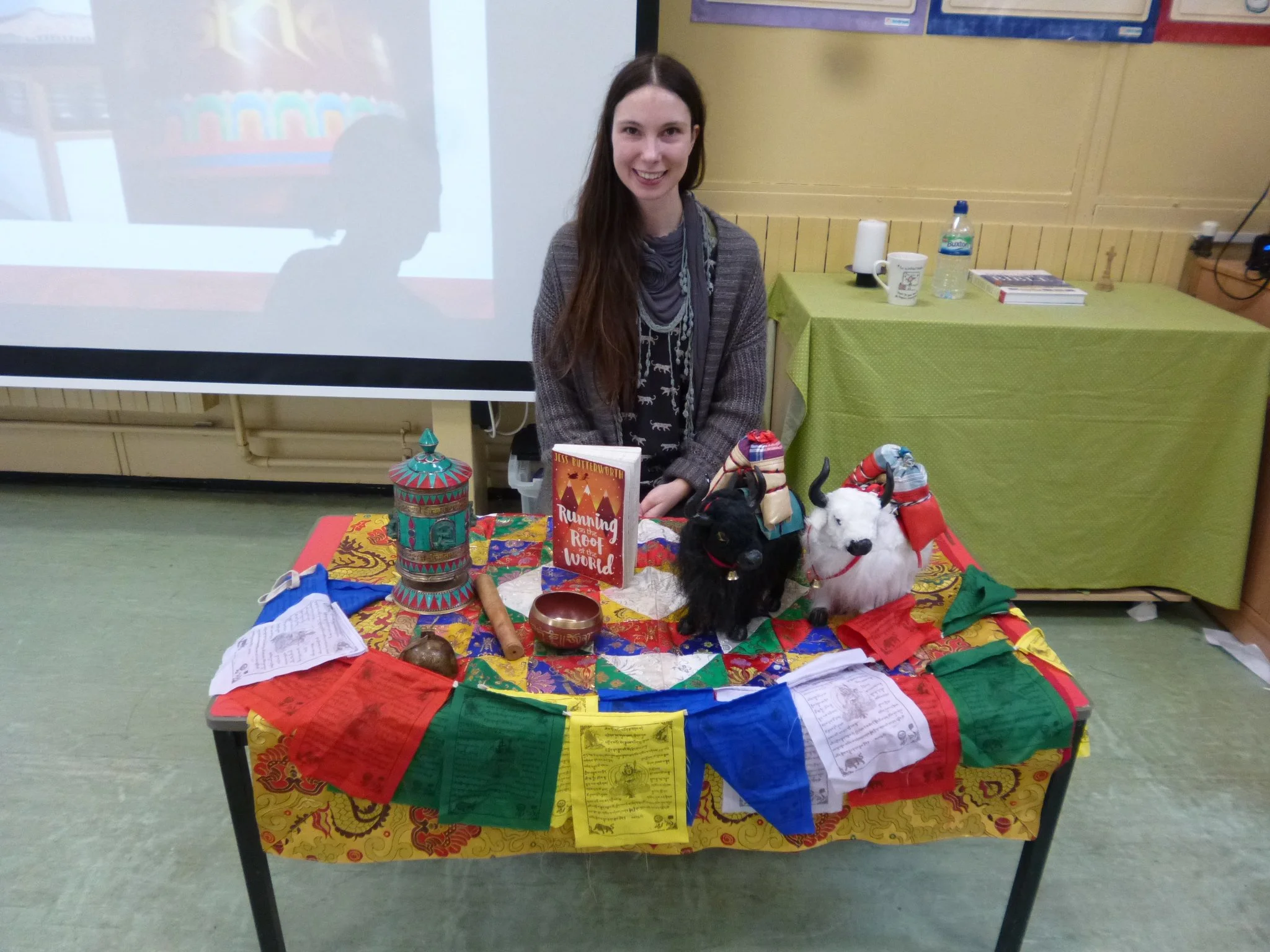
One useful addition to the book would be some pictures to illustrate the ideas in action so I have added a few here. The book is pitched as ‘100 Ideas for Primary Teachers’, but the reach of the content contained goes beyond that with many that can be adapted - or used as is- for both older and younger children, for colleagues in libraries and anyone with children at home. It really is a treasure trove of good sense and inspiration!
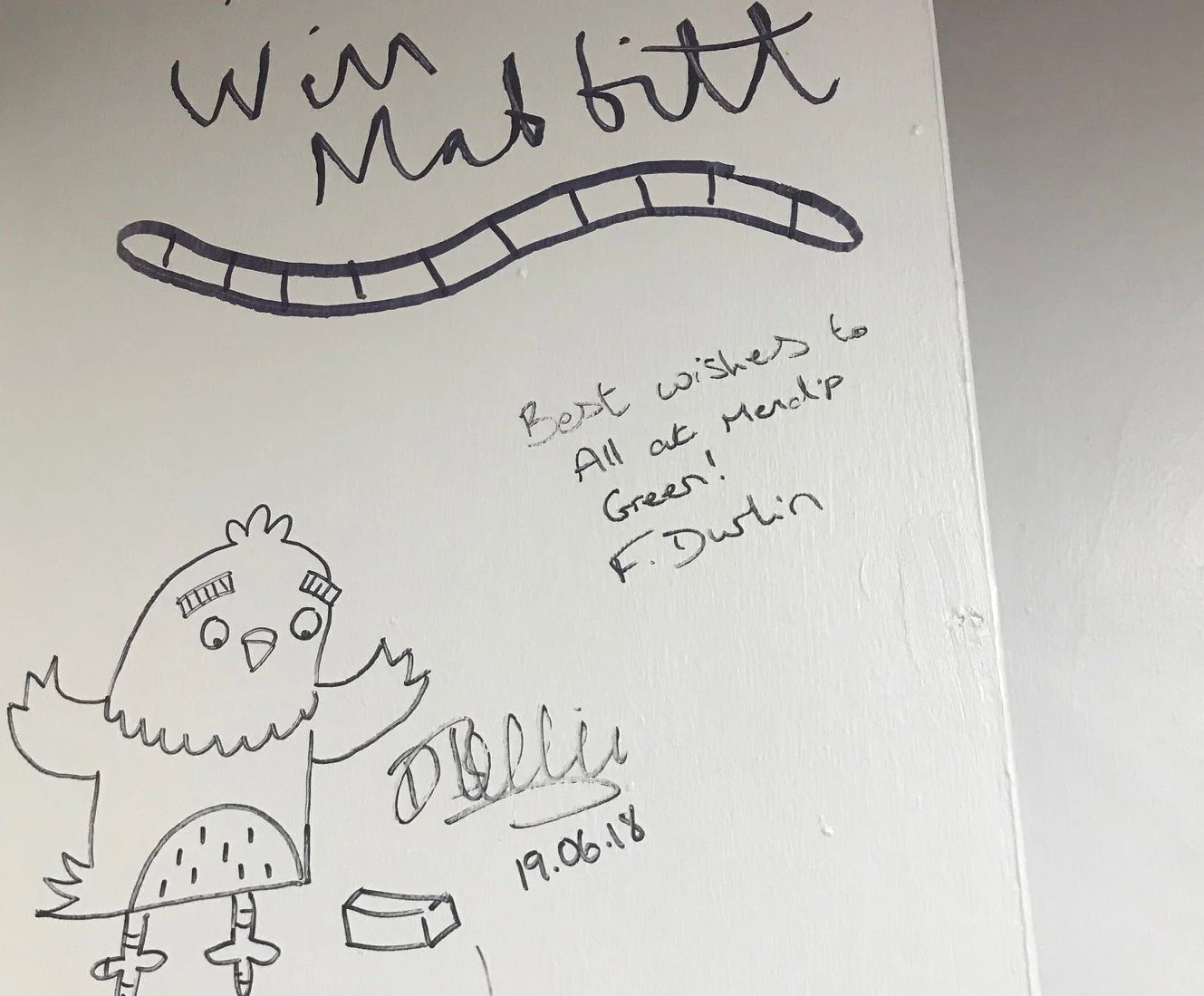
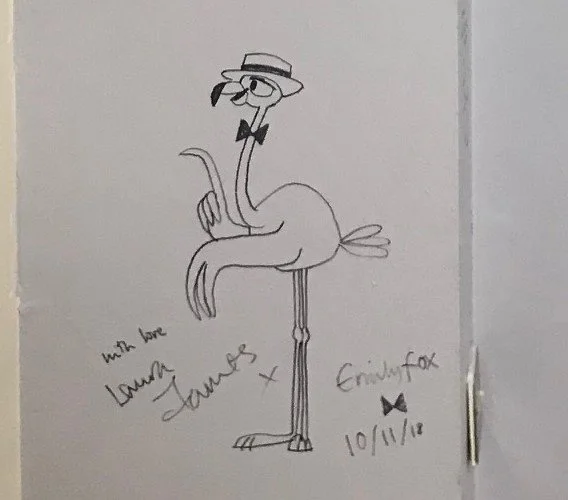
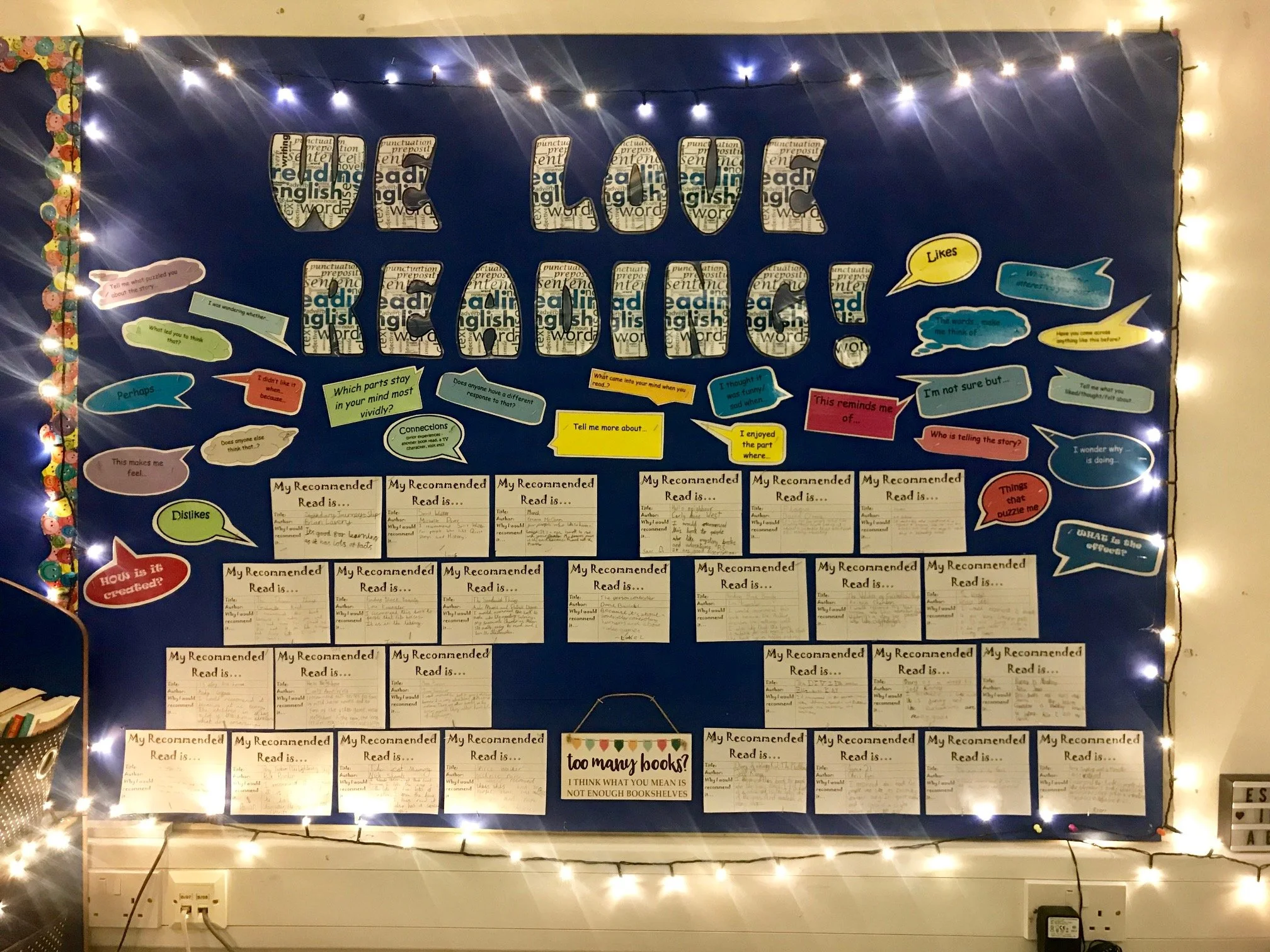
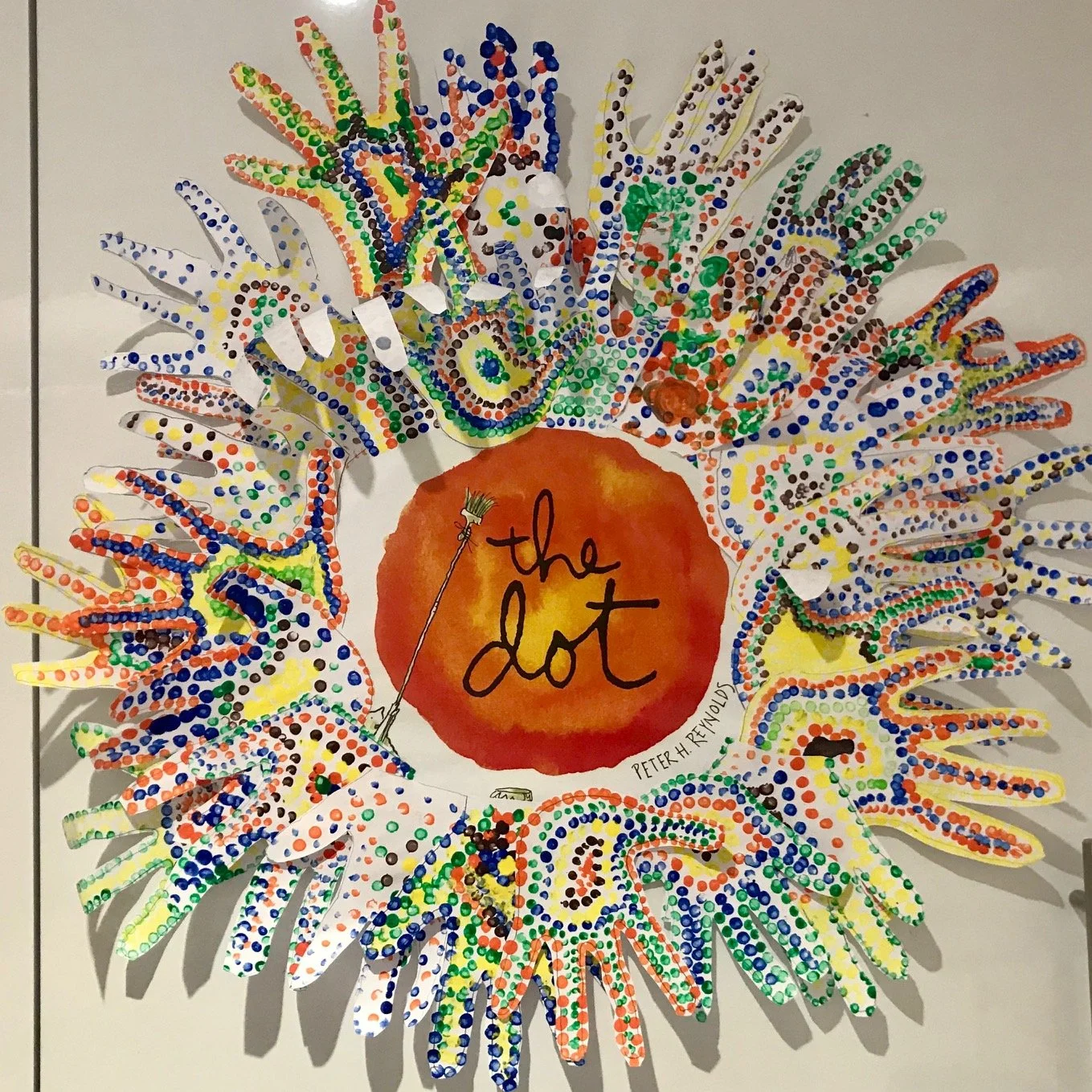
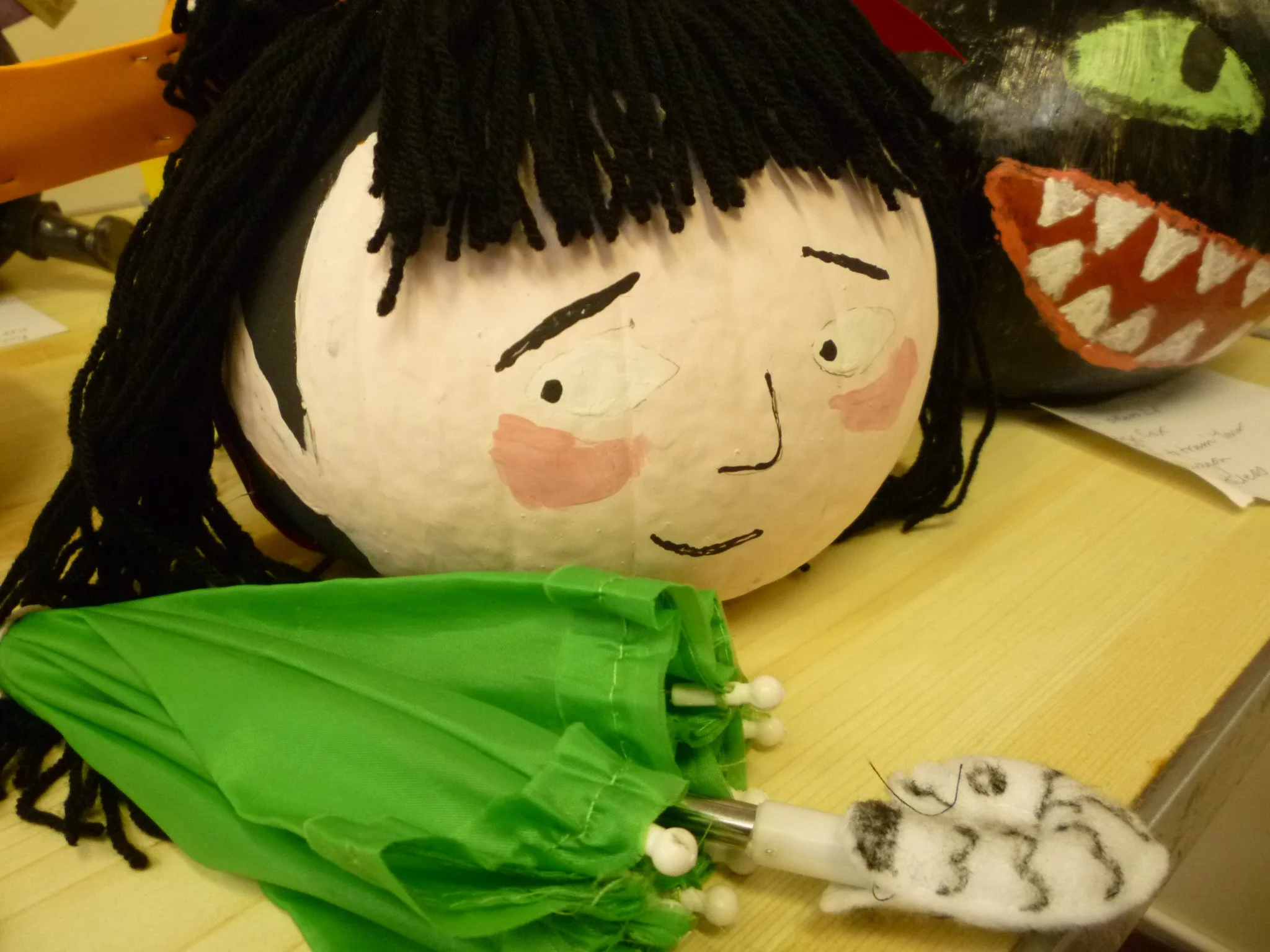
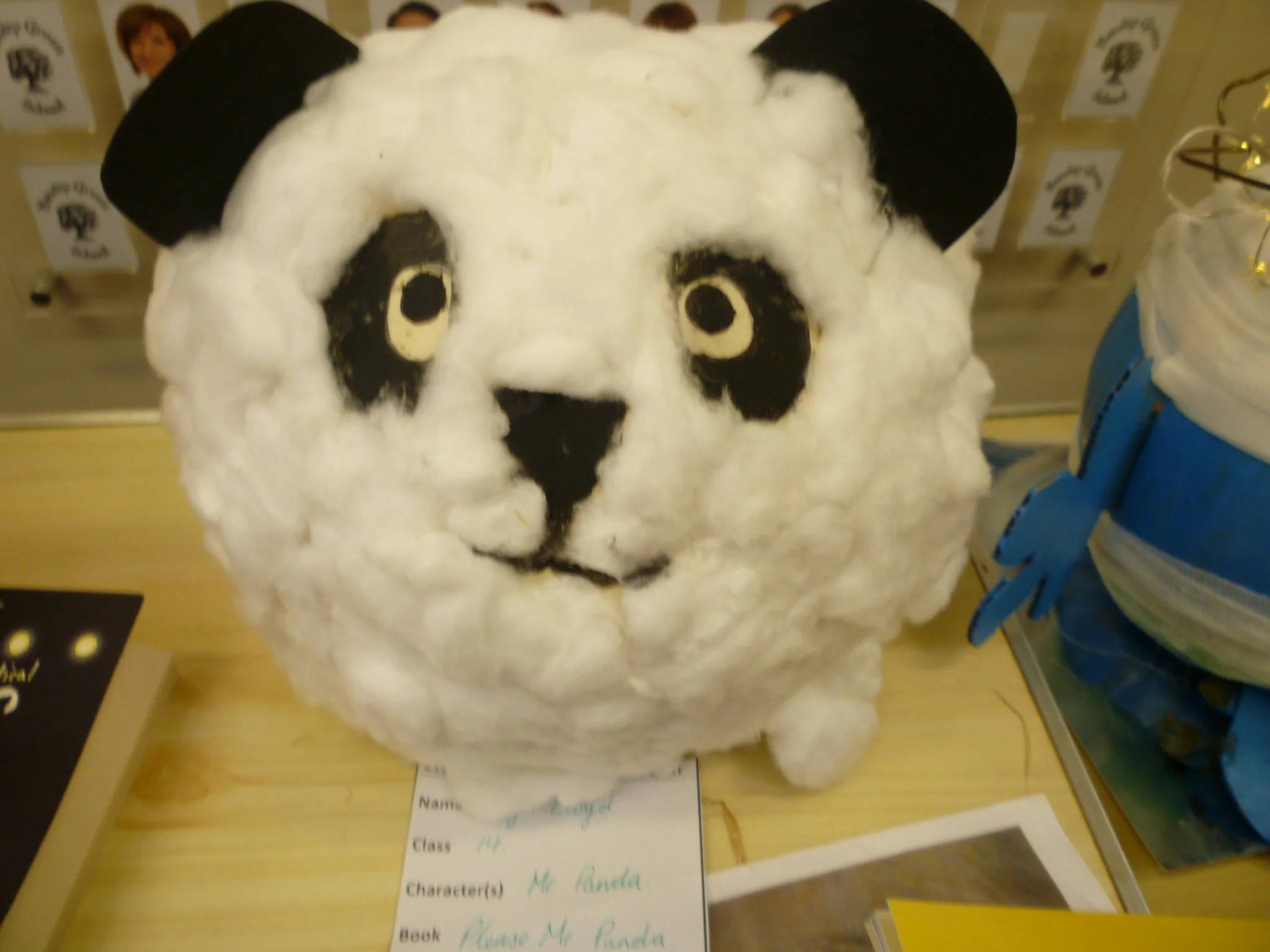
‘Reading for Pleasure’ is a great read, packed with useful, practical ideas, and (in these days of tight budgets!) great value for money! Thanks to Scott for asking me to be part of this Blog Tour and to Bloomsbury for sending me a copy. I shall be enthusiastically sharing this with colleagues!
100 Ideas for Primary Teachers: Reading for Pleasure
Scott Evans
Bloomsbury ISBN: 978-1801991902
Blog Tour: The Way of Dog
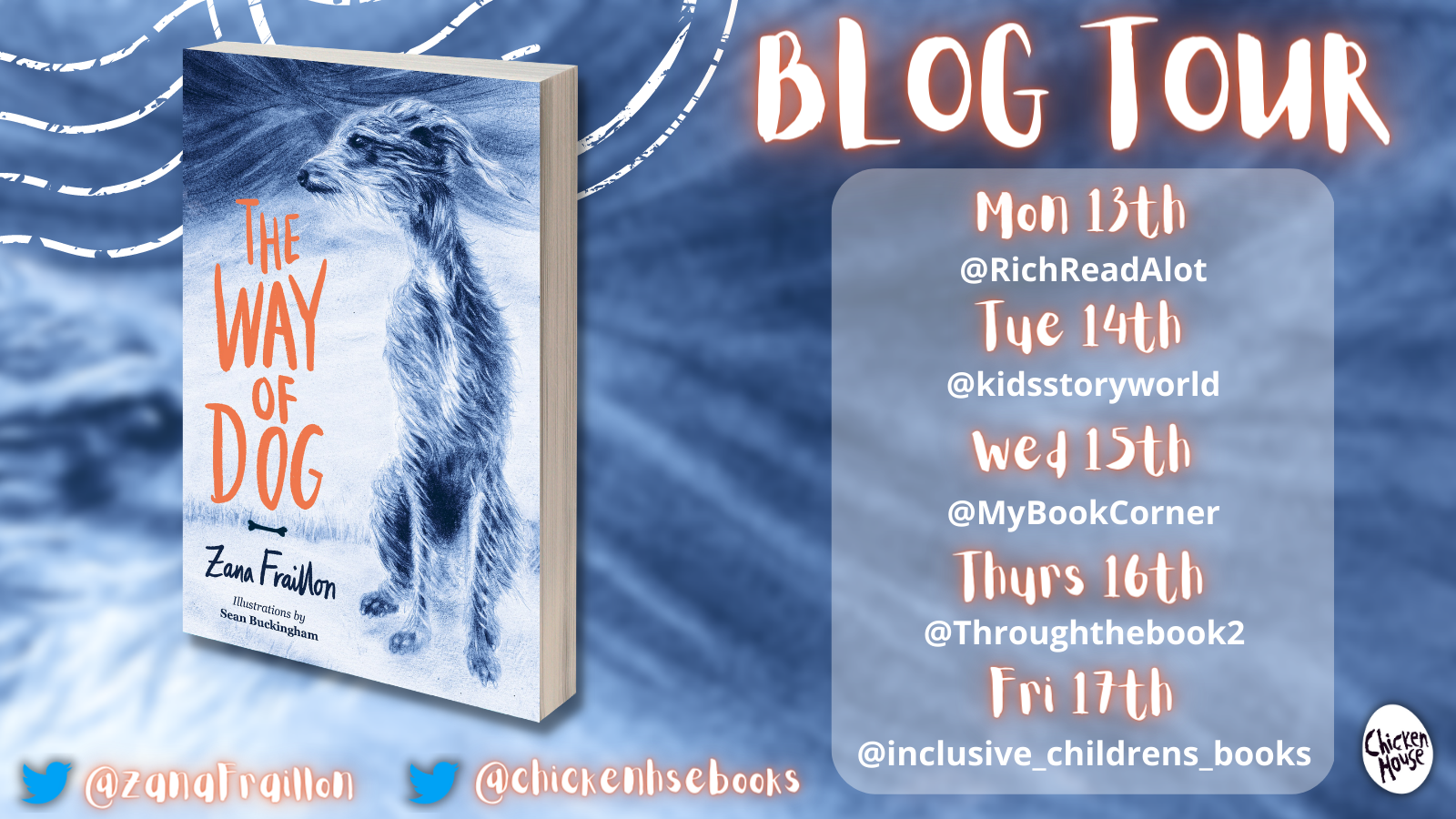
I am delighted to be part of the Blog Tour for this very special book. It is one which I will not forget in a hurry- and am sure to read again soon.
Be strong. Be fierce. Life is more than a concrete floor.
Born in a harsh, grey world, a pup is taken from his mother and locked in a cage with the rest of the litter. As the others are chosen, he yearns to belong to a family, but finds himself alone until he meets a manpup who shows him affection- and gives him a name, ‘Scruffity’. Set free from his cage by this boy who is as unloved as he is, the two run away together and Scruffity gains a taste of both love and freedom…until tragedy strikes.
Told in verse, this is a deeply poignant and utterly beautiful novel. From the opening page, it completely absorbs the reader in Scruffity’s story, shocking them with the callous, casual cruelty of the ‘Shoe-legs’ whose only interest in the dogs is financial gain. The innocent, optimistic, loving nature of this young pup serves only to underline the neglect and the use of verse cleverly frames his thoughts, capturing them in a way which prose would not have done.
Scruffity’s devotion to ‘MyManpup’ (as he calls his boy) and delight in the world outside the cage, his curiosity and excitement are captured perfectly, allowing the reader to share each new discovery about ‘the way of dog’ which Scruffity makes. His loyalty to the humans he meets along his way- the boy who befriends him, OldOne, the little girls, LilaMay and Pippa and their mother, and CharlieMan- is testament to the trusting, faithful nature of dogs and their longing for companionship.
The story also highlights the plight of humans who have been victims of human cruelty. Seen through Scruffity’s eyes, their stories unfold to the reader, the cruelty and neglect shown to them as incomprehensible as that shown to Scruffity. There is so much to discuss here- so much to develop empathy as the loyal true heart of a dog helps others to heal. The ending is just perfect- if requiring a whole box of tissues!
The text is punctuated in places with gorgeous illustrations which are as atmospheric as the verse. Scruffity is beautifully shown in his happiest and darkest moments with shadowy human shapes emphasising the threat they pose.
I am not ashamed to say that I cried many times as I read this story. Zana Fraillon is well known for her powerful writing and tackling ‘difficult’ subjects. ‘The Ones that Disappeared’ almost finished me completely, but the beauty of her writing and the poignancy with which she handles the subject matter are unquestionable. ‘The Way of Dog’ is an outstanding book, a story of love and hope, a story of cruelty and compassion- a masterpiece.
The Way of Dog Zana Fraillon, illustrated by Sean Buckingham
Chicken House ISBN: 978-1915026231
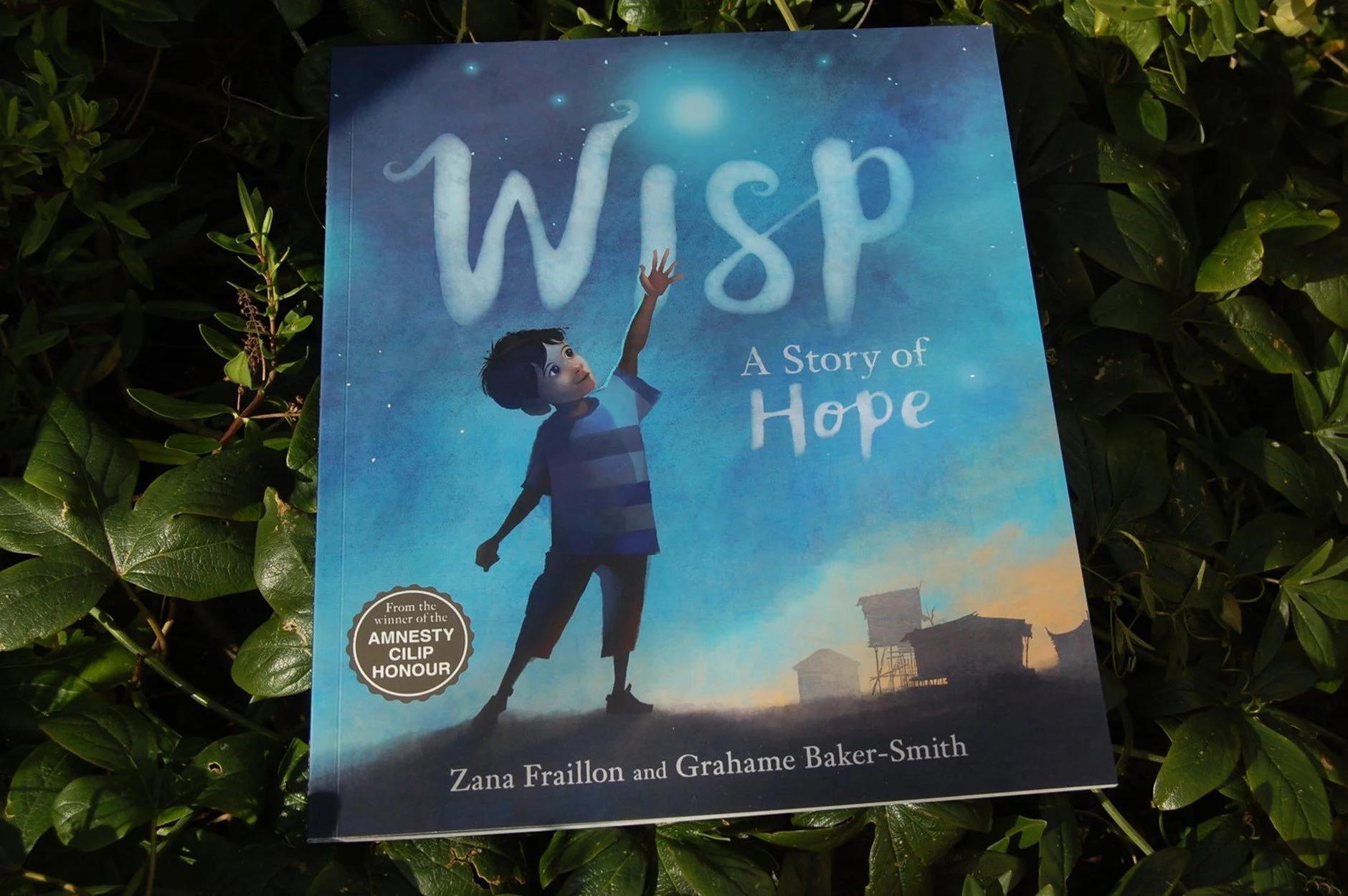
You can read my review of ‘Wisp’ here.
Blog Tour: Rider of the Storm
I have always adored historical fiction. It allows readers to explore the past, sparking interest in different periods, encouraging them to make connections between the past and the present. It opens the reader to reflection and can offer new perspectives. It allows them to ‘be’ there as stories unfold and to witness the action and adventure as the author brings to life the events experienced by everyday people as well as key historical figures. Well written historical fiction should inspire the reader to find out more about the period, igniting their curiosity. And the ‘Circus Maximus’ series does all of the above! Today, I delighted to be taking part in the Blog Tour for ‘Rider of the Storm’, the third book about Dido and her adventures.

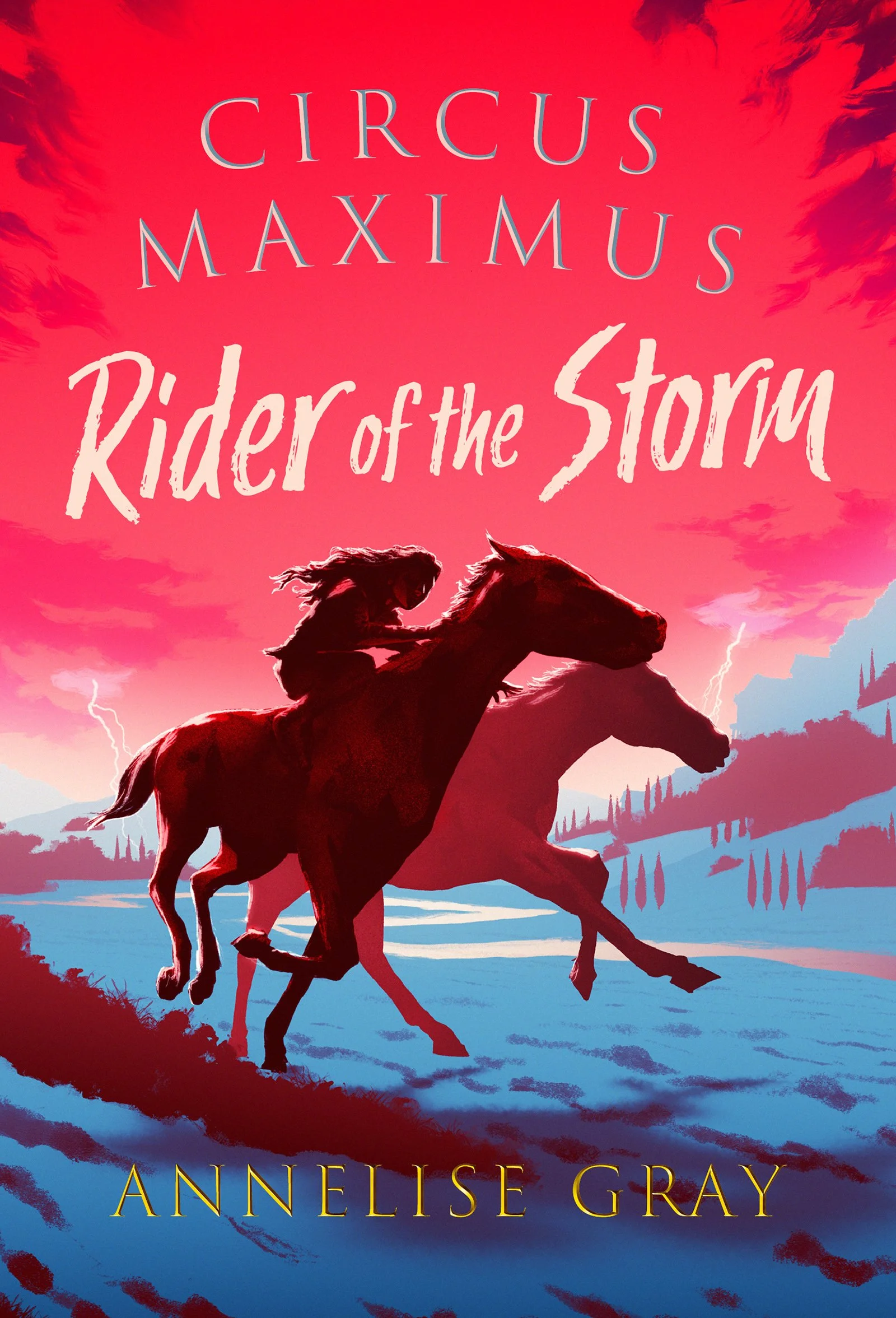
‘Rider of the Storm’ continues Dido’s story which started in ‘Race to the Death’ and ‘Rivals on the Track’. About a year has passed since her last adventure and Dido is now back home, training horses with Scorpus and Parmenion. However, word arrives from Rome that her cousin, Abibaal, has left the Blues, the chariot team he was racing with at the Circus Maximus, to race for the Greens- for the Emperor Caligula. In an attempt to save Abibaal, Dido must return to Rome where she finds herself facing old enemies and new challenges in her most dangerous adventure yet.
There is so much to recommend this story. Full of action and excitement, the plot gallops along at a pleasing pace towards a very satisfying conclusion. The racing scenes are completely compelling, combining historical detail with rich descriptions. For example, Caligula’s building of a circus on his mother’s property, described in the story, is based in fact and an author’s note at the end of the book and an annotated diagram of a charioteer and his team at the front support the reader’s understanding.
Characterisation is a huge strength of this series- both human and horses! At the outset, Dido is struggling with her longing to return to the Circus Maximus and her desire to race and her fear of being discovered and endangering those she loves. She is loyal and kind, fiercely courageous and determined to do what she thinks is the right thing, no matter what the cost. Her devotion to, and understanding of, the horses, is superbly handled. Caligula is also well developed- his cruelty and capricious nature are well documented; however, Annelise Gray offers a nuanced portrayal, hinting at how his upbringing might have had an impact on his behaviour (although not seeking to excuse it). His manipulation of Abibaal plays on that young man’s desire to earn praise from his father by deepening the rift between them. There are many characters worthy of comment- but the best thing is for everyone to read the story and ‘meet’ each one for themselves!
Although this is a series - and each book is worth reading- it would be possible to read this without having read the two previous stories as the writing skilfully builds the picture of past events, filling in necessary details where appropriate. This really is historical fiction at its best- superb for a class reader to bring to life a topic on the Romans, excellent for a guided reading text to help develop understanding and make connections or as an exciting independent read!
Circus Maximus: Rider of the Storm Annelise Gray
Zephyr ISBN: 978-1803281063
Make sure you follow on the rest of the Blog Tour to find out more about this wonderful series! Many thanks to Annelise and the team at Zephyr for asking me to take part.
Blog Tour: Call the Puffins
I am a huge fan of Cath Howe’s books for older readers and so was very excited to hear that she had decided to write something for younger children. In ‘Call the Puffins’, Muffin and the other young puffins, live on the island of Egg where they are in training to be an Unflappable, a member of the Puffin Rescue Team. In this stop of the Blog Tour, Cath shares how her ideas came together to create this delightful new series.
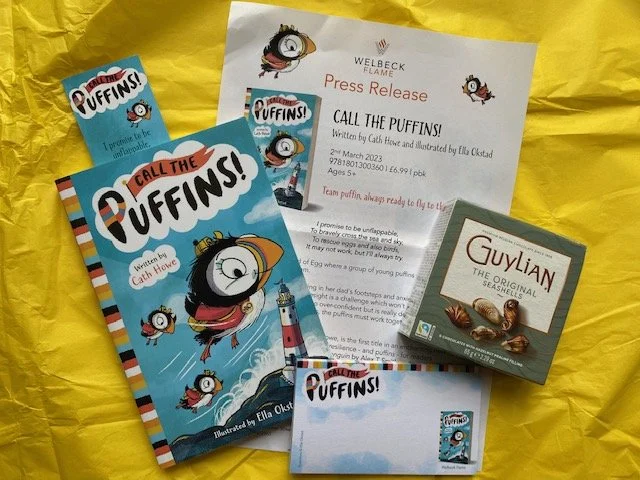
Call The Puffins! tells the story of a puffin rescue team, and, in particular, the newest recruits. These puffins rescue birds and eggs wherever they are in danger from their home on the island of Egg. Muffin, the main character in the first story, arrives on the island with her dad to start her training. She’s very enthusiastic but there is so much to learn: she has to settle into life in the burrows where all the puffins live and be away from Mum and Dad for the first time. And will she find a friend?
I started writing about puffins many years ago and reworked the stories during the pandemic when we weren’t able to meet our families. I decided to create a team of birds who really want to help. I thought about organisations like Scouts and Brownies and how they have mottoes and work towards badges. I read about the way people used pigeons in wartime to carry messages. These puffins were one of the cheeriest things in my life, at a difficult time.
Puffins look amazing. They already look like lifeguards. They toddle along as if they're hoping for the best. They have to flap very hard to stay in the air. They are not graceful, more comical. Sometimes they're compared to clowns. I love their spirit.
I liked the idea of a new little team of recruits and their personalities and squabbles, rather like a new class in primary school. There are so many things to get used to: new rules and things to learn, and new friends by your side. When children start school, they love to be given jobs to do and things they can help with. The puffin motto, It may not work, but I'll always try! is full of that positive attitude towards doing new things.
There is an island of Egg in Scotland but it's spelled EIGG. I used to spend my childhood holidays on the West Coast of Scotland, often in a cottage by the sea in Kintyre. I'm very excited by islands and remote locations.
I love beachcombing. We often found semi-precious stones on the beaches in Kintyre and I used to love collecting them and seeing them cut and polished by the lady who rented us the cottage. My puffins make good use of things they find on the beaches. Sometimes, things wash up which they don't recognise or know how to use.
I’m fascinated by lighthouses: the spiral stairs, the rotating lamp, the beam shining across the sea, stories of rescue and bravery. I wanted the puffins to take over a human lighthouse and use it in a similar way, to spot trouble out at sea and organise rescues. I thought the training camps might be a bit like PE lessons.
I tried to include lots of real details about real puffins because these details are rather amazing. Puffins do sleep in burrows. The noise they make is halfway between a honk and a groan or growl. When I discovered that their beaks can glow in the dark, I couldn't believe it- it seemed like magic!
The puffins are a side of me, I think. There's been a lot of joy creating these stories and I hope it communicates itself to the readers.
Call the Puffins Cath Howe, illustrated by Ella Okstad
Welbeck Flame ISBN: 978-1801300360
Many thanks to Cath for joining me today- and thanks to the team at Welbeck for the box of goodies! I am not prepared to use the post-it notes- too lovely! I look forward to see what the Puffin Rescue Team get up to in their next adventure.
Blog Tour: Emerald and the Ocean Parade
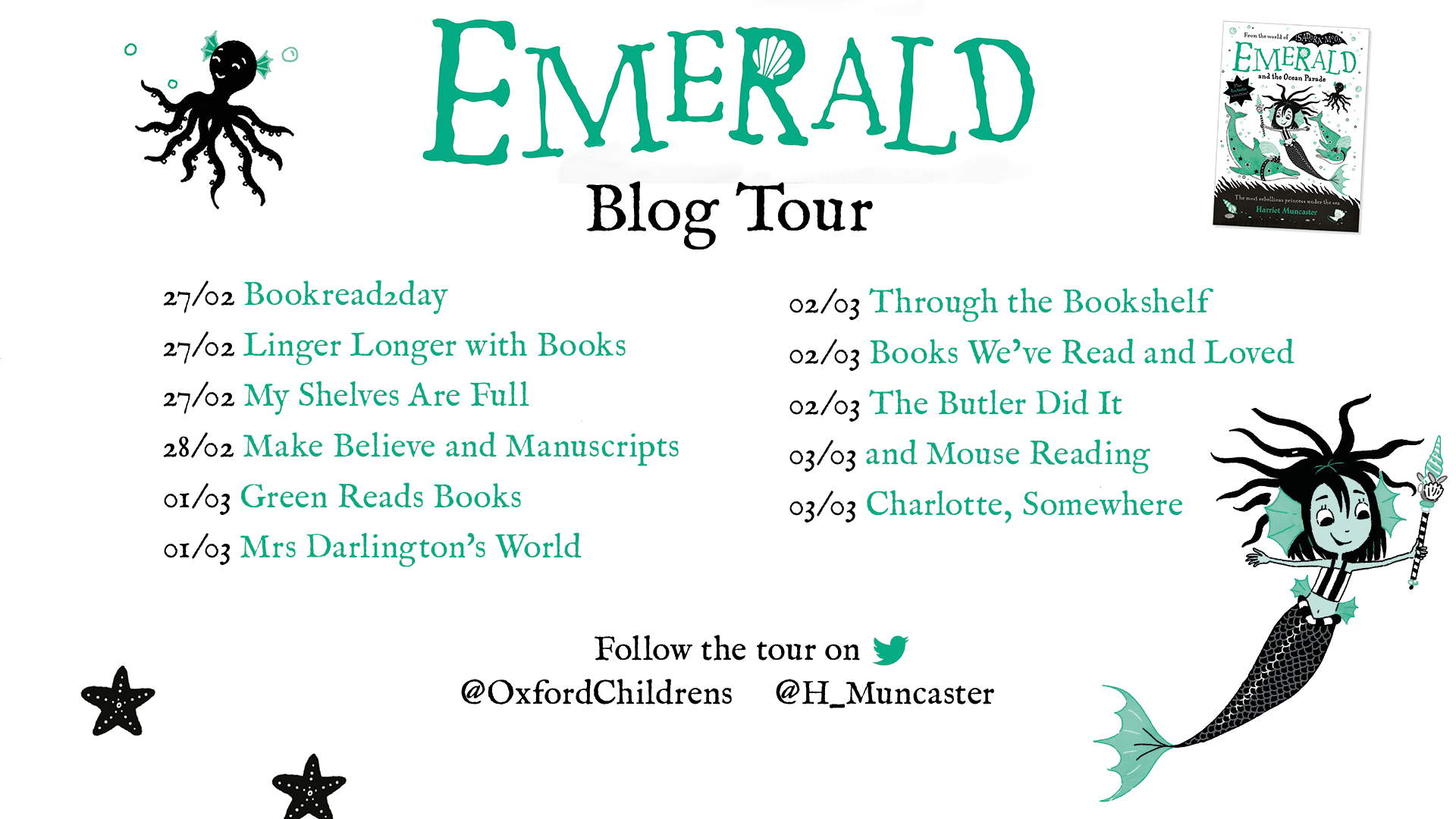
The ‘Isadora Moon’ books are incredibly popular with children at school and for good reason. These charming stories are beautifully presented, in books the perfect size for little hands with sparkly covers, full of lovely illustrations in pink and black. Isadora is half-vampire and half-fairy- special because she is different. Readers were then introduced to her cousin, Mirabelle, whose books are purple and black. Mirabelle is half-witch and half-fairy- and very naughty!
In ‘Isadora Moon Under the Sea’, Isadora meets a mermaid called Emerald (and we learn how she and Inkibelle, her pet octopus first meet)- and ‘Emerald and the Ocean Parade’ is the first book in a new series with a green and black theme!
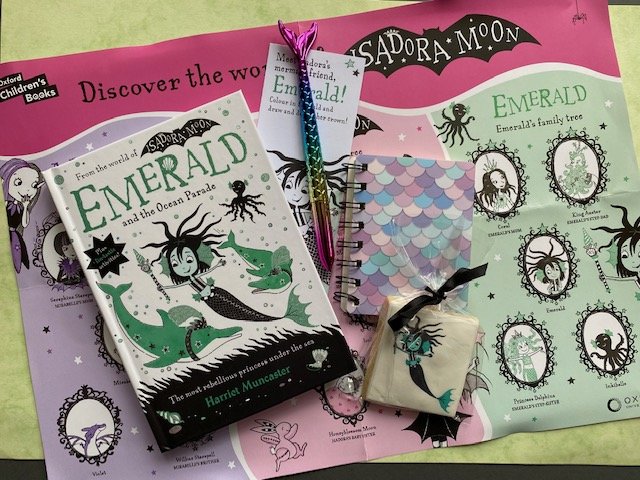
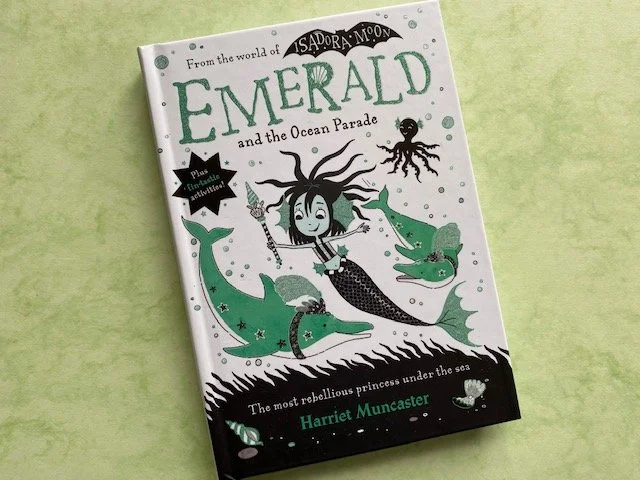
Emerald is learning how to be a mermaid princess, but she doesn’t feel like one at all. Her graceful new step-sister, Princess Delphina, makes it look very easy, but Emerald doesn’t seem to be able to do anything right. But Emerald has wonderful friends, a loving family and the perfect pet, her octopus, Inkibelle. She realises the importance of being herself and doing things her own way.
Scallop City, where Emerald lives, is shown in a map (who doesn’t love a map?!) at the beginning of the book, setting the scene for the story. The language used is full of sea references which really help to build Emerald’s world- crisp- kelp, sea-flower floss, sea-crunch cereal- and the plentiful illustrations show her on her journey to becoming a princess in her own special way. There are many lovely details like air bubbles edging the text which really help to build the under water setting of the story.
At the end of the book is the selection of activities and things to make which (I know from first hand experience) are very popular with young readers. There is also a sneak peek at Emerald’s next adventure, ‘The Sea Sprites’, a reassuring clue that there will be more stories about this mermaid princess to come.
The fact that each of these characters is linked is a brilliant idea, allowing children to have their favourite ‘world’ as well as the familiarity of style and format which they obviously enjoy. Although aimed at younger readers, I have known Year 6s devour these books, romping their way through the series with great pleasure. There is also a very satisfying feeling to having the collection lined up on a shelf!
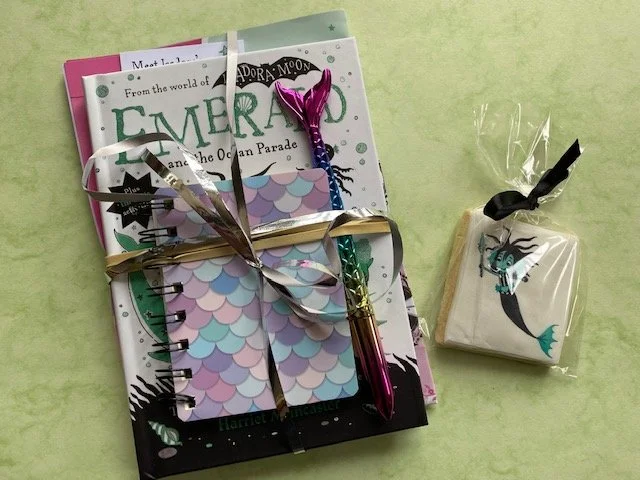
Many thanks to the lovely people at OUP for asking me to take part in this tour and for the lovely box of goodies. The biscuit looks too good to eat!
‘Emerald and the Ocean Parade’ is out TODAY- World Book Day!
Emerald and the Ocean Parade Harriet Muncaster
OUP ISBN: 978-0192783974
Blog Tour: Moon Flight

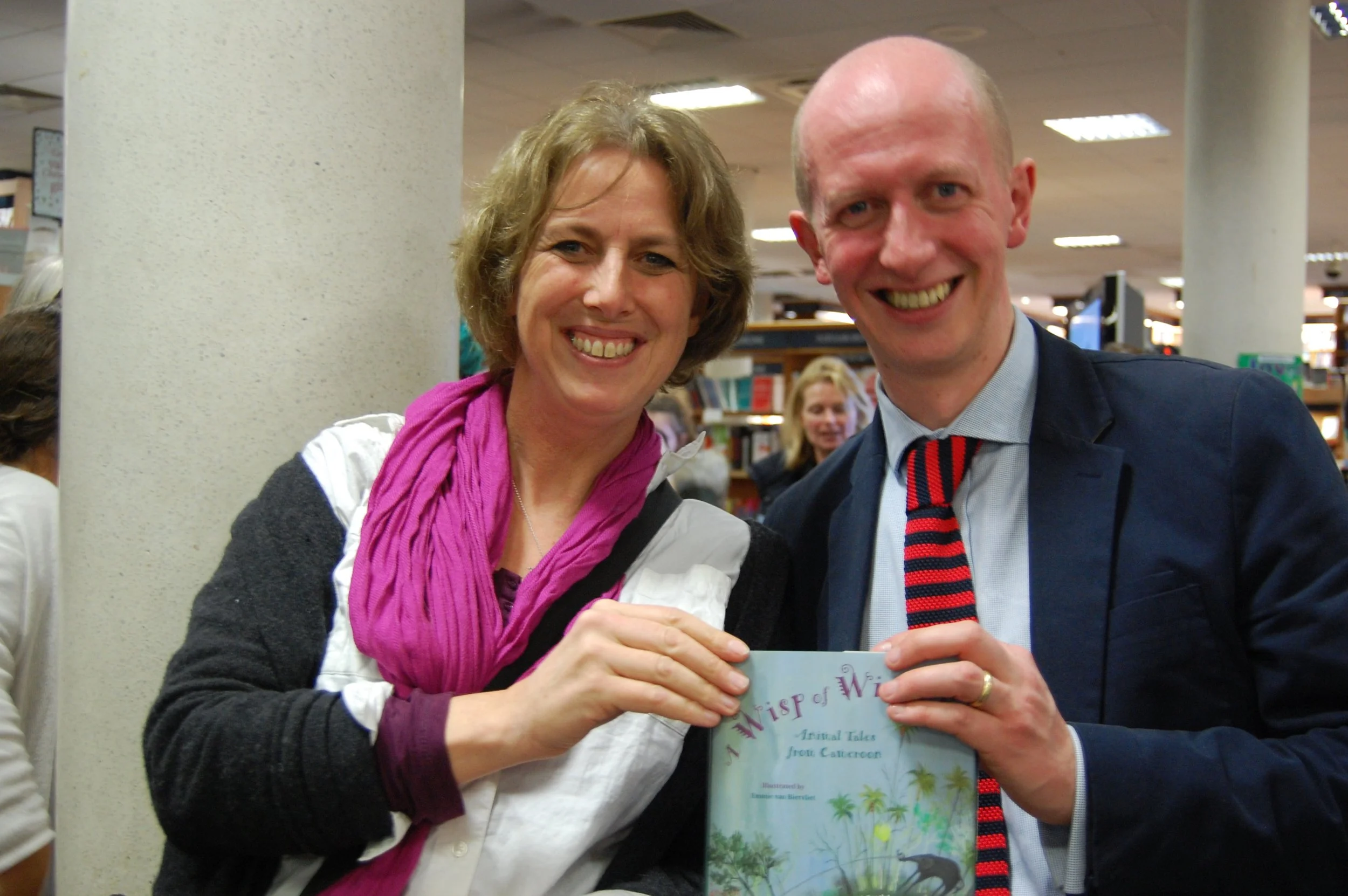
I remember first hearing Gill Lewis speak at Hay Festival in June 2011. Her passion for wildlife and nature was infectious and when she signed my book, she noticed my ‘Monkey World’ fleece and we chatted about sponsoring animals- a chimpanzee for me and an osprey for her. Since then, I have seen her many times and have enjoyed reading- and recommending- all of her books so I am particularly delighted to be taking part in the Blog Tour for her latest, ‘Moonflight’, a captivating adventure story about a timid rat called Tilbury and his sister, Nimble-Quick. It is the quest of a lifetime, full of peril and challenges, and one which allows Tilbury to discover what really matters in life.
I asked Gill some questions…
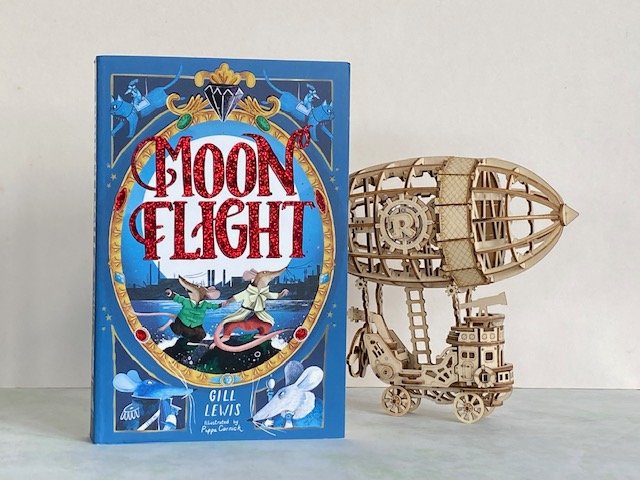
1) You are well known for writing superb books which reflect your passion for wildlife, the importance of our relationship with nature and empathy for others. ‘Moonflight’ is a fantastic story- but a very different style. If it’s not too much of a cliched question, can you tell me what inspired you to write this heart-warming quest?
Many of my other stories are directly about conservation of species and show human protagonists where the animal is not anthropomorphized at all. For Moonflight I wanted to use rats to portray humans and explore aspects of our humanity; those of greed, jealousy and quest for power. Essentially the rats are so anthropomorphised that they are humans thinly veiled as rats.
We humans are a strange species, putting value on rocks and minerals from the ground, eg gold, diamonds etc. We tell stories about these precious metals and gemstones that give us status and power to have them in our possession. I think Moonflight was sparked by one story in particular, one of the cursed Koh-i-Noor diamond, a gemstone with many legends and a history of bloodshed, lies and deceit. This diamond was ‘acquired’ by Queen Victoria from a eleven-year-old maharaja, Duleep Singh. It is said it was gained by deception, though I wonder if Queen Victoria convinced herself with her own story that it was legally gained. It has a curse such that no male heir to the throne will ever wear it. I wonder if surely the curse is just another story, but one where the true narrative of bloodshed cannot be hidden but is a warning for all those who seek the diamond’s power. In Moonflight I wanted Tilbury to go in search of the truth that runs beneath so many stories, and he must find the true owners of the legendary Cursed Night, a black diamond that holds the fate of all the Dockland Rats.
2) Tilbury and his little sister, Nimble-Quick, are very different personalities. Which would you say you are most like- and why?
They are indeed very different. Tilbury is timid, risk averse and anxious. Nimble-Quick is fierce, loyal and determined. She knows her own mind and is not afraid to speak out. Tilbury fears the unknown, whereas Nimble-Quick yearns for adventure.
I would like to think I am more like Nimble-Quick. I am not afraid to speak out about issues that concern me. But perhaps in reality I’m a little more like Tilbury, a little anxious and a planner for all disaster eventualities. And as I get older, I’m finding myself quite content in my own company, happy to spend my time walking with my dogs and swimming in the cold Atlantic Sea and turning my mind inwards to the infinite adventures and journeys of the realms of the imagination.
3) Although I always prefer a book, there is no denying that ‘Moonflight’ would make an incredible film. Would you be happy if this were to happen – and would you prefer an animated version or one with actors?
I would LOVE for Moonflight to be made into an animated film. The rat-based films Ratatouille and Flushed Away both come to mind. If I could go back in time, I think I would have loved to have studied animation. I think the story would work well to be made into a film for Virtual Reality to place the viewer directly into the world of Tilbury.
4) Are you planning to write more adventures set in this world? (Please say yes!)
Not yet, but writing the story freed me up to write in a much more organic way. Usually, I have some idea of the plot for a story, based on months of research, but for Moonflight I just started writing and let Tilbury lead the way. I also love world-building a different reality and hope to explore this in coming writing adventures.
5) When reading for pleasure yourself do you prefer poetry, prose or non-fiction?
I read a lot of non-fiction and narrative non-fiction, often for research, or because they cover topics that I’m interested in. I have enjoyed Wyl Menmuir’s Draw of the Sea. I do read poetry but find some poetry difficult to access. My favourite recent poets are Rebecca Elson with her anthology Responsibility to Awe and AF Harrold’s poems and lyrical writing. I love Harrold’s book A Song from Somewhere Else illustrated by Levi Pinfold. I find fiction hard to read when I am writing the first draft of a story because another person’s protagonist starts filling my head. I also find I have so little time to read, and really enjoy audiobooks so that I can listen to a story while driving, cleaning the house or dog walking. Anne Booth’s Small Miracles is a fabulous story.
6) If you could only recommend ONE book to young readers, which book would it be -and why?
Shaun Tan’s Tales from the Inner City. The book has glorious surreal art and wonderful fable-like stories that we can all relate to. The art is so rich that a reader could become lost in their own stories about the artwork too. The stories are varied, short enough for a quick read to dip into, or long enough to curl up with a hot drink and cake, to savour the richness of the tales. One of my favourite stories is a bittersweet one about an Orca in the sky. To me it’s a reflection of the disconnect we have from the natural world, and the cruelty of keeping captive marine mammals.
7) And lastly- and most importantly according to my niece- what is your favourite cake?
A most important question. My safe bet is always a coffee and walnut cake - I love the intense coffee flavour and the earthy walnuts. However, I do like a good carrot cake with juicy raisins and plenty of cream cheese frosting. But if I push the boat out, I always go for a hummingbird cake with the tropical flavours of pineapple and banana.
Thank you so much to Gill for joining me today and to David Fickling Books for inviting me to take part in this Blog Tour. I must investigate hummingbird cake!
‘Moonflight’ could make an excellent class read- or Guided Reading text- perfect for capturing imagination and offering plenty to discuss and enjoy.
Moonflight Gill Lewis
David Fickling Books ISBN: 978-1788452571
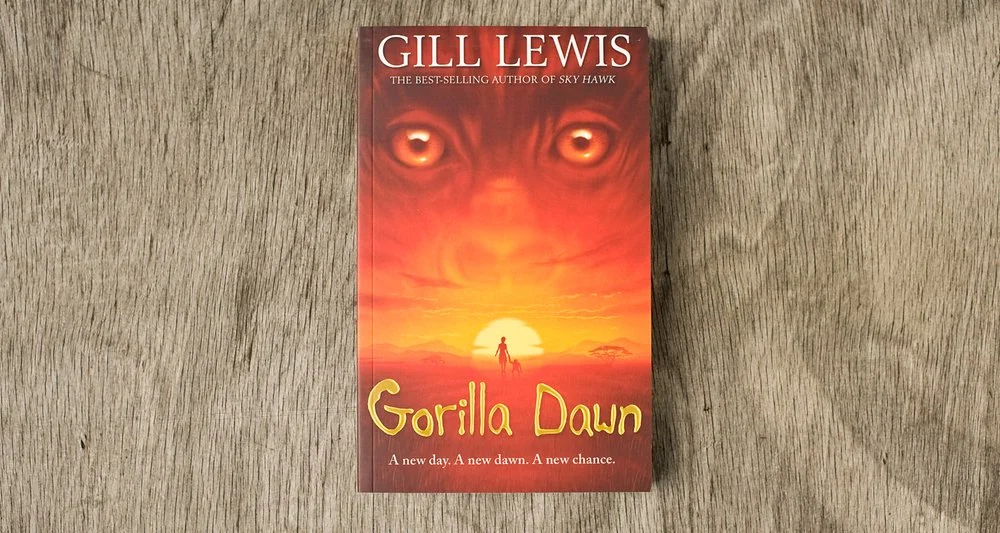
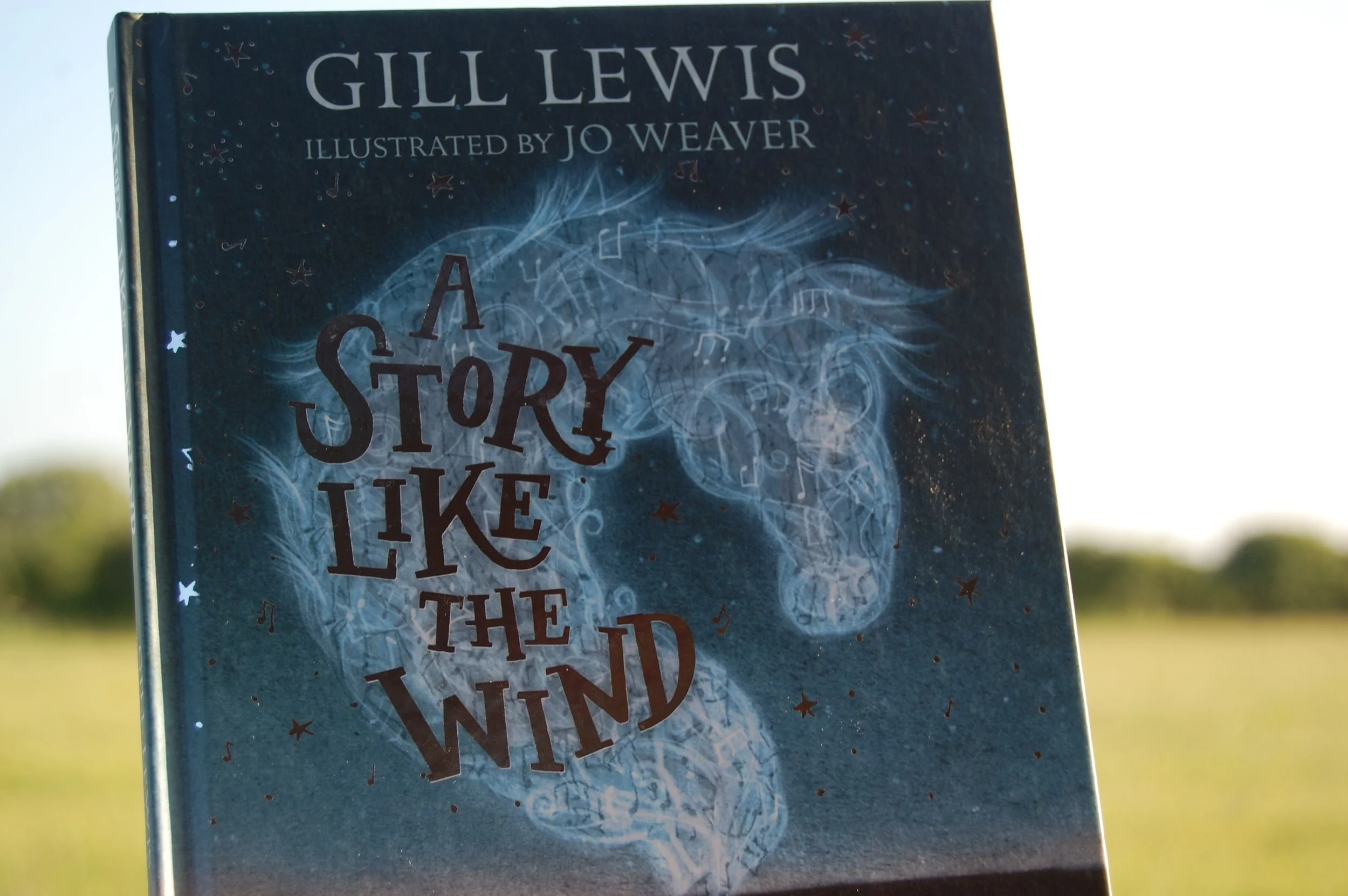
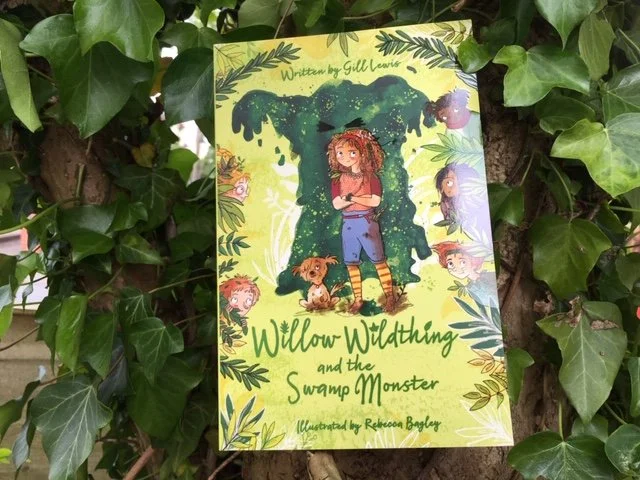
You can read my review of Gorilla Dawn here, A Wisp of Wisdom here, A Story Like the Wind here, Willow Wildthing here and Swan Song here.
Blog Tour: Finding Floss


Today, I am delighted to be taking part in the Blog Tour for ‘Finding Floss, the Colour Changing Cockerpoo!’. The charming colourful illustrations are the perfect accompaniment to the gentle rhyming text, which explores what to do if you should get lost. Parents will find this invaluable for instigating conversations about this in a non-worrying way- there is an advice page at the end of the story- making it an important addition to bookshelves. Floss’s antics are sure to amuse and entertain whilst children enjoy spotting where she is camouflaged in the pictures. The story also has a loving family, which happens to be a blended family, at its heart- my favourite illustration in the whole book is the one shown on the Blog Tour banner above of them all together!
Author, Cara Matheson, joins me on the Bookshelf today to answer some questions…
Can you tell us a bit about yourself?
The first story I remember writing was in verse and about cats. It began: “Cats are lovely, cats are nice, cats like chasing rats and mice.” I think I was 7. Despite this, I am very much a Dog Person. I can mostly be found curled up reading with my cockapoo, Scout, or following her a round Greenwich Park, near where I live.
In a former life, I was a journalist on various women’s magazines. I took a break from that to raise my now school-age daughters, and – after being immersed in the world of picture books – decided that I’d like to have a go myself.
Scout is a therapy dog. Can you tell us about that?
Currently, Scout and I visit a local primary school to read with the children, as part of the Pets As Therapy Read2Dogs scheme. We’re based in the library and small groups of children come to see us and read a book of their choice to Scout. Some children find this easier than reading to a person, as Scout is a non-judgemental (and very cuddly) listener. It’s especially helpful for children with certain educational needs, anxiety or shyness, not to mention those that are going through personal difficulties or speak English as a second language. Scout loves the attention (and extra treats!) she gets during these sessions and it’s wonderful for me to see how the children grow in confidence from her visits.
What made you want to write a children’s book?
Having children of my own opened up the world of picture books to me, starting with Julia Donaldson’s Superworm – the first book I read to my eldest daughter. I’ve enjoyed seeing how much my children benefitted from these stories, which have provided lots of bedtime laughs, opened up interesting conversations and sometimes even helped them process difficult emotions or experiences. I suppose I just wanted to create the sort of book that they would enjoy.
What inspired the story and the characters?
Well, Floss is inspired by my dog, Scout! The other characters are loosely based on my own family. I’m from a diverse background (Irish, English, Chinese and Iranian…and more) and have also grown up in a blended family after my parents split up. I wanted Finding Floss to reflect my ‘normal’ and show it in a positive way. Finally, I think a lot of parents can recall a scary time when their children were lost (it’s only happened briefly for me, but each time my heart pretty much stopped) and I wanted to help children and their grown-ups have that all-important discussion about what to do, in a gentle, non-threatening way.
How did you find the publishing process? How did it feel to hold your finished book in your hands?
In a nutshell: A whirlwind, a wonderfully creative group effort, and a lesson in immense patience at times (publishing lead times are loooong) before being suddenly hurled full-speed towards publication day! When I finally received the finished book I was simply giddy with excitement and in a state of disbelief. I’d been writing for so long – over a decade now – I almost couldn’t believe it had finally happened for me.
What do you think of the illustrations?
Mirna did an incredible job, especially with making Floss such a cute and endearing dog. Floss’s family are also perfectly rendered and the little girl (her name is Annie, though this isn’t mentioned in the story) is the sort of child I love to see in picture books: quirky, unique - and a glasses wearer. I also love the colours Mirna used and all the sweet little details she included. I honestly can’t think of a better illustrator for the book. Oh, and the endpapers are just fabulous!
What do you hope readers will take from the book?
I hope young readers will feel more confident about coping, if ever they find themselves lost. Most importantly, though, I want them to enjoy the story and perhaps even feel inspired to write their own.
Are you working on anything now?
I have lots more picture books up my sleeve, at various stages of completion – including a second Floss book. Writing in verse is a joy, but I’d like to have some of my prose stories published too. These tend to be on the irreverent, slightly random side, like Don’t Let the Pigeon Drive the Bus, which I think children respond really well to.
Finding Floss: The Colour-changing Cockapoo!
Cara Matheson, illustrated by Mirna Imamovic
published by Owlet Press, £7.99 paperback, out now.
Find Cara on Instagram @cara_matheson_writer and Twitter @cara_writer
Thank you so much to Cara for joining me today. Make sure you follow the tour to find out more about this lovely book. You can find out more about publishers, Owlet Press, here www.owletpress.com
Blog Tour: The Time Tider
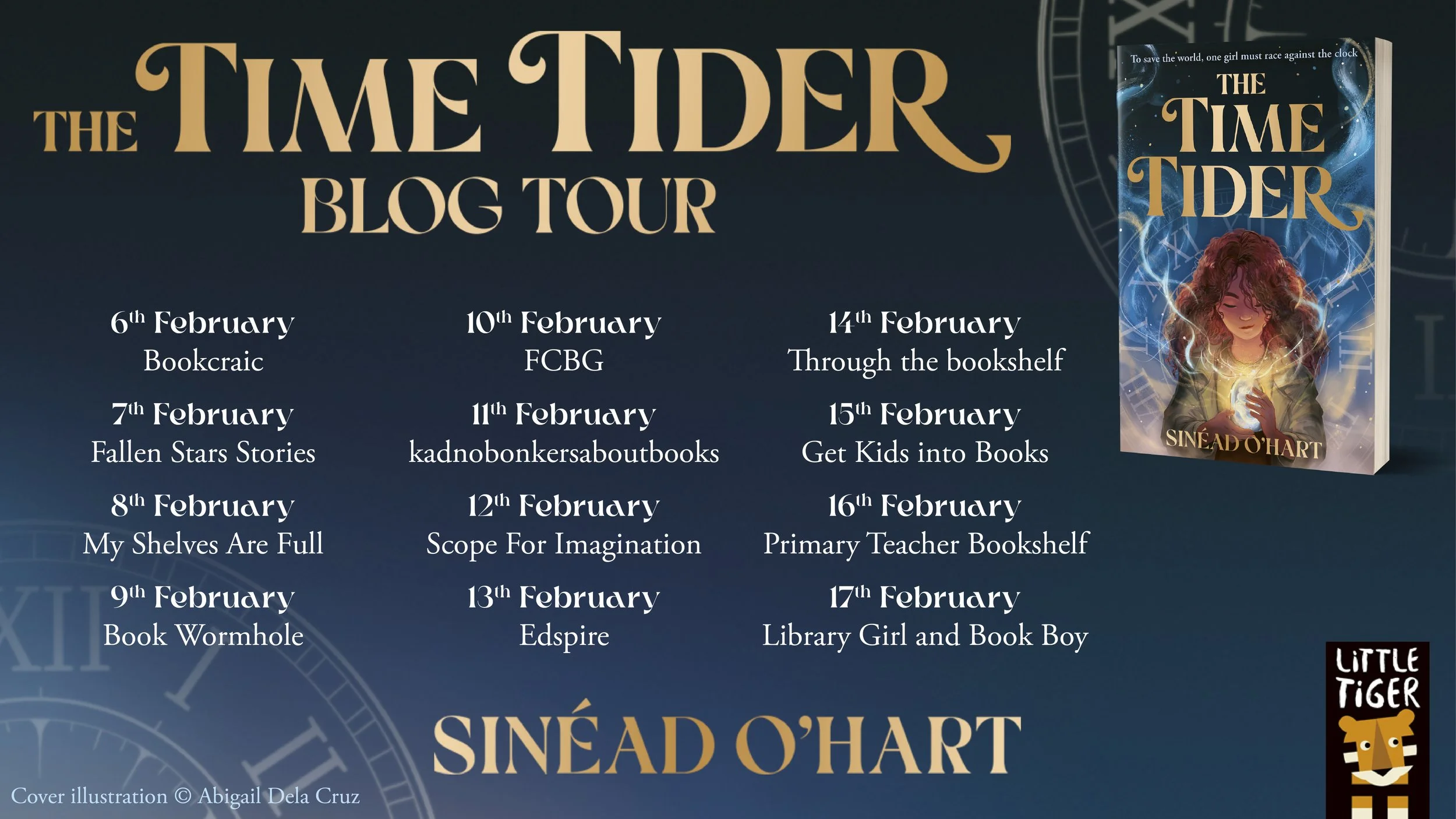
I am beyond delighted to be taking part in the Blog Tour for ‘The Time Tider’ by Sinead O’Hart. I have loved each of Sinead’s books so far for very different reasons, but this latest one really is something special. It offers mystery, adventure and peril whilst challenging the reader to wonder what they would do if they were in Mara’s shoes. Completely compelling, it is an irresistible story- one to return to again and again!
For this stop on the Blog Tour, Sinead shares this fascinating piece about the History of Clocks and Timekeeping.
One of the most enjoyable parts about being an author is the research you sometimes get to do when you’re writing a book. Some books require more background work than others – some require none at all! – and others require loads. My new book, The Time Tider, was somewhere in the middle. It’s a book that’s sort-of about time travel, but which is more about asking questions around the morality of power and who gets to be in charge, and what to do when the people in charge get corrupted and start misusing the power and responsibility that was placed on their shoulders. It’s a book about loss and grief, too, and the importance of making the most of every second we have with our loved ones. And, of course, it’s a cracking adventure with lots of thrills and twists, and two of my favourite characters, Mara and Jan, a girl who lives on the road and a boy with secrets of his own, who have to work together to save not only themselves, but the fabric of Time itself.
In order to write The Time Tider I did some research into how human beings have thought about time for as long as we have historical records, and I learned about clocks and timekeeping and how time – and how it’s measured – can tell us loads about society and culture and structures of power. Of course, when you’re dealing with time as a concept in a book, you run afoul of pesky things like physics and relativity and time dilation and quarks and gravity and black holes… and sometimes, you can become bogged down in the fact that people much cleverer than yourself have spent entire careers trying to understand the way time works – and they still don’t have all the answers. I also read about the physics behind time (turning my brain into a pretzel in the process), but I was more interested in the history of how we’ve measured time – and mostly, what I learned was that time is a very complicated business, and I honestly have no clue how any of it keeps ticking along.
The first means of measuring time, in all likelihood, involved using shadows – because, of course, an object’s shadow changes position during the course of the day, as the sun moves through the sky. People have long noticed this, and used it as far back as the 3rd century BCE (Before the Christian Era – so, over two thousand years ago) to calculate the circumference of the Earth. This was done by a brilliant Greek mathematician named Eratosthenes. He used two gnomons (which are tall objects designed to cast a shadow, and can be used to tell the time as part of a sundial or shadow clock) placed in two different cities, and measured the difference in the angle of the shadows cast by the gnomons at midday. From that, and using the distance between the cities, he was able to work out not only how big the Earth is, but also its axial tilt (the angle of the Earth). At around the same time, during the First Punic War, the Romans took a sundial from Sicily and put it on display in Rome as the first public clock. The playwright Plautus complained about how the human body used to be the best clock – by which he meant he could tell when it was lunchtime by the grumbling of his tummy – and now people were using technology to tell time instead! This complaint has been made at several points in history (and it’s one of the inspirations behind The Time Tider itself).
In Athens, in Greece, there’s an amazing place called the Tower of the Winds, which might date from around the 2nd century BCE. It has shadow clocks (sundials), a wind vane, and a water clock – so it’s like the world’s first meteorological station. Water clocks were a way to measure time through the precise dripping of water through a carefully bored hole in one vessel, which fell into a second, lower, vessel marked with the hours. These clocks were made with great skill, so that the water filled at a predictable and accurate rate during the day, and that it took exactly the same length of time to fill each hour. (Well - more or less.) They were known as ‘klepsidras’, which means ‘water stealer’. In medieval China, we see candle clocks beginning to appear – these were candles which burned at a steady rate, reducing their height each hour so that a person could tell by looking at it what time it was. These sorts of clocks became widespread and were used in Anglo-Saxon England by King Alfred the Great, as well as by the great Mesopotamian inventor Ismail Al-Jazari (d.1206), who made a clock that played music every hour! In later medieval China there were fire clocks which worked by burning a stick of incense, and as the hours passed the burning stick would drop metal balls into a shallow plate placed beneath the clock. The clattering of the balls would alert people to the passing of the hours. Some of these clocks worked using fragrance, so that each hour had its own particular scent; as the incense burned, and the scent changed, the user would know that time had passed. Hourglasses – where sand flows at a known rate through a glass vessel, which is housed inside a wooden frame – were also widely used, but nobody is really sure where they were first invented. Certainly, they’ve been around since at least the eleventh century – a thousand years ago.
From the medieval period, about the thirteenth century, mechanical clocks begin to be invented. Bell towers (which were already ringing out the hours through someone ringing a physical bell) began to be mechanized, and the earliest clock tower with a face and hands comes from the 1380s, in Venice. There was one in Salisbury, in England, from around the same time. And here’s where our friend Plautus would have had a lot to complain about: it’s from this time that people begin to think about time in a different way to before, where time becomes something imposed upon people, and clocks begin to force a sort of order or structure on people’s days and lives, disrupting their personal time. The widespread appearance of public clock towers made people feel they had to be eating lunch when the clock struck one (rather than when they were hungry) and that they had to be at church when the clock struck ten, or that they had to be asleep when the clock struck eight. The phrase ‘time is money’ dates from around 1719, when ideas about time and productivity and work start to get intertwined – time was no longer something personal and private, but now your time belonged to your employer. It was also something precious, given by God, something you could waste (which was sinful), and in the late seventeenth century a writer named Richard Baxter wrote about wasting time as being the same thing as robbing from God himself.
In the nineteenth century, we begin to see time and time-zones becoming established and regularized, and one of the main reasons for this was so that accurate train timetables could be drawn up. Prior to this, each town and village would have had its own time! So, GMT (Greenwich Mean Time, which we still use today, and which regularizes what time it is in Britain, Ireland, and lots of other countries) became the primary way in which we map time-zones around the world. Nowadays, we use quartz watches (quartz vibrates at a set rate, and can be successfully used to calibrate clocks) or atomic clocks (which work similarly – using atoms which vibrate at a set rate to power the most accurate clocks humanity has yet invented) to measure time on land, on sea, and even in space – but sometimes I wonder, even now, do we really understand how time works? Maybe we never will!
Many thanks to Sinead for joining me on the Bookshelf today and sharing this piece. I cannot recommend ‘The Time Tider’ highly enough and know that it is a book which teachers will enjoy introducing their children to- it would work brilliantly as a Guided Reading text! Thanks to Little Tiger for inviting me to be part of this tour- and make sure you check out some of the previous posts as well as the three remaining days ahead.
The Time Tider Sinead O’Hart
Little Tiger ISBN: 978-1788953306
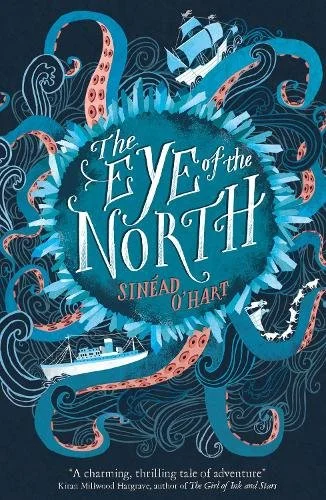
You can read my review of ‘The Eye of the North’ here.