Reviews
There are so many incredible books available at the moment that it is impossible to read them all, no matter how hard I try! Here are my thoughts about some of the books I have read and how I think they could be used in school as well as Q and A sessions with authors and illustrators.
Serpent of the Sands
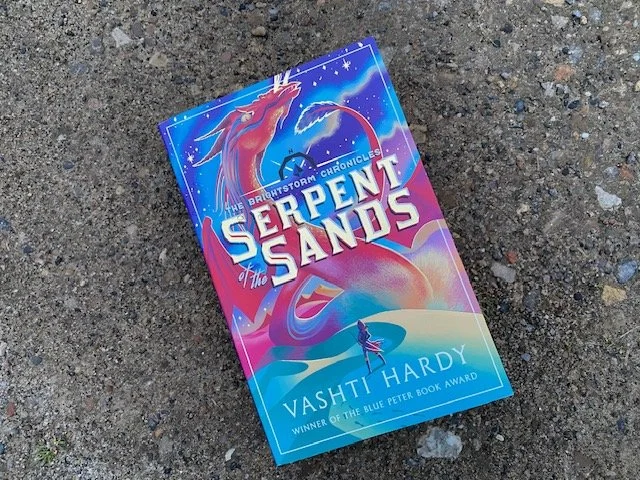
Gan- Princess Ganzorig- has a real taste for adventure and when one of her beloved uncles, King Temur, falls dangerously ill, she sets off in her sky-ship, the Sky-archer, with Slink, a sapient gerbil who has taken a fancy to her and Thorn, a boy who’s escaped from the slums of Lontown in search of a new life. She is intent on finding a cure, a plant said to be guarded by a powerful sapient, the Serpent of the Sands, although she fears this might only be a children’s story. However, as she and her companions travel to incredible places, treachery is at hand and their journey is fraught with many perils- and secrets.
‘Brightstorm’ is one of my all-time favourite books to read to a class. Not only does it offer certain parallels to Shackleton’s journey, making it an excellent accompaniment to learning about explorers, it is wonderful to read aloud, with rich descriptions, relatable characters and plenty of action and adventure. ‘Serpent of the Sands’ is the fourth of ‘The Brightstorm Chronicles’ and, I am delighted to say, maintains the high standard set by the first!
Gan is a wonderful character. Her impetuous nature, courage and kind heart are a winning combination. Thorn is a very different personality, balancing her impulsiveness, but coming up trumps when needed. Slink is bursting with character- sure to be a firm favourite with young readers! – and the other sapients they meet along the way are also well developed characters.
Vashti’s world building is second to none and once again, the reader is swept from location to location, each vividly brought to life and a perfect part of this world. A little map at the front of the book means that readers can plot Gan’s journey across Nadvaaryn and communications between Gan and the Brightstorm twins mean that there is surely more to come from this wonderful series of stories.
An excellent read from an excellent author!
Serpent of the Sands Vashti Hardy
Scholastic ISBN: 978-0702312267
Fireblood: The First Flight
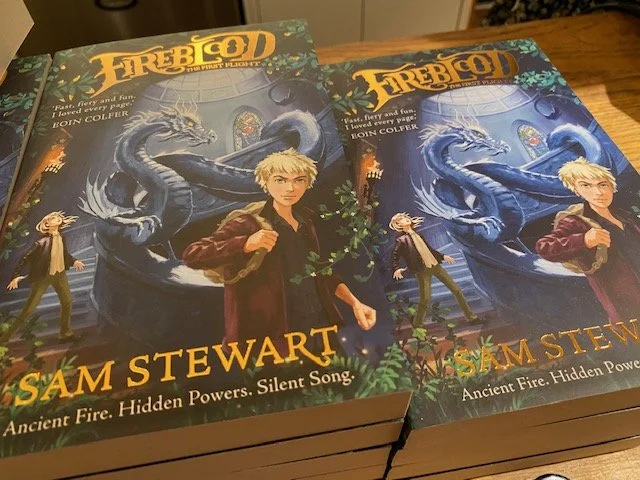
Dragons don’t exist. But they used to…
Discovering that the magic of dragons flows through your veins is frightening – and liberating! But with the powers of dragonkind comes a desperate quest: siblings Finn and Tula must travel to a hidden island fortress to help save their father – and the world they know; and discover the truth of their incredible fireblood heritage.
‘Fireblood’ is a compelling, absorbing read, full of magic and adventure. Finn and Tula have been sheltered from the world by their father, but when he disappears, they find themselves caught in a web of danger, magic and adventure as they embark on a quest to save their father, the world- and find their true selves.
The plot is brilliantly constructed with the reader being offered glimpses and hints which come together as some final revelations are made in a very satisfying conclusion to the book which still allows for more adventure to follow. Evocative descriptions vividly bring the settings to life as the children set off on their perilous journey to save their father, travelling from Bristol to the mysterious island of Portaldor and on to Iceland. Sam Stewart’s world building is second to none, full of creative, imaginative details.
Finn and Tula have a wonderful relationship, sharing a close bond of affection and understanding, developed during their unorthodox upbringing. They are courageous and determined and each flourishes over the course of the story as they gain both understanding of what they are and confidence in what they can be. Errol, who they meet on Portaldor, has an affinity with all manner of creatures and is a staunch and loyal friend whilst Charlie, who they also meet on the island, is brooding and full of anger for reasons which emerge later in the story.
Sam Stewart also draws on myths and legends with appearances from St George and Patrick, and creatures like griffins and wyrms. Welsh is also used in the book, this ancient language adding to the feeling of magic and mystery. ‘Fireblood’ is a most excellent adventure- can’t wait to find out what happens next!
Fireblood: The First Flight Sam Stewart
Firefly Press ISBN: 978-1915444196
Fireblood Launch in Bath

It was a very wet and windy evening as I set off for Waterstones in Bath to celebrate the launch event for ‘Fireblood’, a fantastic new story by Sam Stewart. The warmth of welcome more than made up for the awful weather and soon a large crowd had gathered, all keen to hear from Sam and find out more about her book!

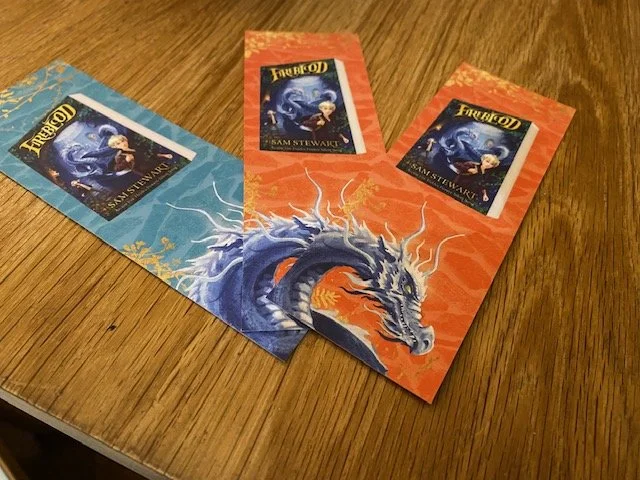
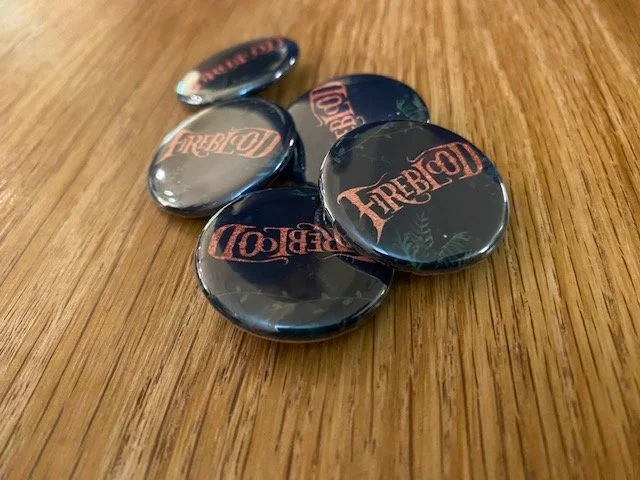
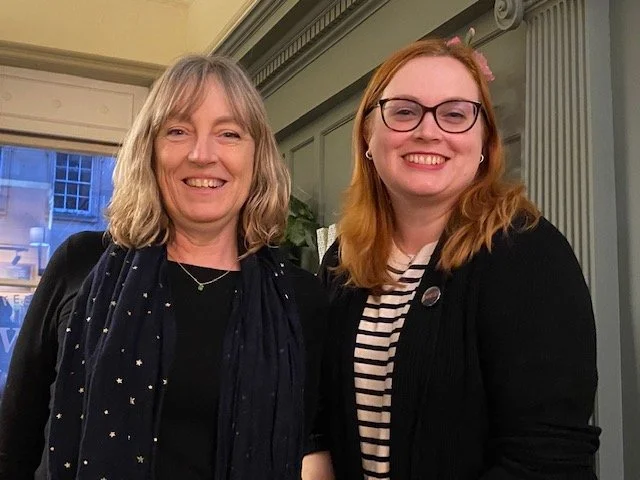
Penny and Karen from Firefly Press made sure the evening flowed smoothly and their enthusiasm for, and belief in, ‘Fireblood’ was infectious. Firefly was founded in 2013 (how can it have been that long?!) and have gone from strength to strength, winning award after award, and publishing a wonderful catalogue of books- such as ‘Fireblood’. Once Penny had made her introduction, Sam and Karen settled down for a brief chat about the book with before Sam gave a reading. And what a reading!

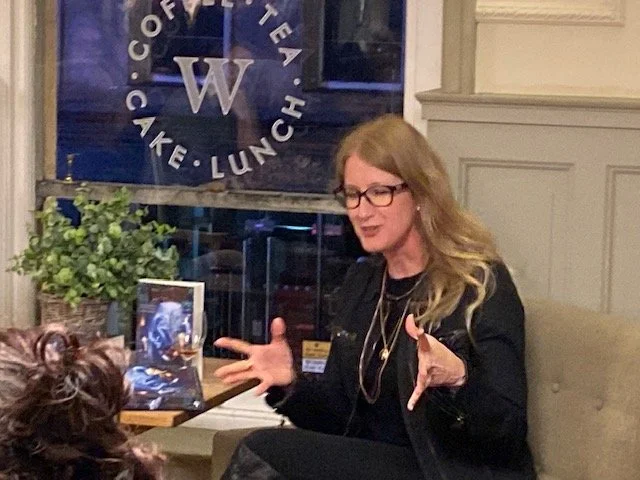
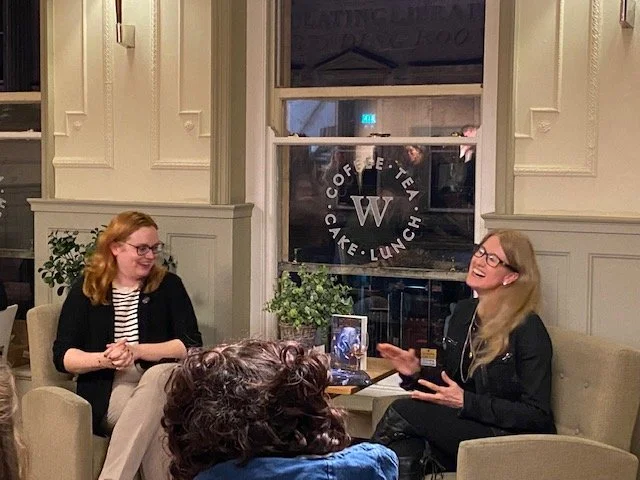
There’s something very special about hearing an author read their own work and Sam is one of those who performs as much as reads, keeping the audience hanging on her every word! No wonder there was such a long signing queue!
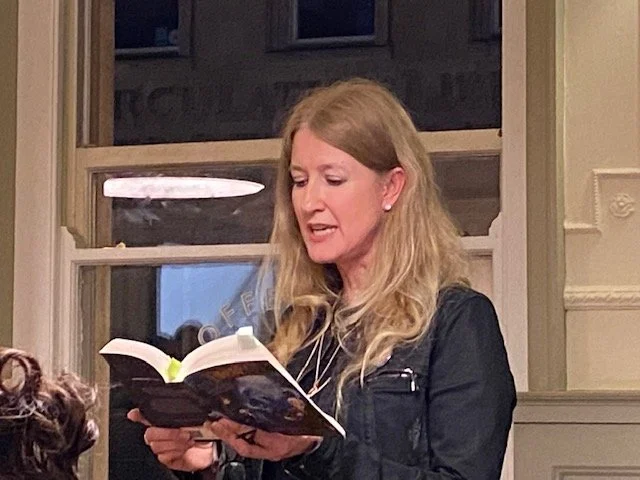
‘Fireblood’ is a great read- my review will follow soon- and it was a lovely event with a very warm, friendly, book-ish crowd. Many thanks to Sam and the Firefly Press team for inviting me!
Fireblood Sam Stewart
Firefly Press ISBN: 9781915444196
Blog Tour: The Time Tider

I am beyond delighted to be taking part in the Blog Tour for ‘The Time Tider’ by Sinead O’Hart. I have loved each of Sinead’s books so far for very different reasons, but this latest one really is something special. It offers mystery, adventure and peril whilst challenging the reader to wonder what they would do if they were in Mara’s shoes. Completely compelling, it is an irresistible story- one to return to again and again!
For this stop on the Blog Tour, Sinead shares this fascinating piece about the History of Clocks and Timekeeping.
One of the most enjoyable parts about being an author is the research you sometimes get to do when you’re writing a book. Some books require more background work than others – some require none at all! – and others require loads. My new book, The Time Tider, was somewhere in the middle. It’s a book that’s sort-of about time travel, but which is more about asking questions around the morality of power and who gets to be in charge, and what to do when the people in charge get corrupted and start misusing the power and responsibility that was placed on their shoulders. It’s a book about loss and grief, too, and the importance of making the most of every second we have with our loved ones. And, of course, it’s a cracking adventure with lots of thrills and twists, and two of my favourite characters, Mara and Jan, a girl who lives on the road and a boy with secrets of his own, who have to work together to save not only themselves, but the fabric of Time itself.
In order to write The Time Tider I did some research into how human beings have thought about time for as long as we have historical records, and I learned about clocks and timekeeping and how time – and how it’s measured – can tell us loads about society and culture and structures of power. Of course, when you’re dealing with time as a concept in a book, you run afoul of pesky things like physics and relativity and time dilation and quarks and gravity and black holes… and sometimes, you can become bogged down in the fact that people much cleverer than yourself have spent entire careers trying to understand the way time works – and they still don’t have all the answers. I also read about the physics behind time (turning my brain into a pretzel in the process), but I was more interested in the history of how we’ve measured time – and mostly, what I learned was that time is a very complicated business, and I honestly have no clue how any of it keeps ticking along.
The first means of measuring time, in all likelihood, involved using shadows – because, of course, an object’s shadow changes position during the course of the day, as the sun moves through the sky. People have long noticed this, and used it as far back as the 3rd century BCE (Before the Christian Era – so, over two thousand years ago) to calculate the circumference of the Earth. This was done by a brilliant Greek mathematician named Eratosthenes. He used two gnomons (which are tall objects designed to cast a shadow, and can be used to tell the time as part of a sundial or shadow clock) placed in two different cities, and measured the difference in the angle of the shadows cast by the gnomons at midday. From that, and using the distance between the cities, he was able to work out not only how big the Earth is, but also its axial tilt (the angle of the Earth). At around the same time, during the First Punic War, the Romans took a sundial from Sicily and put it on display in Rome as the first public clock. The playwright Plautus complained about how the human body used to be the best clock – by which he meant he could tell when it was lunchtime by the grumbling of his tummy – and now people were using technology to tell time instead! This complaint has been made at several points in history (and it’s one of the inspirations behind The Time Tider itself).
In Athens, in Greece, there’s an amazing place called the Tower of the Winds, which might date from around the 2nd century BCE. It has shadow clocks (sundials), a wind vane, and a water clock – so it’s like the world’s first meteorological station. Water clocks were a way to measure time through the precise dripping of water through a carefully bored hole in one vessel, which fell into a second, lower, vessel marked with the hours. These clocks were made with great skill, so that the water filled at a predictable and accurate rate during the day, and that it took exactly the same length of time to fill each hour. (Well - more or less.) They were known as ‘klepsidras’, which means ‘water stealer’. In medieval China, we see candle clocks beginning to appear – these were candles which burned at a steady rate, reducing their height each hour so that a person could tell by looking at it what time it was. These sorts of clocks became widespread and were used in Anglo-Saxon England by King Alfred the Great, as well as by the great Mesopotamian inventor Ismail Al-Jazari (d.1206), who made a clock that played music every hour! In later medieval China there were fire clocks which worked by burning a stick of incense, and as the hours passed the burning stick would drop metal balls into a shallow plate placed beneath the clock. The clattering of the balls would alert people to the passing of the hours. Some of these clocks worked using fragrance, so that each hour had its own particular scent; as the incense burned, and the scent changed, the user would know that time had passed. Hourglasses – where sand flows at a known rate through a glass vessel, which is housed inside a wooden frame – were also widely used, but nobody is really sure where they were first invented. Certainly, they’ve been around since at least the eleventh century – a thousand years ago.
From the medieval period, about the thirteenth century, mechanical clocks begin to be invented. Bell towers (which were already ringing out the hours through someone ringing a physical bell) began to be mechanized, and the earliest clock tower with a face and hands comes from the 1380s, in Venice. There was one in Salisbury, in England, from around the same time. And here’s where our friend Plautus would have had a lot to complain about: it’s from this time that people begin to think about time in a different way to before, where time becomes something imposed upon people, and clocks begin to force a sort of order or structure on people’s days and lives, disrupting their personal time. The widespread appearance of public clock towers made people feel they had to be eating lunch when the clock struck one (rather than when they were hungry) and that they had to be at church when the clock struck ten, or that they had to be asleep when the clock struck eight. The phrase ‘time is money’ dates from around 1719, when ideas about time and productivity and work start to get intertwined – time was no longer something personal and private, but now your time belonged to your employer. It was also something precious, given by God, something you could waste (which was sinful), and in the late seventeenth century a writer named Richard Baxter wrote about wasting time as being the same thing as robbing from God himself.
In the nineteenth century, we begin to see time and time-zones becoming established and regularized, and one of the main reasons for this was so that accurate train timetables could be drawn up. Prior to this, each town and village would have had its own time! So, GMT (Greenwich Mean Time, which we still use today, and which regularizes what time it is in Britain, Ireland, and lots of other countries) became the primary way in which we map time-zones around the world. Nowadays, we use quartz watches (quartz vibrates at a set rate, and can be successfully used to calibrate clocks) or atomic clocks (which work similarly – using atoms which vibrate at a set rate to power the most accurate clocks humanity has yet invented) to measure time on land, on sea, and even in space – but sometimes I wonder, even now, do we really understand how time works? Maybe we never will!
Many thanks to Sinead for joining me on the Bookshelf today and sharing this piece. I cannot recommend ‘The Time Tider’ highly enough and know that it is a book which teachers will enjoy introducing their children to- it would work brilliantly as a Guided Reading text! Thanks to Little Tiger for inviting me to be part of this tour- and make sure you check out some of the previous posts as well as the three remaining days ahead.
The Time Tider Sinead O’Hart
Little Tiger ISBN: 978-1788953306
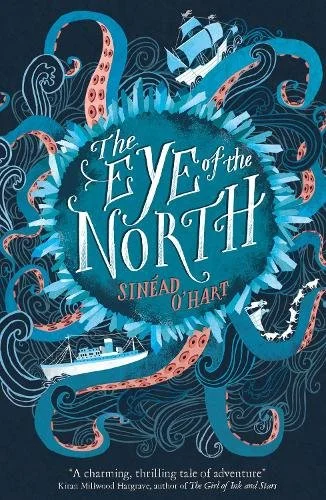
You can read my review of ‘The Eye of the North’ here.
The Treekeepers
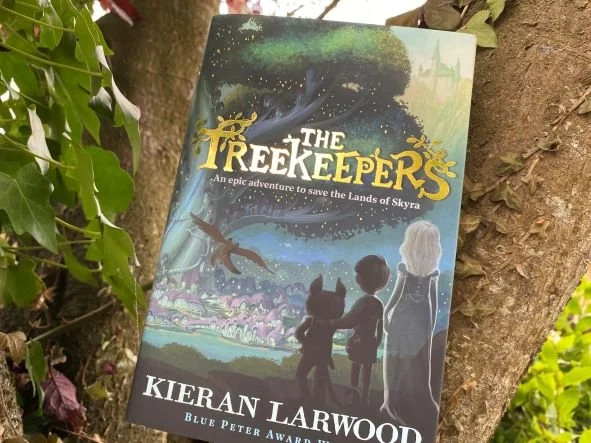
Home to thousands, the city of Arborven owes its existence to the Undrentree. A well as the buildings covering the tree, set in rings around it are the city circles where the different layers of society live- the farther away from the tree, the less magic the inhabitants have. As a shapewalker, Liska, training to be a warrior, lives in the noon Fort, nestled on the northern wall. When she overhears a plan which threatens the city, Liska cannot find anyone who will believe her and so with Lug, a vermispex who can summon and control worms, Elowen, a ghost-girl, and Fishbone, a feisty kittimew, she sets off on an epic, perilous adventure to save her home.
When it comes to creating fantasy worlds, there is none better than Kieran Larwood. The richness of his imagination, the evocative details of his world building, the charm of his flawed but endearing characters – all combine to create the most breath-taking, engaging reads which leave the reader longing to return to the world of the book they have just finished. ‘The Treekeepers’ is just glorious- and (in my opinion) even better than ‘The Five Realms’ stories.
Friendship is at the heart of the story, showing the importance of valuing others and appreciating them for what and who they are. At the beginning of the story, Liska is determined to earn stripes- marks of gleaming colour for great deeds of courage and heroism- yet by the end of the story, realises that such marks of honour are not necessary to show what sort of person someone is. As she has come to know her companions, her appreciation of them- their kindness, their courage, their loyalty- has grown as has she in character. Both she and Lug are, at heart, very ‘normal’ children whose hopes and dreams, whose insecurities and vulnerabilities readers will identify and empathise with.
Beautifully written, with almost poetic descriptions at times, the story offers a rich vocabulary, including Larwood’s own ingenious namings- vermispex not doubt drawing on the Latin ‘vermis’ for worm, kittimew (my favourite), Arborven from a place sheltered by trees to name a few- as well as a sprinkling of mythical creatures.
It is impossible to review this book without commenting on the incredible presentation of the book as an object of beauty. The dust jacket illustrated by Fernando López Juárez is tempting enough, but peel this off, and there is a map of Larwood’s world embossed in gold on the hard cover of the book. Chris Wormell is also responsible for the lovely chapter heading illustrations.
Simply stunning!
The Treekeepers Kieran Larwood, illustrated by Chris Wormell
cover by Fernando López Juárez
Faber ISBN: 978-0571364565
Originally reviewed for Reading Zone.
Mia and the Lightccasters
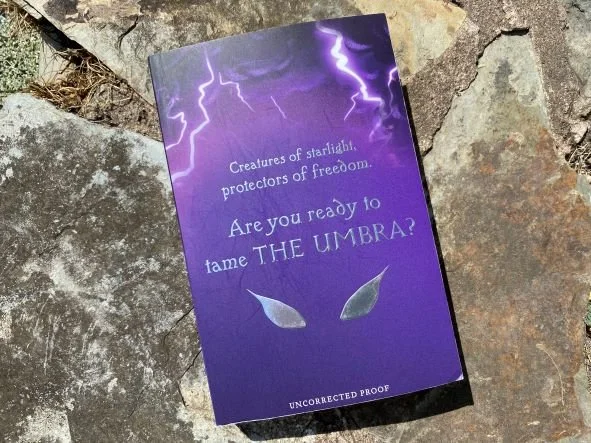
Beware of the shadows, the Reaper King is coming…
Being an umbra trainer was Mia’s dream until an encounter with a wild creature on the Nightmare Plains leaves her preferring to stay within the safety of the walls of Nubis where she lives, her confidence in tatters. When a surprise attack on the city leads to the capture of her parents and the other umbra tamers, Mia, her little brother, Lucas and friend, TJ must make their way to the City of Light to find help.
I loved this story. There is an energy and directness to the story telling which is instantly engaging and the plot merges various genres in a perfect mixture. I know so many children who are going to absolutely love this!
Mia is a fascinating character. The bond between her family is beautifully portrayed and her relationship with little brother, Lucas, is full of love and tenderness- a real joy to see. Convinced she is not good enough or strong enough to achieve what is expected of her, Mia still faces every challenge thrown at her and comes back stronger and more determined than before. Readers will empathise with her feelings whilst admiring her kind and loyal nature as she refuses to give up on others.
There is much to love about Janelle McCurdy’s world building. Lunis, its cities, the Nightmare Plains, the umbra…the story is rich in description, allowing the reader to escape to each location as the action builds. The plot is well paced and builds to a satisfying conclusion which hints at more to come.
Full page illustrations are scattered throughout the story, adding to its appeal. Sure to be a huge hit with children in UKS2, ‘Mia and the Lightcasters’ is one to move to the top of the reading pile!
Mia and the Lightcasters
Janelle McCurdy, illustrated by Ana Latese
Faber ISBN: 978-0571368433
The Light Hunters

Since a Monster killed his family, Lux Dowd lives with his grandfather in the town of Daven. Light Hunters used to battle these monsters, saving people until a terrible mistake turned them against Light and those who use it. However, Lux has a secret. He can wield Light and is being trained by his grandfather in secret. When his friend, Maya, is wounded in an attack, Lux uses the Light to heal her, exposing his secret and attracting the attention of a sinister stranger. Lux finds himself drawn into the world of the Light Hunters where he becomes a member of Squad Juno and soon finds himself facing not only Monsters, but also those who would use his powers for evil.
Action packed and full of energy, ‘The Light Hunters’ is an excellent book. For me, it was a one sitting read as I found myself completely absorbed into the story and invested in Lux, hoping things would work out well for him!
Dan Walker’s world building is excellent. From the outset, the reader is aware of the threat posed by monsters and the existence of the mysterious Light Hunters who used to protect his town, but have since been rejected by the townspeople, gathering all the necessary details effortlessly as the story develops. Vivid descriptions bring the setting to life as Lux travels from his home to Dawnstar, the Light Hunters’ HQ and the pacey plot keeps the reader fully engaged as Lux discovers more about his light-wielding powers and with his new found friends in Squad Juno, rises to the challenges Monster hunting brings.
Friendship and family loyalty are at the heart of the story. Lux’s affection for his grandfather is very touching, adding some emotional moments amongst the action. ‘The Light Hunters’ makes an excellent read for those who love fantasy and I’m already looking forward to the next in the series!
The Light Hunters Dan Walker
UCLan Publishing ISBN: 978-1912979103
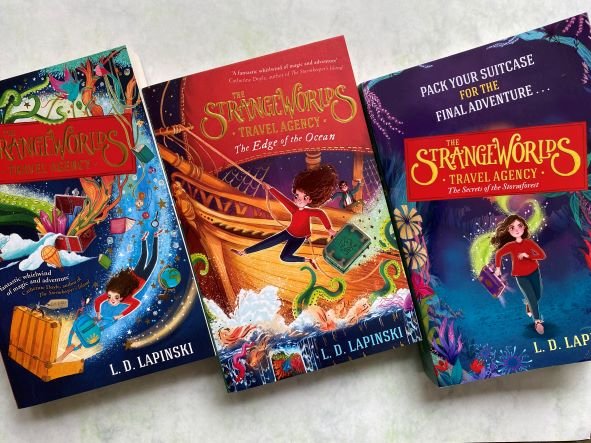
The Strangeworlds Travel Agency: The Secrets of the Stormforest
A belated happy birthday to L D Lapinski whose birthday was yesterday!
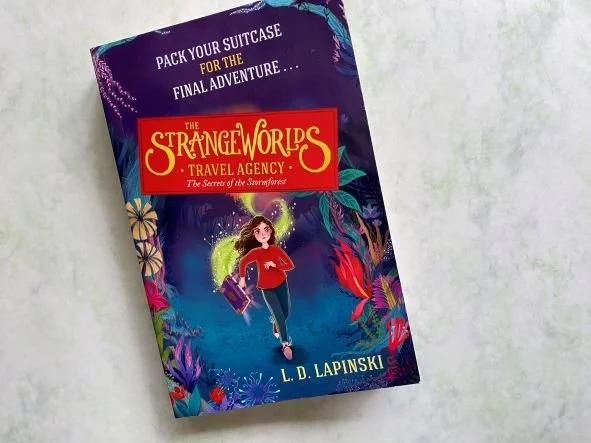
Jonathan and Flick discover that an organisation, not unlike The Strangeworld’s Society, known as ‘The Seren’ are threatening the multiverse, destroying worlds by draining their magic. Although they had been trapped in a world they called Serentegra, they are now free once more and are hunting the suitcase that contains the end of the multiverse. Flick, Jonathan and their friends must find this case first and uncover the secrets of The Strangeworlds Society before it’s too late.
‘The Secrets of the Stormforest’ is the stunning conclusion to the incredible ‘Strangeworlds’ trilogy which has captivated so many children (and adults!). It is always tricky to review the finale to a series for fear of giving things away and spoiling the story for other readers, but I will try!
Throughout the series, each place the children visit is vividly described with a richness of detail which makes it a joy to read. One of the places they journey to in this book is Pendularbor which, with its three suns and sentient plants, is incredibly imagined.
Flick’s strength of character and determination really shine through in this story as she courageously faces events and possibilities which threaten everything she knows and loves. She really begins to believe in herself and what she can achieve, but is also touched by deep grief and regret as events unfold. The supportive love of family and friends once again shines through in this book as her quest is full of action, peril and uncertainty. The Seren are decidedly sinister and the children’s encounters with them are chilling.
It is always sad to reach the conclusion of a series which you have really enjoyed, but ‘The Secrets of the Stormforest’ brings everything to a very satisfying conclusion, leaving the reader full of hope and happiness for Flick and her friends.
An action-packed, brilliantly crafted read, ‘The Secrets of the Stormforest’ is not to be missed!
The Secrets of the Stormforest L D Lapinski
Orion ISBN: 978-1510111035
You can read my reviews of the first two books in this series here.