Reviews
There are so many incredible books available at the moment that it is impossible to read them all, no matter how hard I try! Here are my thoughts about some of the books I have read and how I think they could be used in school as well as Q and A sessions with authors and illustrators.
Pause for Poetry: Courage in a Poem
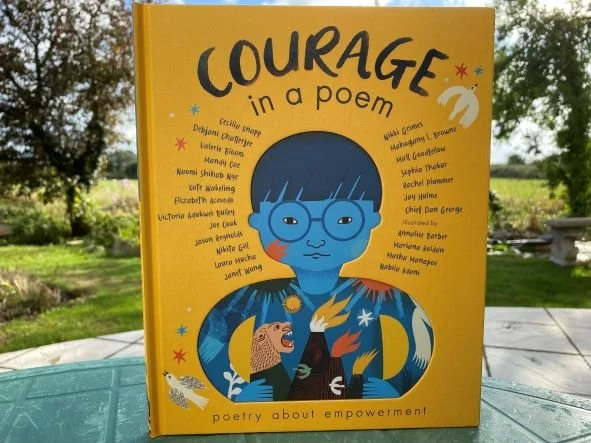
It’s no secret that I love poetry and relish savouring a new collection. ‘Courage in a Poem’ is not only a beautifully presented book, but also offers words of wisdom, comfort and hope. In the introduction, the poems are described as ‘little parcels of empowerment’ and it is easy to see why as they offer such a range of empathetic and inspiring words.
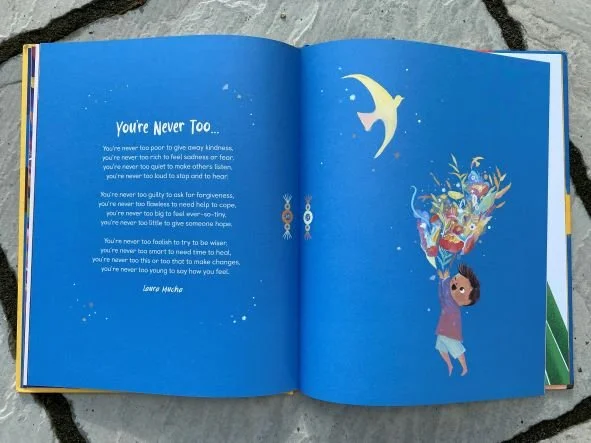
In ‘Your Epic Self’, Kate Wakeling fills the reader with positivity, reminding them that although this ‘epic self’ might not surface every day, it is always there, just beneath the surface. The words of Chief Dan George sing of all the beauty of life which made his heart soar, reminding us to look at the world around us and find inspiration and joy in nature.
‘Afro Hair Haiku’ is formed from a series of haiku, exploring the beauty of Afro hair and the importance of letting ‘it grow the way it wants to grow: confident again.’ whilst in ‘The Cancan’, Mandy Coe celebrates the amazing feelings of empowerment and freedom which dancing gives. Each poem needs dwelling on and lingering over- and each could be used with classes as the focus for discussion, to enhance a lesson or as a thought to end a day.
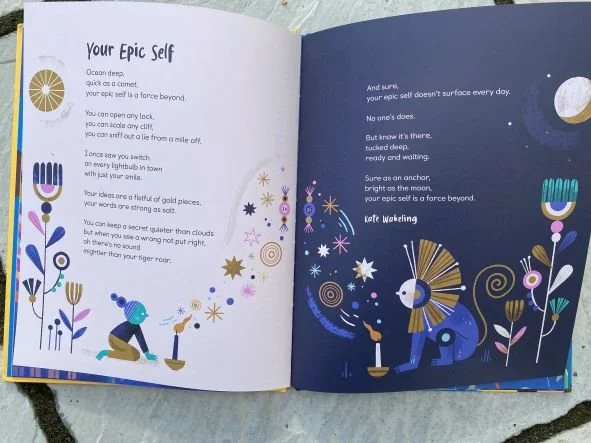
There are also poems which would work well as models to inspire children’s own writing. For example, Laura Mucha’s ‘You’re Never Too…’ is an absolute gift for adding additional lines to either individually or as a class, encouraging children to think about both Laura’s ideas and those that they are building.
Containing work from a wonderful range of poets, I am delighted to see that Little Tiger have chosen to keep the work rooted in the places they were written by preserving the subtle differences between British and American English, allowing children to appreciate how language reflects culture, place and time.
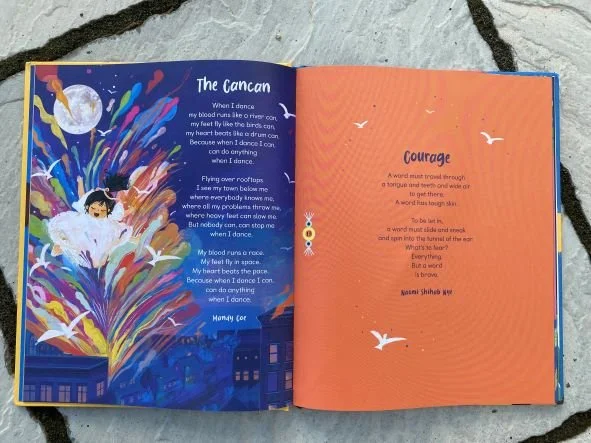
Bursting with vibrant artwork from four talented and creative illustrators, every page is a joy to look at, with colour and energy framing the words. This is a collection which will resonate with many, offering words of comfort, wisdom and courage.
Courage in a Poem: Poems About Empowerment
Cecilia Knapp, Debjani Chatterjee, Valerie Bloom, Mandy Coe, Naomi Shihab Nye, Kate Wakeling, Elizabeth Acevedo, Victoria Adukwei Bulley, Joe Cook, Jason Reynolds, Nikita Gill, Laura Mucha, Janet Wong, Nikki Grimes, Mahogany L. Browne, Matt Goodfellow, Sophia Thakur, Rachel Plummer, Jay Hulme and Chief Dan George
illustrated by Annalise Barber, Mariana Roldan, Masha Manapov and Nabila Adani
Little Tiger ISBN: 978-1838914394
The Blue-Footed Booby
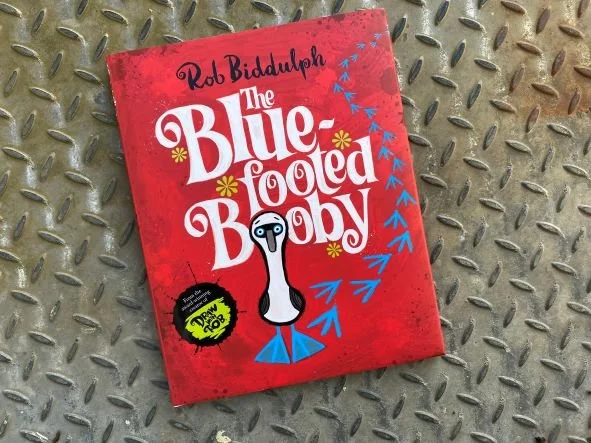
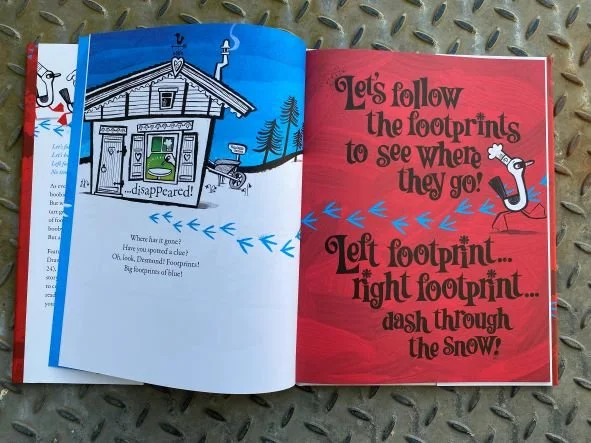
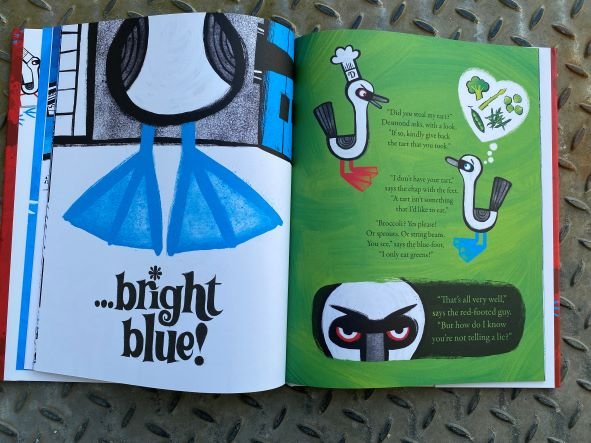
A mystery is afoot! Desmond and his fellow red-footed boobies have been following their passion and baking up lots of treats. However, when Desmond’s frangipane tart disappears, he sets off, following a trail of mysterious blue footprints and is soon joined by the other boobies. When the footprints lead to a blue door, Desmond, Maureen, Rod and the others come face to face with a booby with BLUE feet. Although this booby protests his innocence and claims he only eats greens, Des is suspicious until he spots a trail of tart crumbs. Everyone hurriedly follows this new clue which leads to the discovery of the real culprit. Mystery solved…or is it?
Every book by Rob Biddulph is guaranteed to be an absolute joy- and this is no exception! The title alone is sure to be met with giggles galore despite the inclusion of a definition of the word on the opening end paper- which might encourage children to find out more about these charming birds with brightly coloured tootsies. Desmond and his friends are a loveable bunch with their oversized red feet and each sporting their own style of baker’s hat. There is so much to notice and enjoy in Rob’s wonderful illustrations, including a list of things to find which you can tick off at the front of the book. And one of them is quite tricky to locate (I had to enlist the support of my husband)..! Indeed, eagle eyed children (and adults) may well notice a hidden clue to help solve the final mystery as the story develops!
The wonderful illustrations are accompanied by bouncy rhyme with plenty of interesting words to investigate and enjoy! Sections of the text are perfect for joining in with…in fact, it’s almost impossible not to! I can almost hear classes of children having the best time learning left and right without even meaning to as their quick-thinking teacher encourages them to act out ‘Left footprint…right footprint…’ Desmond learns that he should not jump to conclusions about others and yet, there is a further surprise to end this delightfully silly tale. There is even a QR code included which will lead you to an episode of ‘Draw with Rob’, which shows the reader what a real blue-footed booby looks like as well as teaching how to draw one.
Another triumph from Mr Biddulph! Make sure you take off the dust jacket so you can enjoy the illustrations beneath.
The Blue-Footed Booby Rob Biddulph
Harper Collins ISBN: 978-0008413392
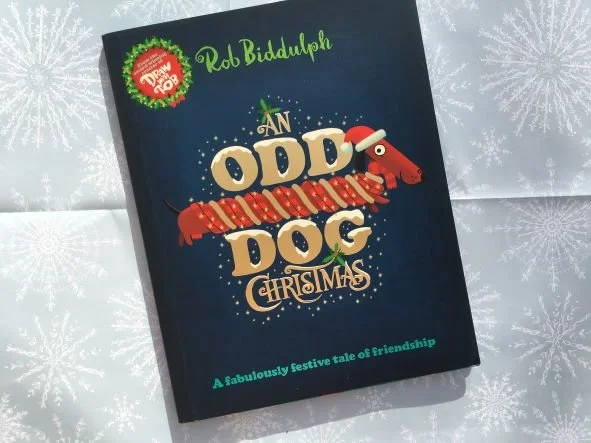
You can read my review of ‘An Odd Dog Christmas’ here.
Meet Frances Durkin
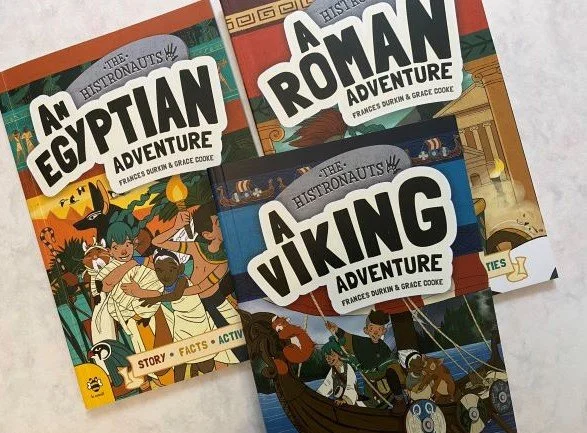
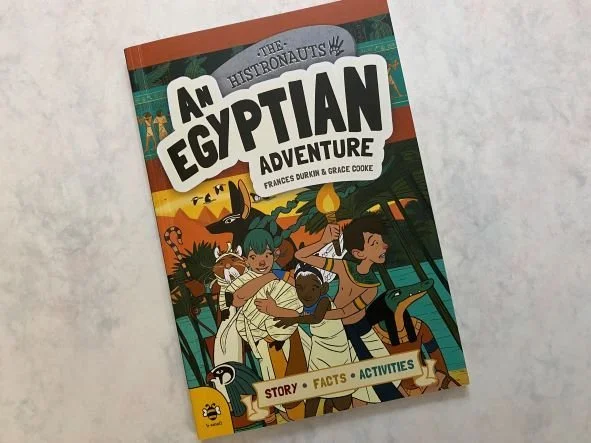
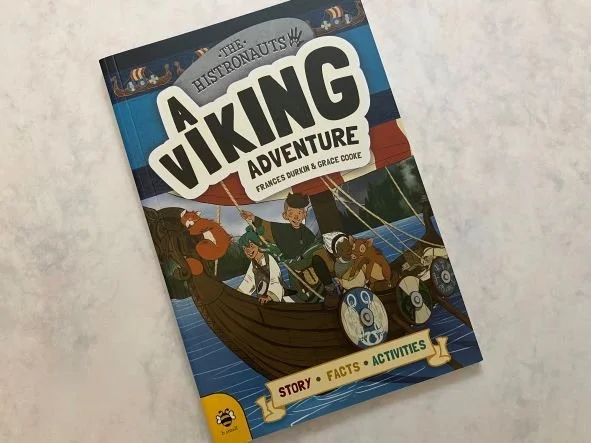
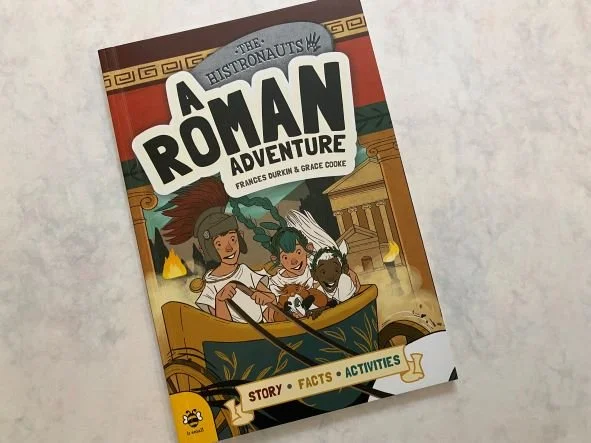
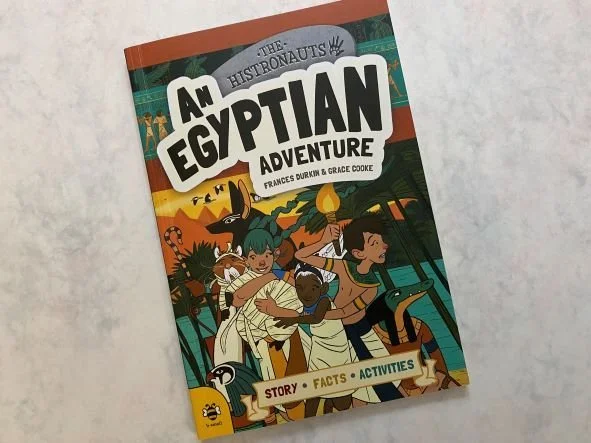
Today, it is a joy to welcome Frances Durkin for a chat! I first met Frankie when ‘The Histronauts An Egyptian Adventure’ won the NSTBA Information Category in 2018. This series of history based adventures quickly became favourites in school, combining adventure, history and a graphic novel approach and making the adventures both accessible and enjoyable. There are four books in this series- apologies that ‘A Greek Adventure’ is missing from the photos (I have lent it someone)- each supporting an area of the curriculum. Many thanks to Frankie for answering my questions.
1. Your ‘Histronauts’ series make history accessible and fun, allowing children to enjoy the benefits of a great story with plenty of historical detail. Did you enjoy history lessons at school?
Thank you so much. We did set out to make the books as accessible as possible while conveying loads of information and being fun to read. I think it’s so important to nurture curiosity about the past at a young age. I really enjoyed history as a child, but I was home educated so I didn’t quite have the conventional school experience of history lessons. I was a voracious reader and I worked through so many books on different subjects. I also had the advantage of living in an area that was full of historical places to visit, and I think it was the sheer number of day trips that really made the greatest impact. York was always a favourite place to go and the smell of the Jorvik Viking Centre (if you know, you know) is really evocative even today. Grace (Cooke) and I visited it when we were researching our Histronauts book about the Vikings and it brought back so many childhood memories
I also used to develop obsessions with certain subjects and would devour as much as I could about that one thing. My first biggest passion was ancient Greece, so it was amazing to revisit something I once knew so well for the latest Histronauts book.
2. If time travel were possible, which period of history or which historical event would you most like to visit?
Oh, that’s such a good question! There are lots of events that I’ve written about that I would love to see with my own eyes. It would have made my PhD a lot easier if I could have just popped back to France in 1095 to see the crowd’s reaction to Pope Urban II announcing his idea for what we now call the First Crusade. And I would love to watch the craftsmanship that went into building somewhere like York Minster with its beautiful stonework and amazing stained-glass windows.
There are also lots of people I’d love to sit and chat with. Can you imagine sitting down with Marie Curie or Alan Turing and just asking them about their work when they had no idea about the impact that they would go on to have on the world?
But I would definitely only want to visit and not to live in the past. I love hot, running water and the internet far too much to stay.
3. If you could change one thing at any point in history, what would it be?
Eek! Where to start? I don’t know! Is it arrogant of me to want to try to do something that made an impact for the good? But I have no idea what I would choose. I could stop a war. But why just that war? Or save people from a catastrophe. But why that particular catastrophe? Or prevent global warming. But which one thing would do that? As a historian I only hope that I can share the information about the past that stops people from repeating the same terrible mistakes.
4. Grace Cooke illustrates the books wonderfully, bringing both characters and setting to life. How did you come to work together?
Isn’t she amazing?! I used to work with her sister and when I was creating some education resources and looking for an illustrator, she suddenly said ‘My sister can draw’. So, it was meant to be. And it’s always important to point out that we are co-creators of The Histronauts. Once we met and started sharing ideas, that first idea for education resources turned into The Histronauts books. That’s because of her amazing creativity. We make a great team and it’s a pleasure to work with her!
5. Richard III (I am a huge fan!) needs someone to write an excellent, child-friendly novel about him. Would you like to do this and if not Richard III, which historical figure would you choose to write a novel about?
That’s a very interesting question! And I would definitely read a novel about Richard III, but I don’t think I would be the right person to write it. I like to look for more unusual narratives and I think there’s so much room for looking at subjects outside of the monarchy or ruling classes of any particular time period. There will always be new information about, or new ways to interpret the histories of kings and queens, and there are amazing historians doing exactly that right now. But I want to share the forgotten or hidden stories that get lost when we focus on a handful of individuals.
6. What can we expect from you next? Are there more adventures for the Histronauts on the way or are you working on something else?
I have two new books out with b small in 2023 but I’m not sure if I can shout about them yet. You’ll know about it when I can. There is also talk of doing more with The Histronauts and I can’t wait to work with Grace again.
7. And lastly- and most importantly according to my niece- what is your favourite cake?
All the cake! Any cake! Actually, I’m not a particular fan of lemon drizzle. But one of the great advantages of being a historian is the wonderful range of tea shops in museums, so cake is always a very big part of my research trips.
Twitter: @HistoriaFrankie
Instagram: @historiannextdoor
Thanks very much, Frankie! I can’t wait to find out more about your new books- and I’m very excited to think that the Histronauts will be off on their adventures again!
You can read my review of The Histronauts: An Egyptian Adventure here.
Beyond the Frozen Horizon
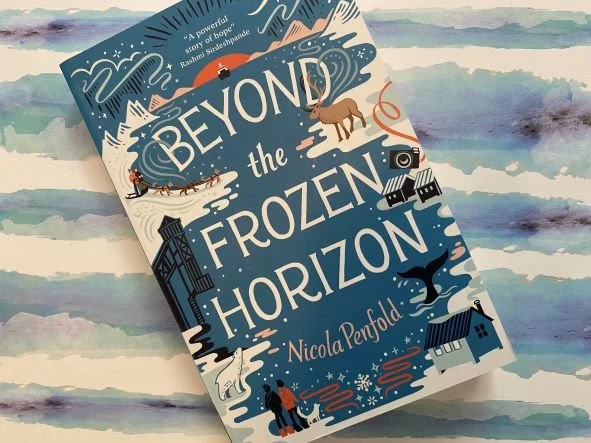
In 2030, the world leaders pledged a coordinated and unprecedented response to the Climate Crisis, introducing strict Climate Laws and establishing World Wilderness Zones, including the High Arctic. Rory’s mum is an environmental geologist whose new job with Greenlight, a company which claims to have developed new ways of ‘mining’ in the Arctic using bacteria, offers mother and daughter the chance of a lifetime opportunity to travel to Svalbard- and Rory the chance to escape the misery of school.
On arrival, instead of a ghost town, they find a tiny community still inhabiting Pyramiden, living in harmony with nature and its wildlife. Initially, Rory is treated with suspicion and shunned by the locals until she makes friends with MIkkal, and together, they uncover some disturbing truths about the Greenlight project.
Nicola Penfold has quickly become one of my favourite authors. Her writing is completely absorbing, superbly crafted and thought provoking- and I think ‘Beyond the Frozen Horizon’ is her best work yet.
The importance of caring for our world is at the absolute core of this book and yet nothing about it is ‘preachy’ or patronising. The respect and care shown for the natural world by Mikkal and his people stands in harsh contrast to the real actions and purpose of those in charge of the Greenlight project. Rory stands between these two camps- she longs to believe in the company her mother is working for and yet is forced to face the realities of what she is seeing, taking the reader on a thought-changing journey about climate crisis, human impact on the planet and the need for change.
Evocative descriptions of the stark, yet stunning Arctic environment create a dramatic backdrop to the story. The perils of this environment, the fragility of human existence amid the cold and creatures which make it their home, is captured so vividly as Rory explores her new home, encountering danger and beauty in equal measure.
‘Beyond the Frozen Horizon’ is a compelling adventure with a hint of the supernatural- I love the reference to Michelle Paver’s ‘Dark Matter’ (which gave me nightmares) another stunning novel set in the Arctic. Any of Nicola’s books would make an excellent key text to study and enjoy, but ‘Beyond the Frozen Horizon’ is an absolute gift to any UKS2/ KS3 teacher in many ways. At story time, it would keep a class completely enraptured and absorbed; as a guided reader, it offers endless possibilities for rich, challenging work both guided and independent; as a class key text, it has the power of an engaging plot, the richness of language, interesting characters, links to other curricular areas and a satisfying conclusion to keep children absorbed and to inspire them to produce quality work in response. It is a fabulous book deserving great success!
Beyond the Frozen Horizon Nicola Penfold
Little Tiger ISBN: 9781788954471
Originally reviewed for Reading Zone.
Pause for Poetry: And Everything Will be Glad to See You
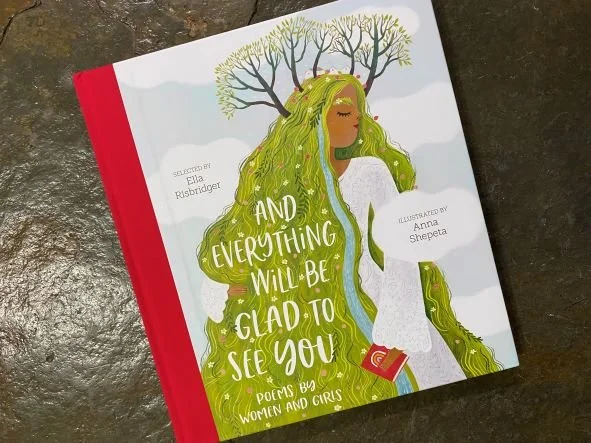
Nosy Crow have set a real precedent for beautifully presented poetry anthologies and this is no exception. The striking cloth bound cover with its stunning illustration is both tactile and tempting.
The collection contains a wealth of poems from well-loved, familiar voices to newer poets whose work is a treat to discover. However, this anthology only contains poems from women and girls. Ella Risbridger, the writer who selected these works, offers a full explanation for her reasons for this in a passionate, enthusiastic introduction (and afterword) to the reader so I will not dwell on this here, but will focus on the poems!
Although not organised into sections, there is a cohesive feeling to the anthology as the poems seem to flow from one to the next. Each spread glows with Shepeta’s beautiful illustrations which capture the essence of the words they accompany. A number of the poems are not only by women, but about women such as Rosa Parks, Malala Yousafzai and Harriet Tubman. Readers can discover the power and beauty of poems such as ‘Carving’ (Imtiaz Dharker), ‘Stars and Dandelions’ (Misuzu Kaneko), ‘Dancing’ (Yang Kuei-Fei) and ‘Remember’ (Joy Harjo) alongside the classic joy of Eleanor Farjeon’s timeless ‘Cats’.
There are many poems here which teachers could thread into their teaching or share as part of a story time, exposing their classes to the wonderful range of poets and their work. The beautiful presentation of the collection makes it the perfect gift to pass on the love of poetry.
And Everything Will be Glad to See You: Poems by Women and Girls
Selected by Ella Risbridger, illustrated by Shepeta
Nosy Crow ISBN: 978-1788009218
Originally reviewed for Reading Zone.
Festergrimm
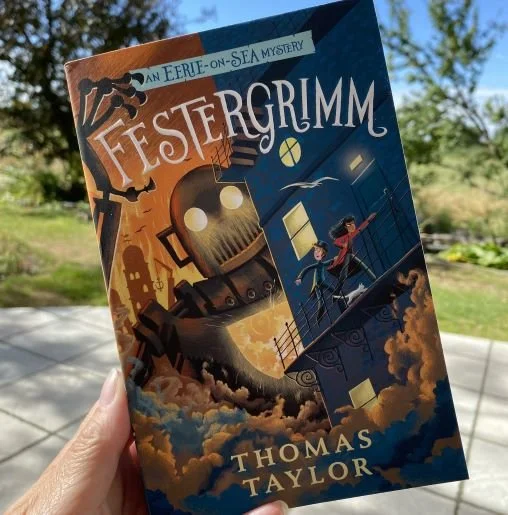
When evil villain, Sebastian Eels, returns to Eerie-on-Sea, Herbie and Vi are convinced that he has some sinister purpose. He claims he is going to re-open Festergrimm’s Waxworks which will bring more tourists to the town, but as the children investigate, they discover another Eerie tale, full of family secrets and mechanical monsters, leading them into dark and dangerous places as they try to foil another of Eel’s dastardly schemes.
This is my favourite trip to Eerie-on-Sea so far! Full of all the familiar faces fans of the series have come to know and love, ‘Festergrimm’ is told with all the humour and charm of the previous books- and yet has a slightly different edge to it somehow.
Threads from the previous stories are drawn together in this one and it feels as if we are tantalisingly close to discovering more about the mysterious past of both Herbert Lemon and Violet Parma. These two make an incredible pair- brave and impetuous Vi often taking the lead, but Herbie (although starting with the intention of doing NOPE-vember and saying ‘nope’ to everything remotely adventurous!) rising to every challenge in his determination to defeat Eels.
I love the way Thomas Taylor refers to stories like the Gollum of Prague and Frankenstein as the children learn of the legend of Festergrimm’s metal giant, opening doors for children to discover new stories should they wish to as he builds on these to create his own. There are some quite chilling and tense moments in the book, but these are well balanced by the strength of the children’s friendship and the strong bonds they have with Jenny Hanniver, Dr Thalassi and Mrs Fossil as well as some more poignant events.
‘Mermedusa’ is, I believe, to be the fifth and final book in this series. Whilst I shall be sorry to make just one final visit to Eerie-on-Sea, Thomas Taylor has done such an excellent job of setting things up for an incredible conclusion to Herbie and Vi’s adventures that I can’t wait to read it!
Festergrimm Thomas Taylor
Walker Books ISBN: 978- 1529502121
Originally reviewed for Reading Zone.
The Little Match Girl Strikes Back
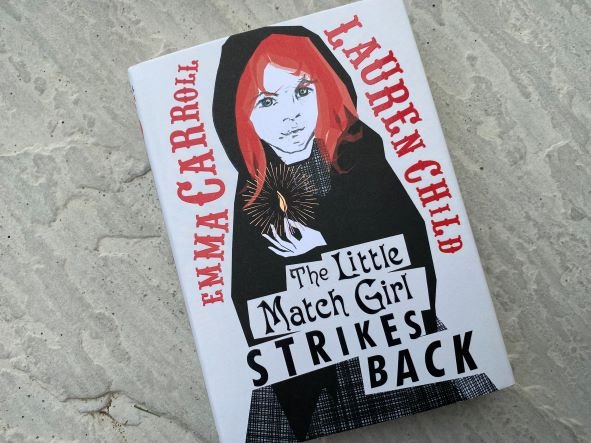
Bridie is one of the many youngsters selling matches on the streets of Victorian London. Her mother works long hours in dangerous conditions as a dipper in the Bryant and May Match Factory and even her six-year-old brother, Fergal, spends long hours making matchboxes in their tiny home. When trouble strikes and leaves Bridie hurt and alone, with just three matches left, magic happens when she strikes each one, allowing her to see visions of a different, brighter future. Realising she can change the future, the little match girl leads the factory workers out on strike and to achieve remarkable things.
Based on the real-life events of the matchgirls’ strike, this is a re-working of Hans Christian Andersen’s classic ‘The Little Matchgirl’. Like the original matchgirl, Bridie is cold, poor and hungry, but that’s where the similarity ends. Flame haired Bridie sparks with life, using her skill as a storyteller to charm people into buying her matches. Her determination and street savvy attitude, essential to her survival on the streets of Victorian London, make her a far more rounded, appealing character than Anderson’s ‘little child’. Her indignation at the injustices she sees all around her – the appalling conditions her mother works in, the bullying pettiness of the male supervisors in the factory, her mother’s encroaching illness to name a few - is infectious, leading the reader to empathise with her situation, but unlike the original, to feel a genuine – and justifiable- anger targeted at those responsible.
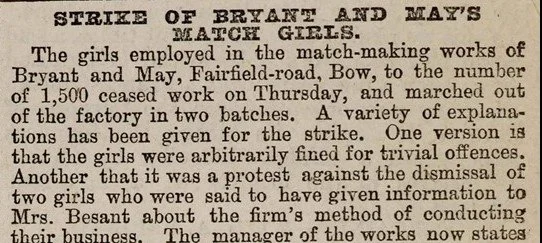
The story is sure to inspire some readers to investigate Annie Besant’s role in these events and research further into the events of this historic occasion. The newspaper article written by Annie, for example, can be seen on-line. Reading the story instantly made me want to know more about the girls involved and I have tried to locate those who are named as part of the Union committee in the census returns for 1881/91, but have had limited success in the short time I have been searching, finding only one possible entry for Mary (Polly) Driscol.

Taken from the 1891 Census
Emma has done a wonderful job of including elements from the original- the loss of the mother’s over-large slippers, the boy who takes them (although very different in this telling), the danger of carriages, the longing for goose- but has transformed the story into so much more. Books like this are essential for broadening children’s historical knowledge to events not taught in school and sparking their interest. Additional information from both author and illustrator is included at the end, accompanied by photographs, adding to the reader’s understanding of these events. In addition to being an excellent independent read, the book would work well as a guided reading or whole class text. It offers so many opportunities for discussion, role play and debate, leading to quality writing in a wide range of forms and enriching the curriculum, allowing children to make links with other areas of learning, deepening their understanding of living conditions in Victorian England and making them question how things have changed- or not.
Lauren’s illustrations and the use of varied typography add to the appeal of the story and the elliptical breaks within chapters will support children who feel overwhelmed by lengthy chapters, offering natural places for them to take a break in their reading should they need to do so. The accessible format does not prevent the story from containing plenty of challenge.

I have reviewed the book for someone else, but love it so much that I had to add some more here! Definitely one I will be planning for as a guided reading text, ‘The Little Match Girl Strikes Back’ is an excellent read.
The Little Match Girl Strikes Back
Emma Carroll, illustrated by Lauren Child
Simon and Schuster ISBN: 978- 1398512818
Published 15th September 2022
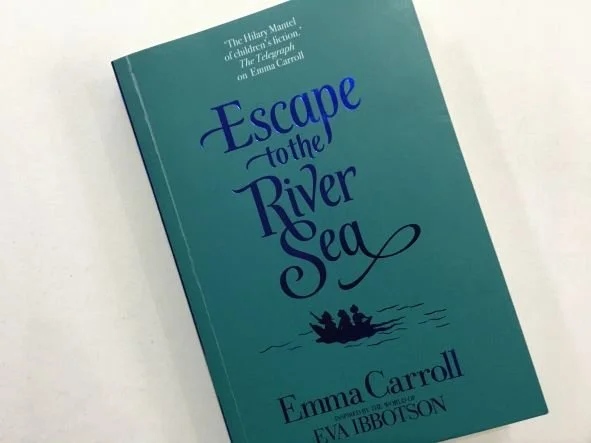
You can read my review of ‘Escape to the River Sea’ here.
Arabic Folktales
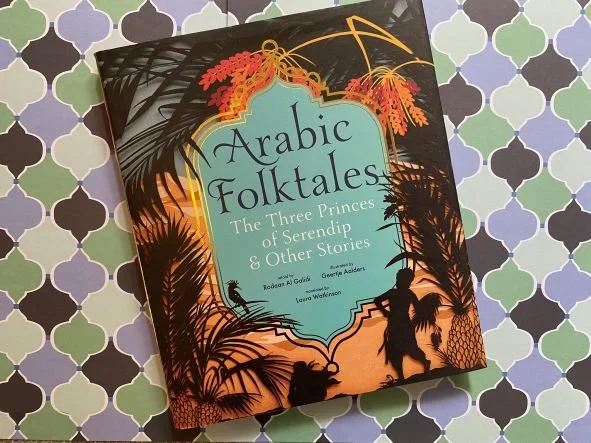
It is no secret that I love traditional tales, myths and legends. For me, there is something really special about reading stories which have been enjoyed and treasured by those before us whatever their culture or where they live in the world. The similarities which can occur between stories from different places are fascinating and each new re-telling offers a different slant as each teller breathes a little of themselves into the telling. So I was delighted to discover this on one of my trips to Bath.
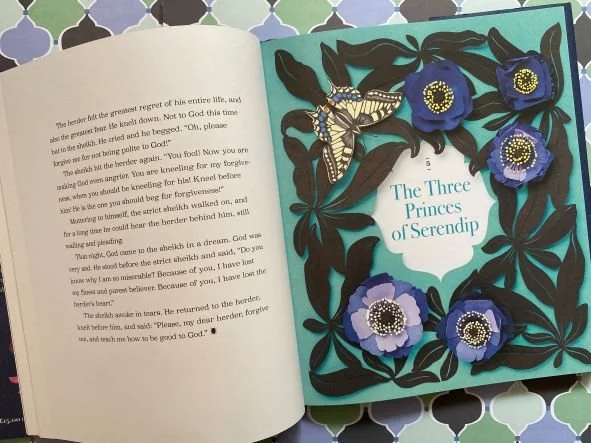
‘Arabic Folktales: The Three Brothers of Serendip and Other Stories’ is a beautifully presented book. The dust jacket is handsome enough, but the actual cover shows an explosion of the paper cut flowers which can be found throughout the book. Geertje Aalders, the master paper cutter responsible for the art work throughout the book, has greatly contributed to making this a very appealing book to be treasured. The title page of each story has a paper cut surround and further illustrations accompany each tale.
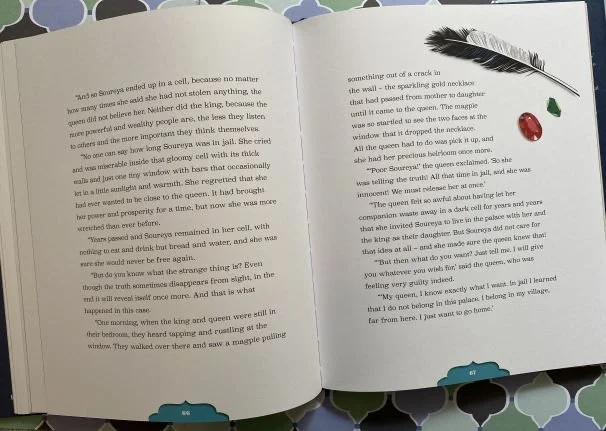
The author describes himself as a ‘sort of gatherer of tales’ who has tried to rewrite them in his own style, but encourages the reader to change elements as he says ‘stories are the best migrants and the finest travellers. Let these stories become your own.’ And this is a delightful collection with a story for every occasion. ‘Soup’ is a wonderful story about the importance of having enough love in your heart to help others whilst ‘The Man Who Was Never Satisfied’ teaches the importance of appreciating what you have. Many of these stories would be perfect to use as the starting point for an assembly or for sharing as part of a PSHE session as they contain wisdom a-plenty! However, the book would also make an excellent text for guided reading, allowing children time to discuss the stories and explore them further with the stories being short enough to allow a sense of satisfaction and achievement for those put off by longer texts.
Translated from Dutch by Laura Watkinson, ‘Arabic Folktales’ is an essential collection for anyone who shares my delight in traditional stories and for anyone who hasn’t yet discovered just how delightful they can be!
Arabic Folktales:
The Three Princes of Serendip and Other Stories
Rodaan Al Galidi, translated by Laura Watkinson, illustrated by Geertje Aalders
Walker Books ISBN: 978-1529506006
If You Read This
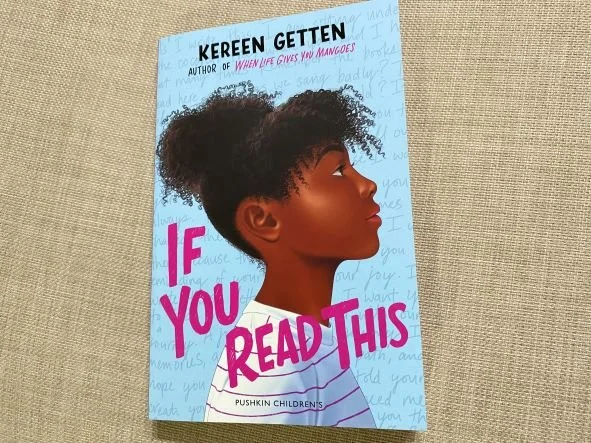
When her Nana throws a surprise party for her twelfth birthday, Brie is embarrassed by all the attention. Her final present is from her mother- who died three year’s ago- a series of letters leading Brie on one final treasure hunt like those they used to enjoy together. The first letter guides Brie to a special place, but her father, manager of the resort where they live, works long hours and seems disinterested in his daughter and her quest. Will her mother’s treasure hunt help bring them together?
Beautifully told, ‘If You Read This’ is a heartwarming, sensitive story, full of love and hope. Brie is trying to cope with the grief of losing of her mother and the complex emotions surrounding this. She is also struggling in her relationship with her father who has been distant and focused on his work, leaving her feeling neglected and hurt. Ultimately, her mother’s treasure hunt helps her come to understand both her father and mother better and learn more about herself.
The story is full of appealing characters set against a vivid Caribbean background, full of colour and energy. The constant in Brie’s life, her Nana, is just wonderful and the strength of her friendship with Smiley and Femi is heartwarming. Brie herself is endearing and readers are really able to empathise with her mixed feelings as the story develops.
‘If You Read This’ is a powerful and emotional story which is a joy to read. As with any story dealing with such emotive issues, the content should be considered before recommending, but it offers much to enjoy!
If You Read This Kereen Getten
Pushkin Children’s ISBN: 978-1782692812
Meet Cath Howe
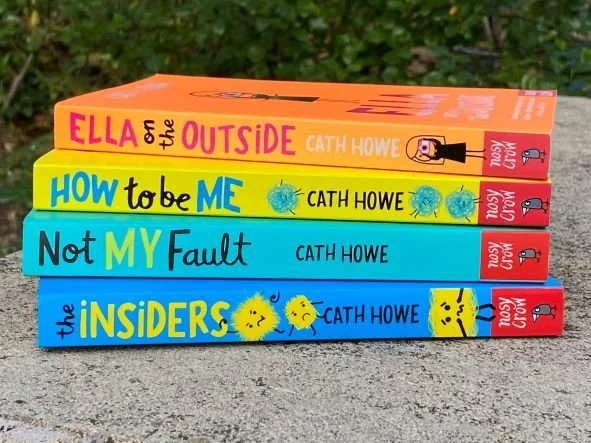
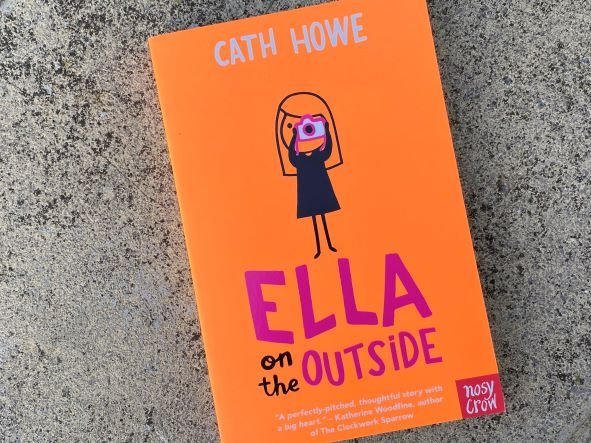
It is wonderful to be joined by Cath Howe for today’s Q and A session. Cath won the NSTBA 2018 Moving On Category with ‘Ella on the Outside’ and has continued to produce powerful and enjoyable books which are very popular with children in both primary and secondary schools. If you are not familiar with her writing, I strongly recommend that you read everything she has written!
1. You are well known for writing heart-warming, insightful stories. Do you think being a teacher helps you with how you present your characters and the situations they find themselves in?
Yes, I spend time with my chosen age-group every week and get to know them throughout the year, teaching small groups creative writing and performance. I love this work. I get lots of story ideas and I think it helps me write believable contemporary characters. I also really like the company of children. They make me laugh.
2. When you’re writing, do you start with an idea of a character or a situation?
Usually I start with a character. I need to write that character’s voice for a while with bursts of writing about their life, family and home world. Once they begin to feel alive in my head, I write monologues of other characters who will appear in the story- incidents and opinions. The monologue work means I write thousands of words that never appear in the story. But that’s OK.
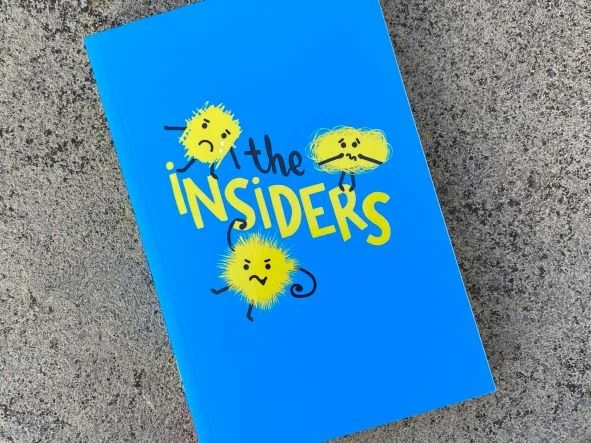
Unusually, The Insiders started with the idea of a school at night and wondering if anyone might be inside it. It’s rare for me to use a situation first and characters second but this plot really interested me right from the start and I loved writing three viewpoints.

3. Your characters are hugely relatable and easy to empathise with so the reader really feels they know them by the end. Although your books are stand alone, would you ever think about writing another story about any of them?
I’d love to. I’d like to tell the story of Ella in Ella on the Outside when she visits her Dad.
I’d like to revisit Lucas in How To Be Me and see how he has changed in the months after the summer ended.
I’d love the group of friends in The Insiders to discover more weird situations in school.
I have often carried on writing a story after the book has ended. Some of the minor characters have intrigued me too. I wonder if one of them could switch to being a central story.
4. Have you ever thought about writing something completely different - like historical fiction for example?
I’m not someone who loves to do research. I really like writing for different age-groups. I’m busy working on something for a younger age group. I’m not able to give details right now but…very exciting!
5. Do you think you have you been influenced by any authors whose work you read as a child?
Yes, definitely. I read a lot as a child- a wide range of books from Alan Garner and Tolkein to Noel Streatfield. And I was lucky to be read to a lot.
6. What can we expect from you next?
My next MG book is nearly complete. It’s a firecracker of a theme and a book I really wanted to write. The story is told by two children. It starts with a very dramatic event in the life of one of them. I have absolutely loved writing it and exploring the psychology and behaviour of the main characters.
And younger fiction on the horizon- this is a great joy.
7. And lastly- and most importantly according to my niece- what is your favourite cake?
I love a good carrot cake with cream cheese icing- my idea of perfection.
Website: www.cathhowe.com
Twitter: @cath_howe
Many thanks to Cath for joining me today. I’m really excited about the next book- can’t wait to read it! You can read my review of ‘The Insiders’ here
Blog Tour: Safe
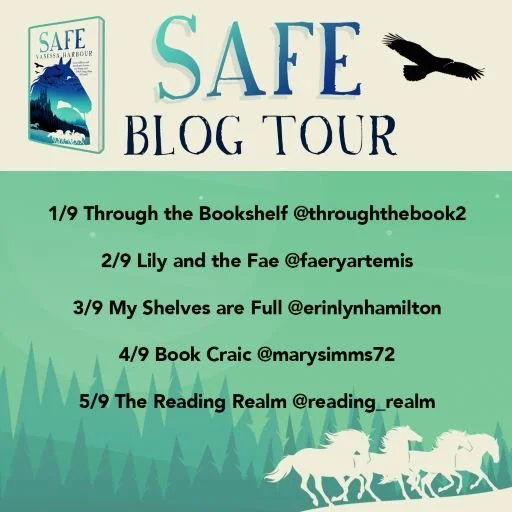
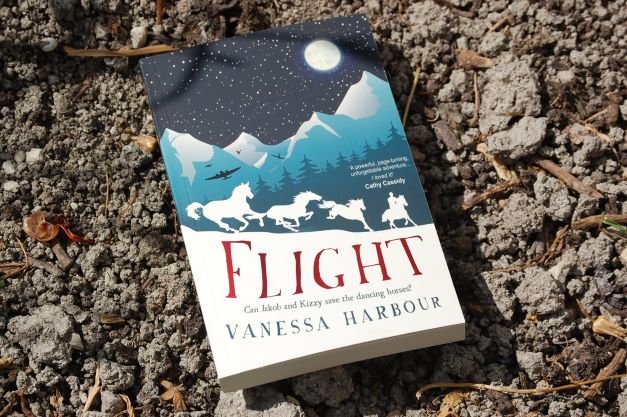
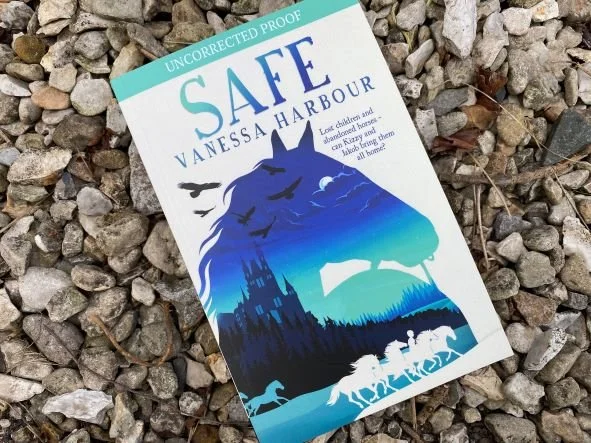
Today, I am thrilled to be starting the Blog Tour for this wonderful book. ‘Flight’, the first book in which we meet Kizzy and Jakob, is a stunning story which I highly recommend and so I was delighted to learn that ‘Safe’ was to be the sequel.
This guest post from Vanessa offers a fascinating insight into her writing, showing how she adds such life and texture to her work.
When writing a novel you have to have credible characters and a viable plot which all has to happen within a believable setting. Obviously, when writing historical fiction you have to get the details of the setting right within the appropriate period. You have to watch for anachronisms. No microwaves or mobile phones in your story is an extreme way to prove a point in the instance of Safe.
With both Flight and Safe, nature has been an important element. Whether it is the trees, flowers, or the birds and animals surrounding them. This is because in both stories they spend a lot of time living outside so are aware of them. I also wanted to remind children of nature. To make them think about trees and the world beyond the screen I suppose.
But setting is so much more than geography, flora and fauna. Setting encompasses where they live, what they might eat, how they get about, how they communicate and with Safe details of the war – guns, transport, uniform. This then takes us back to research. We must do enough research to get the details right but not overwhelm the narrative. The story must always wear the research with a light hand.
When creating setting the ideal is to visit the place you are situating your story in. Sometimes this is not always feasible. For me, for example, as a disabled author, this is not always that simple and I confess it is where I love Google maps and the facility where you can ‘walk’ around to see what is there. Allowing me the freedom to ‘visit’ a place. Yes, it allows you to visualise it, but what it can’t do is enable you to hear the sounds or the smells in a place, which is a distinct disadvantage, particularly for me who loves to use the senses in her writing.
Smell can be very powerful and evocative. We can all think of a smell that immediately takes us back to a memory or a place. The smell of burnt toast immediately takes me back to holidays with my family on the Welsh coast when I was between 2 and 3. Very happy times. Using all these senses in your writing can lift the narrative and just add that depth. However, as with everything, there is a fine line between adding the perfect detail and overwhelming the reader with too much detail. It’s a cliché, but something that I stand by – less is more.
When you are writing a scene that is emotionally wrought and powerful, I have a habit of doing lots of research and writing it ‘big’ first. This might mean I will write a whole chapter based on the scene away from the manuscript so that I can get all that research in – doing everything that I have said above that you shouldn’t do. Once I have done that and got the emotion in there that I want. I will distil it down and down, by rewriting it, shorter and shorter, until it ends up at the length I want it to be in the actual manuscript. It will have all the emotion and power that I wanted because it has been informed by the work I did beforehand. I did this in Flight with the mass grave scene and also in Safe with the death of Anna’s parents and brother.
Getting the setting right is important because if you get that wrong the reader may lose faith in your story and put it down, wondering what else in the story is inaccurate. I’ve seen that with my grandson, who stopped reading a book when he found an issue with a historical book he was reading. It put him off. When I am researching my settings, I will create a document where I list all the websites and books that I use so I know if there is a query during the editorial process I can check it quickly.
Like research, the setting is something that I love to create and understand. It is one of the main foundation stones of your story and you need to be aware of it so that your readers can get the most out of your story.
Vanessa Harbour
Social Media:
Instagram @NessHarbour
Twitter @VanessaHarbour
Many thanks to Vanessa for sharing this with me today- and thanks to Amy at Firefly Press for inviting me to take part. I will be posting my review of ‘Safe’ early next week with a link to my previous review of ‘Flight’, but I highly recommend them to everyone!
Make sure you follow all the stops on the Safe Blog Tour to find out more.
Pause for Poetry: Yapping Away: Poems to Fill the World with Laughter
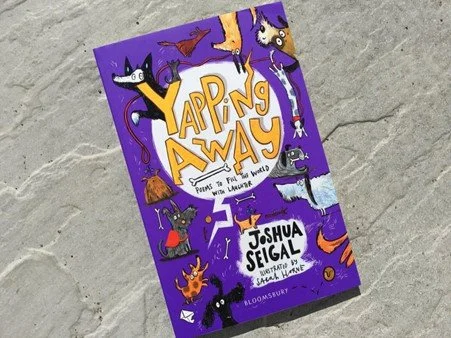
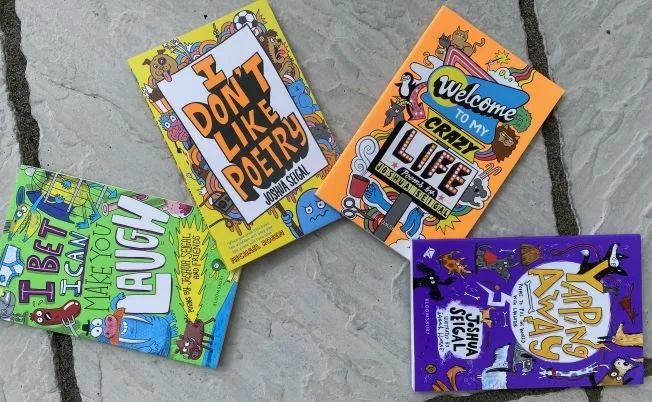
Joshua Seigal is well known for his humorous and inspiring poems and his most recent collection is every bit as wonderful as the others. Full of excellent poems, it is perfect for sharing at home, school or for curling up with on your own. With the start of the new school year rapidly approaching, it is well worth having to hand for those odd moments which need a poem or two!
The poems are playful, drawing on the everyday and inviting the reader to look at things differently. Like many, ‘Fill the World’ would be great fun to perform, adding actions – and/or creating new verses and performing these. The use of word play and pattern mean that children will pick many of the poems up without any effort, joining in with repetition- Icky Sticky Choccy Biccy, Happy or Sleepy Dust, for example, and thoroughly enjoying deciding how to present them. ‘Magic!’ is another which is calling out to be shared and which children would really enjoy using the structure to create their own versions.
These really are poems which will fill the world with laughter, but Joshua Seigal also offers places to pause and think. Drawing my Grandma is full of lovely images, but ends with a poignant thought. Sad perfectly encapsulates that inexplicable feeling of sorrow which hit us all from time to time- great for initiating discussions and exploring feelings.
Many of the poems here would be perfect for inspiring children to create their own and Joshua Seigal has included ideas at the end of the book for the reader to try. Some of these would make great getting-to-know-you activities for the first days back to school.
Although aimed at a younger audience, these poems would work well with children of any age, helping them to explore poetic techniques and offering enjoyable examples. Even the subjunctive seems less hideous when in a poem! Other poems like ‘Lots’ are just perfect for PSHE for exploring ideas and encouraging discussion in these lessons or as the basis for an assembly.
With illustrations by Sarah Horne adding to the humour of the poems, Yapping Away’ is a wonderful collection- a must have addition to any teacher’s collection!
Yapping Away: Poems to Fill the World with Laugher
Joshua Seigal, illustrated by Sarah Horne
Bloomsbury ISBN: 978-1472972743
The Mountain Rescue Dog
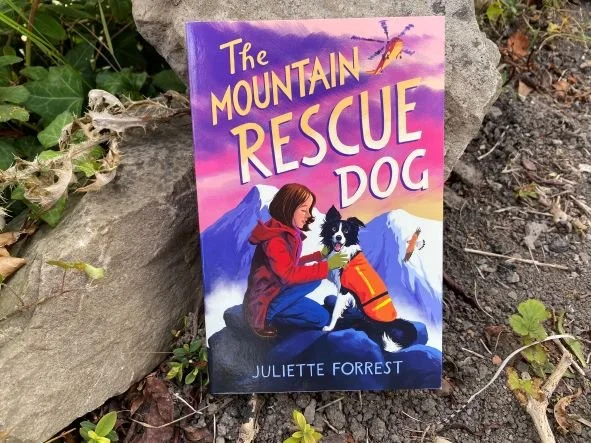
Everything changes for Clova after her mother, part of the Glenstrome search and rescue team in the Scottish mountains, dies during a rescue mission. Her grieving father withdraws into himself, becoming overly protective of his daughter and it is thanks to the efforts of her grandfather that the family hotel is still running. Feeling lonely and lost, Clova is struggling until she meets Tatty, a nervous collie stray, who helps her find purpose again as she begins to train him as a rescue dog. When two young boys are lost, Tatty and Clova track them down; her father is furious and vows to send Tatty away, leaving Clova heartbroken. However, when her father is lost on the mountain and heavy snow causes an avalanche, Clova and her faithful dog prove that they belong together and save the day.
Anyone who has had a dog will instantly recognise the remarkable bond that can form with a much loved companion. Juliette Forrest captures this perfectly, making ‘The Mountain Rescue Dog’ a great read for anyone with a canine pal. However, there is so much more to this fabulous story of grief, courage and adventure.
The incredible work of mountain rescue teams and their Search and Rescue dogs is really celebrated through the book, giving the reader a glimpse of the work which the dogs, their handlers and the teams do and the lengths which they go to, at great personal risk, to save those in need. In her author note at the end of the book, Juliette says, ‘Scottish Mountain Rescue have 850 team volunteers, who will respond at a moment’s notice 24 hours-a-day, 365 days-a-year.’ Through highlighting their amazing dedication and the essential work they do, the story also acts as a reminder of the dangers and fickle nature of mountains, encouraging readers (should they wish to!) to explore them safely. The patience and commitment needed to train a rescue dog and the love and kindness used to do this is beautifully explored as Clova trains Tatty with guidance from her grandfather, who offers many useful tips to consider when training any dog!
Deeply poignant in places, the story also explores loss and the overwhelming nature of grief. Clova is devastated by her mother’s death and keenly feels the secondary loss of her father who has lost himself in his sorrow. His frantic desire to protect his daughter- to try to keep her safe- results in a lack of communication and a loss of understanding as each struggles to come to terms with what has happened. The story also touches on her grandfather’s grief as he sees his daughter in Clova, comforting her as he acknowledges her sadness, sharing his feelings with her in a way her father is not ready to.
‘…everywhere you go a fresh memory pops up you had forgotten about. Even though you can see them as clear as day as if they’re right in front of you - you know they are not coming back.’
With each of her books, Juliette Forrest offers something different, but strong characters and vivid settings are sure to feature whatever the focus. In ‘The Mountain Rescue Dog’, she has created a heart-warming tail (sorry- couldn’t help myself!) of loss, love and understanding which is sure to become a firm favourite for teachers to read to their class as well as for enjoying independently.
The Mountain Rescue Dog Juliette Forrest
Scholastic ISBN: 978-0702313646
Published 1st September 2022
Blog Tour: The Dangerous Life of Ophelia Bottom
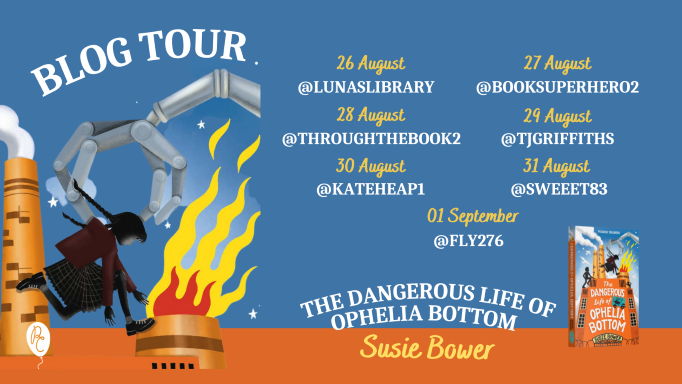
I was delighted to be asked to take part in this Blog Tour as I thoroughly enjoyed ‘The Dangerous Life of Ophelia Bottom’. Once started, it’s almost impossible to put down!
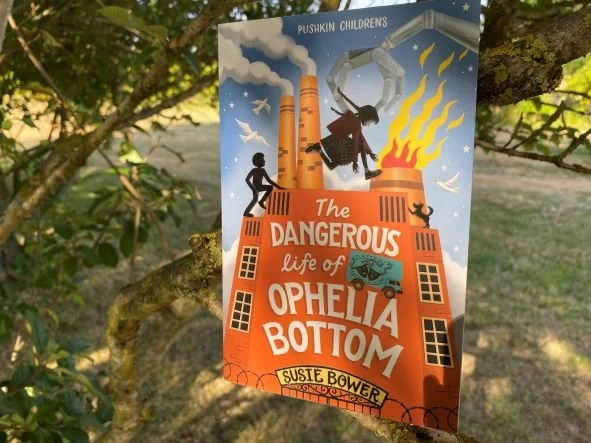
Ophelia Bottom longs to be ‘normal’- to have well-behaved parents and live in a house which stays still. But with her parents being Shakespearian actors in their own travelling theatre company and living in a rickety old converted van, her life is unusual to say the least. So when the van, known as the Pantechnicon, makes its stop in the seemingly perfect town of Stopford and bad luck strikes her family, could this offer the opportunity she has longed for?
Packed with drama, adventure and theatricals, ‘The Dangerous Life of Ophelia Bottom’ is an absorbing read with much to recommend it! One of its strengths is its wonderful cast of characters, particularly Ophelia’s family. Ophelia’s father (who she calls Ar) is a flamboyant, irrepressible thespian who speaks mainly in capitals and (like Mr Micawber!) seems to be permanently convinced that something will turn up whilst her mother is a risk averse, superstitious lady who wants her daughter to experience some stability and get an education. This causes some tension in the Pantechnicon which increases when Ar breaks his leg meaning the family is forced to extend their stay in Stopford. Money worries and misunderstandings cause the arguments to mount and Ophelia, sadly like many children, finds herself caught between them and full of anxiety about the future of their relationship.
Settling in to a new school is hard enough, but in a place where the town motto is plastic is fantastic – different is dangerous, Ophelia (or O-failure as her name is pronounced in school)- struggles to fit the mould. Uniformity is key and over-zealous prefects are determined that everyone should conform. As Ophelia realises that there is a sinister plot afoot in this too-perfect town with its high levels of plastic pollution, the story takes a darker turn as it romps towards its conclusion.
‘The Dangerous Life of Ophelia Bottom’ would make an excellent class read, offering plenty to discuss and consider- the importance of family and friendship, the need to question, the dangers of plastic pollution, rights and responsibilities, how important it is to be yourself, lots of Shakespearian references… to name a few. There are some sinister characters and perilous moments to be aware of, but this is a gripping story which it is impossible to do justice to in a short review! Add straight to the top of the TBR pile!
The Dangerous Life of Ophelia Bottom Susie Bower
Pushkin ISBN: 978-1782693604
Thank you for including me in this Blog Tour! Make sure you follow on for the rest of the week!
Meet Emma Perry
Founder of ‘My Book Corner’, Emma Perry is also the author of four delightful picture books and her love of books is second to none. A fellow teacher, I believe the children she teaches are very lucky to have her as I am sure she fills their days with wonderful stories, nurturing their imaginations. I first met Emma at meetings of Picture Book South West events and was thrilled when she agreed to join me for a chat!
1. What two things would you most like your readers to know about you- and what one secret would you like to keep (but aren’t going to because you’re sharing it here!)?
I don’t write every single day. I like to chip away at a story, bit by bit, then delve into it on full throttle once the story demands to be written.
I don’t always finish every single book that I read. That’s ok. Sometimes a book just isn’t right for you in that moment.
I CAN’T POSSIBLY TELL YOU THE THIRD ONE BECAUSE IT IS A VERY SECRET, SECRET!
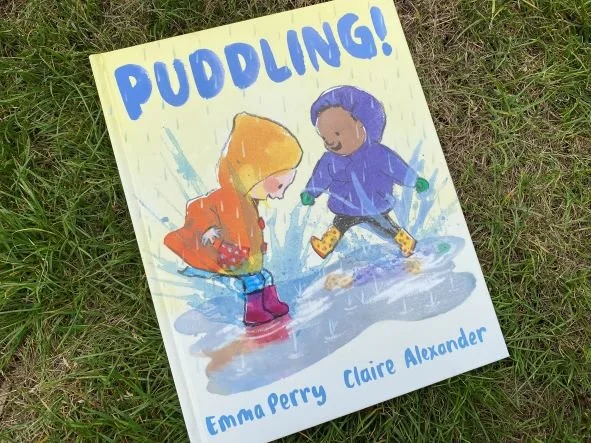
2. ‘Puddling’ is a fabulous picture book which perfectly captures the joys of a rainy day with little ones which I remember so fondly from when my son was tiny. Do you prefer splashing in puddles or relaxing in the sun? Why?!
Thank you so much, we had a LOT of fun creating that one.
I do love a bit of sunshine, but it’s been far TOO HOT recently and at the moment I am DREAMING of splashing in puddles. With big wellies on, there’s really nothing better than splish, splash, sploshing about with friends.
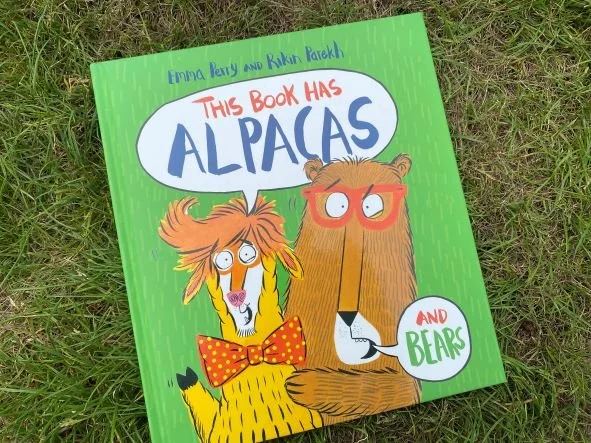
3. Shhhhhhh! Don’t tell Alfonso about this question, but which story about bears is your favourite?
Yikes, poor Alfonso! Well then, let’s sneak in This Book Has Alpacas And Bears first of all 😉Now, you know I can’t pick just one fav book so here’s a couple (or maybe more!) of books with bears that I love. Jon Klassen’s I Want My Hat Back is comedy gold, Bear Has A Story To Tell by Philip C. Stead and Erin E. Stead features a super lovely, kind and gentle bear, and then there’s The Very Cranky Bear from Nick Bland. Each bear is very different! {Oops, that’s FOUR! *runs and hides* }
4. Does being a teacher help you with writing such lovely books? Do you try your ideas out on children you teach before submitting stories?
I think that being surrounded by little ones – seeing what makes them smile and giggle, being in tune with how they talk, think and act – is all great fodder for picture books, and makes for some great anecdotes too! They help me immensely, in all sorts of ways. I have tried out early versions of picture books on different classes, reading it out loud to a little audience is useful for highlighting where tweaks need to be made to the narrative to ensure the meaning is clear.
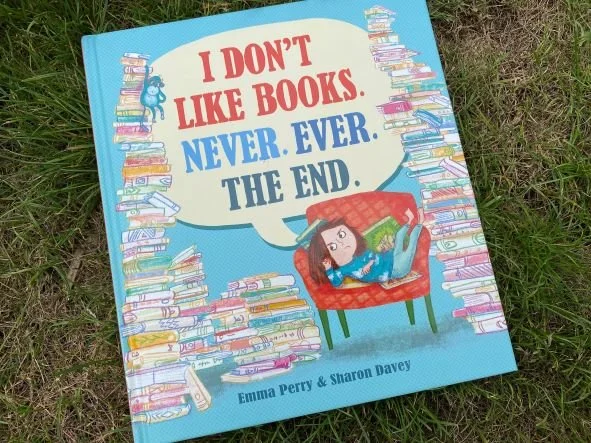
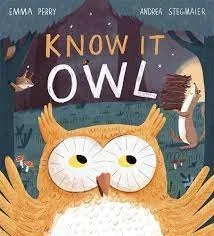
5. Your latest book, ‘Know It Owl’, is about a well-meaning, but over enthusiastic owl who is very keen to tell everyone how to do it when building a den with friends. Mabel in ‘I Don’t Like Books. Never. Ever. The End.’ Is based on your daughter. Did you have anyone in mind when writing this story? [Psst… same name as my daughter, but that’s the only similarity]
My lovely, well-meaning Owl is probably a mishmash of lots of people – big and small – that I’ve met over the years. That keenness to help, but not really being able to step back and allow space, mental or physical, for others. It’s a real skill and takes a great deal of empathy to master. I reckon we’re all guilty of it from time to time!
6. What can we expect from you next? Another picture book- or do you have something else tucked up your sleeve?
Well now, I have a couple of things on the go at the moment. A picture book that is super close to my heart and has taken awhile to get it to say… what I really, really want it to say.
I’m also working on a joyful yet very warm-hearted Young Fiction series. It’s written in a very different style, but it’s a style I’ve wanted to write in for a long, long time. Writing it has made me smile. So. Much. It feels very… me! Not out on submission… yet.
7. And lastly- and most importantly according to my niece- what is your favourite cake?
Cake?! Yes please! Anything Gluten Free makes me smile, as I have to stick to that. It’s so hard to get GOOOOOD GF cake to be fair. But I have lots of fun hunting it down – chocolate, coffee, walnut, lemon, carrot. It’s all good!
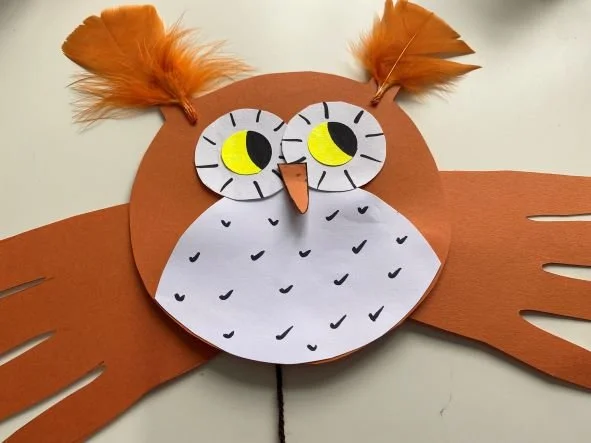
A huge thank you to Emma for joining me today! You can read my review of ‘Know It Owl’ here and have a go at making an Owl puppet!
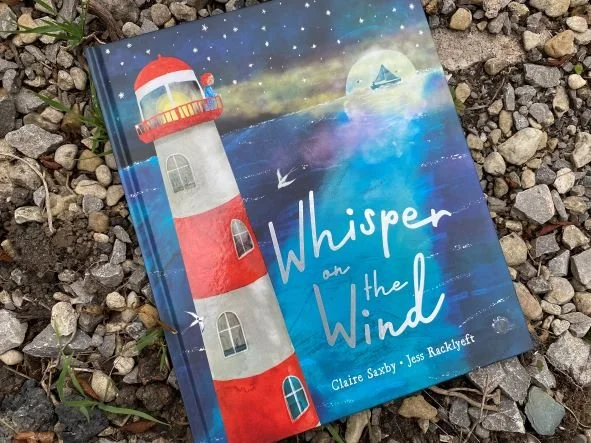
Whisper on the Wind
As Ren sleeps, the whisper of her dream is carried by the wind and the waves across the sea to a sailor who is working far away. On catching it, the sailor turns for home to answer the whisper in the dream and is home in time for them to spend the day together.
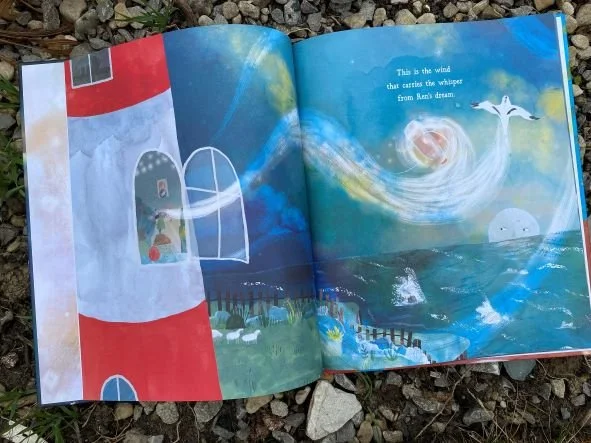
Told in the cumulative tale style, the lyrical text follows the whisper of Ren’s dream on its journey across the ocean. This style of telling works perfectly for this story as it feels almost like the lapping of the waves against Ren’s lighthouse home taking her dream to the sailor who, although never identified, we suppose to be her mother. Ren’s gender is never specified and the illustration showing Ren asleep in bed has a picture on the wall of a woman holding a baby so the story could hold personal relevance to children in many different situations.
The illustrations are quite enchanting and full of wonder. Ren’s dream is depicted as a message in a bottle, encountering real and imagined creatures of the sea on its way. Watched over by the moon as it makes its journey, the bottle is helped on mermaids and whales, fish and dolphins until it reaches the sailor who finds joy in its contents, understanding its meaning and following its call to return home.
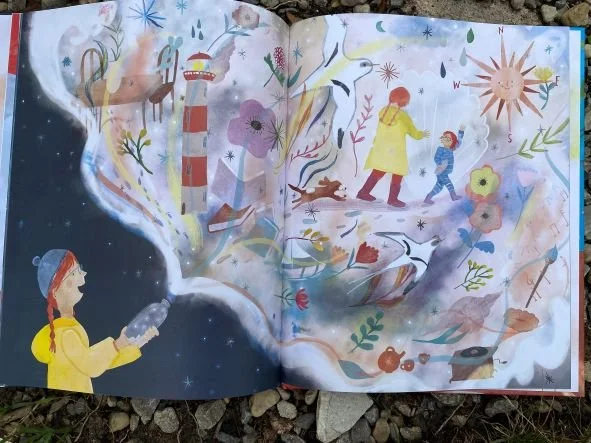
‘Whisper on the Wind’ shows the power of love to unite us with those we hold dear wherever they might be, making it a comforting bedtime story, particularly for those who are separated due to work.
Whisper on the Wind Claire Saxby, illustrated by Jess Racklyeft
Allen and Unwin ISBN: 978-1911679387
Pause for Poetry: Things That Should Be in a Poem
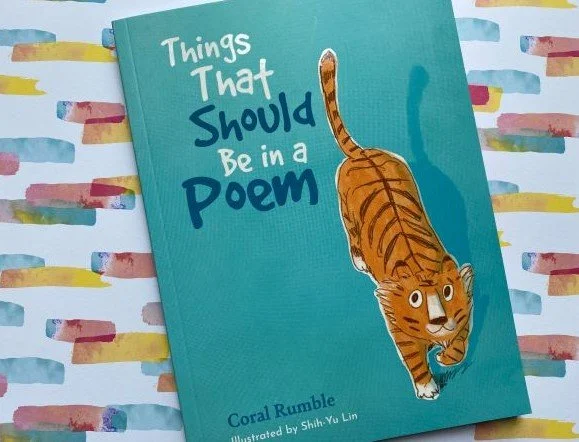
I love Coral Rumble’s writing! Her first collection, ‘Riding a Lion’, is full of poetic treasures like ‘One Shoe Tall and Three Shoes Wide’ and ‘After the Storm’, all perfect for sharing with children and using to inspire them to create poems of their own. Her verse novel, ‘Little Light’ is just beautiful- the evocative story of young Ada and how she faces- and overcomes- the daily challenges of her life. So when I received a copy of her latest collection, Things That Should Be in a Poem’, not only was I very excited, but my expectations were sky high!
And I was not disappointed! The range of poems in this collection is pure joy as Coral skilfully moves from the silly to the profound, from observation to imagination. The book opens with the titular poem which offers a perfect launching pad for discussions about poetry and what the reader does or doesn’t like. Used with a class, it could open doors to finding out about all manner of new poems and poets! But it also makes a brilliant model for writing as children can play with all their ideas for the things that they would use to ‘collect a poem today’.
Another poem which could be used as the spark for writing is ‘Magic Coat’. It could work with children of any age, sharing their ideas for what their magic coat would allow them to do and using these to form collective or individual poems to share and enjoy.
‘Secrets’, on the other hand, is one of those poems you sometimes need to read to a class and let the message sink in. Seemingly simple, it carries a powerful message, encouraging empathy and provoking a thoughtful response. Deeply poignant, ‘My Name’ is a very special poem.
The collection is illustrated throughout by Shih-Yu Lin whose lively, expressive pictures perfectly complement Coral’s poems. This is a must have collection for any teacher- or adult- or child!
Things That Should Be in a Poem
Coral Rumble, illustrated by Shih-Yu Lin
Troika Poetry ISBN: 978-1912745203
Published 5.9.22
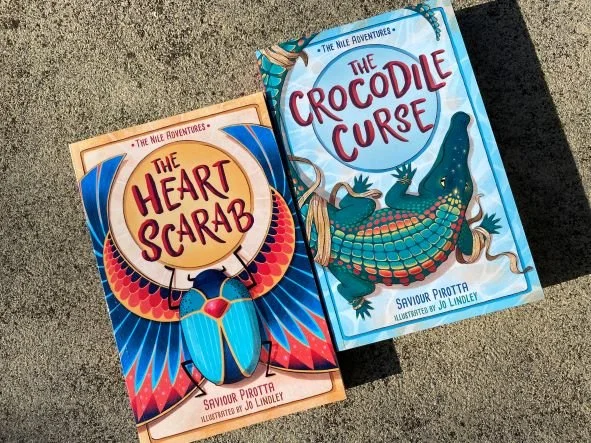
The Crocodile Curse
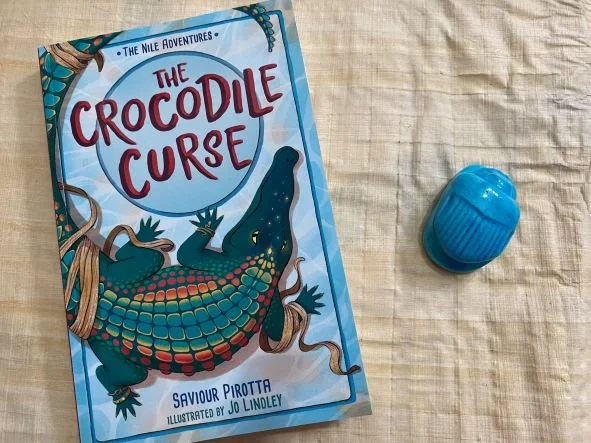
The second of ‘The Nile Adventures’, ‘The Crocodile Curse’ is set in 1269BCE in the tenth year of the reign of Ramesses II and continues the story of brothers Renni and Mahu and their friend Princess Balaal. Having thwarted the plans of the evil vizier, Paser, and survived, the children find themselves caught up in a new adventure when Balaal asks the brothers to accompany her to Shedet, the City of Crocodiles, to visit the temples dedicated to Sobek. However, when they arrive, they soon realise that their old enemy, Paser, is once more up to no good…
‘The Crocodile Curse’ (like all of Saviour’s historical fiction) offers not only an exciting and engaging story, but the rich descriptions and historical details incorporated seamlessly into the fabric of the tale also make it perfect for being used to support work on the Ancient Egyptians, one of the civilisations suggested for an in-depth study as part of the KS2 work on achievements of the earliest civilisations.
Details about daily life, customs, religious practices, the landscape are easily absorbed whilst the reader enjoys the story, making it perfect as a class read or a guided reading text. The joy of books like this is that, if you want to use them to support the curriculum, they can be used at any time. If the children have not learned about the Ancient Egyptians yet, they will absorb lots of information which they can later pin new learning on; if they have previously learned about the Egyptians, the story will encourage them to recall this learning and use it to deepen their understanding of Renni’s life; if the Egyptians is not the ancient civilisation chosen for in-depth study in a particular school’s curriculum, the story will allow children to encounter the Egyptians, perhaps encouraging them to find out more independently, and allow them to make links and comparisons between the civilisations of the past. A glossary and author’s notes at the end offer additional information for the reader.
Most importantly, ‘The Crocodile Curse’ is a well-paced, gripping read, full of adventure and intrigue, magic and mystery. Renni, Mahu and Balaal are appealing characters, each very different. In this story, Renni learns that he can find courage when he needs it whereas his brother learns that it is sometimes better to think before speaking.
The book is full of black and white pictures by Jo Lindley which help to bring key scenes further to life as they capture details from the text. The children’s adventures continue in ‘The Jackal’s Graveyard’ and you can get a hint about what’s coming in that if you read my ‘Meet Saviour Pirotta’ post.
The Crocodile Curse Saviour Pirotta, illustrated by Jo Lindley
Maverick ISBN: 978-1848868946
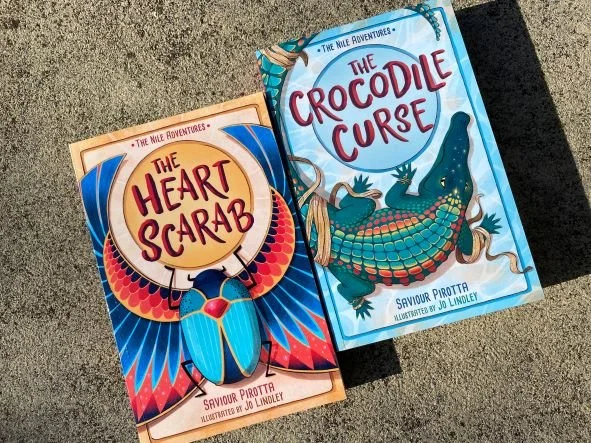
You can read my review of ‘The Heart Scarab’ here.
The Worlds We Leave Behind
Hector, or Hex as he is known, didn’t mean to cause an accident, but instead of taking responsibility, he runs, burning with a fierce sense of injustice at the situation. He finds himself in a fairy-tale clearing in the woods- a clearing which he knows can’t actually be there- where an old lady in a cottage offers him a deal. She will ‘clip’ those who have wronged him from the world, allowing Hex to continue his life as if nothing happened. All he has to do is crush the acorn she has given him…
But Hex is not the only one the old woman has offered this deal and when Hex’s best friend, Tommo, wakes the following morning, he is in a different world, with only hazy, blurred memories of the world before. Can things be changed back to the way they were?
‘The Worlds We Leave Behind’ is an exceptional, beautifully written book, full of evocative descriptions and stunning illustrations. It is one of those books which is so hard to review without ruining it for anyone who hasn’t read it- so be warned!
Hex tends to act without thinking about the consequences of his actions. Impulsive and with a tendency to act the clown in class, his actions have landed him in the head’s office on more than one occasion. But he’s not the only one who is not considering the consequences of their actions- and the fact that we have to live and deal with the choices we make.
The story also considers the idea of revenge. Hex is offered the change to get his own back- to settle a score- but at what cost? When Missus ( the old lady) offers to erase Hex’s enemy from existence so the ‘world will heal, reshape itself around’ the place where that person would have been, she tells him that only he would ever know they had existed at all. It is perfect for instigating discussions - or ponderings- on just how far people might go to feel avenged and once again, reflect on the consequences of this.
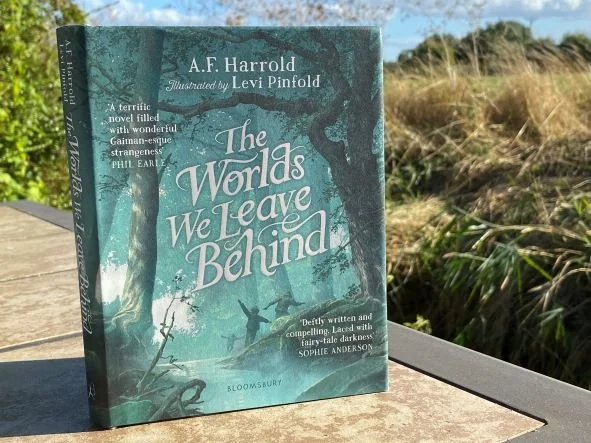
Deliciously spooky and atmospheric, ‘The Worlds We Leave Behind’ is full of the most amazing illustrations by Levi Pinfold, some of which are quite sinister. The story has a very magical quality with its enchantments and alternate versions of reality, dense woods and fairy tale cottages, making it completely captivating. I loved it!
The Worlds We Leave Behind
A F Harrold, illustrated by Levi Pinfold
Bloomsbury ISBN: 978-1526623881
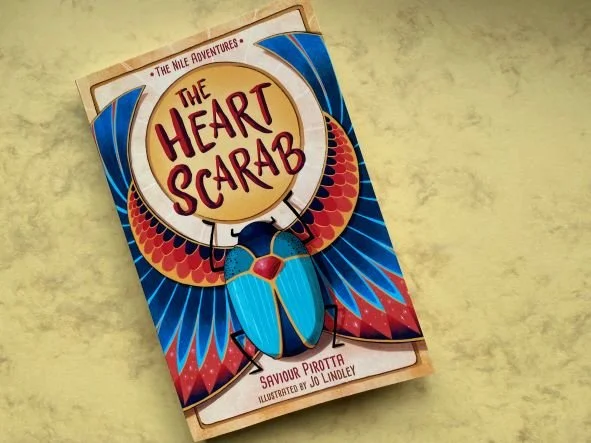
Meet Saviour Pirotta
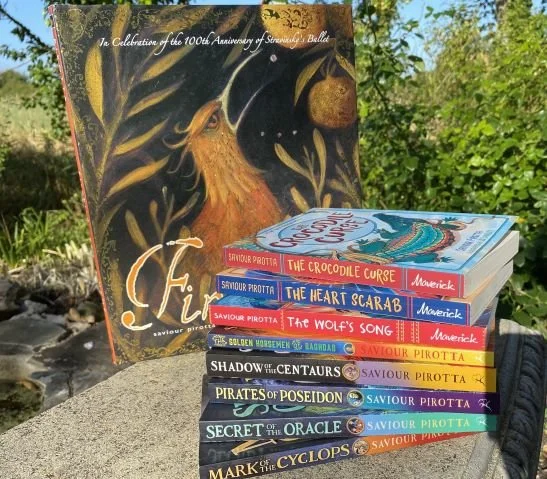
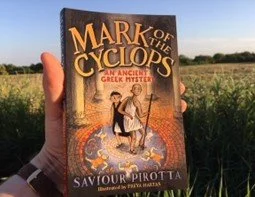
Not only does Saviour Pirotta brings history to life with his very engaging and enjoyable historical fiction, he is also responsible for some excellent re-tellings of myths and legends. I first met Saviour when ‘Mark of the Cyclops’ won the 2018 NSTBA Quality Fiction Category and frequently use his books in school. I am delighted that he agreed to answer a few of my questions!
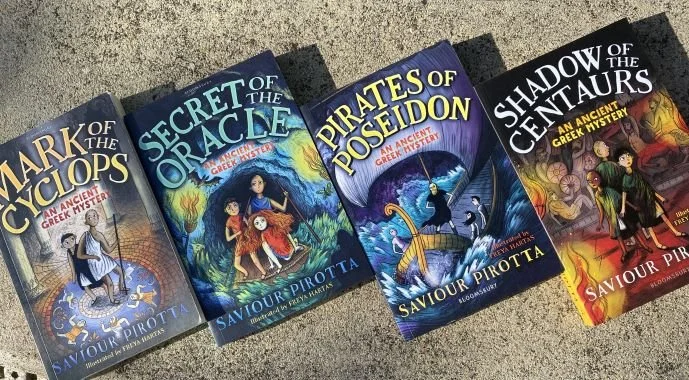
1. You are well known for your historical fiction, taking readers to Ancient Greece, the Islamic Golden Age, the Stone Age and now to Ancient Egypt. Have you always had a love for history? Which period of history would you most like to write about (that you haven’t already!)?
As a child I used to go to religious education classes where we listened to Bible stories. I became fascinated with the ‘pagan’ civilisations mentioned in the Old Testament: the ancient Egyptians, the Babylonians, the Hittites etc. It was hard to come by information about them, which made them the more alluring. I’m still fascinated by them now. If I had to choose a period in history to write about today, I would go for the Anglo-Saxons. I love the art from this period which, for many years, people called ‘the dark ages’, especially the statues. There’s something about their faces I find almost hypnotic, so I’d probably write a mystery about Anglo-Saxon statues.
2. ‘Mark of the Cyclops’ (winner of NSTBA 2018 Quality Fiction category) is the first in your series about Ancient Greece. What gave you the idea for a detective series set in this period?
I’d wanted to write a story set in Ancient Greece for years but I didn’t know what kind of story to write. I just knew I wanted to have a story that showed how people actually lived in. classical times. When I had my first, I treated myself to a holiday on the island of Poros. On the ferry from Athens, I met a real-life detective. He was a fascinating chap with a shaved head, enormous Doc Marten boots and lots of attitude. He became Thrax in the Ancient Greek Mysteries.
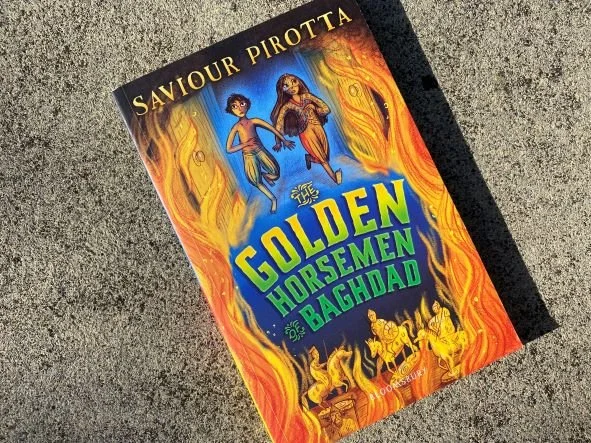
3. Do you have any plans for more adventures for Jabir and Yasmina?
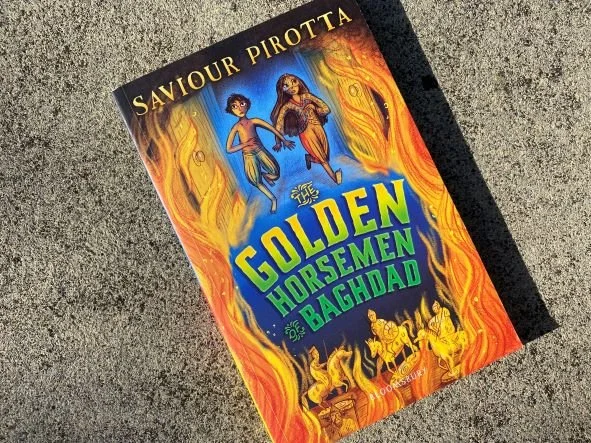
I do have another story planned for Jabir and Yasmina and my agent is in talks to see whether we can make it happen. I get a lot of letters from readers asking if the evil landlord survived his encounter with the snakes at the end of The Golden Horsemen of Baghdad. I can’t answer that question because of spoilers but…watch this space.
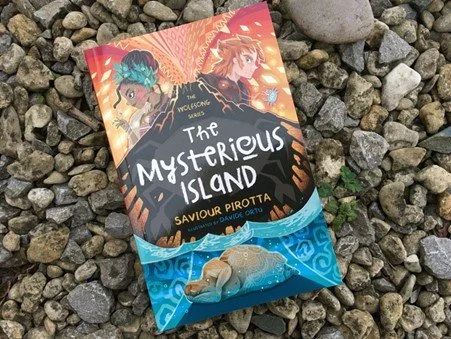
4. I was fascinated by your descriptions of Malta in ‘The Mysterious Island’ and am determined to visit this beautiful island in the near future. What are the ‘must see’ things you would advise any visitor to see whilst there?
Malta is practically an open-air museum. There’s so much to see. If you’re into pre-history there are the Tarxien Temples and the nearby Hal Saflieni Underground Temple, both of which feature in The Mysterious Island. Over on the sister island of Gozo, you can visit the Ggantija Temples. Built around 3600 to 3200BC, experts believe they are the oldest structures in the world. But it’s not all pre-history. Valletta, the capital city, is a baroque masterpiece built by the famous Knights of Saint John. Walk down Republic Street, visit St John’s Co-Cathedral to see the Mattia Preti paintings and then have an ice-cream at Cordina’s outdoor Café in Republic Square, formerly called Piazza Regina after Queen Victoria.
5. I know the next adventure for Renni, Mahu and Balaal is called ‘The Jackal’s Graveyard’. Can you give any clues about what they are up to?
The Jackal’s Graveyard is going to be another adventure for our intrepid trio. We meet new characters but also find out more about Prince Khaemwaset, who was a real person. He takes Renni, Mahu and Balaal to the new city of Per Ramessu which his father is building. But what starts off as a nice little holiday soon turns into a dangerous mission with spies, jackals and a baddie a hundred times more lethal than the vizier in books 1 and 2.
6. Apart from ‘The Nile Adventures’, are you working on anything else?
I’m working on several projects at the moment. They’re all very much in the planning stage although I have worked out rough plots for two of them. I can’t give much away at this point but one of the books features the most sought after treasure in the world, and one has ghostly birds in it. Watch this space…
7. And lastly- and most importantly according to my niece- what is your favourite cake?
Your niece is right that cake is probably the most important thing in the world, and very close to my heart. I have yet to taste a cake I didn’t like and, since moving to Yorkshire fifteen years ago, I have come to enjoy cake with cheese on the side. I especially love Lemon Drizzle and Pineapple Upside Down cake but I’d say my absolute favourite is carrot cake with frosted topping. Give me a slice of that with a nice cup of Earl Grey and I’m all set up for an afternoon of writing and editing.
So much to look forward to! ‘The Crocodile Curse’ (Maverick ISBN: 978-1848868946) is published next week- my review is coming soon!
Thank you so much to Saviour for answering my questions!
You can read my review of ‘The Heart Scarab’ here , ‘The Stolen Spear’ here, ‘Mark of the Cyclops’ here and ‘The Golden Horsemen of Baghdad’ here.