Reviews
There are so many incredible books available at the moment that it is impossible to read them all, no matter how hard I try! Here are my thoughts about some of the books I have read and how I think they could be used in school as well as Q and A sessions with authors and illustrators.
Meet Laura Mucha
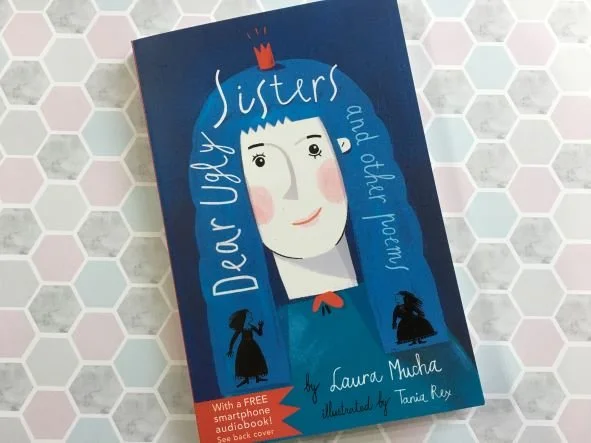
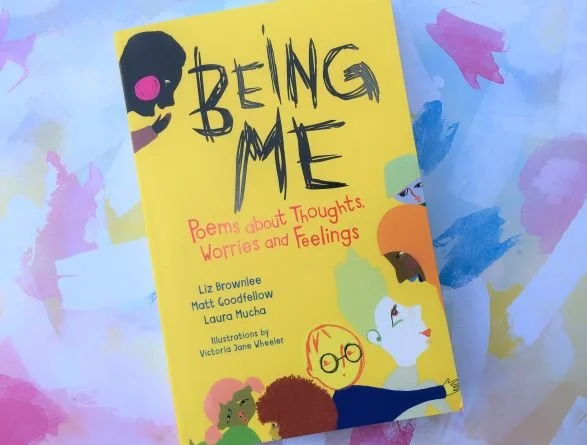
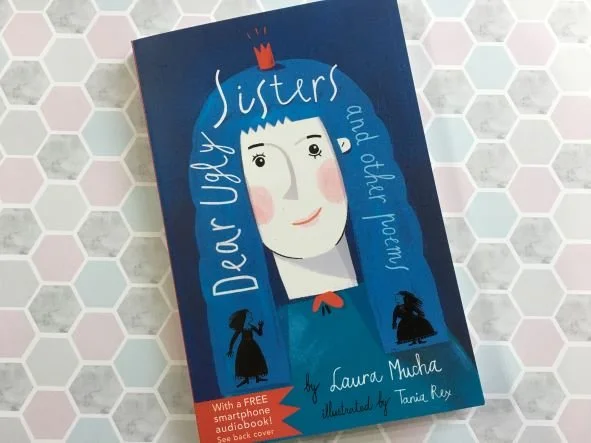
Today, I delighted to be joined by one of the most joyful people I know- poet, Laura Mucha, whose poetry book, ‘Dear Ugly Sisters and other poems’ won the NSTBA poetry category in 2021. This collection has proved incredibly popular with teachers and children alike. As well as contributing to various collections, Laura has also collaborated with two of my other favourite children’s poets on the wonderful ‘Being Me’, an excellent resource for teachers and parents as well as being a brilliant read!
1. One of my favourite poems to share with children is ‘Travel by Book’. Which is your favourite book to travel by – and you can only choose one!
The book that pops into my head is Celebrate! which I wrote with the British Museum during the various lockdowns.
Instead of sitting in my gardenless flat in London, researching and writing Celebrate! meant I was in Botswana, Argentina, China and lots of other places I had travelled to before the pandemic hit. It REALLY helped me stay positive because it allowed me to travel the world, even though I was actually locked inside.
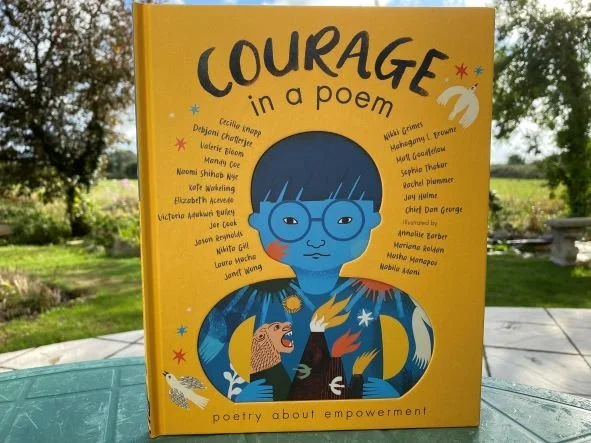
2. I have always loved poetry and my head is full of snippets of my favourites which come to me in moments of need! Have you always been drawn to poetry and if so, which are your childhood favourites?
Growing up, I read English books with Mum and Polish books with my grandparents. I still remember the line ‘whips a pistol from her knickers’ from Roald Dahl’s Revolting Rhymes and REALLY loved his language and humour.
But I think my favourite book was Stefek Burczymucha by Maria Konopnicka. I still have my original copy… It’s a poetic picture book about a boy who pretends to be ridiculously brave and describes all the things he’d do to various scary animals. But at the end, you discover he’s actually petrified of a teeny tiny mouse. It’s written in fantastic metre and rhyme, which I think you can still enjoy even if you don’t speak Polish. And I love the way it explores the difference between what we say and what we actually feel or do.
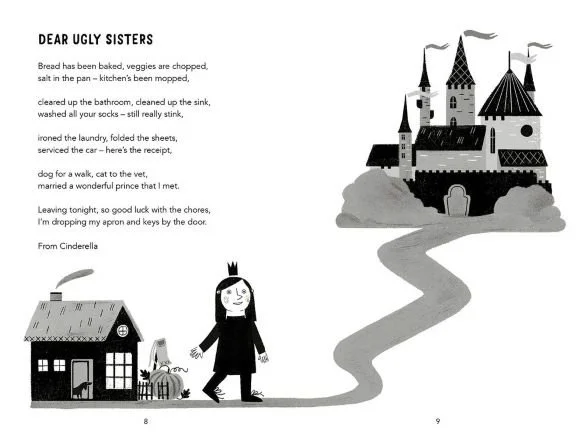
3. In your collection, ‘Dear Ugly Sisters and other poems’, you share poems in a number of forms- haiku, acrostic, shape. Do you have a favourite to use or do your ideas take shape in a particular form as they come to you?
Weirdly, a lot of poems come out as: tee TUM tee TUM tee TUM tee TUM. It’s called iambic tetrameter, and sometimes I wonder if that’s what my internal metronome is set to?!
But I think variety in a poetry collection is VERY important, so I tried to write in different forms so the book didn’t start to feel monotonous.
Not ALL my poems come out in strict metre. Quite often they seem to demand their own shape and form, and it feels like my job to figure out what they’re after. It’s odd to talk about poems as if they have a personality but it does feel like that sometimes!?

4. Do you write books- fiction or non-fiction- as well as poetry?
I write fiction for younger children, and non-fiction for all ages, from preschool to adult. My plan is to write fiction for older children and young people too, but I have quite a lot of non-fiction books to finish first...
I used to be a lawyer, so maybe that's why I love doing LOTS of research and trying to find the simplest way possible to communicate big ideas. I spend a massive amount of time writing and rewriting to try to make language help understanding, instead of stand in the way of it.
Poetic technique plays a HUGE role in that, even when I’m writing prose. Poetry influences everything I write and I often send what are probably quite annoying notes to my editors talking about metre even when a book doesn't have a single poem in it.
5. Why do you think poetry is important- particularly for children?
I love the musicality of poetry. I think it can help make words feel more friendly, more accessible, more joyful, more memorable. So I think poetry has an important role to play in language development.
I think the smallness of poetry can be really helpful in exploring and containing difficult thoughts, feelings and experiences that might otherwise feel scary or overwhelming to a child or young person (or adult). It never ceases to amaze me that a small package of words can help clarify something difficult in our lives, change the way we think and help us know we are not alone.
A poem’s smallness is also a great way into learning how to write. I love co-writing poems with large groups of students, going through the messy start of the creative process to the brutal decision making that’s involved in editing, followed by the challenges of performing. Poems are a great way to learn all of that. I don’t think I could achieve anything near that trying to co-write a chapter with a hundred students in a short space of time.
But despite its many benefits, I think a lot of people see poetry as intimidating or difficult and I would love to change that.
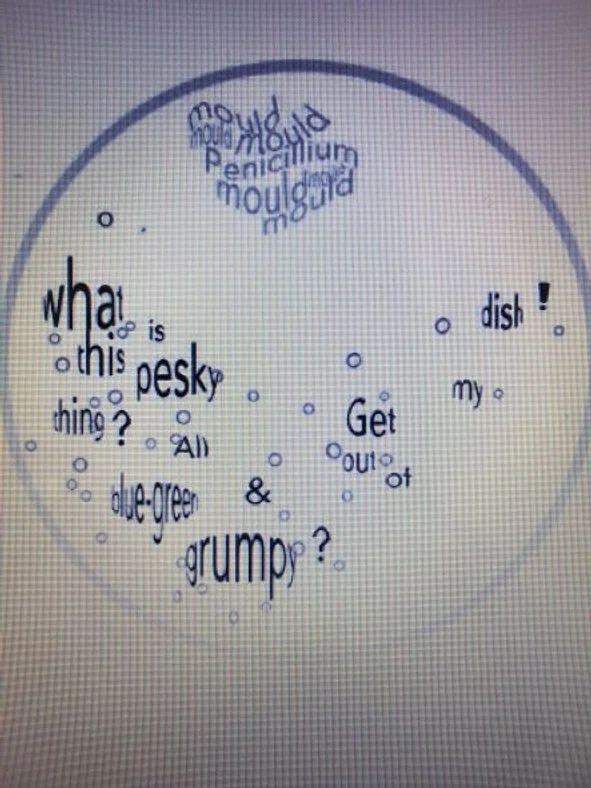
Photos taken during the on-line launch of ‘Shaping the World’.
6. What can you tell me about what are you working on at the moment?
I’m in the process of finalising three books: the first is Celebrate! that I mentioned earlier. The second is Welcome to our Table, a book about food around the world for children. I co-wrote it with my husband who is a food writer and learnt a GIGANTIC amount doing it.
The third is a book for adults about how our upbringings impact us throughout life. I joined a research group at Cambridge University to try to understand all the many, MANY complexities of the subject – and to make sure I don’t get it wrong! It’s taken me about 5 years so far and I’m looking forward to finishing...
I’m also working on a series of full colour poetry-non-fiction books for Hachette. The first is called Scary and looks at creatures that seem scary before exploring why they aren’t, or why they’re scary because they’re scared, or why they’re actually really interesting. It also explores the science of fear. Fear plays a major role in our lives, and I don’t think we do enough to support young people in understanding how it works or how to manage it.
7. And lastly- and most importantly according to my niece- what is your favourite cake?
When I was little, my grandma used to bake cakes and one of my favourite things EVER IN LIFE was to lick the bowl. It didn’t really matter what the cake was, as long as it was uncooked and dolloped on my finger!
Another favourite cake is anything my mum makes me for my birthday. She always goes all out and creates slightly bonkers iced bonanzas. When my very first book came out, she made a cake that looked just like the book cover. She’s also made me a cake that featured a swimming pool in it!?
I don't think I've answered your question. If I had to choose one type of cake, I would go for cornflake cakes when they’re smothered in dark chocolate. I think they are DELICIOUS! In fact, I might make some right now…
Thank you so much to Laura for joining me today! I can’t wait to read ‘Celebrate!’ and we must get together for a cake making (and eating!) fest sometime soon!!
You can read my review of ‘Dear Ugly Sisters…’ here including a link to some teaching notes to go with some of the poems.
Pause for Poetry: The Wild Verses

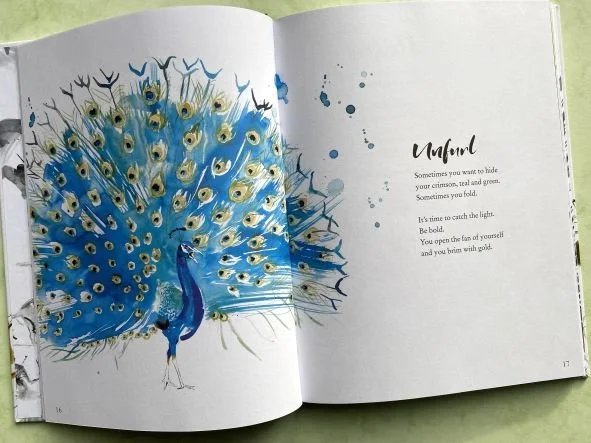
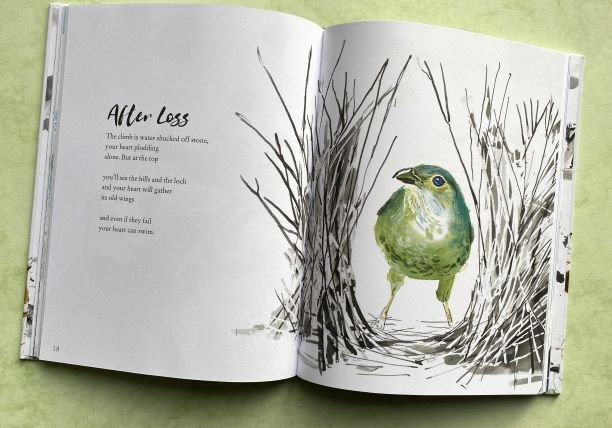
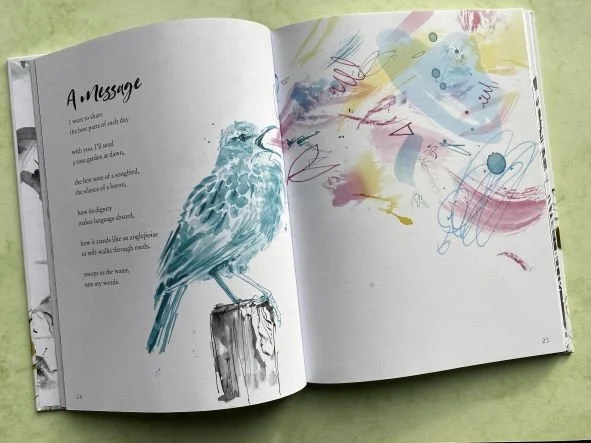
‘The Wild Verses’ is a lovely collection of verse, offering comfort and calm as it explores a whole range of emotions and feelings. Each verse is accompanied by Sarah Maycock’s stunning illustrations of animals and birds, making the book a visual treat as well.
The poems are grouped into sections- Joy, Hard Times, Family, Strength and Love- enabling the reader to choose verse to match their mood or to browse and select at random. The title page of each section offers a quote from a famous writer- John Keats, Emily Dickinson, Louise May Alcott- whose wise words set the tone for the poems which follow. In her introduction, Helen Mort explains that the reader will find ‘a different mind-landscape for every mood’ in this collection with art and language combining as an ‘invitation to stand back for a moment’. There are so many poems to enjoy, to reflect upon and to linger over here, offering those ‘still moments’ which we all deserve.
It is always a challenge to select a few favourites to comment on from a collection! Different poems appeal at different times and to different moods, but one of my best loved has to be ‘Duo’ with its gorgeous illustration of a bear and a giraffe. Another is ‘The Painter’ which I think would be brilliant to use as a model with children for creating their own versions as well as for the beauty of the thought it captures!
Subtitled ‘Nature poems on love, hope and healing’, ‘The Wild Verses’ is a collection to savour, to meditate with, to muse on. The book concludes with tips on how to be more mindful which many readers may find useful and seek to incorporate these wonderful words and pictures into their well-being moments.
The Wild Verses Helen Mort, illustrated by Sarah Maycock
Big Picture Press ISBN: 978-1800784765
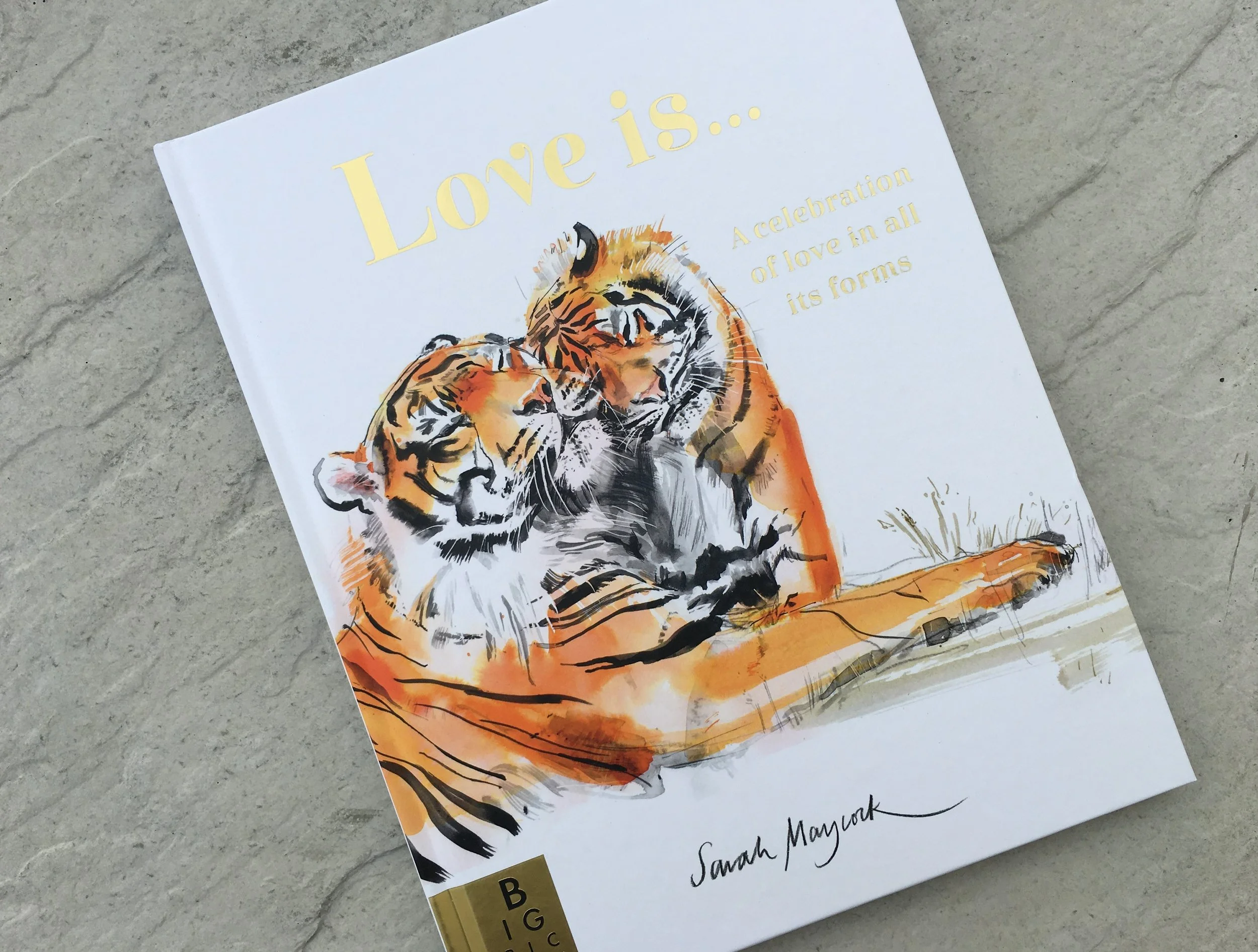
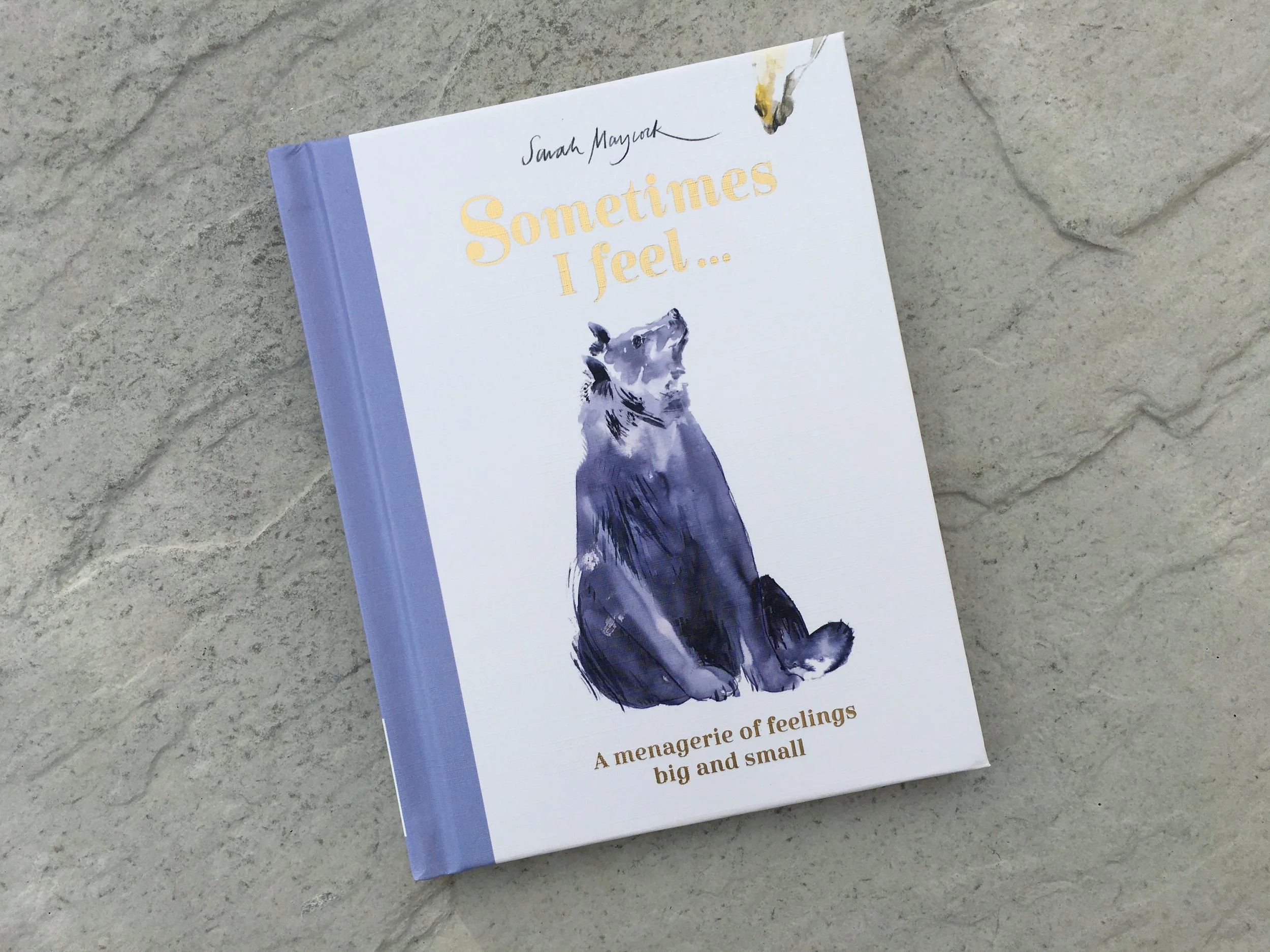
You can read my review of ‘Love is…’ and ‘Sometimes I Feel…’ both by Sarah Maycock here.
Birds of a Feather
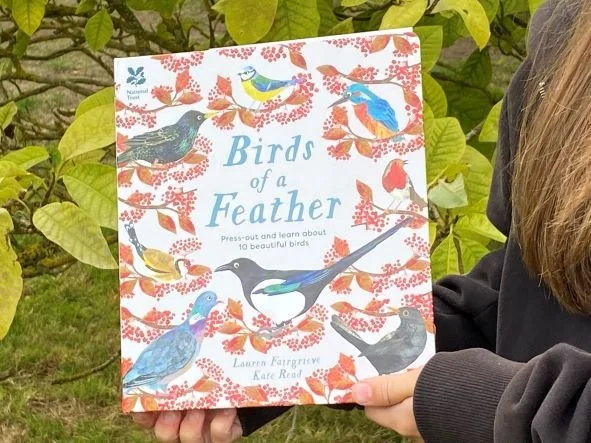
Produced in collaboration with the National Trust, ‘Birds of a Feather’ combines information about ten beautiful birds with the interactive element of creating 3D models. Perfect for children interested in nature or for encouraging imaginative play, this book is an excellent addition to any shelves.
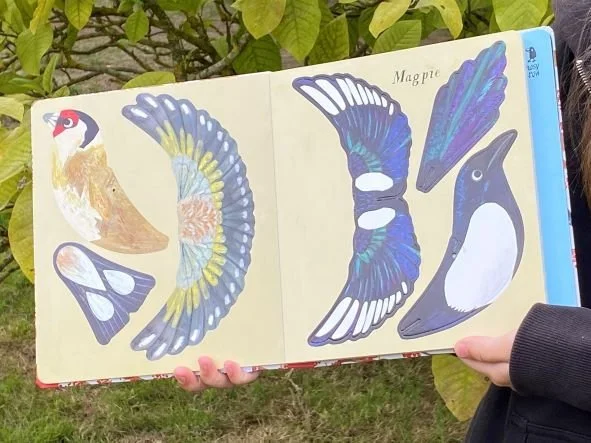
The models are constructed by pressing out the sturdy card pieces which then slot together. Illustrated on both sides, string can be added to each bird so that they can hang as a flock either as decoration or as a constant talking point, the focus for much learning. However, there is the added bonus of being able to press the pieces back into their spaces ready to be used again and again unlike many books of this ilk where bits are easily lost, leading to frustration and disappointment.
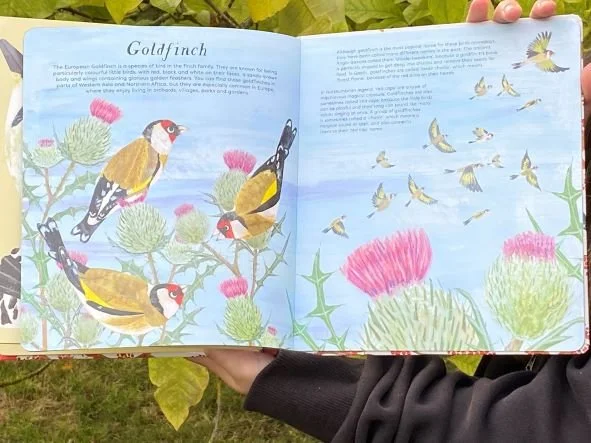
Behind the sturdy board pages is a beautifully illustrated information section with a section about each of the birds. Not only does this offer facts about the bird’s appearance, diet and habitat, but there is a wealth of folklore and legend here as well, all sure to ignite curiosity and inspire further research. It’s a great way of engaging children with nature and developing their observational skills as well as their reading! ‘Birds of a Feather’ would make an excellent gift this Christmas!
Birds of a Feather
Lauren Fairgrieve, illustrated by Kate Read
Nosy Crow in collaboration with the National Trust
ISBN: 978-1839942723
Gross FACTopia! Follow the Trail of 400 Foul Facts
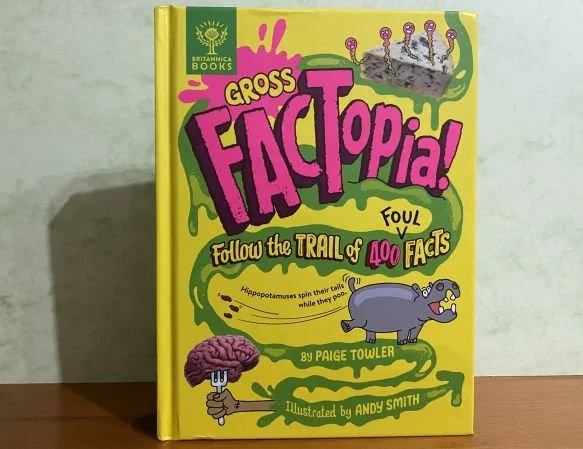
Highly entertaining, completely absorbing and utterly disgusting, ‘Gross FACTopia!’ is a brilliant read. Every fact is linked to the next in ingenious ways, creating a trail of information which sometimes branches out allowing the reader to choose their own path through this cornucopia of revolting facts!
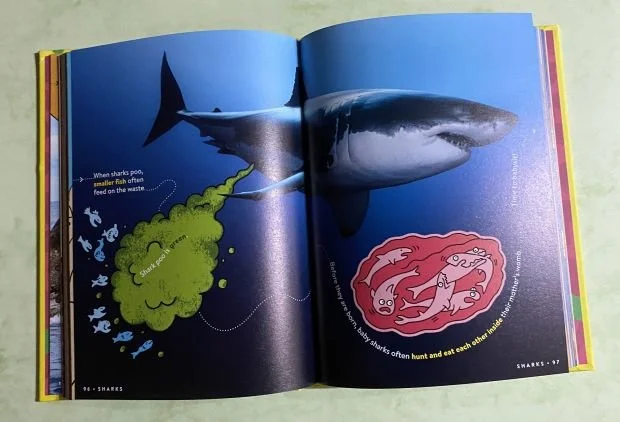
The colourful layout of each spread, combining photographs and cartoons, is instantly appealing and the trail of facts linked by dotted lines is easy to follow (or not!), presented in accessible chunks. The book is perfect for dipping in and out of or for inhaling at speed as curiosity and strength of stomach dictate!
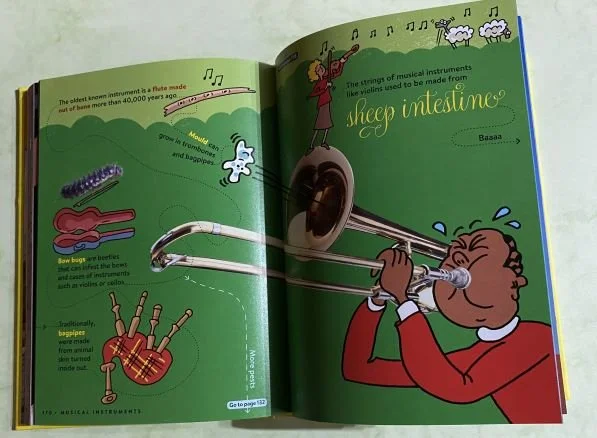
Some of the information here is truly disgusting- the sort of facts which children are curious about and yet have that ‘yuck!’ factor like caterpillars which can shoot poo pellets, how one chicken survived a whole year without a head and how the Surinam toad gives birth. Although the table of contents and index allow readers to locate specific facts, this is one of those books best enjoyed by browsing!
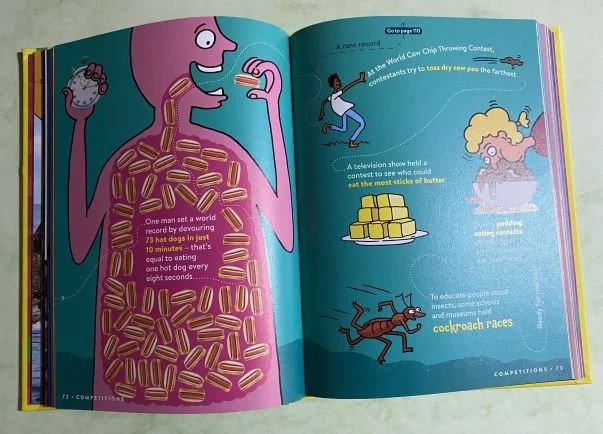
‘Gross FACTopia!’ would make an excellent addition to any book corner (home or school) or library as well as being a brilliant stocking filler this Christmas!
Gross FACTopia! Follow the Trail of 400 Foul Facts
Paige Towler, illustrated by Andy Smith
Britannica Books ISBN: 978-1913750671
Wild Animals of the World
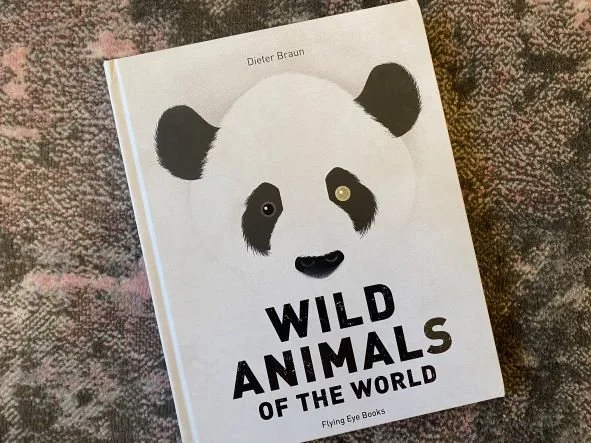
‘Wild Animals of the World’ is a beautifully illustrated book, the perfect gift for any animal lover. Combining Dieter Braun’s ‘Wild Animals of the North’ and ‘Wild Animals of the South’, it takes the reader from continent to continent, admiring a selection of the incredible animals that live there. The text has undergone some revisions from the previous editions and offers information in a concise synopsis.
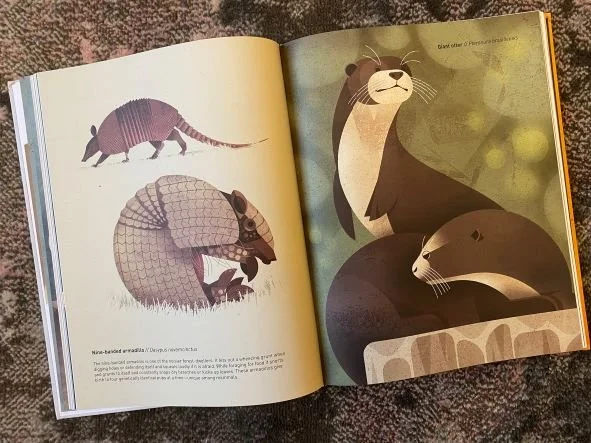
Each picture is clearly labelled with both the English name and the Latin binomial classification which Y6 children enjoy applying their learning from science lessons to! The index allows animal specific information to be quickly located; however, for some, there are only a named illustration rather than additional text. This lends itself perfectly to further research where children could write their own entry for these animals, using Braun’s text as a model.
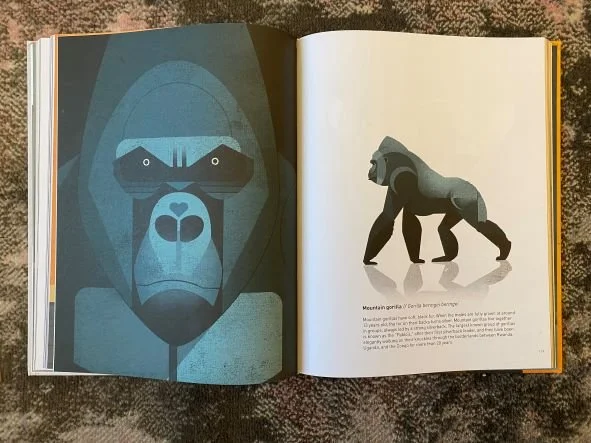
The illustrations are simply stunning. The Northern bald ibis seems to fix you with a steely glare whilst the Asian elephant seems to move through the water, trailing bubbles in its wake. A Malayan tapir drinks from a river as its young waits by its side; ermine, alpine hare and Arctic fox share a snowy spread and Japanese macaques enjoy the hot springs. There is so much to enjoy and explore in these pages and children never stop marvelling at the pictures, returning to them again and again.
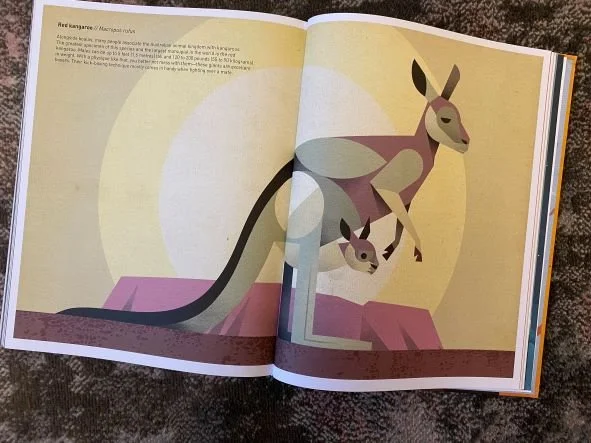
This book would make a lovely gift for a nature loving child (or adult!) who also enjoys beautiful illustrations.
Wild Animals of the World
Dieter Braun
Flying Eye Books ISBN: 978-1838741143
Meet Joseph Coelho
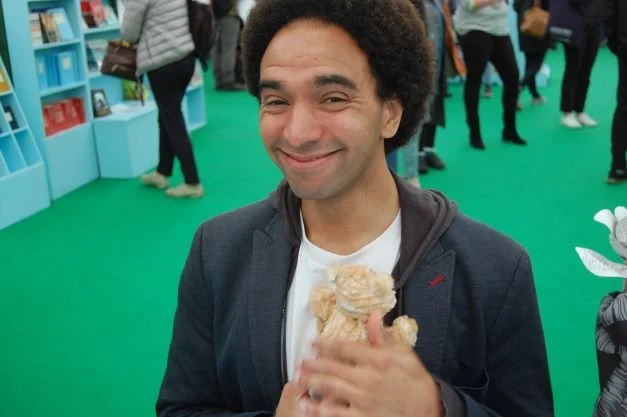
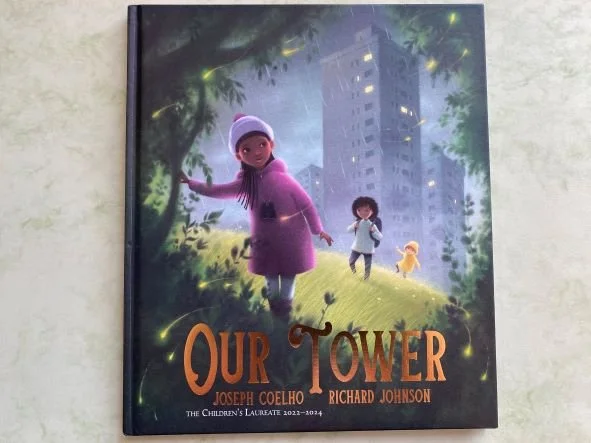
Today, I am delighted that Joseph Coelho kindly found time in his very busy Laureate-ing schedule to join me on the Bookshelf. I have heard Joseph speaking many times over the years, at conferences and festivals, and am constantly inspired by his enthusiasm and passion for poetry. Author of the lovely ‘Luna’ books (Luna Loves Library Day, Luna Loves Dance, Luna Loves WBD, Luna Loves Art) illustrated by Fiona Lumbers and the ‘Fairy Tales Gone Bad’ series, Joseph has also written some fabulous picture books, including the very beautiful ‘Our Tower’, illustrated by Richard Johnson.
1. Firstly, huge congratulations on becoming Children’s Laureate. I am sure you have great plans and will be doing many exciting things. What would you like your legacy from this time to be?
Thank you so much, it is a real honour. Being a poet, my first focus is on poetry and shifting the baggage associated with the medium. I have spent over 20 years working in schools engaging young people with literacy through poetry and have seen first-hand the impact that poetry can have in this endeavour. But I have also seen the fear associated with poetry that's why I have started the Poetry Prompts. Every week a new video goes live gently inviting everyone to write a poem in a fun and accessible way in under ten minutes, I want everyone to reclaim the birth right of poet and to realise that poetry is there waiting for us whenever we need it, not just for those big life changing moments (deaths, births and marriages) but also as a means of describing a perfect holiday or expressing a day when we haven't felt ourselves or recording a fun time with friends. I hope that after my tenure has finished there will be a lot more people realising that poetry is always available to them.
You can take part in the poetry prompts by checking out the videos over on the Booktrust website... www.booktrust.org.uk/poetryprompts
2. Everyone knows how much you value libraries from your ‘Library Marathon’. Did you have a particular library you used to visit as a child and do you have a favourite now?
My first library was Roehampton library, still open! Based at the bottom of a block of flats I have fond memories of exploring its shelves when I was little. I have visited over 141 libraries now as part of my Libraries Marathon where I plan to visit and join a library in one of every 209 library authorities in the UK. I have seen brand new modern libraries, libraries in buses, beautiful Carnegie libraries and even a library in a converted one-bedroom flat on an estate. Every library has its charm so it's hard to pick one, but if pushed I would go for the new Children's Library opened in Z-arts Manchester a beautiful rainbow filled library filled with kids’ books.
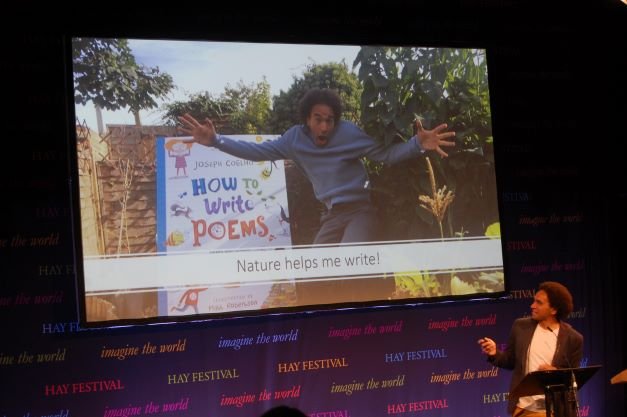
3. If you were in charge of education, what would your dream vision for poetry in schools be?!
I would love to see more space for creative writing that would include poetry. It's such a shame that young people so often miss out on the opportunity to see themselves as writers and poets. I find that if a young person is able to see themselves as a writer then they are more likely to want to engage in reading and discovering the works of others. The written word becomes something that is welcoming them in rather than just something done by other people.
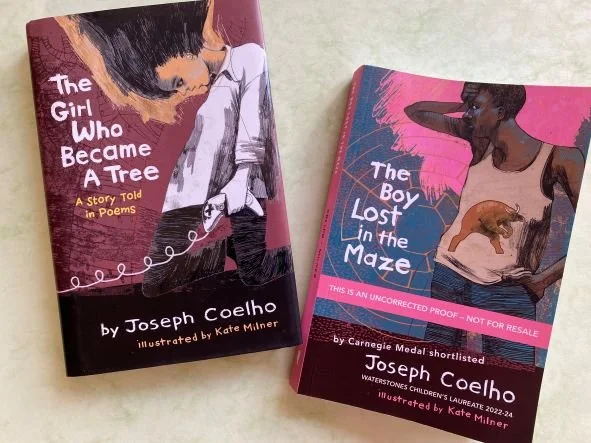
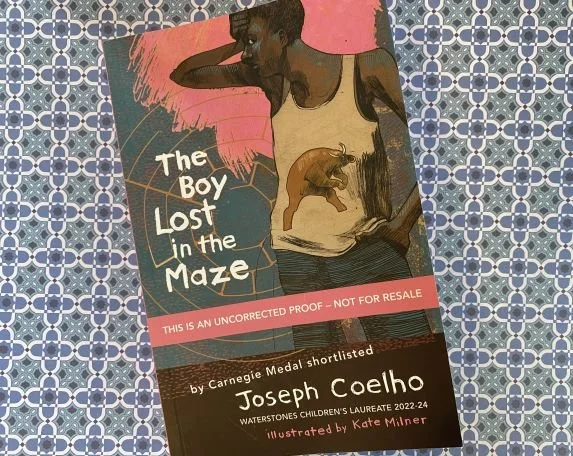
4. In ‘The Girl Who Became a Tree’ and ‘The Boy Lost in the Maze’, you brilliantly blend modern life with Greek mythology. Do you have plans for any more verse novels in this style?
I'm always dreaming up new stories and have quite a few things I want to work on, so you never know... watch this space.
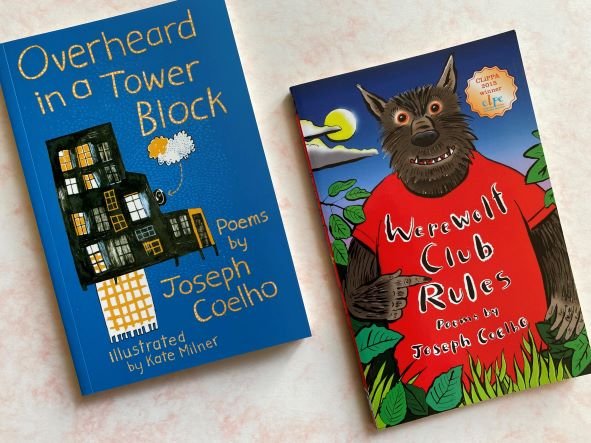
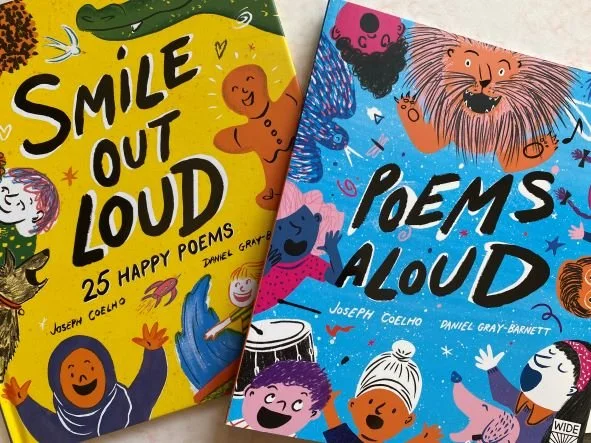
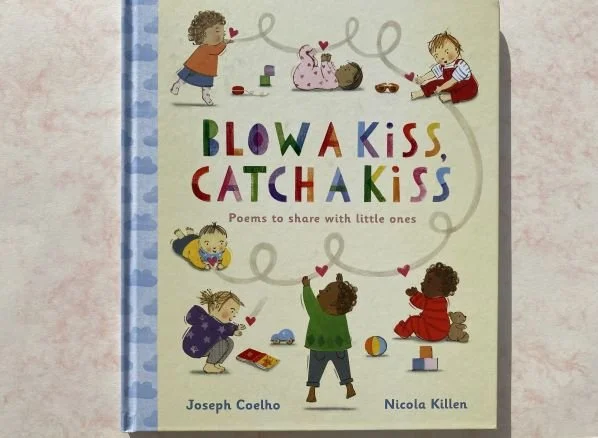
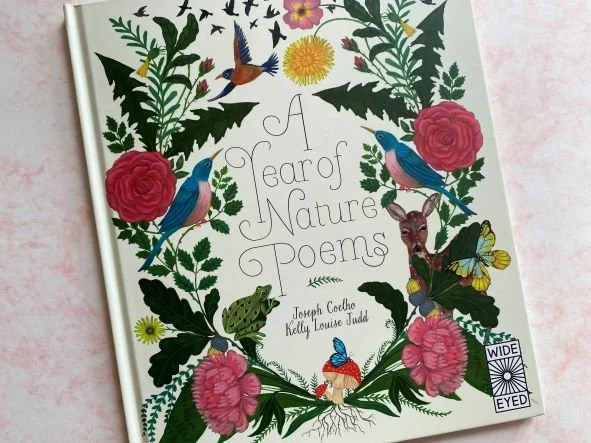
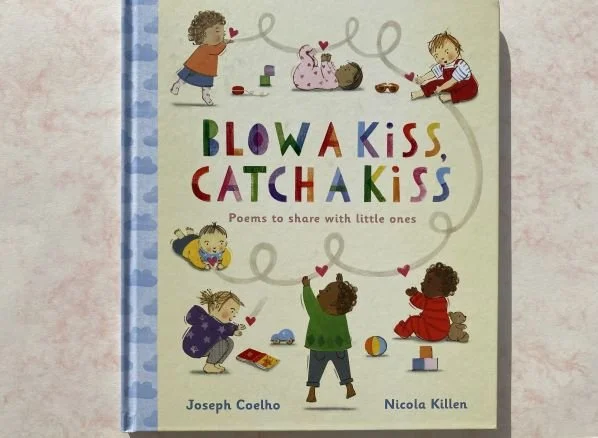
5. Your new book, ‘Blow a Kiss, Catch a Kiss’, is a joyful collection of poems for very young children, but you write poetry which appeals to all ages. Which age group do you find the easiest to write poetry for and which the hardest?
I don't believe there is one age group that is harder to write for... writing a good poem is difficult no matter the age range. There is often a belief that writing for younger children is easier, people read a rhyming text or a picture book text and think (without ever trying it) "I could do that!" when in fact using fewer words to great effect makes things trickier and when writing for a younger audience you are writing a piece that (you hope) will be read again and again and not just by the child but by the adult as well. When writing material for younger audiences you really also have to consider an adult audience too. If anything I think it is easier to write badly for young people - and this is where the misconception lies.

6. What are you working on at the moment?
Several exciting things, a new action-adventure middle-grade series, a couple of poetry collections and some more PB's a little bit of everything and a few expeditions into new territory which I’m particularly excited about with my Ten Word Tiny Tales coming out next year. It is a compendium of illustration talent working with artists like Flavia Drago and Shaun Tan to help young readers unlock their imaginations by taking one of my little stories - gorgeously illustrated by a host of fantastic illustrators - and turning them into fully fledged tales.
7. And lastly- and most importantly according to my niece- what is your favourite cake?
This is a serious and difficult question. I am partial to a piece of Madeira but of late I've become slightly hooked on a vegan biscoff sponge from a local cafe... in fact, I may grab a slice now!
Huge thanks to Joseph for joining me today. Biscoff Brownie is a huge favourite in this house, but we might have to try the sponge. I’m very excited to hear about ‘Ten Word Tiny Tales’ and shall eagerly await its arrival!
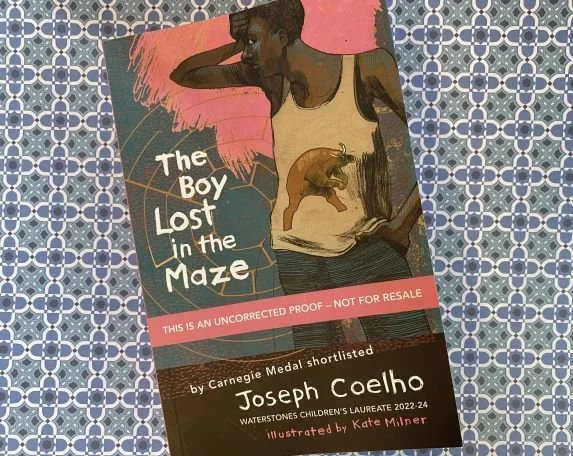
You can read my review of ‘Blow a Kiss, Catch a Kiss’ here and ‘The Boy in a Maze’ here.
Mathematics for Beginners
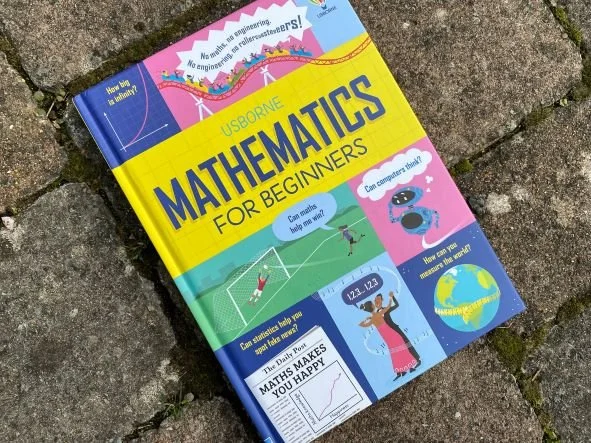
Part of the very popular ‘For Beginners’ series, ‘Mathematics for Beginners’ is a fascinating introduction to the history of the subject as well as the different stands it covers, such as numbers and probability. It is the perfect book for those children who want to know why they have to learn about mathematical concepts, encouraging them to see the possibilities and connections of the subject, perfect for budding maths boffins who thrive in this area- and perfect for reflective teachers who might want to deepen their own understanding of the subject and add a little something extra to lessons.
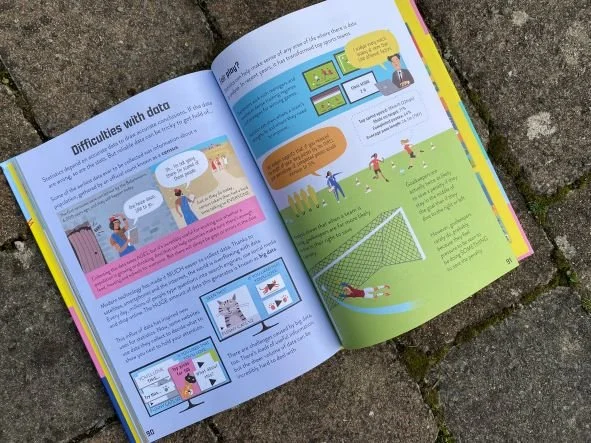
Each double spread is both attractive and easy to navigate with text sectioned into manageable chunks. Contents, index and glossary are included, allowing children to use their reference skills or dip in and out of the text as interest is piqued. The use of speech bubbles is engaging as characters either discuss certain points or speak directly to the reader to explain or comment on something. El, Nina and Marcus 3.0, a robot, act as guides through the book with El ending up convinced that maths is ‘vast and varied’, not ‘boring’ as she maintained at the outset.
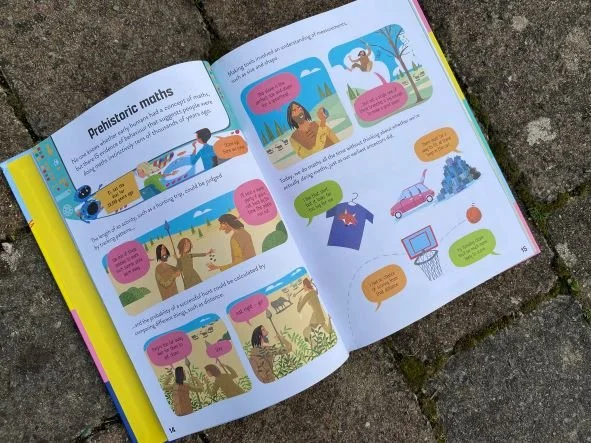
The book could also be used for Guided Reading sessions and offers links to other subjects. The history section obviously could be used alongside work in other subjects and the computing section explains many things we might just take for granted. Much of the mathematical content is relevant to the primary curriculum with teachers easily able to guide children to relevant sections if they wish to, but there is plenty here for older children as well. A great addition to library and book corners, this is one for home and school!
Mathematics for Beginners
Sarah Hull and Tom Mumbray, illustrated by Paul Boston
Mathematics expert: Dr Audrey Curnock
Usborne ISBN: 978-1474998543
Pause for Poetry: Blow a Kiss, Catch a Kiss

This is a delightful collection for babies and toddlers which offers poems about their everyday experiences. Gathered into four sections- All About Me, Out and About, What Do I Feel? and At Home- Joseph’s poems capture the essence of the things which shape a little one’s day and the simple joy of these experiences.
The poems play with sounds and word families, making them easy to learn and even easier to interact with. You can’t help but join in with the ‘Dancing Families’, use the bubbles in a bath to follow the actions of ‘Bubble Pop’ or gather your own imaginative collection after reading ‘Collecting’.
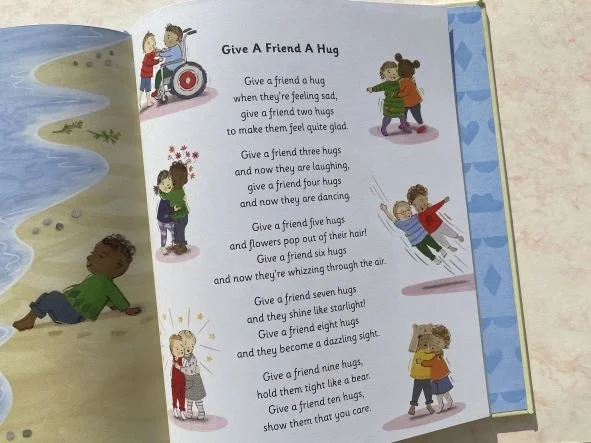
There are poems which share love and hugs and those which help develop empathy and understanding of feelings. Many of the poems could be used as action rhymes- Stomp, Sneak, Dance, Blow a Kiss- which families could add their own ideas and verses to. ‘Take a Deep Breath’ is a wonderful poem for encouraging calm and could easily become part of a daily routine just as ‘Dreamtime’ is the perfect poem for ending a busy day.
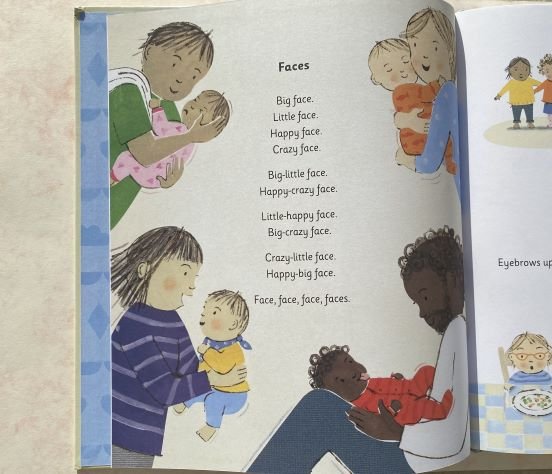
Each poem is worthy of comment, but two of my favourites are ‘Take a Book from The Shelf’ and ‘Some Words’ which offer plenty to chat about as well as being great poems! Nicola Killen’s illustrations are full of fun and energy, perfectly capturing the essence of the poems.
Brilliant for home and school- a collection for everyone!
Blow a Kiss, Catch a Kiss
Joseph Coelho, illustrated by Nicola Killen
Andersen Press ISBN: 978-1839131363
Originally reviewed for Reading Zone.
You can read my review of The Boy Lost in the Maze here.
Once Upon a Hillside
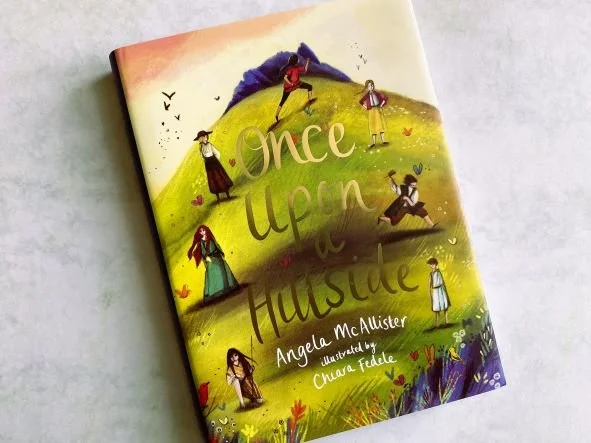
In ‘Once Upon a Hillside’, Angela McAllister skilfully combines seven different, yet linked, stories following the changing landscape of a hillside over the course of six thousand years. It celebrates the healing power of nature, the beauty and joy to be found in the outdoors and how it connects us to the past.
There is so much to love about this story. Angela draws on folklore, her fondness for archaeology and nature’s wonders to create something very special which would be an incredible choice as a key text to inspire and develop children’s own writing.
The stories are linked, not only by the landscape, but also by objects which are significant to characters being found those in the later tales. This idea of history from objects- the stories of past owners- the personal stories uncovered by archaeology- is one which fascinates children and the book could be used to develop work on the local area through significant or relevant periods of history. This island is so full of history that every village (let alone town or city) has a wealth of material to draw on. My own village has an iron age hill fort, had a Roman temple (some say you can still hear the echoes of the footsteps of Roman soldiers haunting it!), was the site of a battle between the Saxons and Danes, suffered at the hands of Royalist soldiers and was flooded in the Somerset tsunami amongst other things- plenty to capture the imagination. Angela’s beautifully constructed and sensitively written book is perfect for inspiring children to write their own stories as well as developing their own ideas about the characters in the book.
Richly illustrated, ‘Once Upon a Hillside’ would make a wonderful gift to share and enjoy again and again. Below, I have included a synopsis of each story, but I would hate to spoil this gorgeous story for anyone- so please stop here to avoid spoilers!
The book opens with the story of Tani as she ‘walks where no foot has ever stepped before…’. Set in the Neolithic era, the hillside is wild and wooded, full of creatures, and Tani is determined to uncover its secrets. Her family have different ideas, feeling she should take her place with the women. Whilst knapping, she finds a flint containing the form of a white bird with outstretched wings which her people believe indicates she is a chosen one and soon, she proves her worth…
Time passes and twins, Corio and Lucillia live on the hillside in their family’s villa. Corio longs to join the Roman army and march across the Empire and is delighted to find an old arrowhead containing the milky white shape of a bird. Lucillia finds a wounded hare which she cares for, praying to a statue of the goddess Diana to take pity on the poor creature.
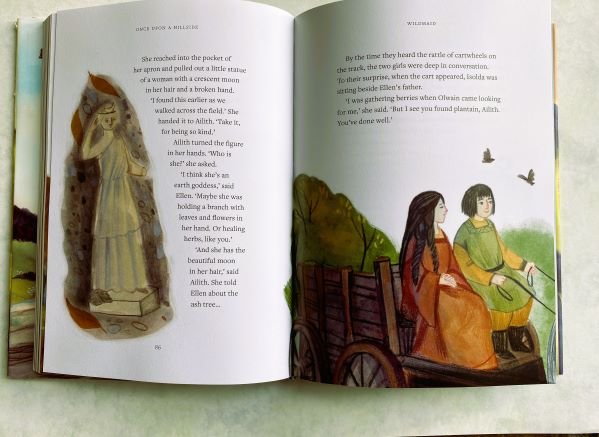
The Middle Ages arrive and Ailith and her mother, Isolda, arrive on the hillside and make their home in an abandoned cottage. At one with nature, Ailith wishes ‘she could gather a cloak of sunset and wrap it about herself’. She ties a horseshoe to the low branches of an ash tree and she and her mother help those around them with remedies from nature until their well being is threatened by lies of a stranger. When Ailith helps Ellen, who has hurt herself, she is given small Roman statue which Ellen found on the hillside as a token of thanks and the truth about the lies is discovered, leaving the wildmaid free to dance with the wind.
In 1650, young Liddy arrives on the down, trying to make his way in the world. Hired as crow scarer by a farmer, he works hard at this thankless task before stopping to listen ‘to the music of the down’. He is befriended by a shepherd who carves him a wooden sheepdog. After a storm, he finds horseshoe half buried in the heartwood of a tree which leads to him finding family he never knew he had.
The Victorian era arrives and we meet Clara, who is fascinated by grandfather’s collection of finds, and joins him on a dig on the hillside where they are exploring a burial mound from around 6000 years ago. She is given brass magnifying glass by grandfather before a series of strange events lead the workmen to abandon the dig. Determined to solve the mystery, Clara investigates, hiding in a shepherd’s hut where she finds a wooden carving of a dog. Having found a solution to the dig’s problems, Clara’s grandfather gifts her a stone tool from the dig.
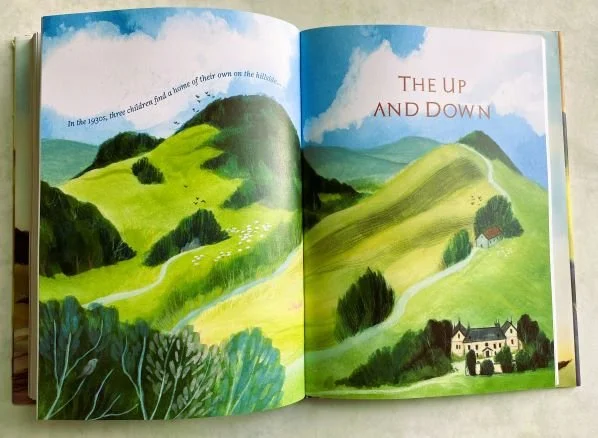
Three children, Peggy, Dennis and Stan, arrive on the down in the 1930s, to stay with an old lady who had been friends with their granny. Peggy finds a little brass magnifying glass and in the woods, the children find a den which they make their own. When the boy who made den turns up, conflict develops, but a game of football brings peace.
In today’s landscape, Amari often stays with her Granny Down whilst her parents are working. As Granny grows older, Mum and Dad think that she should leave the down and live with them. But a visit to the Wishing Tree, an ancient hawthorn growing on the hillside, inspires Amari to take photos of all Granny’s favourite places for scrapbook. Involving her dad in her plan helps him to remember how mush he loves the place and how important it is to spend time in nature and with those we love, leading to a change in plans.
A stunning book from an incredible author.
Once Upon a Hillside
Angela McAllister, illustrated by Chiara Fedele
Head of Zeus ISBN: 978-1801107525
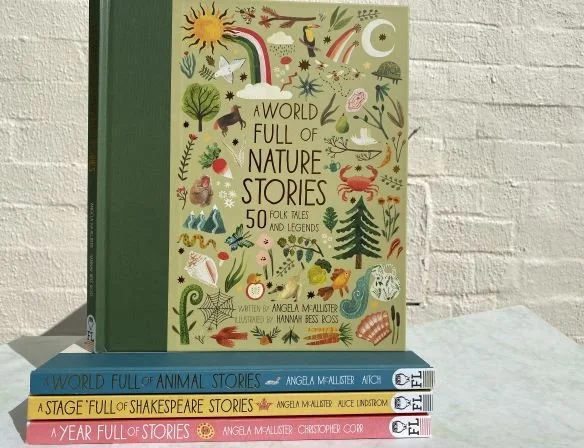
You can read my review of ‘A World Full of Nature Stories’ here and my Q and A with Angela here.

Penguin Huddle
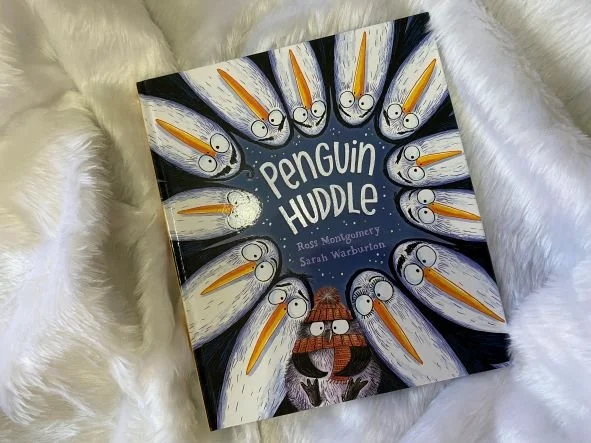
Every day, the penguin pack plays on the frozen southern pole, but when the sun goes down, they squeeze together in a penguin huddle, warm and cosy, all night long. However, one morning, after a freezing gale, the penguins wake up to find themselves stuck together. Luckily, Pipsqueak, the smallest of them all, has the biggest ideas…
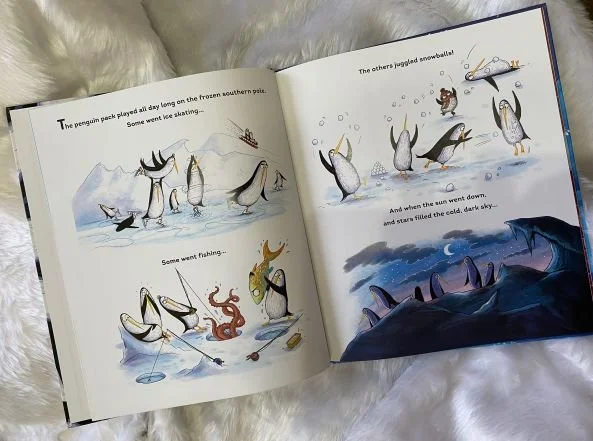
Perfect for the chilly winter evenings, ‘Penguin Huddle’ is a delightful tale of friendship and helping others, full of Ross Montgomery’s humour and Sarah Warburton’s charming illustrations. There is so much to discuss and enjoy on each spread that this will quickly become a firm favourite with young- and old(er) readers everywhere.
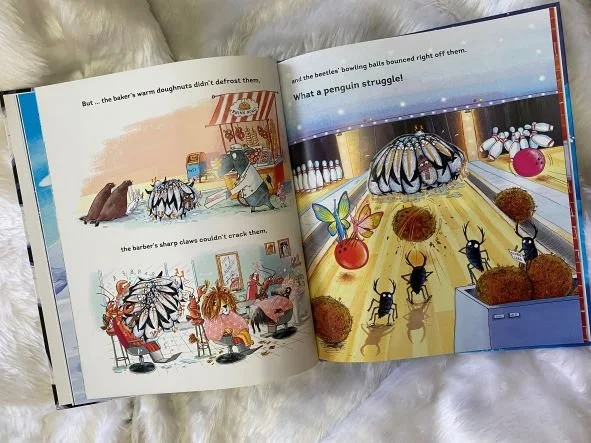
So many creatures step up to help the huddle in need, showing the importance of kindness and lending a helping hand -or paw-or claw-or flipper- whenever you can. Pipsqueak’s positive nature and good ideas lead the penguins to work as a team, eventually solving their problem. The wonderful illustrations lend themselves to children inventing their own stories- the mouse family being aided by the fire-giraffe, for example! There are also plenty of touches of humour to explore in the posters about town and in the Doctopus’s surgery!
The book also lends itself to inspiring creative activities- penguin skittles (made from toilet roll tubes), making lollies, using the features of individual penguins to create new ones- perhaps in a game of Build-a-Penguin! So many possibilities!
That said, this is simply a delightful story, packed with personality and penguin power! One not to be missed!
Penguin Huddle
Ross Montgomery, illustrated by Sarah Warburton
Walker Books ISBN: 978-1406389838
Ghost Orchid
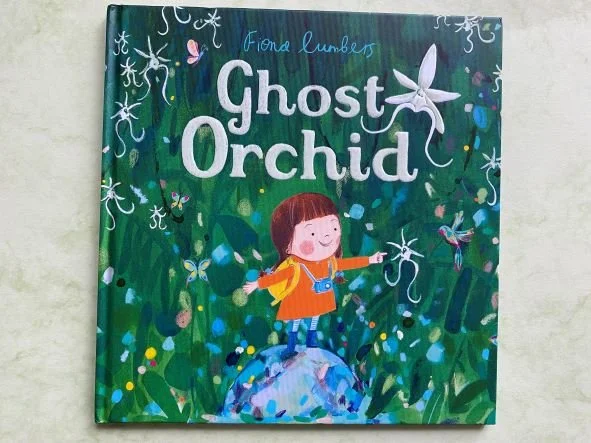
Ava and her parents are off on an adventure to locate the mysterious, rare ghost orchid. Whilst her parents focus completely on the task in hand, Ava wonders at the marvels they see on the way. When they finally reach the location of the ghost orchid, Ava’s parents are despondent as they fear they are too late; however, they are lucky to have Ava, ‘an explorer who notices things that aren’t in the plan’ to open their eyes and change their ways.
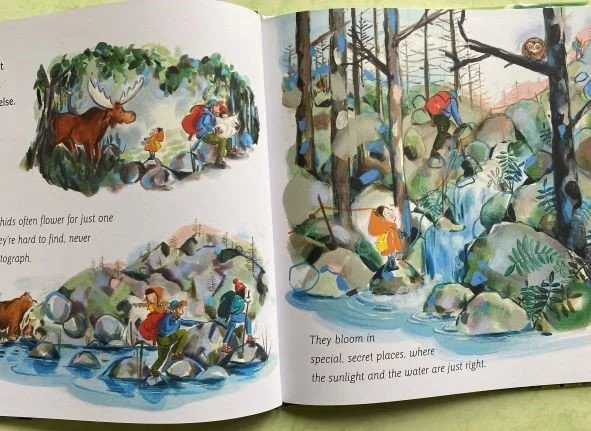
This gentle, beautifully illustrated story is an absolute delight. Text and pictures combine to offer the ‘whole’ story in that way which little children love so much. They can see all the things which Ava sees and share her joy in and curiosity about each discovery Ava makes, thriving in the in-the-moment-joy of being a child. Each illustration is rich in detail with so much to notice and discuss.
I was delighted to find that ghost orchids are real. The title page shows a drawing (fig.1) with the plant’s binomial classification, Dendrophylax lindenii, perfect for leading children into discussions about plants, explorers, classification systems… Although aimed at younger children, there is much that could be developed here with older children as well. The opening end papers show a map of the world with notes attached setting up the story with a dotted travel line marked with x’s to show the places visited along the way, making a perfect starting point for further investigation either at school, with home-schooled children or to start an exciting holiday project to interest and excite children about the world whilst away from school. My son and I used to love doing this sort of thing!
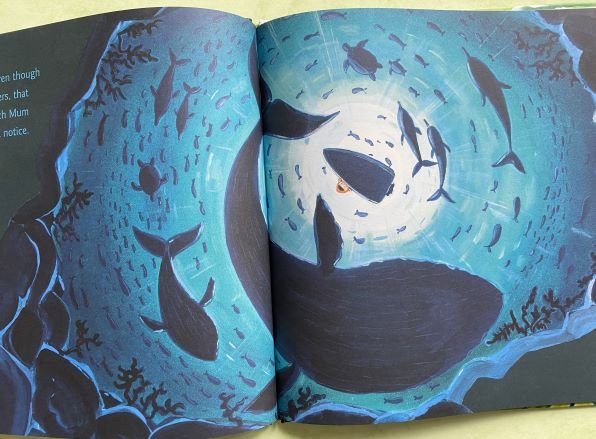
One of my all-time favourite picture books is Layn Marlow’s ‘Hurry Up and Slow Down’ which I frequently share with parents when talking about the joys of reading with children. ‘Ghost Orchid’ has the same feeling- take time to listen to little ones and to see things through their eyes- live the moment. When her parents say, ‘We’ll all explore the Ava way’, the family are shown gazing together at the wonders of nature. Ava is back up on her father’s shoulders, central to the family group rather than tagging along behind her tunnel-visioned parents, each face split by a huge grin, caught up in the joy of being together and really looking around them.
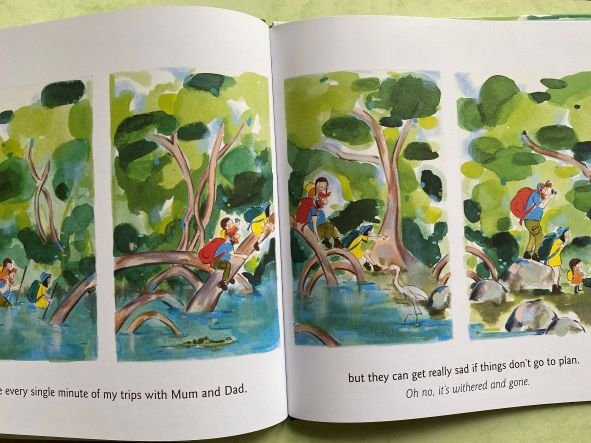
With its gorgeous illustrations, this heart-warming book is sure to become a firm favourite, encouraging discussion and expeditions for families as well as inspiring discovery and creation.
Ghost Orchid Fiona Lumbers
Andersen Press ISBN: 978-1839131370
Meet Samuel Langley-Swain
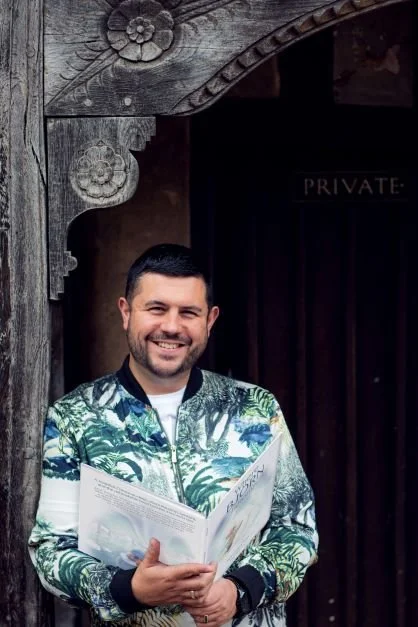
Today, I am thrilled to be joined on the Bookshelf by Samuel Langley-Swain, author and founder of Owlet Press whose books are just delightful. Samuel’s new book, ‘Where Bjorn Belongs’ is a heart-warming, tender story- perfect for this time of year!
1. You are the founder of ‘Owlet Press’, a very inclusive publisher. Why did you choose the name ‘Owlet’?
I was inspired by the symbolic ‘wise old owl’ which is often used in books and in publishing for that matter. I thought about how our books should give children different types of wisdom, helping them grow into ‘owls’ and so Owlet was born. Amazingly the name wasn’t already taken, so it was obviously meant to be!
2. What three words would you choose to describe Owlet Press to someone who doesn’t know you?
Small – we’re one of the smallest presses in the market – a one-man business with a tiny team of fantastic freelance experts. I think often people don’t realise that. The performance of each book has a direct impact on my livelihood, which means any support means so much.
Honest – our books deal with some quite impactful themes, and we approach them with an authenticity that feels respectful to the children who might have those lived experiences. I’m also very open about the trials of being a micro-business within the publishing industry.
Brave – we publish books that other publishers may consider too risky, or niche. For us, we obviously need to survive, but the social need for the book often outweighs the commercial security of a concept. We also need courage to keep trading in changing and challenging markets.
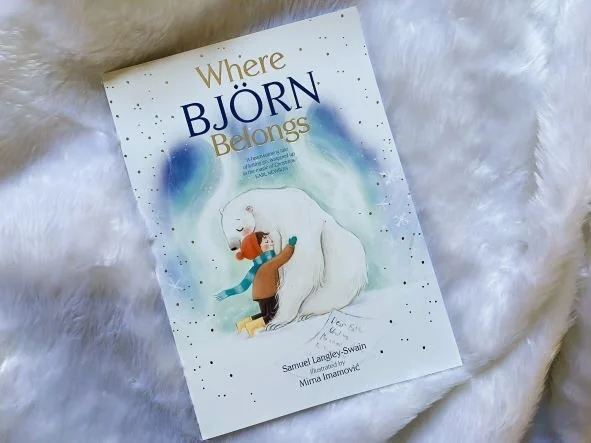
3. ‘Where Bjorn Belongs’ is a beautiful book about friendship and belonging. It starts when a little boy called Arthur loses his favourite toy, a polar bear called Barney. Did you have a toy which offered you comfort when you were young?
I did – I had a small white dog with black ears. It’s one of the only items I still have from my childhood, although it’s up in the attic somewhere and looks a bit sorry for itself after over 35 years!
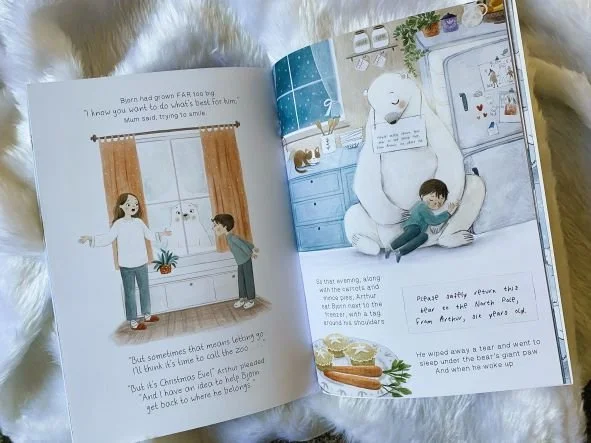
4. Your words are beautifully brought to life through Mirna Imamovic’s lovely work. Which of her illustrations in ‘Bjorn’ is your favourite?
Oh, yes! Her artwork is simply stunning and everything I wanted for this story. I absolutely adore the image of Arthur falling asleep in Björn’s arms, in the open door of the fridge, before his friend is whisked away on Christmas eve.
5. If you could only choose one book (JUST ONE!) to recommend to others, what would it be- and why?
Well, if it was one of mine, then it would be ‘The Blanket Bears’ which helps children and families understand what it means to be adopted, which would help them grow up to be kinder to those who have been on that journey. If it’s ANY book, it would have to be ‘The Comfort Book’ by Matt Haig – I’ve taken a lot from that personally.
6. What can you tell me about the next book we can expect from you?
Well . . . it’s very different to Where Bjorn Belongs – it features a lot of dancing animals, a mixture of body types and abilities, and the theme of being treated like an outsider.
7. And lastly - and most importantly according to my niece - what is your favourite cake?
The hardest question of all! As I’m Welsh, it has to be bara brith (or a simply spiced tea loaf) with a generous wave of butter.
Thank you so much to Samuel for answering my questions. Not sure about your taste in cake, but I’m really looking forward to your next book!
I would highly recommended everyone exploring the Owlet Press website www.owletpress.com to discover more about the amazing books they offer. The thought and care put in to each one is obvious, making them very special.
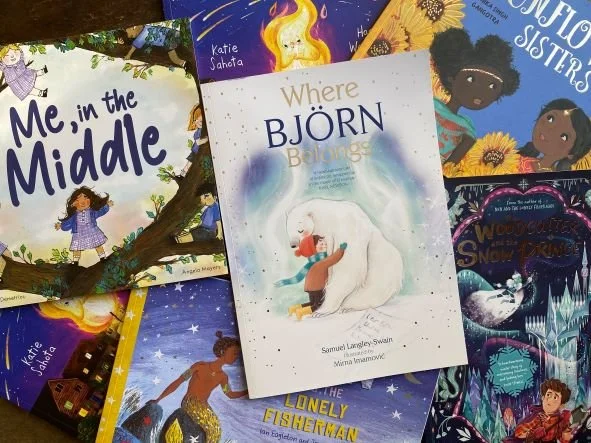
Where Björn Belongs by Samuel Langley-Swain, illustrated by Mirna Imamovic, is published by Owlet Press. Out now, £7.99 paperback.
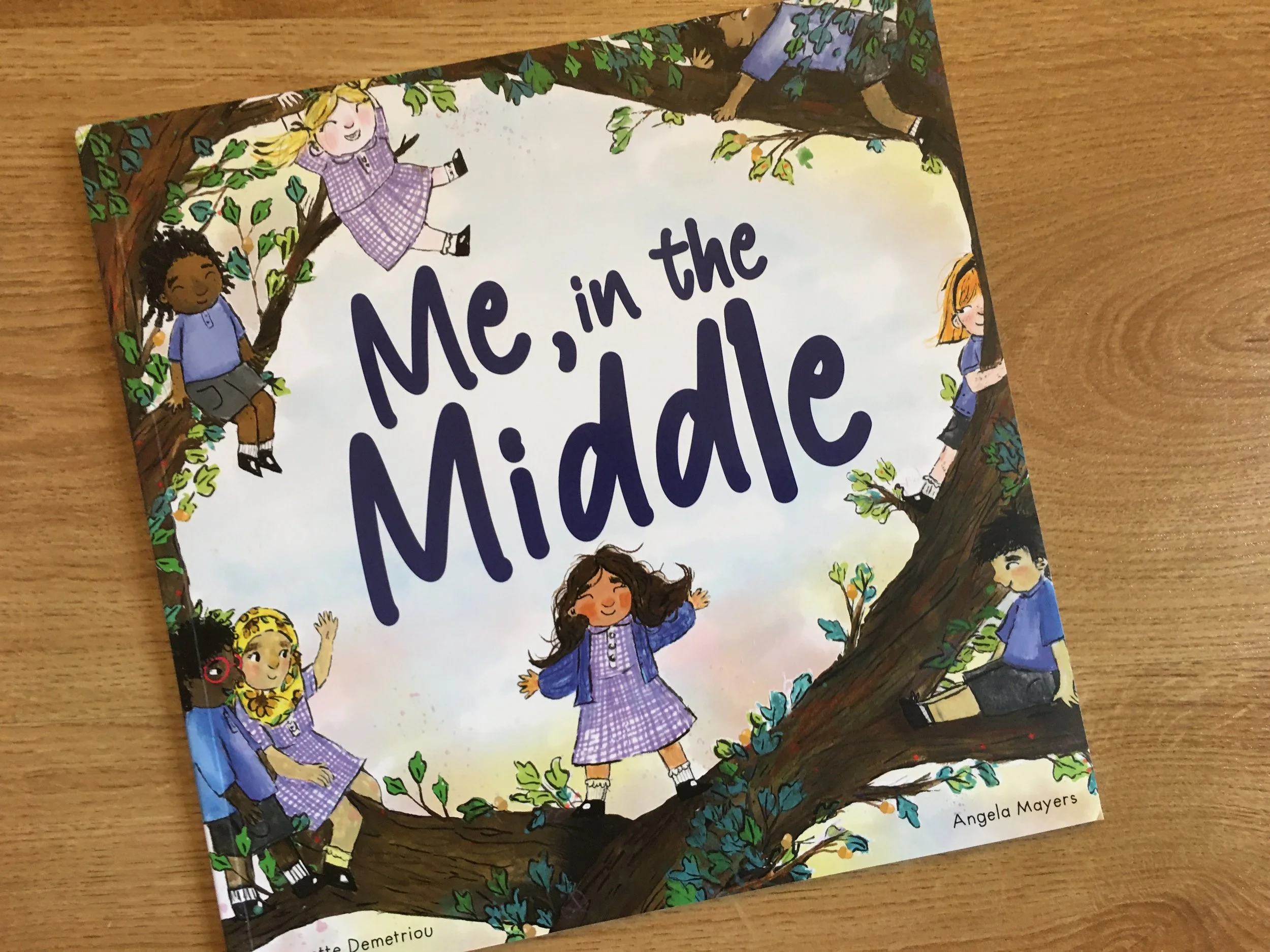
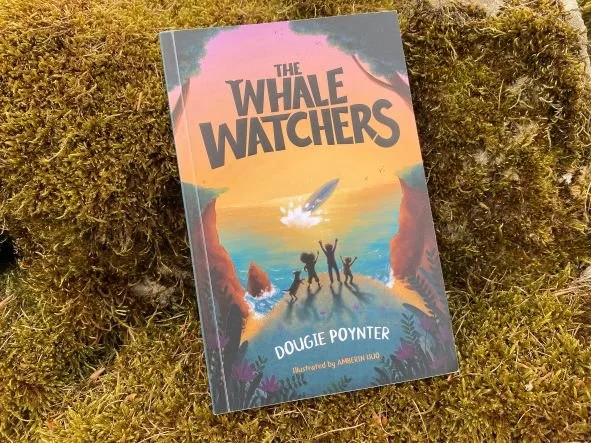
You can read my review of ‘Where Bjorn Belongs’ here and my reviews of two other Owlet Press titles, ‘Me, in the Middle’ here and ‘The Whale Watchers’ here.
Where Bjorn Belongs
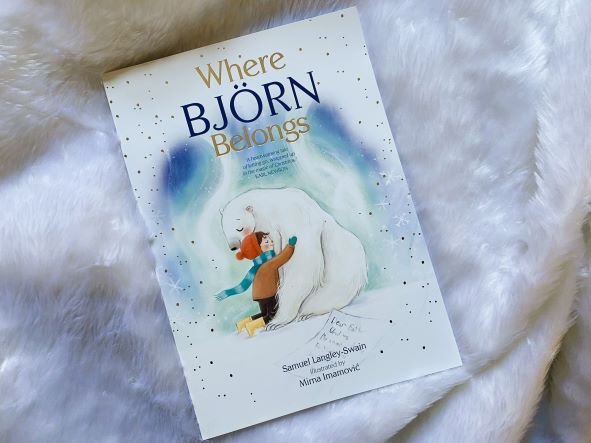
When Arthur loses Barney, his toy polar bear, he writes to Father Christmas to ask for a new one. Waking to a snowy world on Christmas Day, Arthur is amazed to see a real polar bear in his garden. A special bond between the two quickly forms and Arthur does everything he can to keep Bjorn the polar bear happy and healthy. However as the bear grows, Arthur comes to realise that he must find a way to get Bjorn back to the place he belongs.
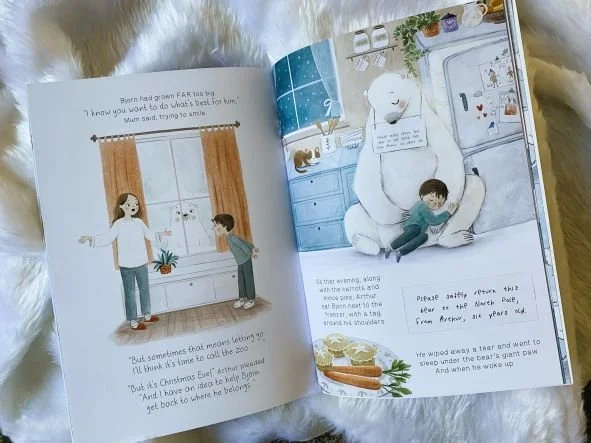
Perfect for sharing at home or at school, ‘Where Bjorn Belongs’ is a special story about true friendship and following your dreams. Arthur’s dislike of the noise and bustle of the Christmas season with the changes it brings to routines and ‘normality’ is something which is difficult for many children (and adults!) to cope with and the story enables conversations around this experience, encouraging understanding and empathy.
The story encourages discussion about the impact of global warming on polar bears- melting ice was a BIG problem for polar bears- as well as the importance of being a responsible pet owner. Arthur does everything he can to make sure that Bjorn is comfortable and well looked after- and when it matters most, makes the best decision for the well-being of his new-found friend. Bjorn needs to be where he belongs- not with Arthur, not in a zoo- but back in the wild with his own kind. Having promised to look after him, Arthur does, first by letting him go and then by becoming an Arctic explorer and learning how to help polar bears in their natural environment.
Another strength of this book is the illustrations. There are many which glow with the love between Arthur and his mother as well the deep bond between Arthur and Bjorn. There are picture showing the beauty of the natural world and those sharing the magic of Christmas. Even the end papers celebrate the amazing creatures of the Arctic!
One not to be missed this Christmas!
Where Bjorn Belongs
Samuel Langley-Swain, illustrated by Mirna Imamovic
Owlet Press ISBN: 978-1913339449
Am I Made of Stardust?
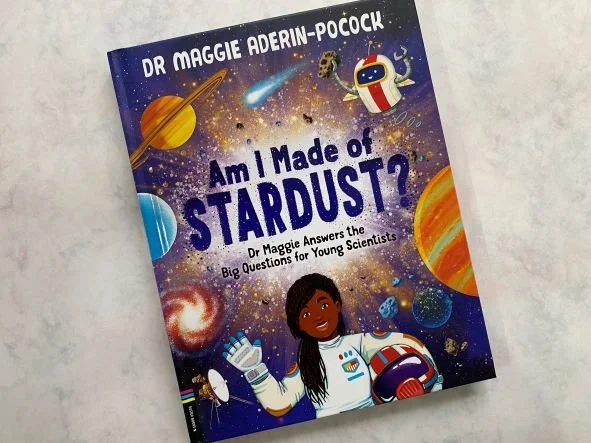
Dr Maggie combines passion for her subject with an engaging and accessible style of presentation, making this an excellent book for finding answers to all the questions you might have about space. In this book, she has collected some of her ‘all-time favourite’ questions and answered them, grouping them in to three chapters- the universe, our solar system and humans in space.
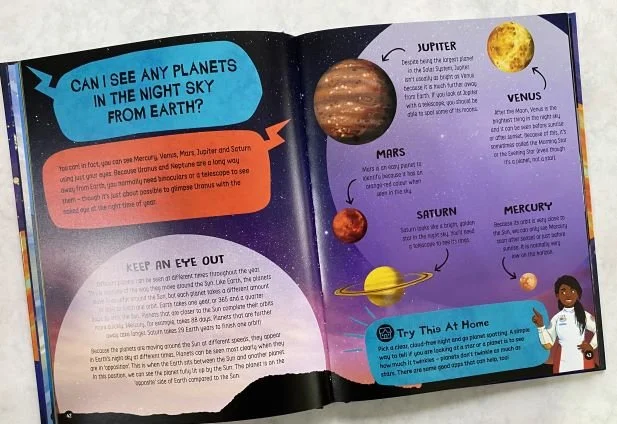
The book is perfect for dipping in and out of as browsing turns up some fascinating questions. However, it also makes a useful research tool as a comprehensive index and glossary support locating information and understanding terms. Dr Maggie is pictured throughout the book along with IQ, her robot assistant, whose initials stand for ‘Interesting Question’.
Each page offers a good amount of information, balancing a clear explanation and achievable chunks of texts, making the book appealing to reluctant readers and those who struggle with ‘text heavy’ books as well as anyone interested in this topic. There are clearly labelled activities to look out for which can be tried at home- making a rainbow, using a balloon to show how the stars move as the Universe expands, for example.
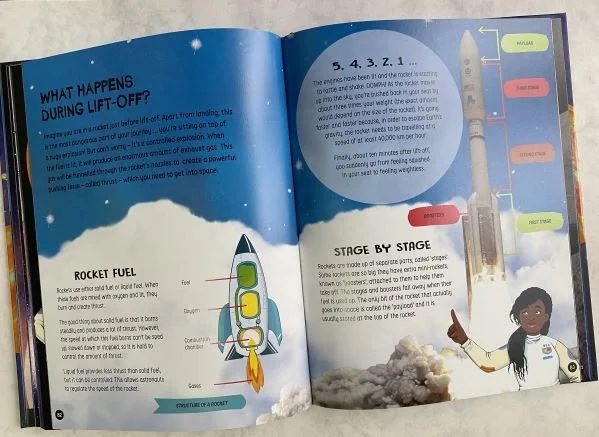
Astro facts are also scattered throughout the book. Fun extra snippets of information relating to the topic of the page, these encourage the reader to think as well as learn. The layout is very attractive with lots of photos, diagrams and illustrations, sure to tempt readers in and keep them! This is a real gem of a book- a must for topic boxes and collections to support learning about space as well as the perfect gift for astronauts in the making!
Am I Made of Stardust? Dr Maggie Answers the Big Questions for Young Scientists
Dr Maggie Aderin-Pocock, illustrated by Chelen Ecija
Buster Books ISBN: 978-1780557540
India, Incredible India
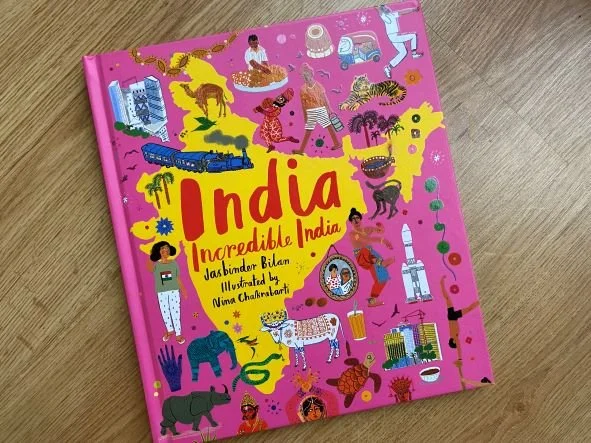
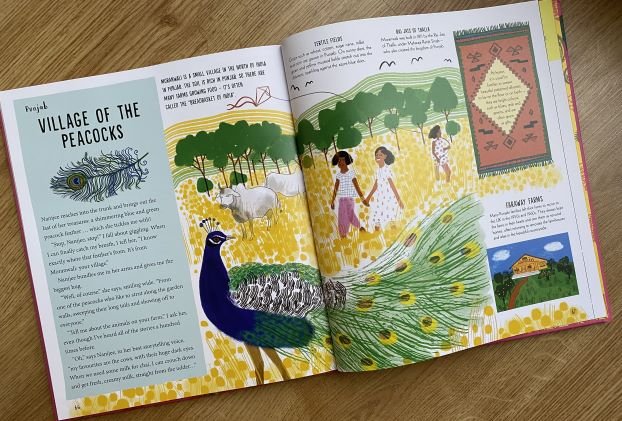
India is an incredibly diverse, vibrant country, a unique mix of ancient and modern, and this book does an amazing job of conveying the size, variety and richness of this intriguing sub-continent. ‘India, Incredible India’ takes the reader on a journey whilst telling the story of each of the many special objects the Nanijee of a little girl called Thara has in her special trunk.
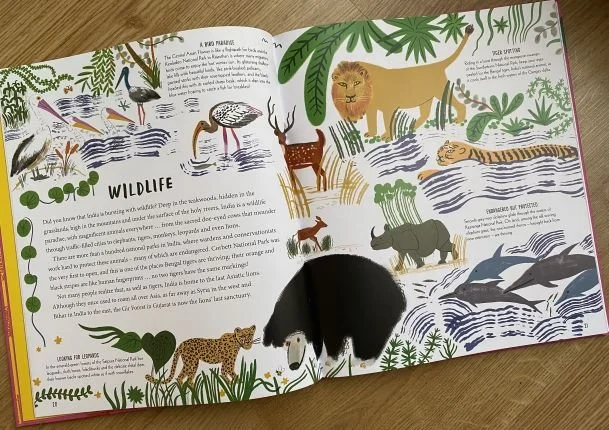
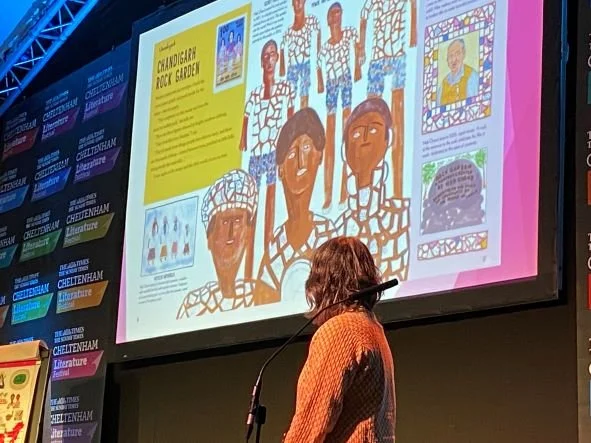
As Nanijee shares each object, the reader is taken to a beautifully illustrated double page spread which focuses on one location in India. A stamp on a letter reminds Nanijee of the statues created by Nek Chand at the edge of the city of Chandigarh whilst some dice encourage her to tell Thara all about the Indus Valley civilisation. Other objects lead them to places such as the Punjab, West Bengal and Rajasthan- each spread packed with information and evocative illustrations. So many marvels to wonder at and inspire further investigation- or sow the seeds of a desire to travel and explore.
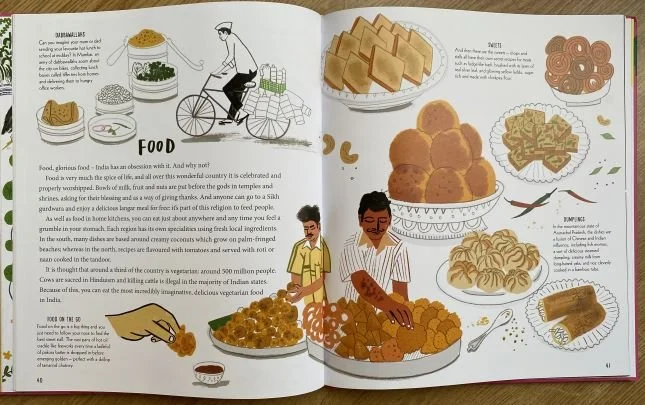
These sections are interspersed with pages focusing on different topics such as sports, food and religious festivals. This is a book which is perfect both for using in school or for having at home, a must have for every library and book corner, offering plenty to discuss and explore. A detailed index makes it an excellent research tool and there is a ‘Find Out More’ section at the end to aid those wanting to extend their knowledge.
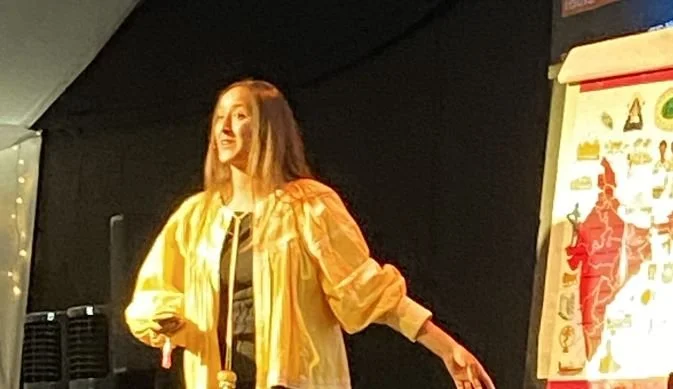
I was lucky enough to hear Jasbinder and Nina talk about their book at Cheltenham Literary Festival this year, inspiring young (and older!) readers to find out more about Incredible India!
India, Incredible India
Jasbinder Bilan, illustrated by Nina Chakrabarti
Walker Books ISBN: 978-1406395426
Take a Bite
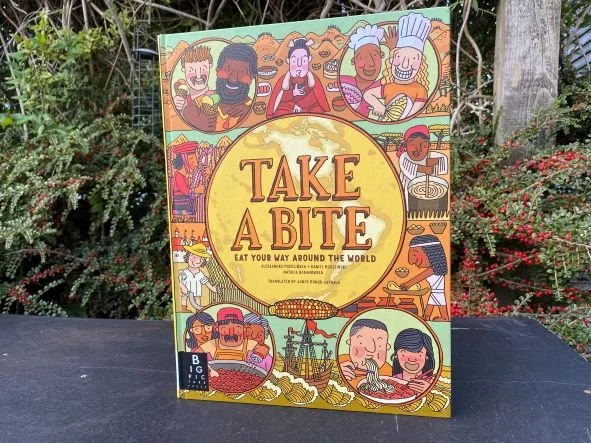
Full of fascinating facts and recipes from around the world, ‘Take a Bite’ is all about food, glorious food! The Mizielinskis visit twenty-six different countries, exploring global food and cultural traditions. A map on the endpapers identifies the places which the book visits taking the reader from the first wheat fields to the space age meals astronauts eat. The following index introduces the recipes which can be found throughout the book, offering plenty of treats to try and enjoy!
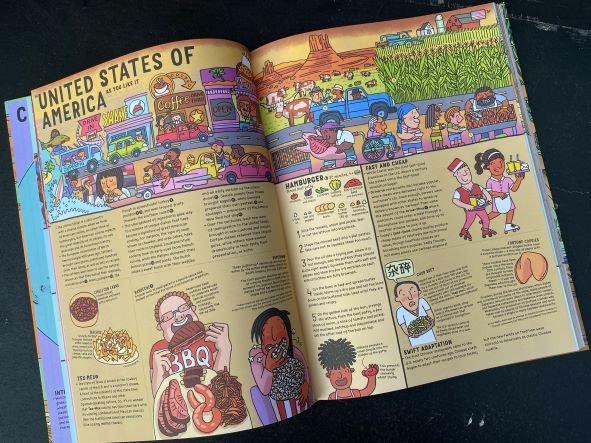
The book starts with Turkey, the ‘crossroads of culture’, discussing the importance of its location for, including other things, the combining of the customs and cuisines of many nations. Here, readers are encouraged to make ‘imam bayildi’ whose name literally translates to mean ‘the imam fainted’. Further on in the book, a visit to Japan discusses the ingenuity of Japanese chefs who used a few local ingredients to create dishes which are both beautiful and delicious whilst the stop in America shows how their food reflects the great diversity of its people- bagels invented by Polish Jews, donuts based on Dutch olykoeks, popcorn inspired by the native inhabitants of North and South America.
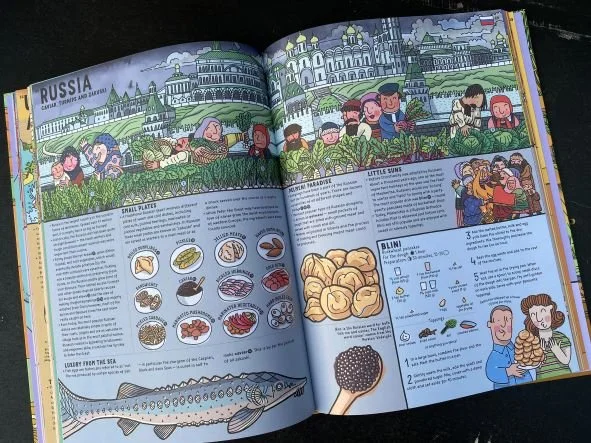
The book includes recipes which appeal to those with a sweet tooth as well as those which are savoury. Melomakarona are honey biscuits served in Greece at Christmas and honey gingerbread is a spiced treat from Poland. Pastries from France will come as no surprise and the book offers recipes for both mille-feuille and croissants.
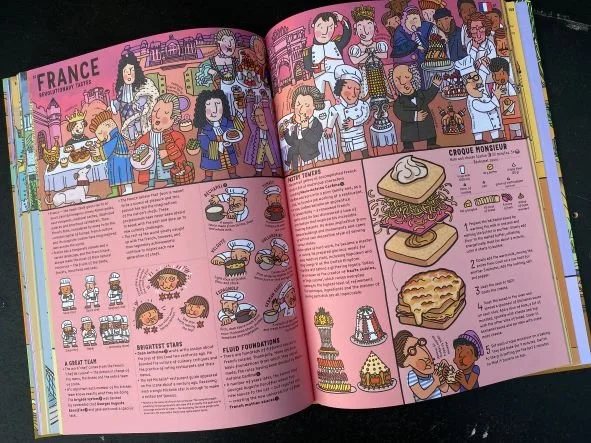
In addition to all the recipes, there is a wealth of information on every page, making this book perfect for dipping in and out of or for focusing on a particular place or culture. It would be an excellent introduction to a country’s cuisine before a holiday or offer an opportunity to try something from a country or culture being studied. It is a fascinating read, including timelines and a comprehensive index to help readers locate information if required.
Take A Bite: Eat Your Way Around the World
Aleksandra Mizielinska, Daniel Mizielinski and Natalia Branowska
Translated by Agnes Monod-Gayraud
Big Picture Press ISBN: 978-1800782884
Meet Hilary Robinson
Hilary Robinson, with Martin Impey, is well known for her excellent series of books about Ben and Ray and their experiences in the First World War. Winners of the NSTBA 2016 Poetry Category for ‘Flo of the Somme’ and the 2017 Quality Fiction Category for ‘A Song for Will and the Lost Gardeners of Heligan’, their books are highly respected and much used by teachers as well as families. Although Hilary is the author of over 60 books, this Q and A is focused on these titles in recognition of Remembrance Day.
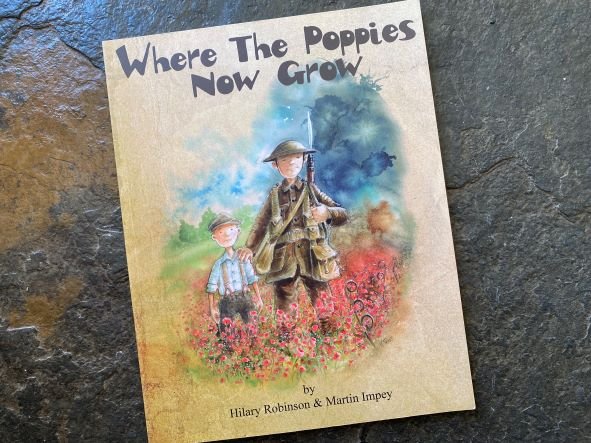
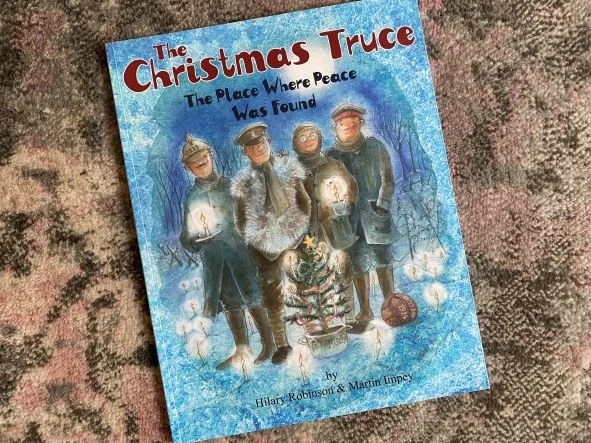
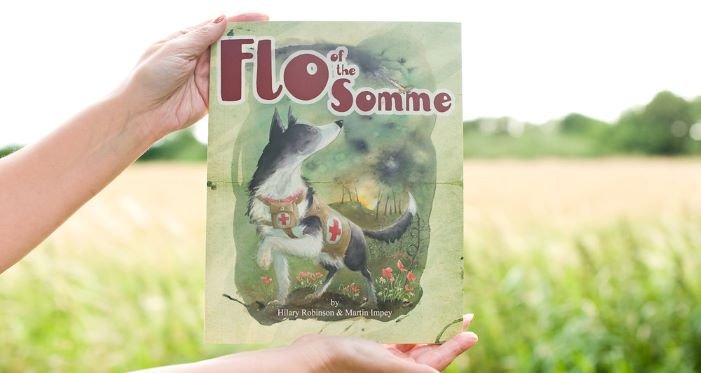
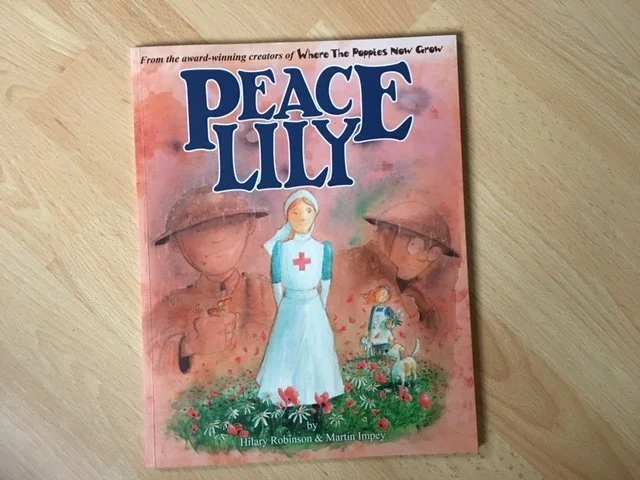
1. Your quartet of books about Ben and Ray are deeply poignant stories which are incredibly popular in schools. Do you have a favourite story amongst them.
I love all the stories for different reasons but, perhaps, if I were to choose a favourite I would opt for Where The Poppies Now Grow because, without this title, the other three wouldn't exist. It is also dedicated to our great uncles, both of whom died at the Battle of the Somme. I also find that children identify with Ben and Ray- who represent every soldier who served - and the fact that they remained close friends throughout their lives. It has been wonderful to see how children have engaged with the story and the characters and developed an interest in their own family and local social history as a consequence. That way the lives of those that served and those that perished live on so that we never forget how easy it is to slip into war. Words and friendship will always be the most powerful weapons in the pursuit of peace and that is Ray and Ben's legacy.
2.The stories are told using the cumulative verse style. Why did you choose this way of telling them?
This device helps young children engage with the story content and the use of rhyme helps them to expand their vocabulary, because the rhythm, rhyme and repetition serves to reinforce. I changed this structure for Peace Lily because this was the time that reflected the start of something new so by altering the pace and pattern readers grasped the notion that a new world was looming.
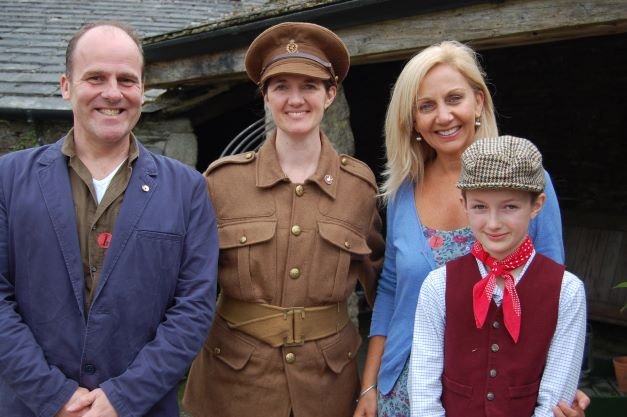
3. ‘A Song for Will and the Lost Gardeners of Heligan’ continues to be one of my all-time favourite books and I have used it with many classes since its publication. How did you and Martin decide on using the fictional character of Alfie as the main character of the book?
Thank you and we love it Sue that you took the time to travel down to Cornwall to meet us! Fred Paynter and William Guy were real people - gardeners who went to war. I wanted to reflect their lives as closely as I was able drawing on recorded detail of the time. Alfie though is fiction. There will have been a young errand boy at Heligan and it was fun trying to imagine how he was feeling as life at Heligan began to change. Alfie's role is also to describe events at home and to provide a colourful counter-canvas to the bleakness, terror and atrocities on the battlefields.
4. I know that you and Martin Impey, who illustrates these books, have a very close relationship. Do you have any plans for future projects together? (Please say yes!)
Martin and I are working on solo projects but there is another collaboration on the horizon! This will be fiction based on fact, again, and is partly autobiograpical in that the main character was a huge influence on me, my sisters and cousins when we were children. It's top secret for now but I will tell you that his name was Ted and it has been great to record his contribution to life in a deeply personal story. Martin has also met Ted and was inspired by him too. Sadly he died two years ago. It is set during the second world war which is before I was born - so that part is fiction, but Ted as a character, his talents and gifts play out through the narrative and it has been lovely to honour his legacy in this way.
5. Is there a historical figure or event you would love to write about for children- one perhaps you feel has been neglected?
I would love to write about the Humbug Billy and the Bradford Sweet Poisoning disaster - not only is it a fascianting story but it shows why history is important. It shows how easily mistakes and assumptions can be made and, in this case, the investigation led to a change in the law.
https://www.historic-uk.com/HistoryUK/HistoryofBritain/Dying-for-Humbug-the-Bradford-Sweets-Poisoning-1858/
6. What can we expect from you next?
I have just written two board books, illustrated by Mandy Stanley, which were influenced by all the creative ways people were recycling everyday objects during Covid. Tatty Mouse is the ultimate mend-it-make-it-mouse and with her cool toolbelt and necklace crafted out of milk bottle tops, she is one huge role mouse-model! I have just written her Christmas story and we are collaborating on a book that incorporates sign language as an activity.
7. And lastly- and most importantly according to my niece- what is your favourite cake?
Great question! My absolute favourite cake is coffee and walnut. We have our own walnut tree which produces thousands of nuts each year but I haven't grown any coffee beans yet! I love the soft meaty flesh of the walnut with the delicate coffee aroma and taste. My aunt used to always make me a coffee and walnut cake when I visited her in Cambridge so I think of her always when I have a piece now. Like Ben and Ray - legacies live on!
Thank you so much, Hilary for joining me today. I am really looking forward to seeing what you and Martin are up to next - and I think you should definitely write about Humbug Billy! Stories from history are so fascinating.
You can read my review of the ‘Ben and Ray’ books here and ‘A Song for Will’ here.
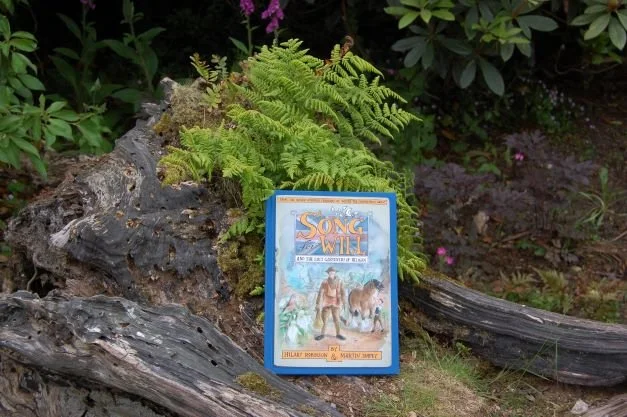
A Song for Will and the Lost Gardeners of Heligan
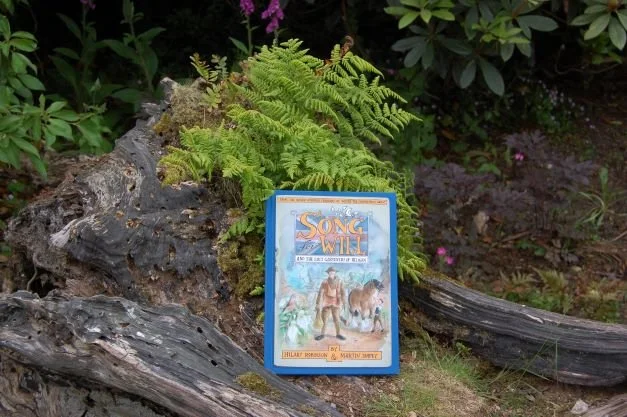
‘A Song for Will and the Lost Gardeners of Heligan’ is one of my favourite books. Based on the lives of real people and real events, it tells the story of William Guy and the other gardeners who worked for the Tremayne family when World War One broke out. Written by Hilary Robinson and beautifully illustrated by Martin Impey, the story is told through a series of letters written between the gardeners of Heligan House during the First World War.
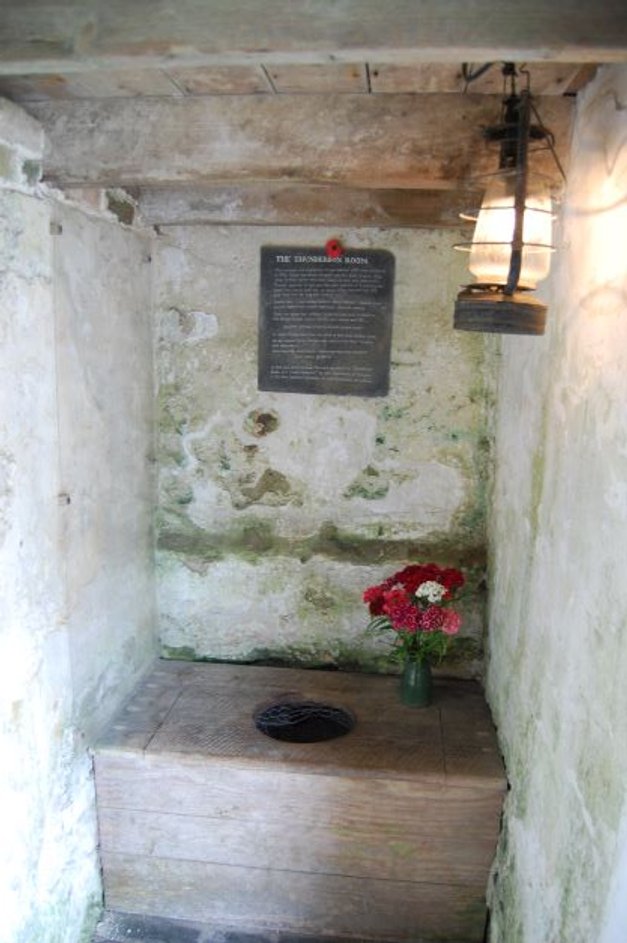
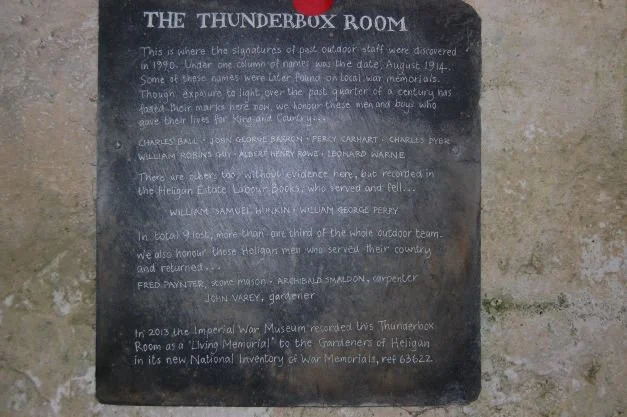
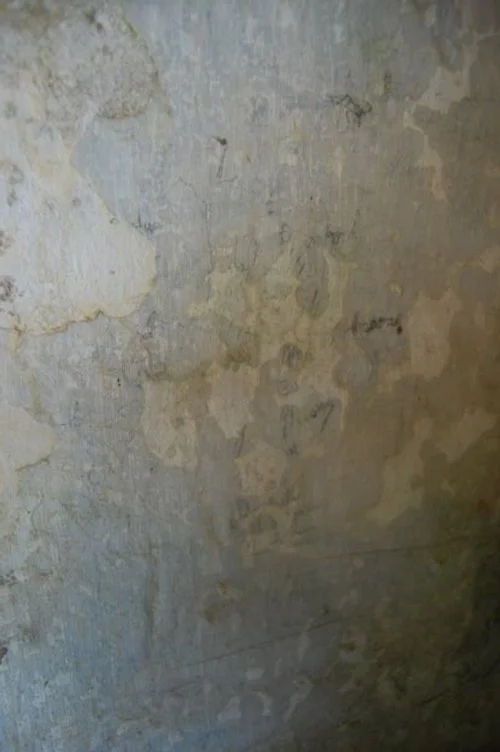
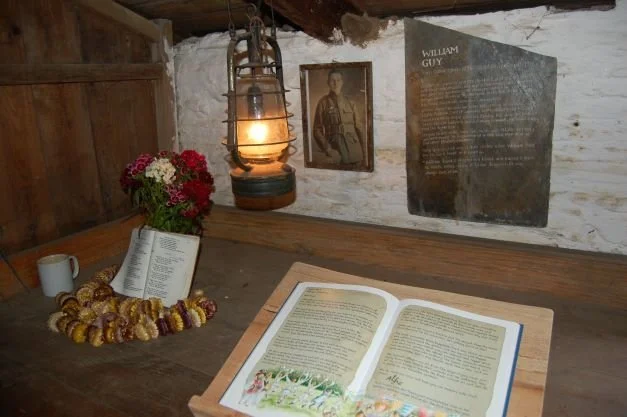
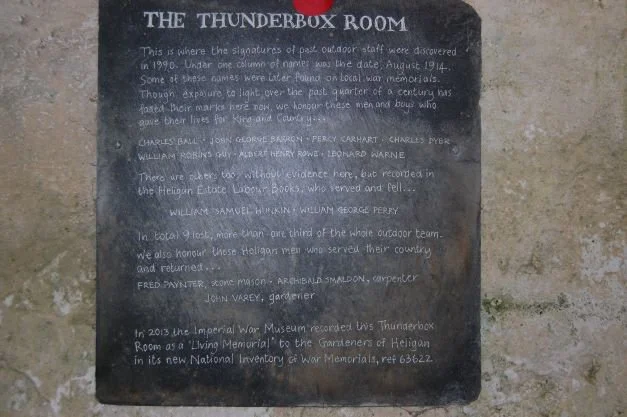
When war was declared in 1914, it wasn’t long before men across the country courageously volunteered or were called up to serve the war effort. The gardeners of Heligan, near Mevagissey in Cornwall, were no exception and to mark the occasion, they wrote their names upon the wall of the outdoor staff toilet (which they called the ‘Thunderbox’), as a reminder to all of their brave commitment to leave the gardens to serve king and country. Thirteen outdoor staff left Heligan to fight across the sea but only four returned. William Guy was one of the nine who never came home and this book is dedicated to his memory.
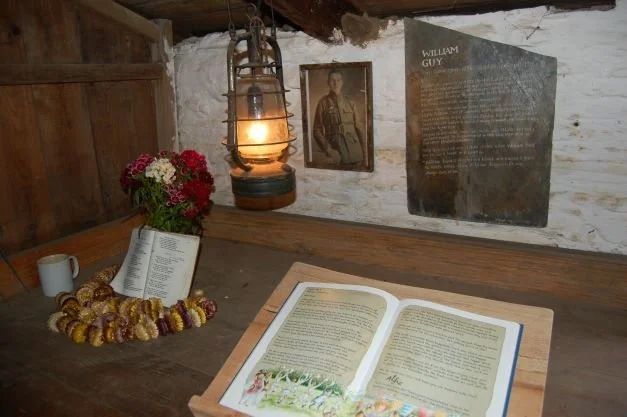
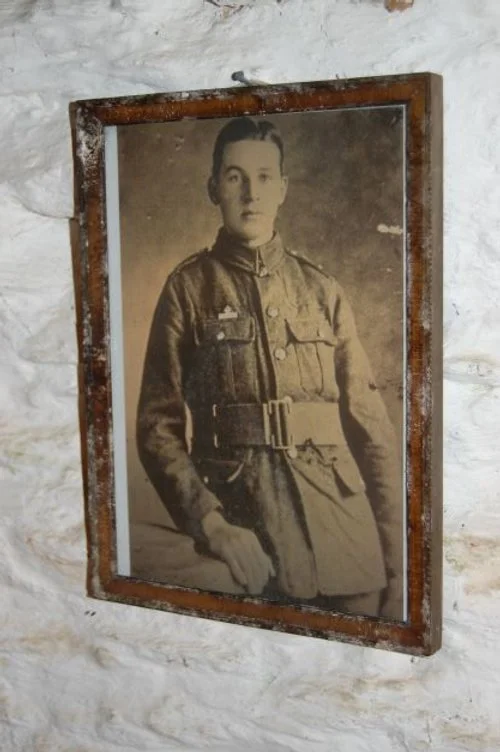
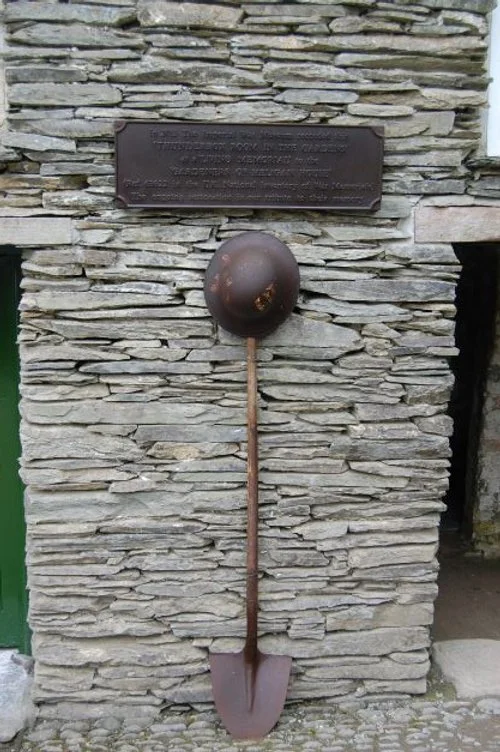
'A Song for Will' tells the story of both the changing seasons at Heligan and the effects on the gardens from the war waging abroad. The loss of livestock, changing diets due to lack of food and the developing 'make do and mend' attitudes all feature. The loss of skilled workers meant that the gardens themselves would eventually become neglected and overgrown and would not be restored to their former glory for many years. 'A Song for Will' also highlights the feelings of those bravely fighting on the battlefields, the tragic mental toll of war and sadly, the loss felt by all when loved ones did not return home. In 2013, the Imperial War Museum recorded the Thunderbox Room as a ‘living memorial’ to the gardeners of Heligan and the monument pictured below can be found nearby.
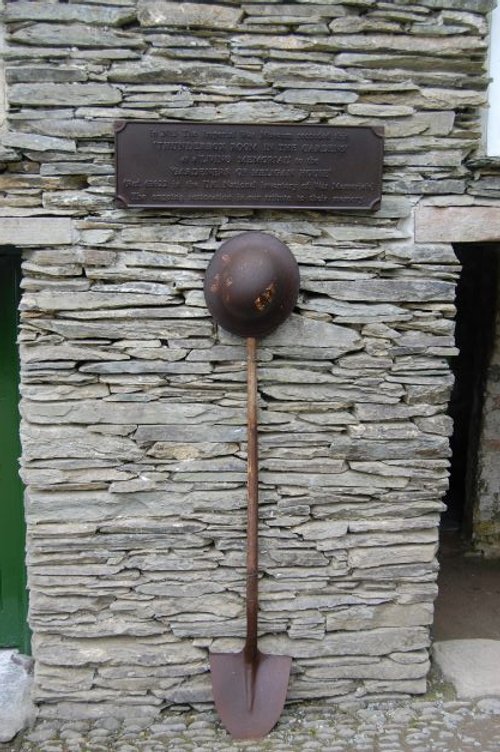
This is a poignant story, gently told, and is perfect to use in school to illustrate and investigate the effects of the First World War. I have used it very successfully on a number of occasions with excellent results in terms of engagement, understanding, empathy and written outcomes. The book could be introduced through the artefacts, plants and gardening equipment featured in the book, using role play and drama to develop scenes. The letter story telling format might inspire similar attempts to write in character. Hilary and Martin’s book contains letters between only two individuals and there were many more that left Heligan to serve both on land and at sea whose stories could also be told. Readers could keep either a diary of events and feelings whilst reading the story or imagine what characters might write in their own diaries. Children might enjoy reading the text aloud to each other or summarising sections to share.
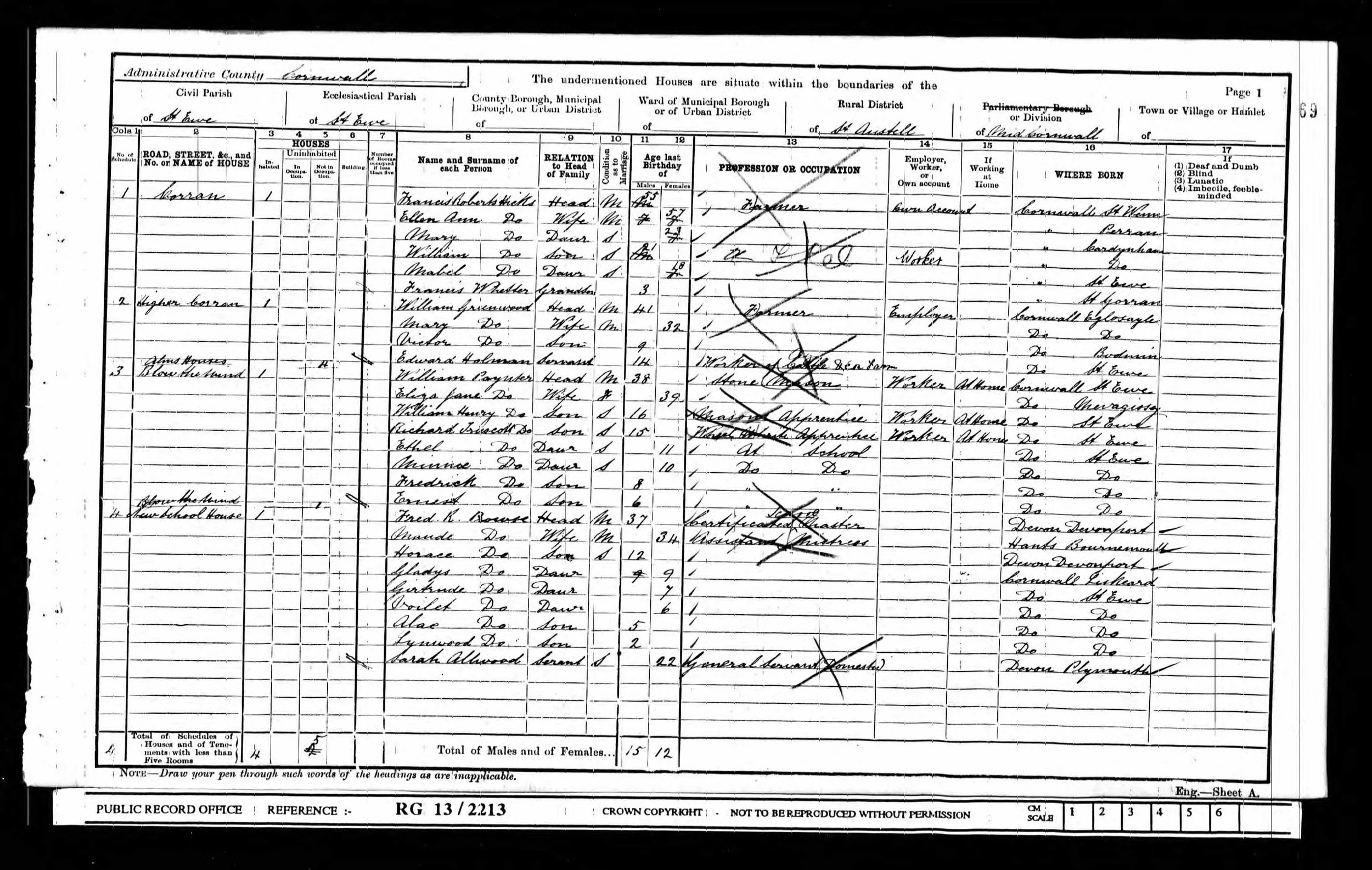
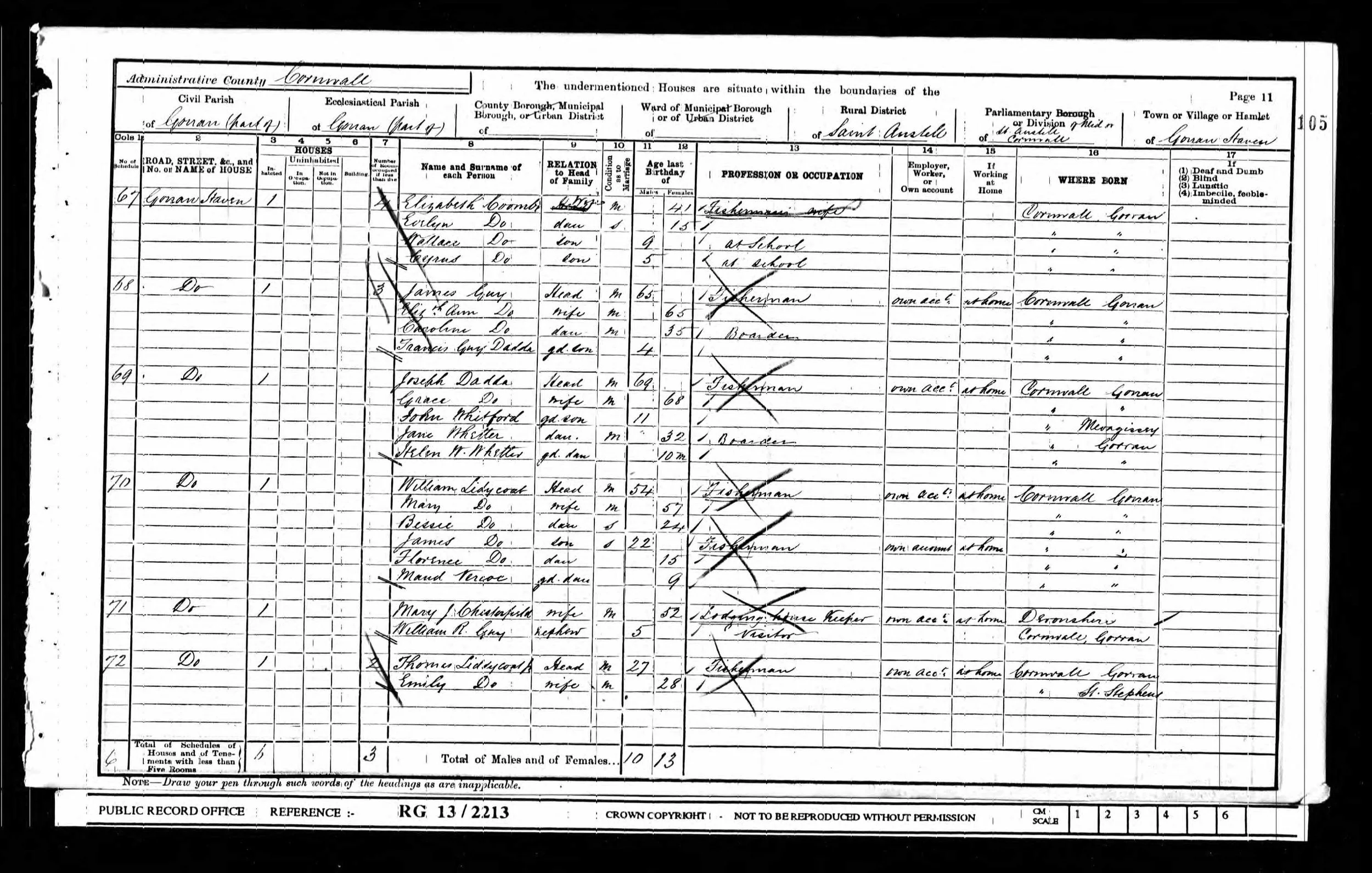
The gardeners that served during the Great war are listed at the back of the book and a search through war records, such as those held by Ancestry, yields information about some of the individuals involved. Children I have taught have enjoyed looking at the census returns as well as army documents, developing the idea of the characters in the book as real people and engaging children with primary sources of evidence.
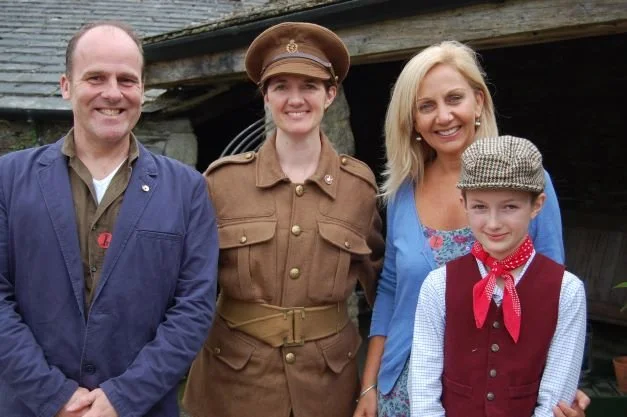
Finally, the book acts as the perfect guidebook to the gardens and a visit to Heligan would be an enriching and memorable experience for a class of children. I had a wonderful time when I visited for the launch of the book (picture above) and wondered at Martin’s skill as I matched scenes from the book to locations at Heligan.
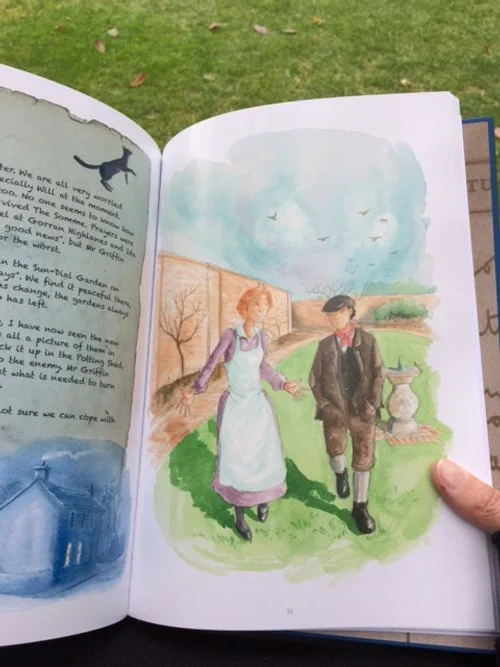
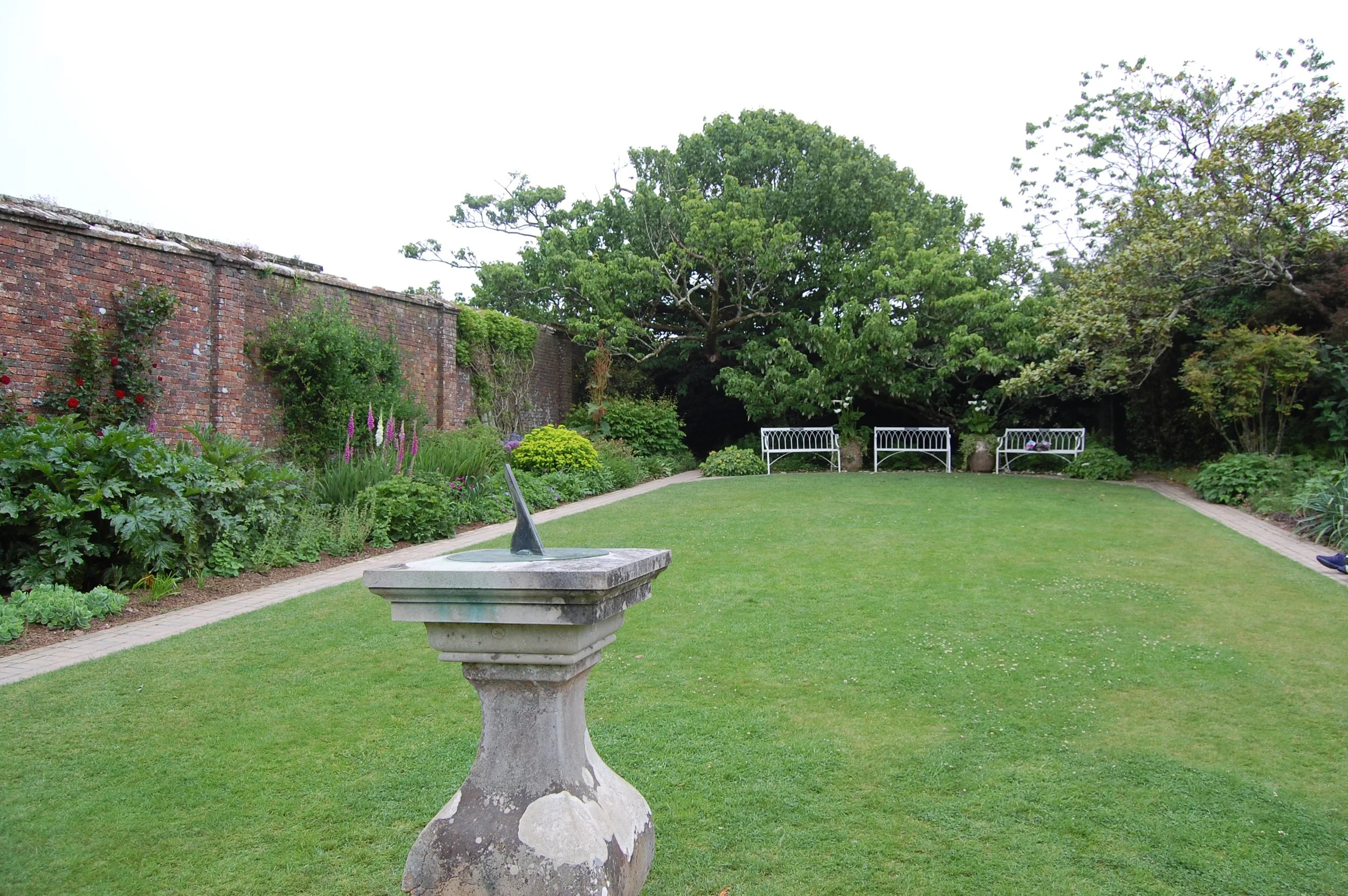
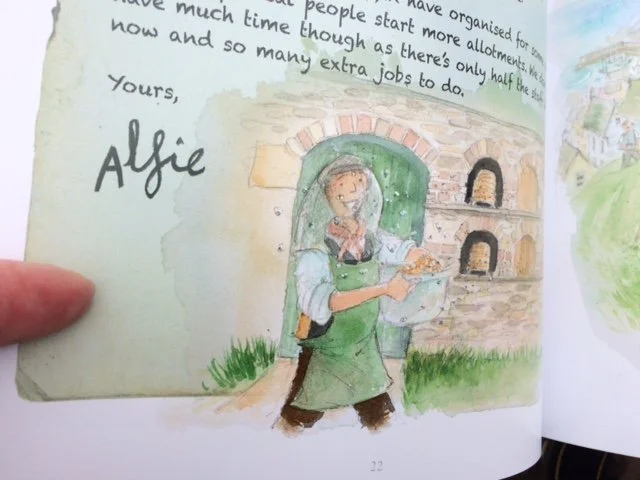
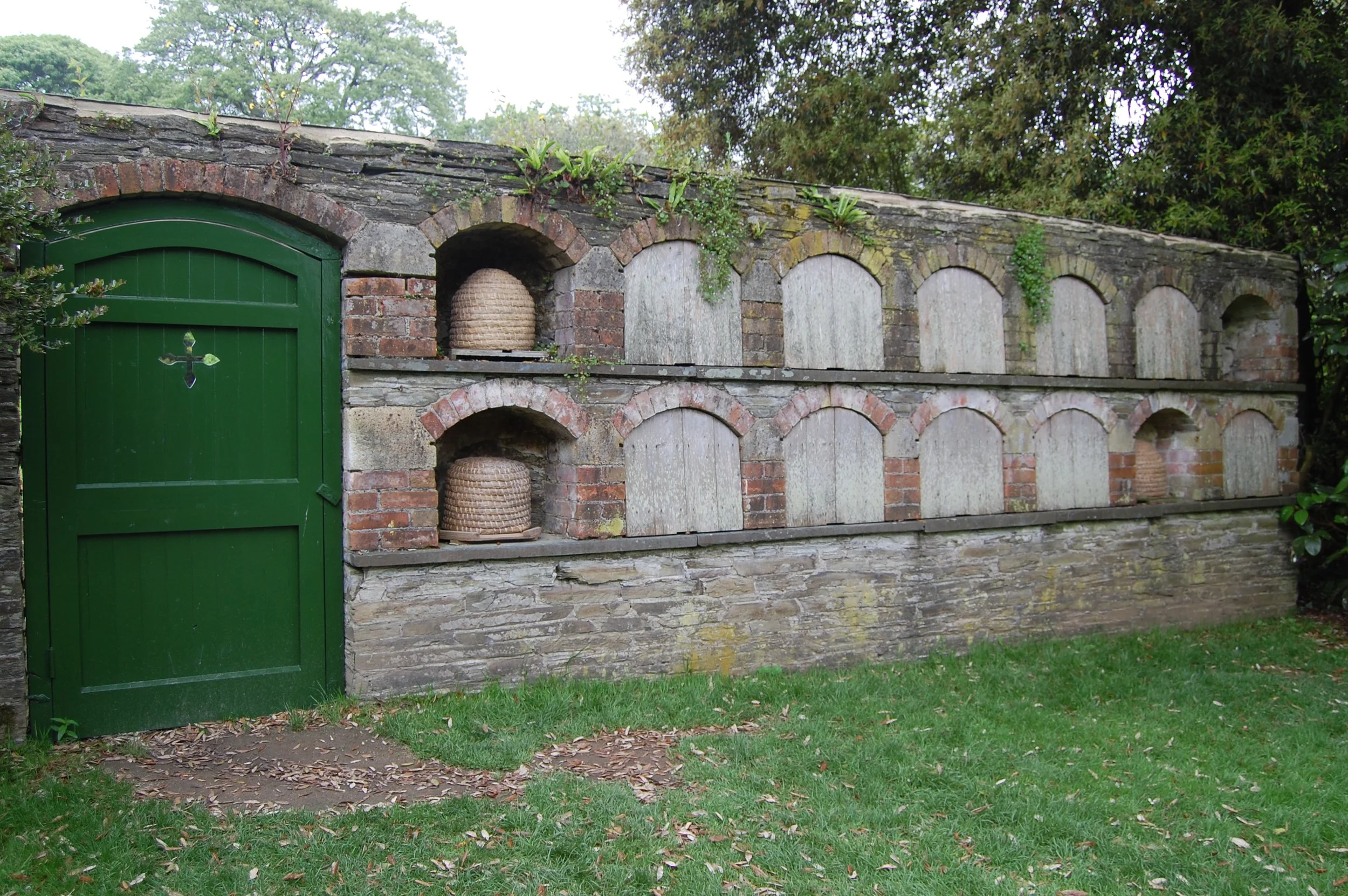
Hilary and Martin have become a wonderful story writing team, detailing various aspects of the First World War through several books they have authored together. They can always be relied upon to tell the most difficult of stories with the dignity they deserve whilst maintaining an appropriate amount of detail, so as not to distress a younger audience. ‘A Song for Will’ is an incredibly special book.
A Song for Will and the Lost Gardeners of Heligan
Hilary Robinson, illustrated by Martin Impey
Strauss House Productions ISBN: 978-0957124530
Pause for Poetry: Dulce et Decorum Est

In October 1917, whilst recovering from shell-shock, Wilfred Owen sent a letter to his mother which included a ‘gas poem’. This he revised and edited between January and July 1918 until it became the poem we now know as ‘Dulce et Decorum Est’.
Incredibly powerful, deeply moving, Owen’s work describes the harsh realities faced by those fighting in the trenches. My grandfather was amongst them.
We were very fortunate and my grandfather returned home; many did not.
Martin Impey and Hilary Robinson have combined their talents to create four amazing, beautiful books about Ben and Ray, friends who went to war together. These are the perfect way to introduce children to the life of soldiers in the trenches, the Christmas truce, the role of animals in war and the vital contribution of women who nursed soldiers on the battle lines (review here). Their fifth collaboration- ‘A Song for Will and the Lost Gardeners of Heligan’ - is an incredible piece of work, celebrating the lives of those who worked at Heligan in Cornwall (review tomorrow)
Illustrating ‘Dulce et Decorum Est’, Martin Impey has used his incredible artistic talents to interpret Owen’s words. This is not for a younger audience, but a heart-felt, gritty interpretation of the horrors experienced by soldiers.
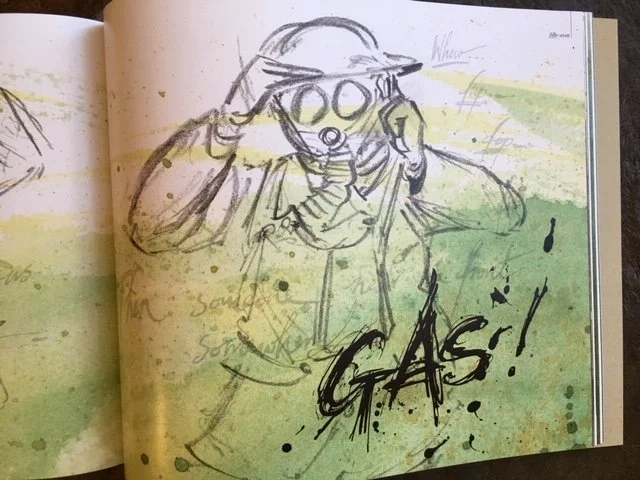
The book starts with a foreword contextualising the poem before showing the revisions Owen made to ‘Dulce et Decorum Est’ as he edited and developed his work to its finished form. Martin has included some of these alterations as haunting shadows behind the finalised text, adding to the poem’s poignancy.
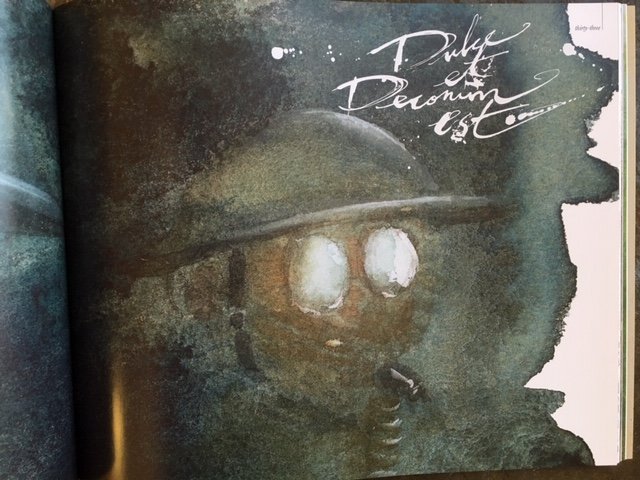
Listening to Martin speak is always a real joy as his enthusiasm for whatever he is working on and his passion for art is just incredible. I was fortunate enough to hear him speak at The Wilfred Owen Association’s Annual Birthday Lecture last year and the amount of time, effort and attention to detail he dedicates to his research is incredible. You can read more about this here.
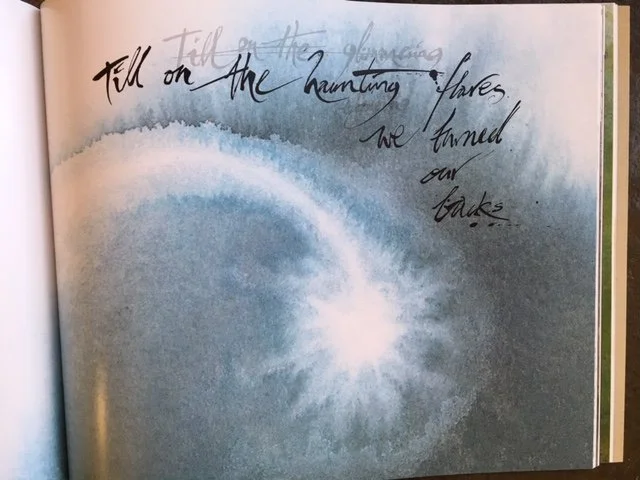
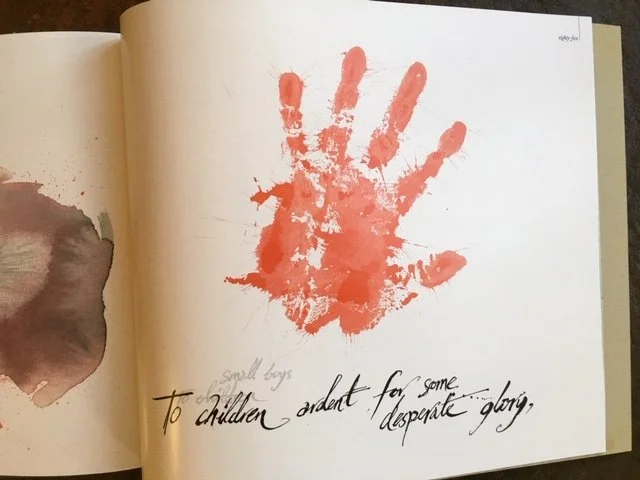
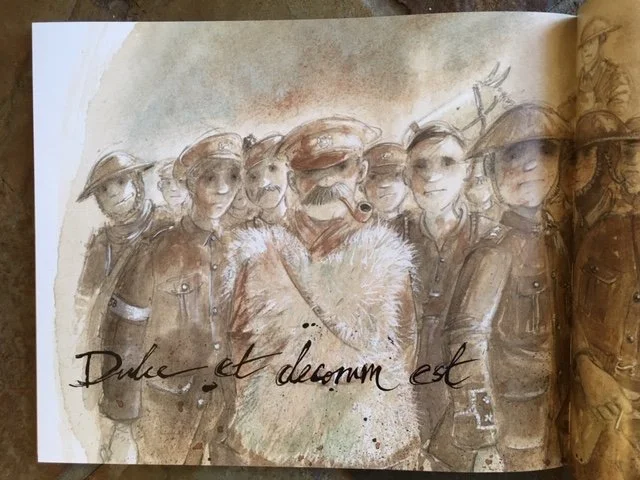
Each page of the book is a work of art. Martin’s talent and passion match that with which Wilfred Owen wrote each line and make a worthy tribute to those who fought and a stunning memorial for them, emphasising the horrors of conflict and refuting ‘the Old Lie’.
A powerful, significant work, perfect for using at KS3.
Dulce et Decorum Est by Wilfred Owen, illustrated by Martin Impey
Strauss House Publishing ISBN: 978-1527218253
The ‘Ben and Ray’ Books
Without a doubt, this series of books is essential for any teacher- or family- wanting to explore events from the First World War with children in an accessible and supportive way. Since the publication of ‘Where The Poppies Now Grow’ in 2014, the four books chronicling events in the lives of friends, Ben and Ray, have been shared with thousands of children.
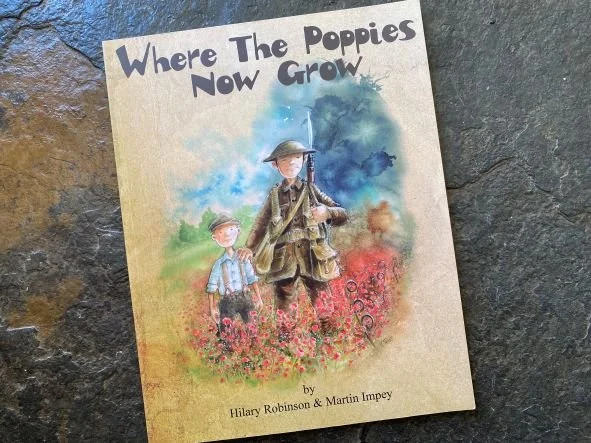
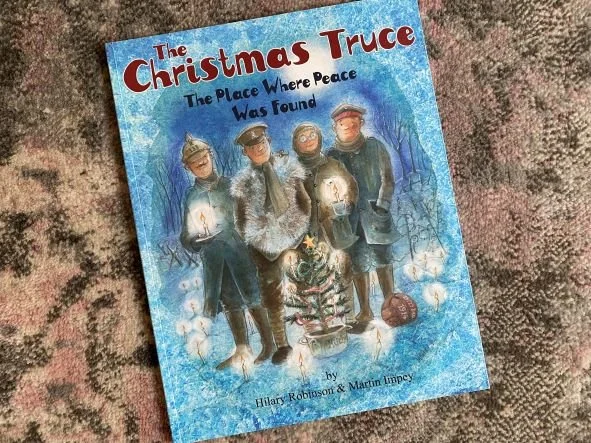
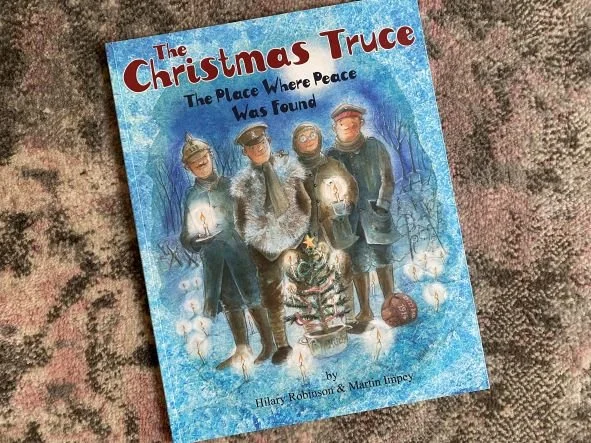
Stunning illustrations and lyrical text combine to create four linked stories, each of which focuses on a different aspect of the war. The second book sees Ben and Ray playing football during the Christmas Truce, the third pays tribute to the contribution played by animals during conflict and the final book introduces Lily, childhood companion of Ben and Ray, and not only highlights the contribution of women to the war effort, but also brings the series to a satisfying and moving conclusion.
The stories offer so much to discuss and explore with the illustrations adding many additional details. Children may notice the names on the wall by Ben’s bed in ‘Where the Poppies Now Grow’ and wonder who these people were or make the connection with some of the names and the dedications made by Hilary and Martin at the front of the book. This is one of the many examples of the attention to detail and the care with which these extraordinary books have been created.
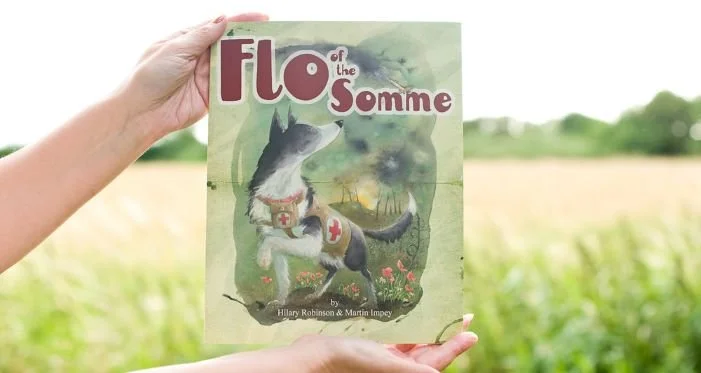
These books are obviously a labour of love, born out of personal connection to these events through family history. ‘Flo of the Somme’ won the Poetry Category of the North Somerset Teachers’ Book Awards in 2016 and these books have rightly been nominated for and won many other awards. They are accessible to a wide ranging audience from little ones enjoying the rhyming text and hunting for Ben’s pet mouse in the pictures to older readers who will make connections- perhaps with family experiences.
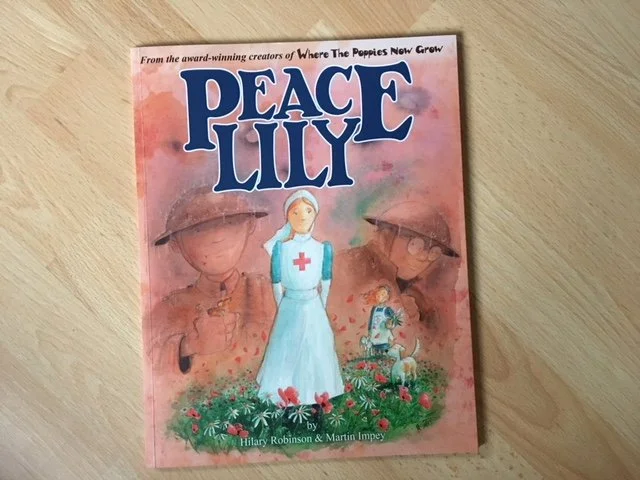
Poignant and powerful, this is a very special set of books. Tomorrow, I will be reviewing Martin’s edition of ‘Dulce et Decorum Est’ and 'on Thursday, ‘A Song for Will and the Lost Gardeners of Heligan’.
I will be joined by author, Hilary Robinson, for my Q and A session this Friday where I ask some questions about these books and ‘A Song for Will’.
Where the Poppies Now Grow
Strauss House ISBN: 978-0957124585
The Christmas Truce Strauss House ISBN: 978-0957124578
Flo of the Somme Strauss House ISBN: 978-0957124561
Peace Lily Strauss House ISBN: 978-0957124554
Hilary Robinson, illustrated by Martin Impey