Reviews
There are so many incredible books available at the moment that it is impossible to read them all, no matter how hard I try! Here are my thoughts about some of the books I have read and how I think they could be used in school as well as Q and A sessions with authors and illustrators.
Woodwitch
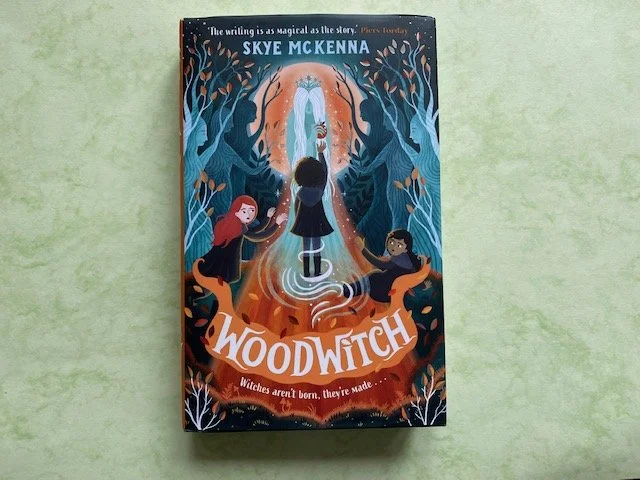
Cassie has settled into life in the village of Hedgely. Her broomstick riding is improving and has found loyal friends in Rue and Tabitha, fellow members of Oak Patrol at her school. As Hallowe’en approaches, some of the villagers start behaving strangely, possessed with the need to locate a missing object. Although the Hedgewitch has been called away and her sneering cousin Sebastian has reluctantly come to stay, Cassie and her friends decide to investigate and discover whoever is controlling the villagers is in search of an ancient faery relic. Soon, they are in a race to locate this treasure before it falls into the hands of the Erl King.
I loved ‘Hedgewitch’ and so started reading this with high expectations- and I was not disappointed. Skye McKenna’s world building is second to none and it is easy for those who have read the first book to quickly find their feet in Hedgely once more. Who wouldn’t want to wander down Loft Street and visit Widdershin’s Bookshop, Marchpane’s bakery or the Bramble and Bloom Tea Room? This attention to detail is also shown in Skye’s use of beautifully descriptive language, bringing this world vividly to life.
Cassie continues to be a very endearing character. Courageous and resourceful, she is also a loyal friend. The girls make an excellent team with their characters and skills complementing each other as they bravely face the perils of the Hedge and the threat of the Erl King. The story is pacy and offers just the right amount of peril. Cassie continues to search for her parents and the reader learns more about her past and that of Ivy, the ‘thorn in Cassie’s side since she’d arrived’.
The story reaches a very satisfying conclusion, allowing different characters to find resolution whilst making the reader long for Cassie’s next adventure!
Woodwitch Skye McKenna
Welbeck Flame ISBN: 978-1801300414
Originally reviewed for Reading Zone. You can read my review of ‘Hedgewitch’ here.
The Story Shop: Dino Danger
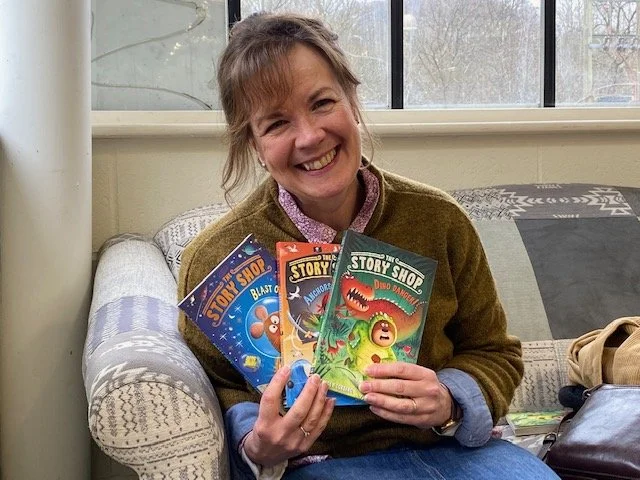
Dino Danger! is the third visit to the Story Shop, a special shop in Puddletown High Street, which sells adventures which customers can really take part in. Shopkeeper, Wilbur, and his assistant, Fred Ferret, are ready to help everyone step into their own adventure…
When timid Bear is given a voucher for an adventure by his friend, Ted, Wilbur and Fred decide that a dinosaur adventure is just the thing he needs. With Fred’s help, this scaredy-Bear manages to find the courage to challenge Big T to a game of crazy golf, return a group of Tricereatots to their teacher and identify the veggie thief on the dinosaur allotments.
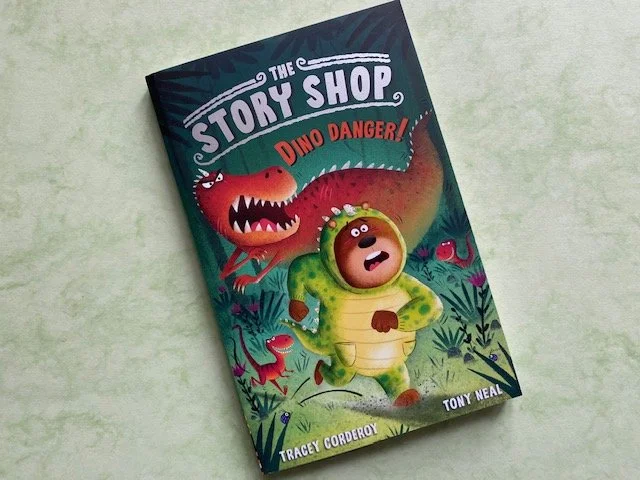
As with the previous ‘Story Shop’ books, ‘Dino Danger!’ is perfect for younger readers as an independent read or as a story to share. Tracey’s use of gentle humour and endearing characters make each book accessible and enjoyable and the three linked adventures in each book allow children to build their reading stamina whilst the short chapters with plentiful illustrations make the books achievable.
Fred Ferret is the perfect companion for Bear’s adventure and is on hand to support and encourage him as he faces each new challenge. Initially, Fred uses a special rock which he calls a ‘Crystal of Calm’ to make Bear believe in himself, but by the end of the story, it becomes clear that all the brave and clever things Bear has done are because if who he is and not because of the stone. Many children will identify with Bear, feeling nervous or frightened of unfamiliar situations and these stories are perfect for encouraging discussions about self belief. By the end of the book, timid Bear has enjoyed his Story Shop adventures and is keen to tell his pal, Ted, all about them, leaving the Story Shop quite a different character to the one who entered it!
These stories are a real celebration of the imagination and a wonderful starting point for encouraging children to develop their own adventures - ones which they would choose if they were able to visit Wilbur and Fred- and to act these out using their own props and costumes. Tony Neal’s lively illustrations add much to the text and the book ends with a guess the dinosaur from their silhouette activity and some dinosaur jokes! Great fun!
The Story Shop: Dino Danger!
Tracey Corderoy, illustrated by Tony Neal
Little Tiger ISBN: 978-1788953320
Published 2nd March 2023
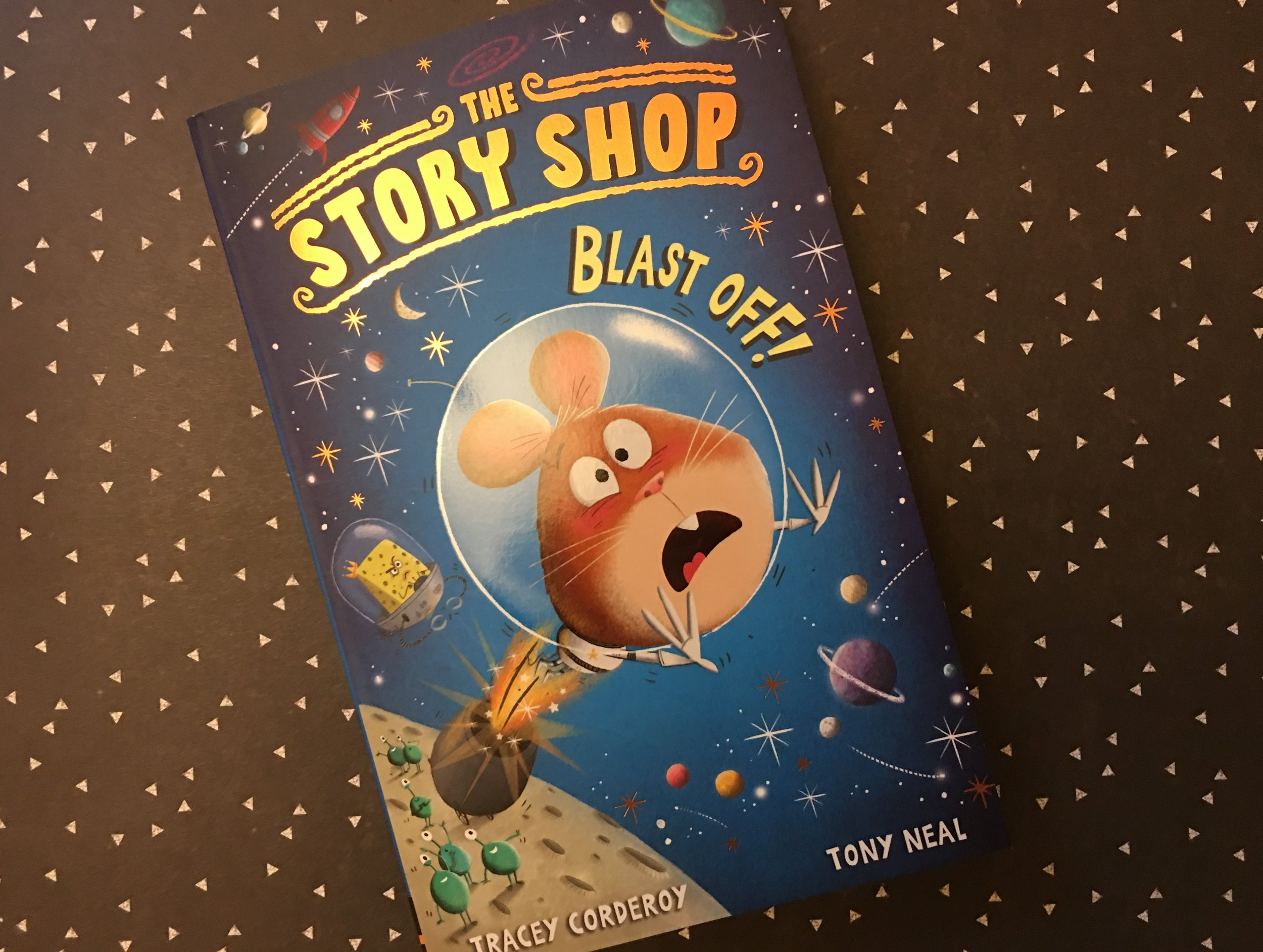
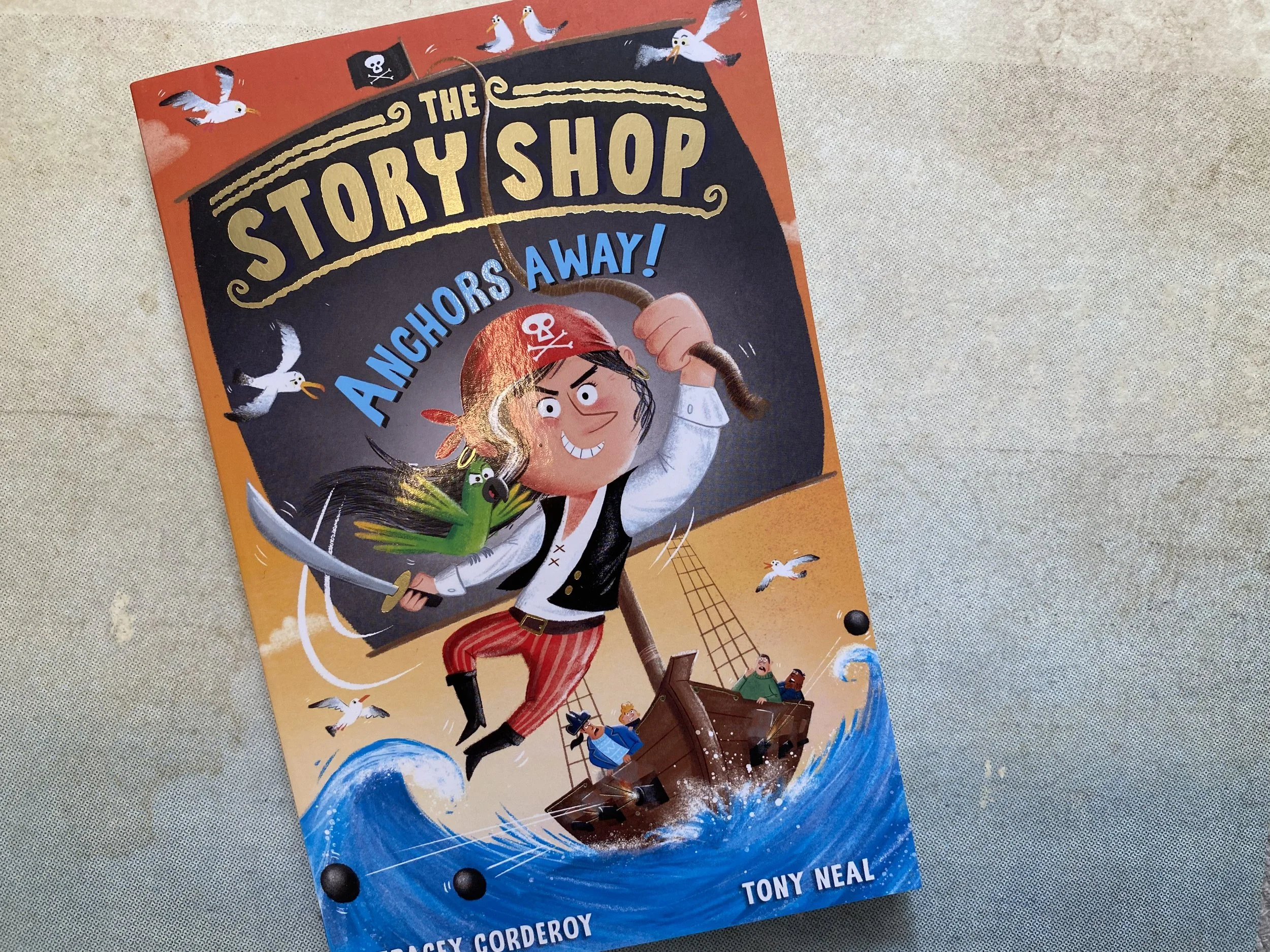
You can read my review of ‘Blast Off’ here and ‘Anchors Away!’ here.
When Things Aren’t Going Right, Go Left
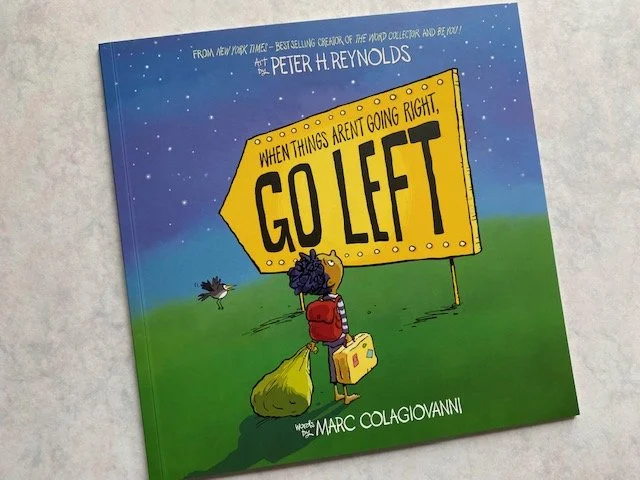
I love ‘The Dot’, Peter H. Reynolds’s timeless and inspirational story about creativity, perseverance and self-confidence, celebrating ‘Dot Day’ every year. He has written and illustrated many other books, each of which carries a very positive, self-affirming message. They are perfect for using in school- for individual classes, for assemblies, for whole school projects- and each with Reynolds’s wonderful illustrations.
‘When Things Aren’t Going Right, Go Left’, written by Marc Colagiovanni and illustrated by Peter H. Reynolds, is an inspirational story about making a choice about how to deal with worries, frustrations, fears and doubts.
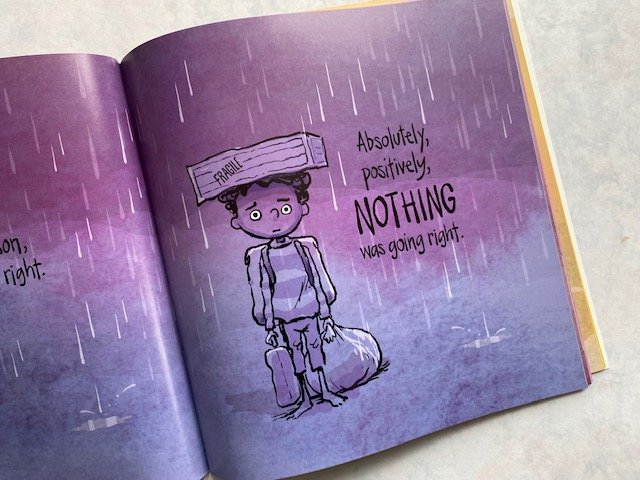
The little boy at the heart of the story is faced with a day when nothing is going right. So, he decides to go left- leaving all his worries, doubts, fears and frustrations behind. He perseveres, finds the courage to try again and realises that the more he does this, the more ‘right’ he feels. The wonderfully positive, affirming message is simply, but directly told, perfect for sharing with children and offering strategies for coping with being overwhelmed or overcoming adversity.

Language play, a direct, optimistic tone and lovely artwork make this an appealing text to use with any age group as its message is as relevant to adults as it is to children. The guidance it offers is full of optimism, reminding the reader they have the power to choose to ‘go left’ and ask for help when needed. It is a joyful book- one for sharing again and again.
When Things Aren’t Going Right, Go Left!
Marc Colagiovanni, illustrated by Peter H. Reynolds
Scholastic ISBN: 978-0702324765
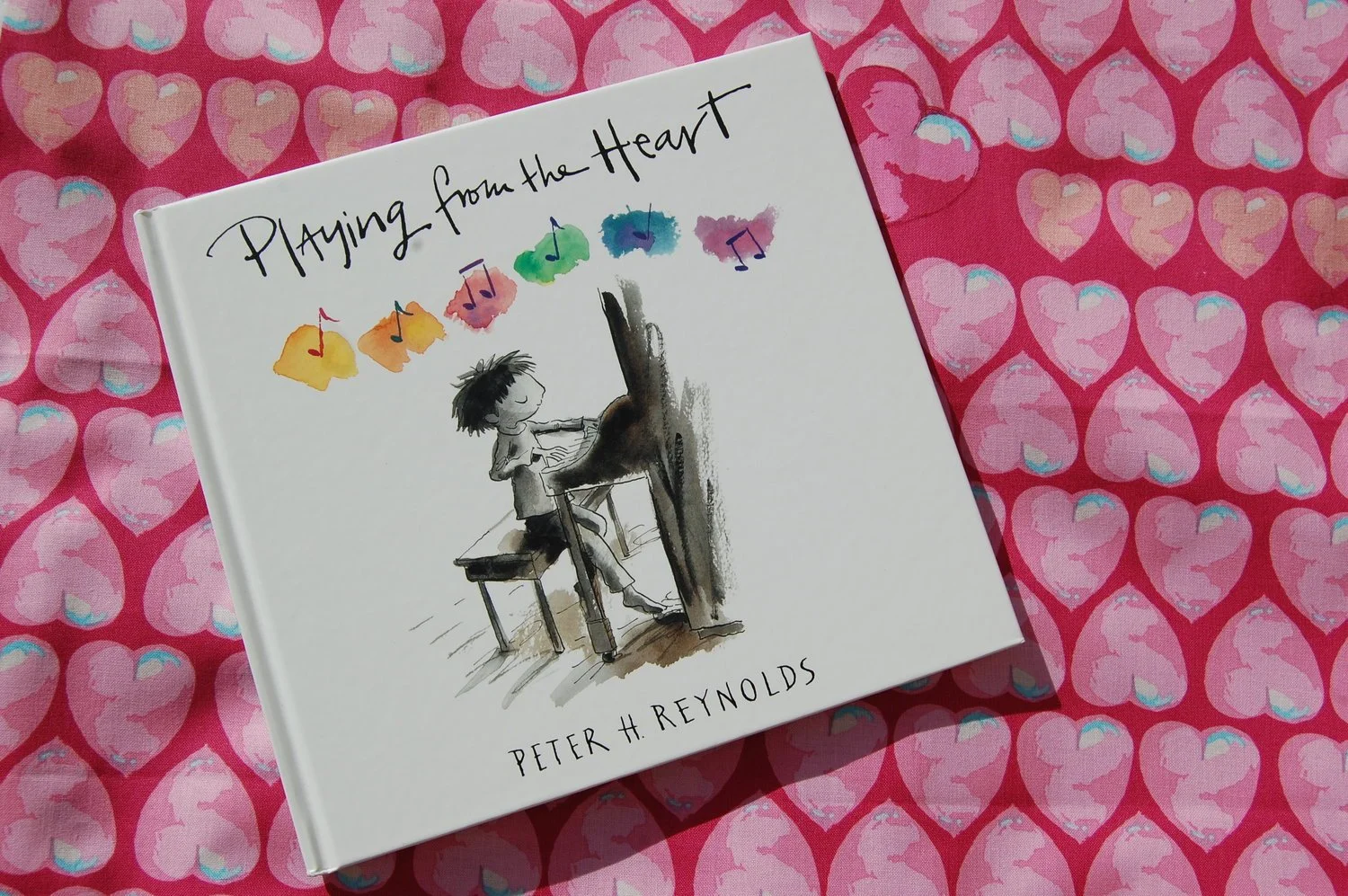
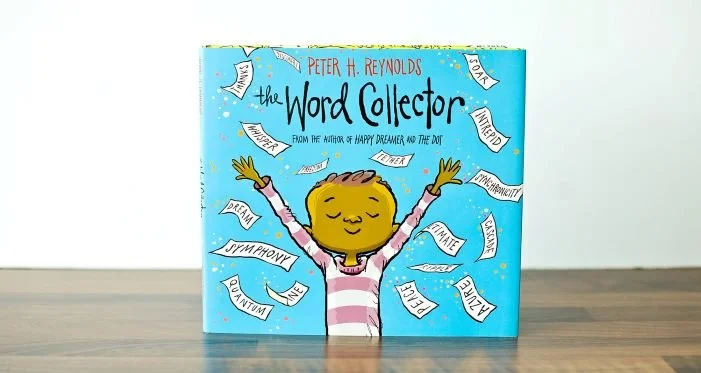
You can read my review of ‘Our Table’ here , ‘Playing from the Heart’ here and ‘The Word Collector’ here.

Earth’s Incredible Places: Everest

Welcome to Mount Everest…
Most people have heard of Mount Everest and could probably tell you that it is the highest mountain on Earth and that people strive to ‘conquer’ it by climbing to its peak. From this absorbing book, there is so much more to learn about this fascinating place. With mountains being an area for study in the primary Geography curriculum, this is an essential addition to topic boxes and school libraries as well as for any budding mountaineer or explorer - armchair or otherwise!
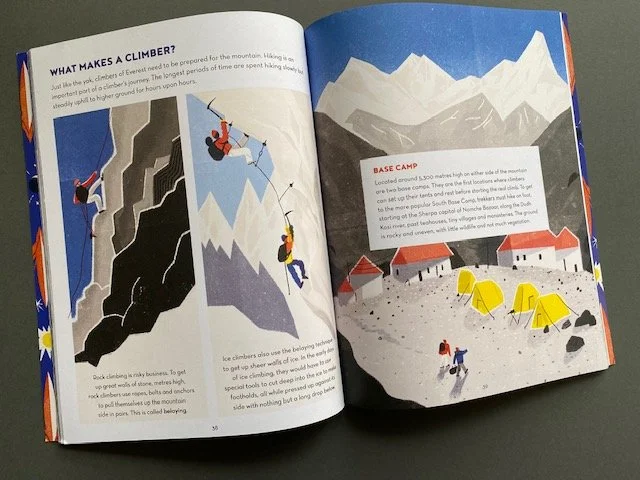
The book opens with an explanation of how the Himalayas formed, their location and the various names Everest and her sister mountains have been given. There are many myths and legends associated with the mountains and a selection of these are included here, scattered amongst information about the flora and fauna and the people who live here.
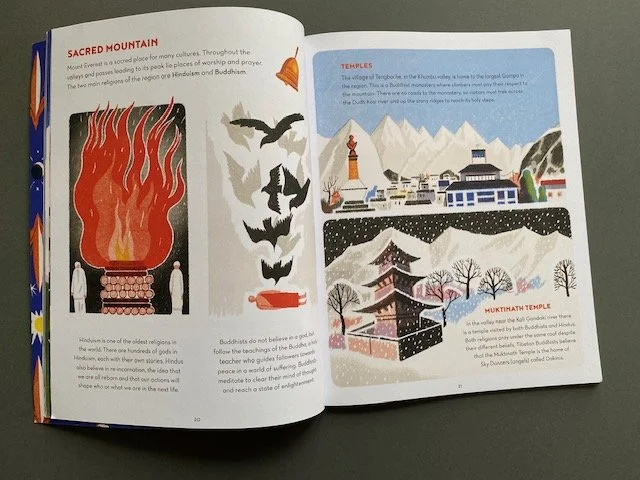
Information about climbers and their determination to ‘conquer’ Everest is also included. The perils to be faced and the equipment used and invented to tackle the challenge are explored as the book introduces the reader to some of the people who have taken the challenge and have pushed themselves to the very limit to climb this mountain. The less appealing subject of the damage humans are doing to this special place by the waste they leave behind is also explored. The book closes with some learning resources to support teachers and parents/ carers to enjoy using it with children. An excellent resource, packed with information!
Earth’s Incredible Places: Everest
Sangma Francis, illustrated by Lisk Feng
Flying Eye Books ISBN: 978-1838741457
Winter’s Keep Launch
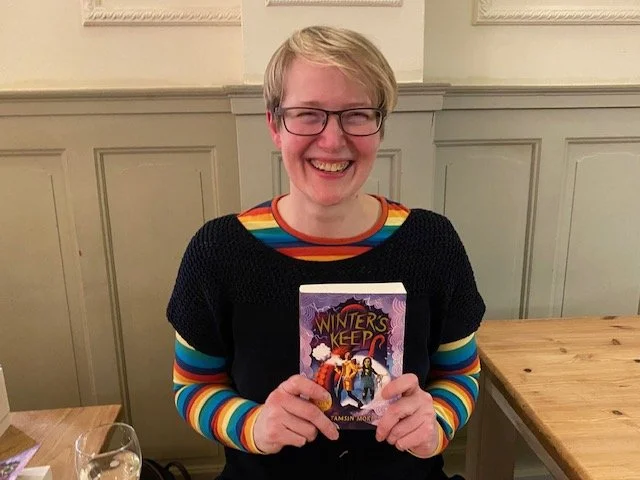
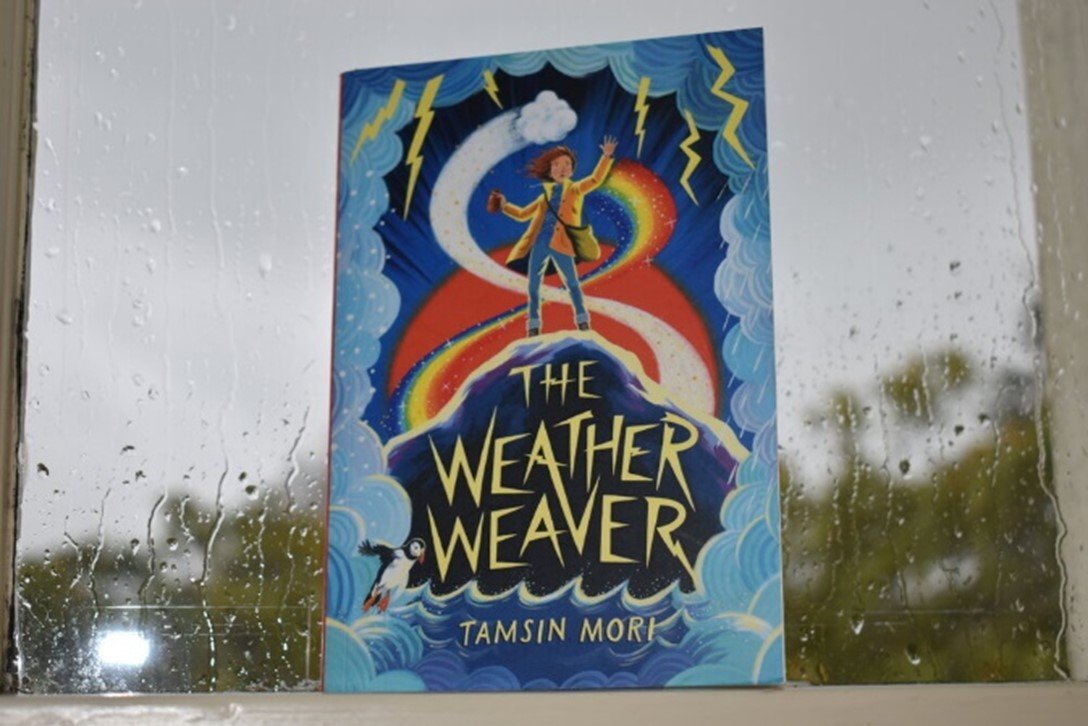
Last night, I went to Waterstones in Bath to join the celebrations for the launch of ‘Winter’s Keep’, the final instalment of the Weather Weavers trilogy. It was a lovely occasion, full of familiar, friendly faces- and lots of book-ish chatter!
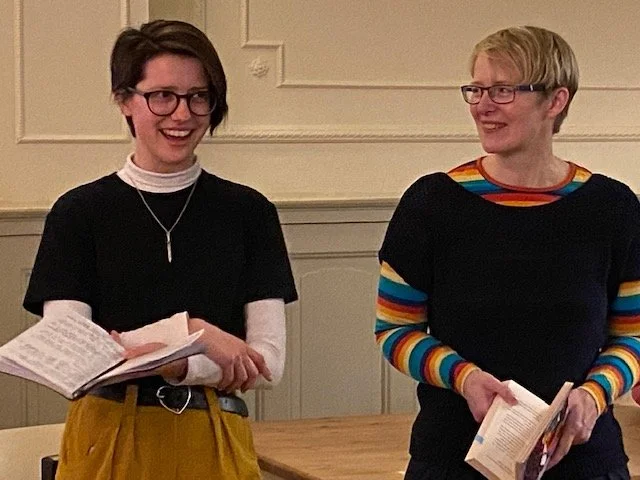
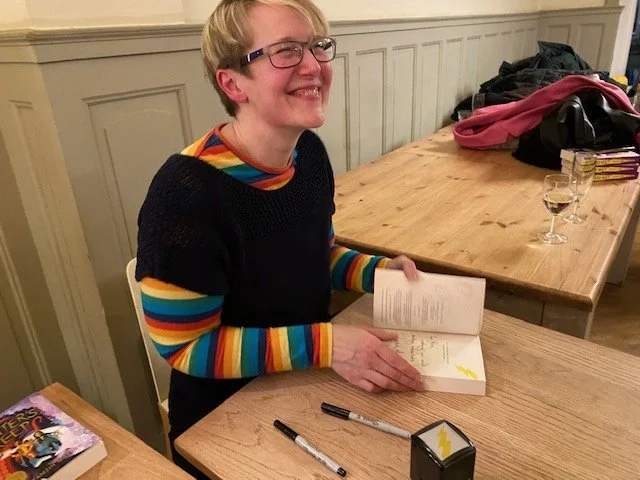
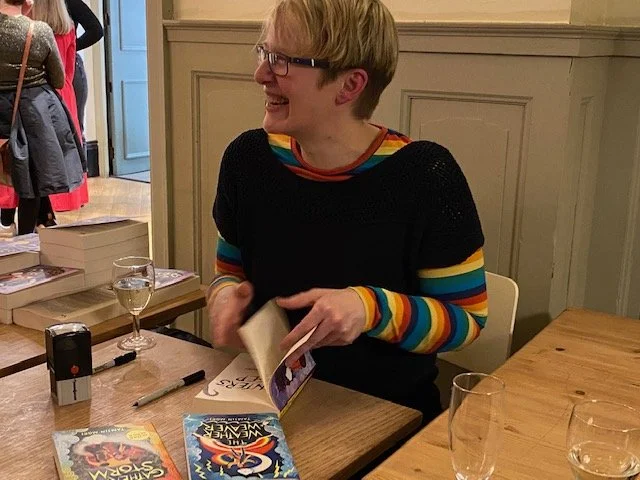
Erin from Waterstones gave a lovely introduction and then Tamsin read a section from ‘Winter’s Keep’ to a captivated audience. There is something very magical about listening to an author sharing their work and Tamsin read beautifully, offering a tantalising glimpse into the pages of the final book of her series.
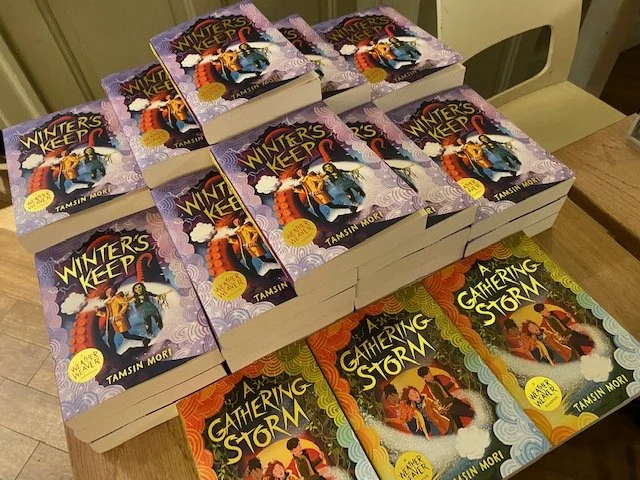
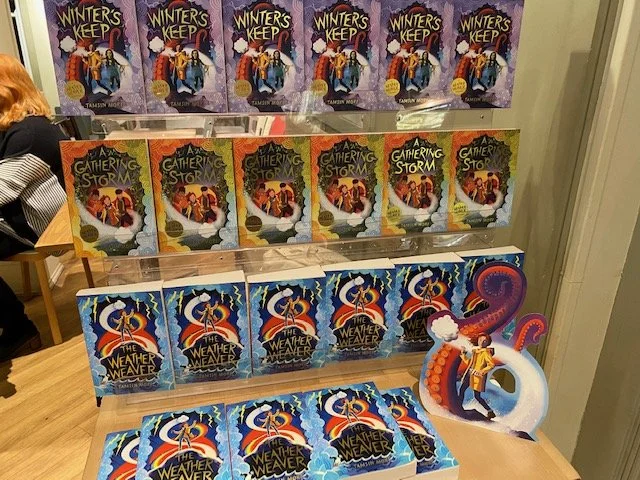
Tamsin was kept very busy signing books until the evening came to an end. These wonderfully magical adventures, intertwined with myths and legends, are a fabulous read- highly recommended- and ‘Winter’s Keep’ brings them to a very satisfying and compelling conclusion. Congratulations to Tamsin on an excellent book and a lovely launch event!
Winter’s Keep Tamsin Mori
UCLan Publishing ISBN: 978-1915235053
Published 3rd March 2023
You can read my review of The Weather Weaver here.
Protecting the Planet: Emperor of the Ice

This beautiful book tells of a year in the life of the Emperor penguin, highlighting the dangers that they face both due to the harsh climate they live in and to the effects of climate change. A forward by Dr Phil Trathan sets the scene, explaining the role played by satellites in helping to tell their story and the book closes with two pages of information about Emperor Penguins, climate change and what can be done to help.
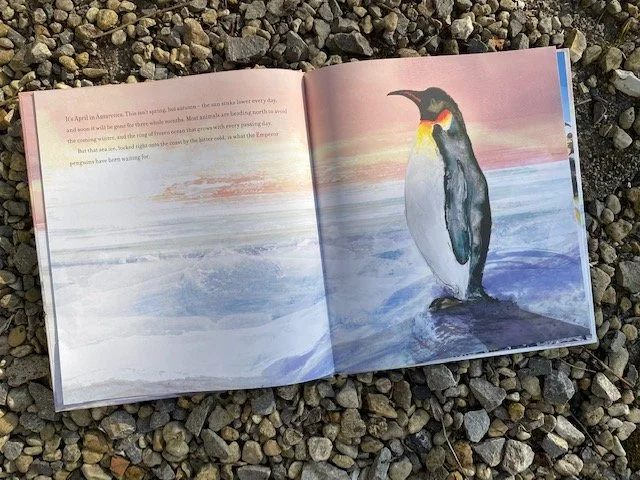
The book is beautifully written, full of rich imagery, with the lines of penguins and their shadows making their way across the ice described as ‘like spidery writing across a blank page’. From reaching the ice at Halley Bay, the perfect location to breed, and finding a mate, laying a single egg and the Empress making her treacherous journey to the sea and back, the text outlines the vulnerability of these creatures and the fragility of both their lives and the new one they have created. Nicola Davies does not shy away from the harsh realities, but offers these honestly as an essential part of the story she is telling. Although she describes ‘a good year for this colony’, the book ends with a reminder of the fragility of the penguins existence.
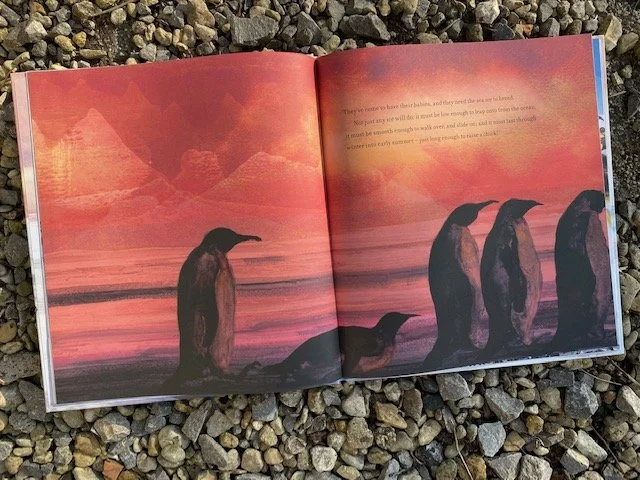
Catherine Rayner’s stunning illustrations make the perfect accompaniment to the words, making this a very attractive and appealing book. This would be an engaging and accessible text for Guided Reading, offering much to explore and investigate as well as being a book which is sure to be taken from shelves by individuals to be devoured with great pleasure. This is a special book.
Protecting the Planet: Emperor of the Ice
Nicola Davies, illustrated by Catherine Rayner
Walker ISBN: 978-1406397086
The Song Walker
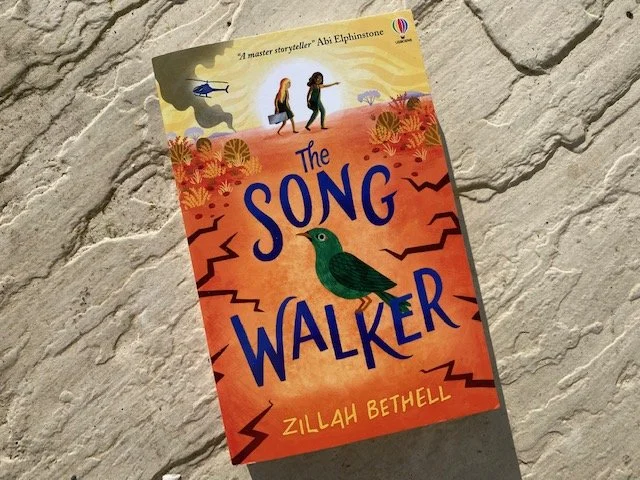
Waking up alone in the middle of the desert, a young girl wearing a black dress, one shoe and carrying a heavy case, struggles to keep walking. She has no idea who she is, where she has come from or where she is going to when she meets Tarni, a young First Country Australian girl who is on a quest of her own. Together, the girls embark on a trek across the Australian Outback in search of answers.
‘The Song Walker’ is one of those very special books which makes you slow down towards the end as you don’t want to leave the story behind. From the very first page, it is completely compelling, immersing the reader in the girls’ world. Beautifully constructed, the plot unfolds perfectly with hints and details guiding the reader as the story reaches its climax.
Evocative descriptions bring the landscape to life with its shimmering heat and unique flora and fauna. It makes the perfect backdrop for the girls’ journey as they learn much about each other and themselves. The story shows great respect for, and understanding of, Tarni’s beliefs and cultural background, encouraging the reader to find out more by offering links to websites where they might find out more.
I read this in one sitting, completely immersed in the story. So many threads are woven into the story, developing empathy, sparking conversation and encouraging reflection that this would make an excellent text to share with children in upper KS2 as a class read or as a key text from which to develop work. I cannot recommend this one highly enough!
The Song Walker Zillah Bethell
Usborne ISBN: 978-1474966856
Originally reviewed for Reading Zone.
Blog Tour: Finding Floss


Today, I am delighted to be taking part in the Blog Tour for ‘Finding Floss, the Colour Changing Cockerpoo!’. The charming colourful illustrations are the perfect accompaniment to the gentle rhyming text, which explores what to do if you should get lost. Parents will find this invaluable for instigating conversations about this in a non-worrying way- there is an advice page at the end of the story- making it an important addition to bookshelves. Floss’s antics are sure to amuse and entertain whilst children enjoy spotting where she is camouflaged in the pictures. The story also has a loving family, which happens to be a blended family, at its heart- my favourite illustration in the whole book is the one shown on the Blog Tour banner above of them all together!
Author, Cara Matheson, joins me on the Bookshelf today to answer some questions…
Can you tell us a bit about yourself?
The first story I remember writing was in verse and about cats. It began: “Cats are lovely, cats are nice, cats like chasing rats and mice.” I think I was 7. Despite this, I am very much a Dog Person. I can mostly be found curled up reading with my cockapoo, Scout, or following her a round Greenwich Park, near where I live.
In a former life, I was a journalist on various women’s magazines. I took a break from that to raise my now school-age daughters, and – after being immersed in the world of picture books – decided that I’d like to have a go myself.
Scout is a therapy dog. Can you tell us about that?
Currently, Scout and I visit a local primary school to read with the children, as part of the Pets As Therapy Read2Dogs scheme. We’re based in the library and small groups of children come to see us and read a book of their choice to Scout. Some children find this easier than reading to a person, as Scout is a non-judgemental (and very cuddly) listener. It’s especially helpful for children with certain educational needs, anxiety or shyness, not to mention those that are going through personal difficulties or speak English as a second language. Scout loves the attention (and extra treats!) she gets during these sessions and it’s wonderful for me to see how the children grow in confidence from her visits.
What made you want to write a children’s book?
Having children of my own opened up the world of picture books to me, starting with Julia Donaldson’s Superworm – the first book I read to my eldest daughter. I’ve enjoyed seeing how much my children benefitted from these stories, which have provided lots of bedtime laughs, opened up interesting conversations and sometimes even helped them process difficult emotions or experiences. I suppose I just wanted to create the sort of book that they would enjoy.
What inspired the story and the characters?
Well, Floss is inspired by my dog, Scout! The other characters are loosely based on my own family. I’m from a diverse background (Irish, English, Chinese and Iranian…and more) and have also grown up in a blended family after my parents split up. I wanted Finding Floss to reflect my ‘normal’ and show it in a positive way. Finally, I think a lot of parents can recall a scary time when their children were lost (it’s only happened briefly for me, but each time my heart pretty much stopped) and I wanted to help children and their grown-ups have that all-important discussion about what to do, in a gentle, non-threatening way.
How did you find the publishing process? How did it feel to hold your finished book in your hands?
In a nutshell: A whirlwind, a wonderfully creative group effort, and a lesson in immense patience at times (publishing lead times are loooong) before being suddenly hurled full-speed towards publication day! When I finally received the finished book I was simply giddy with excitement and in a state of disbelief. I’d been writing for so long – over a decade now – I almost couldn’t believe it had finally happened for me.
What do you think of the illustrations?
Mirna did an incredible job, especially with making Floss such a cute and endearing dog. Floss’s family are also perfectly rendered and the little girl (her name is Annie, though this isn’t mentioned in the story) is the sort of child I love to see in picture books: quirky, unique - and a glasses wearer. I also love the colours Mirna used and all the sweet little details she included. I honestly can’t think of a better illustrator for the book. Oh, and the endpapers are just fabulous!
What do you hope readers will take from the book?
I hope young readers will feel more confident about coping, if ever they find themselves lost. Most importantly, though, I want them to enjoy the story and perhaps even feel inspired to write their own.
Are you working on anything now?
I have lots more picture books up my sleeve, at various stages of completion – including a second Floss book. Writing in verse is a joy, but I’d like to have some of my prose stories published too. These tend to be on the irreverent, slightly random side, like Don’t Let the Pigeon Drive the Bus, which I think children respond really well to.
Finding Floss: The Colour-changing Cockapoo!
Cara Matheson, illustrated by Mirna Imamovic
published by Owlet Press, £7.99 paperback, out now.
Find Cara on Instagram @cara_matheson_writer and Twitter @cara_writer
Thank you so much to Cara for joining me today. Make sure you follow the tour to find out more about this lovely book. You can find out more about publishers, Owlet Press, here www.owletpress.com
Into the Faerie Hill

Whilst his father is working with a construction company on a tunnelling project through a local hill, Alfred is to stay with his grandmother under a forest topped cliff. Everything is strange and unfamiliar- particularly the odd little faerie creatures that only he can see. When he meets local girl, Saga, he starts to really appreciate the beauty of the area and the threat it is under from the construction project his father is involved in. As he joins Saga in the protests, he is drawn deeper into the world of the faerie, trying to discover the secrets of his past as well as saving the beauty of the natural world.
‘Into the Faerie Hill’ is a wonderfully atmospheric, magical story, full of mystery, but one which carries a powerful environmental message. Once started, it is impossible to put down.
The story is richly descriptive, quickly immersing the reader. Alfred is conscious of his differences, both physical and in his ability to see things which others can’t, but the wonderful Saga’s natural openness and free-spirit allow him to relax and enjoy a genuine friendship. Her passion for the natural world and the local area are as inspiring as her loyalty and support of Alfred. Together, they make a formidable team.
Folklore is woven seamlessly into the fabric of the story as Alfred seeks answers to questions about his mother, who -he believes- died twelve years ago. His father and grandmother are reluctant to talk about her and Alfred has to piece together the truth whilst facing the perils of the faerie.
There are so many elements to enjoy here, appealing to different people as they enjoy the story as a whole. The map at the beginning - who doesn’t love a map?!- also has a floor plan of Granny’s cottage, showing the location of the carved figures which are placed around the house, an attention to detail to support the reader which some of us really appreciate!
Perfect for those looking for something a little different, this is one not to be missed!
Into the Faerie Hill H S Norup
Pushkin Children’s ISBN: 978-1782693864
Published 2nd March 2023
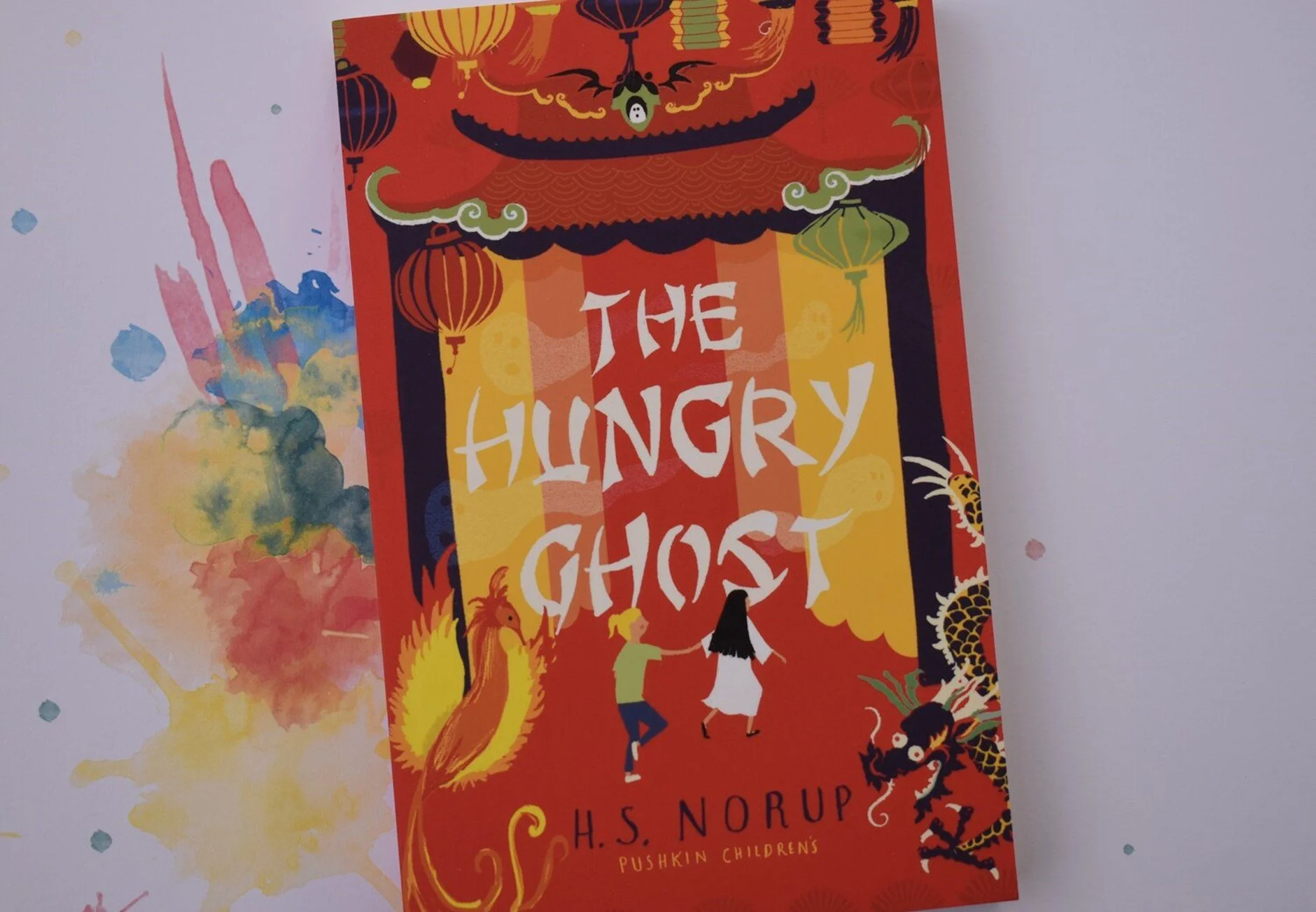
You can read my review of The Hungry Ghost here.
Granny and Bean
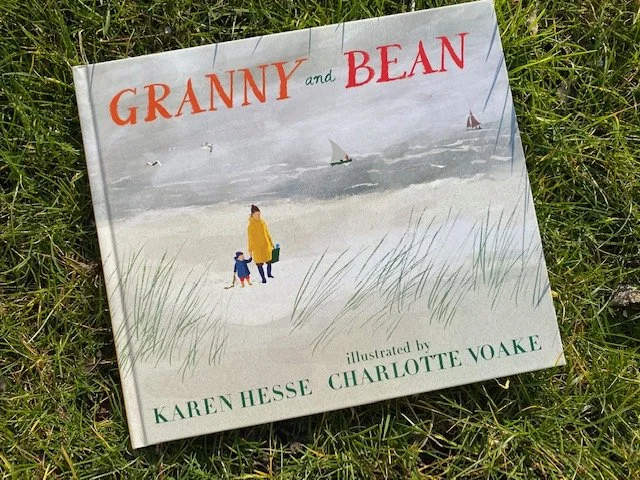
There are some books which magically manage to capture the very essence of a perfect day and this is one of them. The story evokes memories of childhood (and parenthood) as it portrays the idyllic sense of togetherness and joy- joy in each others company, joy in exploration, joy in their surroundings, joy in the simple things of life- that is at the heart of an outing with a child.
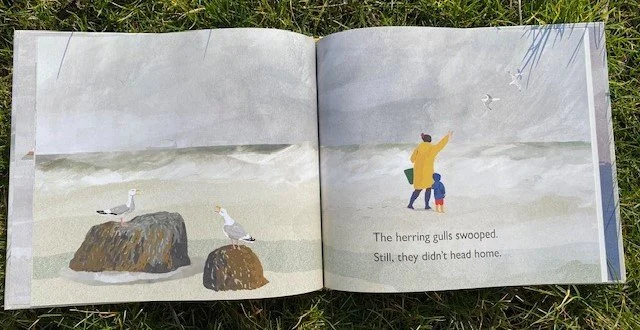
Karen Hesse uses gentle rhyming text to capture this day at the beach. The sky is grey and the wind whips the waves, but nothing deters these two from enjoying each new experience. With ‘their cheeks chaffed red and their hair dripping wet’, they continue their walk across the beach, laughing and playing, picnicking and singing. The language is rich and playful with plenty of things to discuss and to inspire the next trip to the beach!
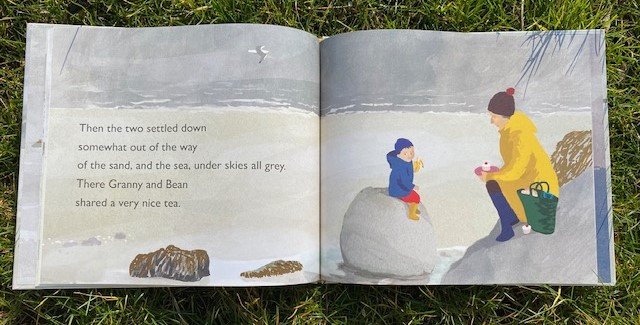
The illustrations are as delightful as the text. Granny and Bean move across each spread, the bright colour of their clothing vivid against the unique beauty of a grey day on a British beach. They do not pause for photos or phone calls; Granny is as ‘in the moment’ as Bean, often crouching down to child level to share and value each experience. They keep a few ‘best shells and a stone’ to take away with them- no living creatures torn from their environment here- as they turn and make their way back towards home, their shadows long in the late afternoon light.
Perfect for sharing at home or at school, ‘Granny and Bean’ is simply delightful!
Granny and Bean
Karen Hesse, illustrated by Charlotte Voake
Walker Books ISBN: 978-1529510041
Scientists in the Wild: Galápagos
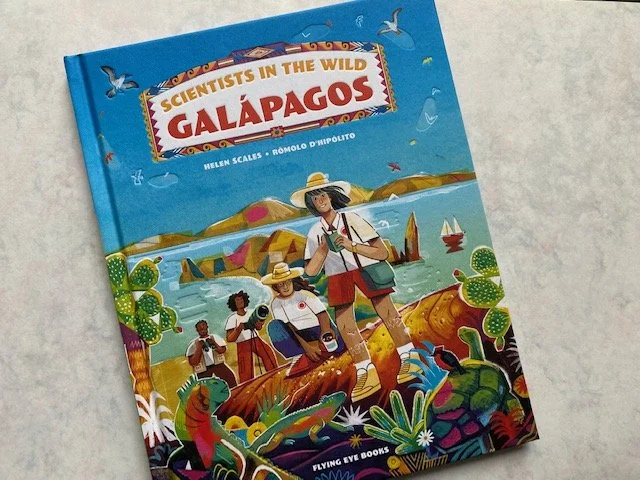
A team of scientists tasked with observing and protecting the islands’ wildlife set sail for the Galápagos Islands, a place like no other on Earth. This book follows their adventures as they work in the field, exploring all the wonders of this incredible archipelago.
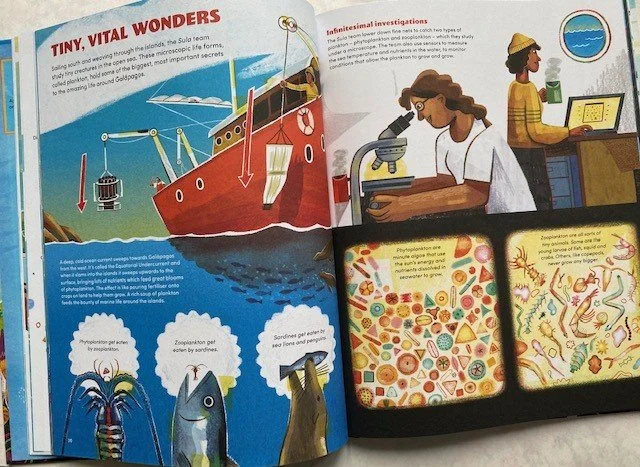
Starting with a map and a brief introduction to the islands, the scene is set for the introduction of the seven scientists from around the world who form the team on board the research ship ‘Sula’. The role of each is clearly explained, showing the range of expertise needed for the expedition and introducing the reader to a wide range of skilled jobs. A cross section of the Sula (the scientific name for the blue-footed booby, one of the birds of the Galápagos) and labelled diagrams of the diving equipment to be used help the reader to understand how the team will conduct their studies.
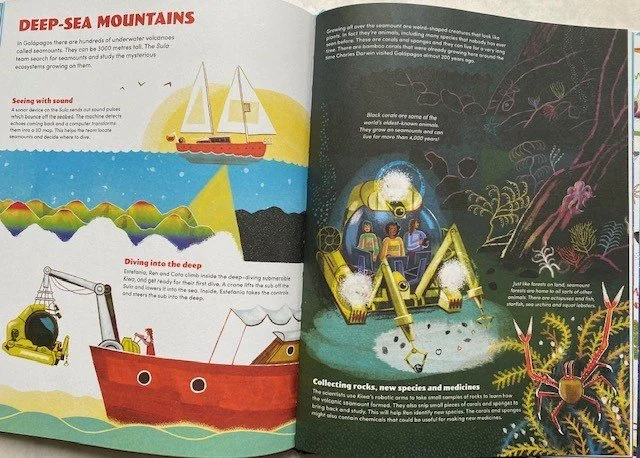
A spread offering a ‘Guide to Galápagos Life explains why the islands are so unique and, sadly, how close to extinction many of the species which inhabit the archipelago are. A key for identifying their status is included and used throughout the book as different species are introduced. The islands are then explored through the eyes of the research team as they pursue their fascinating mission, climbing volcanoes and diving the depths of the seas to gather the data they need.
This is a fascinating, highly engaging book which will be a welcome addition to school libraries and bookshelves as well as being an excellent text for inspiring young adventurers at home. From the arrival of Darwin and his discoveries to food chains, from evolutions and inheritance to volcanoes, from conservation to island habitats, there are so many ways in which this book would add to the primary curriculum. A glossary, contents and index help the reader navigate the text for research and each spread is beautifully illustrated, adding much to the reader’s enjoyment of the text.
Scientists in the Wild: Galápagos
Helen Scales, illustrated by Rômolo D'Hipólito
Flying Eye Books ISBN: 978-1838740931
Published on the 2nd March 2023
Mole’s Quiet Place
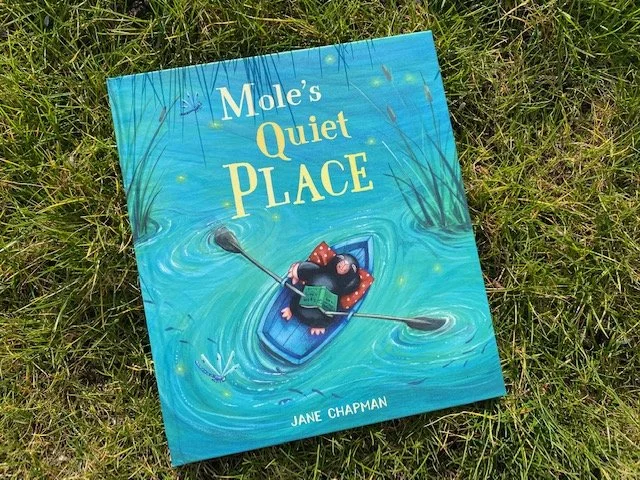
Mole and Beaver live together in a treehouse in the forest. At the end of each day, they light the lanterns, just as their old friend Bear used to, making their home like a lighthouse. Seeing the light, many other creatures are drawn to the warmth and friendship of this home, but as more and more animals arrive, Mole feels overwhelmed. Realising his friend needs some space, Beaver and the treehouse gang set to work to create a mole-sized boat so Mole can enjoy some quiet time before heading back to the comfort of the treehouse.
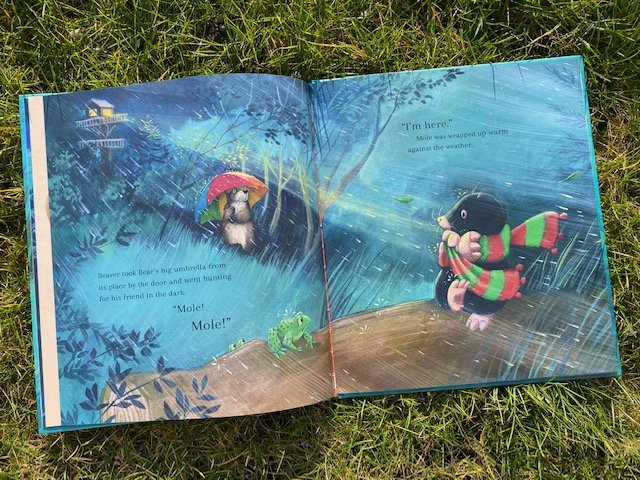
Readers first met Beaver and Mole in ‘Goodbye Bear’ where they comforted each other after the loss of their dear friend. In this touching sequel, the friends are living in Bear’s treehouse and there are many details for readers to notice and enjoy which link the two stories. In this book, Bear’s treehouse is full of the hustle and bustle of visitors as a constant stream of friends drop in to chatter, sing and share some cake. But although Mole enjoys the excitement, she longs for the peaceful evenings she and Beaver used to share. Beaver and the others recognise and value these feelings, validating them by creating a space for her to be alone. No one gets offended or questions her need for a quiet space- they support her by understanding her need.
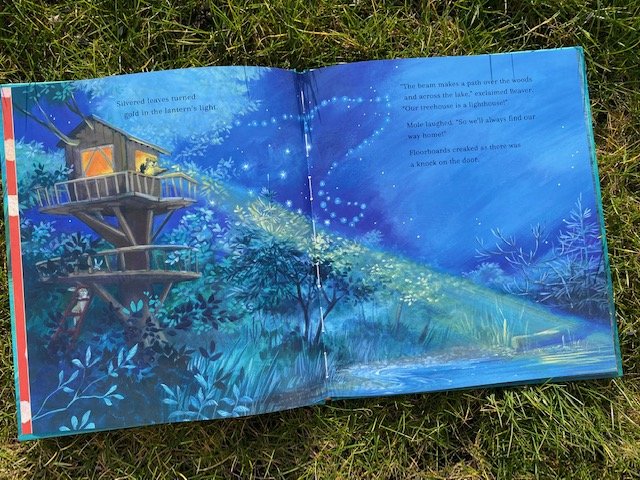
The story is perfect for starting conversations about allowing others some space by striving to understand their feelings. Many parents will find this invaluable for helping siblings navigate not feeling rejected or valued when alone time is needed by one- or all- of their number. It would also make an excellent book for a story time to support children with understanding the importance of ‘allowing’ friends to make choices about how they spend play times or working times and respecting these. The enchanting illustrations are the perfect accompaniment to the story and I hope we see more books about Mole and Beaver and their lovely friendship.
Mole’s Quiet Place Jane Chapman
Little Tiger ISBN: 978-1801044257
Pause for Poetry: You Are Not Alone
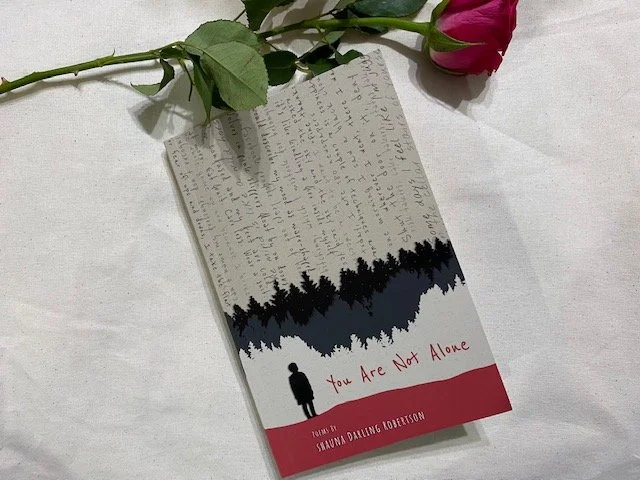
‘You Are Not Alone’ is Shauna’s second poetry collection. Each poem is on the theme of mental health and well-being, making it a powerful, thought-provoking treasure trove for individuals, classrooms and families to share, explore and express their feelings.
The book is divided into five sections- Sometimes like a Wild Horse and Sometimes Like Disco Lights’, ‘What if I’m Not the Shape of the Boxes on Offer?’, ‘I Asked the Edge, the Edge Said Yes’, ‘The Crate of Air That Will Change Everything’ and ‘Happiness is a Hummingbird.’ - and cover a huge variety of feelings and experiences. Readers are sure to find those which speak directly to them, those which make them pause for thought, those which make them empathise and those which make them cry.
I was caught by the pace and imagery of ‘I’m Juggling a Hundred Full Stops’. ‘Suvi’ reminded me of children I have taught and made me cry. I was fascinated by ‘If We Have More Words for Good Things, Do We Feel Better?’. There are so many poems here to comment on- and which I will return to regularly.
The collection offers a rich source of material with which to support and develop understanding of emotions, encouraging empathy and self-awareness, a recognition that others may have similar experiences and an outlet for pent up worries and fears.
The addition of notes about the poems at the end of the book makes for fascinating reading and can be used as a starting point for further reading. An excellent collection which should not be missed!
You Are Not Alone Shauna Darling Robertson
Troika ISBN: 978-1912745173
You can read my review of ‘Saturdays at the Imaginarium’ here.
Blog Tour: The Time Tider
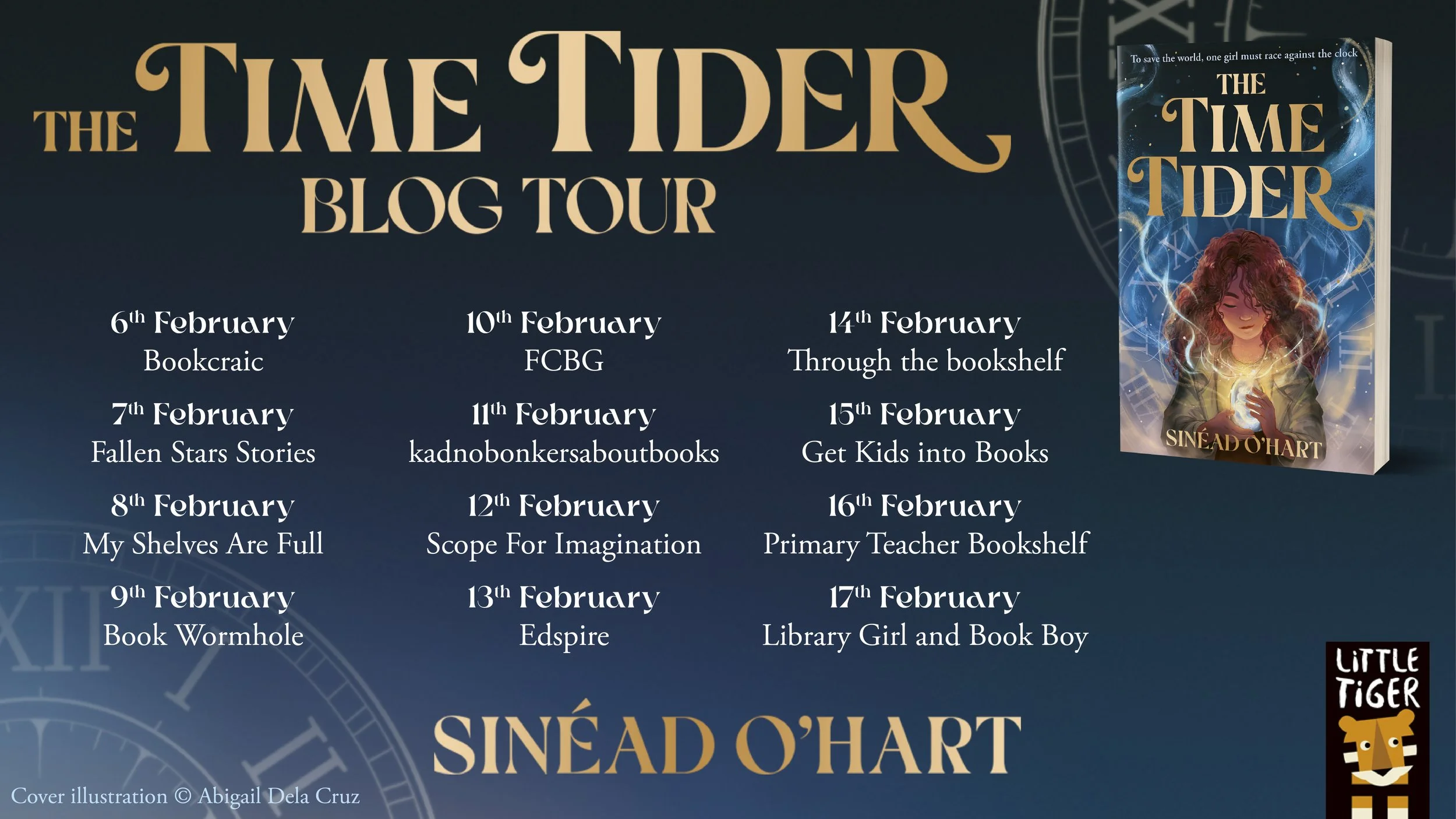
I am beyond delighted to be taking part in the Blog Tour for ‘The Time Tider’ by Sinead O’Hart. I have loved each of Sinead’s books so far for very different reasons, but this latest one really is something special. It offers mystery, adventure and peril whilst challenging the reader to wonder what they would do if they were in Mara’s shoes. Completely compelling, it is an irresistible story- one to return to again and again!
For this stop on the Blog Tour, Sinead shares this fascinating piece about the History of Clocks and Timekeeping.
One of the most enjoyable parts about being an author is the research you sometimes get to do when you’re writing a book. Some books require more background work than others – some require none at all! – and others require loads. My new book, The Time Tider, was somewhere in the middle. It’s a book that’s sort-of about time travel, but which is more about asking questions around the morality of power and who gets to be in charge, and what to do when the people in charge get corrupted and start misusing the power and responsibility that was placed on their shoulders. It’s a book about loss and grief, too, and the importance of making the most of every second we have with our loved ones. And, of course, it’s a cracking adventure with lots of thrills and twists, and two of my favourite characters, Mara and Jan, a girl who lives on the road and a boy with secrets of his own, who have to work together to save not only themselves, but the fabric of Time itself.
In order to write The Time Tider I did some research into how human beings have thought about time for as long as we have historical records, and I learned about clocks and timekeeping and how time – and how it’s measured – can tell us loads about society and culture and structures of power. Of course, when you’re dealing with time as a concept in a book, you run afoul of pesky things like physics and relativity and time dilation and quarks and gravity and black holes… and sometimes, you can become bogged down in the fact that people much cleverer than yourself have spent entire careers trying to understand the way time works – and they still don’t have all the answers. I also read about the physics behind time (turning my brain into a pretzel in the process), but I was more interested in the history of how we’ve measured time – and mostly, what I learned was that time is a very complicated business, and I honestly have no clue how any of it keeps ticking along.
The first means of measuring time, in all likelihood, involved using shadows – because, of course, an object’s shadow changes position during the course of the day, as the sun moves through the sky. People have long noticed this, and used it as far back as the 3rd century BCE (Before the Christian Era – so, over two thousand years ago) to calculate the circumference of the Earth. This was done by a brilliant Greek mathematician named Eratosthenes. He used two gnomons (which are tall objects designed to cast a shadow, and can be used to tell the time as part of a sundial or shadow clock) placed in two different cities, and measured the difference in the angle of the shadows cast by the gnomons at midday. From that, and using the distance between the cities, he was able to work out not only how big the Earth is, but also its axial tilt (the angle of the Earth). At around the same time, during the First Punic War, the Romans took a sundial from Sicily and put it on display in Rome as the first public clock. The playwright Plautus complained about how the human body used to be the best clock – by which he meant he could tell when it was lunchtime by the grumbling of his tummy – and now people were using technology to tell time instead! This complaint has been made at several points in history (and it’s one of the inspirations behind The Time Tider itself).
In Athens, in Greece, there’s an amazing place called the Tower of the Winds, which might date from around the 2nd century BCE. It has shadow clocks (sundials), a wind vane, and a water clock – so it’s like the world’s first meteorological station. Water clocks were a way to measure time through the precise dripping of water through a carefully bored hole in one vessel, which fell into a second, lower, vessel marked with the hours. These clocks were made with great skill, so that the water filled at a predictable and accurate rate during the day, and that it took exactly the same length of time to fill each hour. (Well - more or less.) They were known as ‘klepsidras’, which means ‘water stealer’. In medieval China, we see candle clocks beginning to appear – these were candles which burned at a steady rate, reducing their height each hour so that a person could tell by looking at it what time it was. These sorts of clocks became widespread and were used in Anglo-Saxon England by King Alfred the Great, as well as by the great Mesopotamian inventor Ismail Al-Jazari (d.1206), who made a clock that played music every hour! In later medieval China there were fire clocks which worked by burning a stick of incense, and as the hours passed the burning stick would drop metal balls into a shallow plate placed beneath the clock. The clattering of the balls would alert people to the passing of the hours. Some of these clocks worked using fragrance, so that each hour had its own particular scent; as the incense burned, and the scent changed, the user would know that time had passed. Hourglasses – where sand flows at a known rate through a glass vessel, which is housed inside a wooden frame – were also widely used, but nobody is really sure where they were first invented. Certainly, they’ve been around since at least the eleventh century – a thousand years ago.
From the medieval period, about the thirteenth century, mechanical clocks begin to be invented. Bell towers (which were already ringing out the hours through someone ringing a physical bell) began to be mechanized, and the earliest clock tower with a face and hands comes from the 1380s, in Venice. There was one in Salisbury, in England, from around the same time. And here’s where our friend Plautus would have had a lot to complain about: it’s from this time that people begin to think about time in a different way to before, where time becomes something imposed upon people, and clocks begin to force a sort of order or structure on people’s days and lives, disrupting their personal time. The widespread appearance of public clock towers made people feel they had to be eating lunch when the clock struck one (rather than when they were hungry) and that they had to be at church when the clock struck ten, or that they had to be asleep when the clock struck eight. The phrase ‘time is money’ dates from around 1719, when ideas about time and productivity and work start to get intertwined – time was no longer something personal and private, but now your time belonged to your employer. It was also something precious, given by God, something you could waste (which was sinful), and in the late seventeenth century a writer named Richard Baxter wrote about wasting time as being the same thing as robbing from God himself.
In the nineteenth century, we begin to see time and time-zones becoming established and regularized, and one of the main reasons for this was so that accurate train timetables could be drawn up. Prior to this, each town and village would have had its own time! So, GMT (Greenwich Mean Time, which we still use today, and which regularizes what time it is in Britain, Ireland, and lots of other countries) became the primary way in which we map time-zones around the world. Nowadays, we use quartz watches (quartz vibrates at a set rate, and can be successfully used to calibrate clocks) or atomic clocks (which work similarly – using atoms which vibrate at a set rate to power the most accurate clocks humanity has yet invented) to measure time on land, on sea, and even in space – but sometimes I wonder, even now, do we really understand how time works? Maybe we never will!
Many thanks to Sinead for joining me on the Bookshelf today and sharing this piece. I cannot recommend ‘The Time Tider’ highly enough and know that it is a book which teachers will enjoy introducing their children to- it would work brilliantly as a Guided Reading text! Thanks to Little Tiger for inviting me to be part of this tour- and make sure you check out some of the previous posts as well as the three remaining days ahead.
The Time Tider Sinead O’Hart
Little Tiger ISBN: 978-1788953306
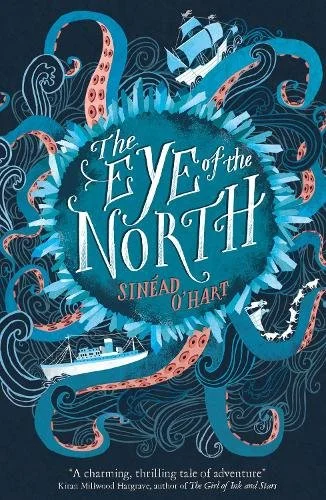
You can read my review of ‘The Eye of the North’ here.
The Rescue of Ravenswood
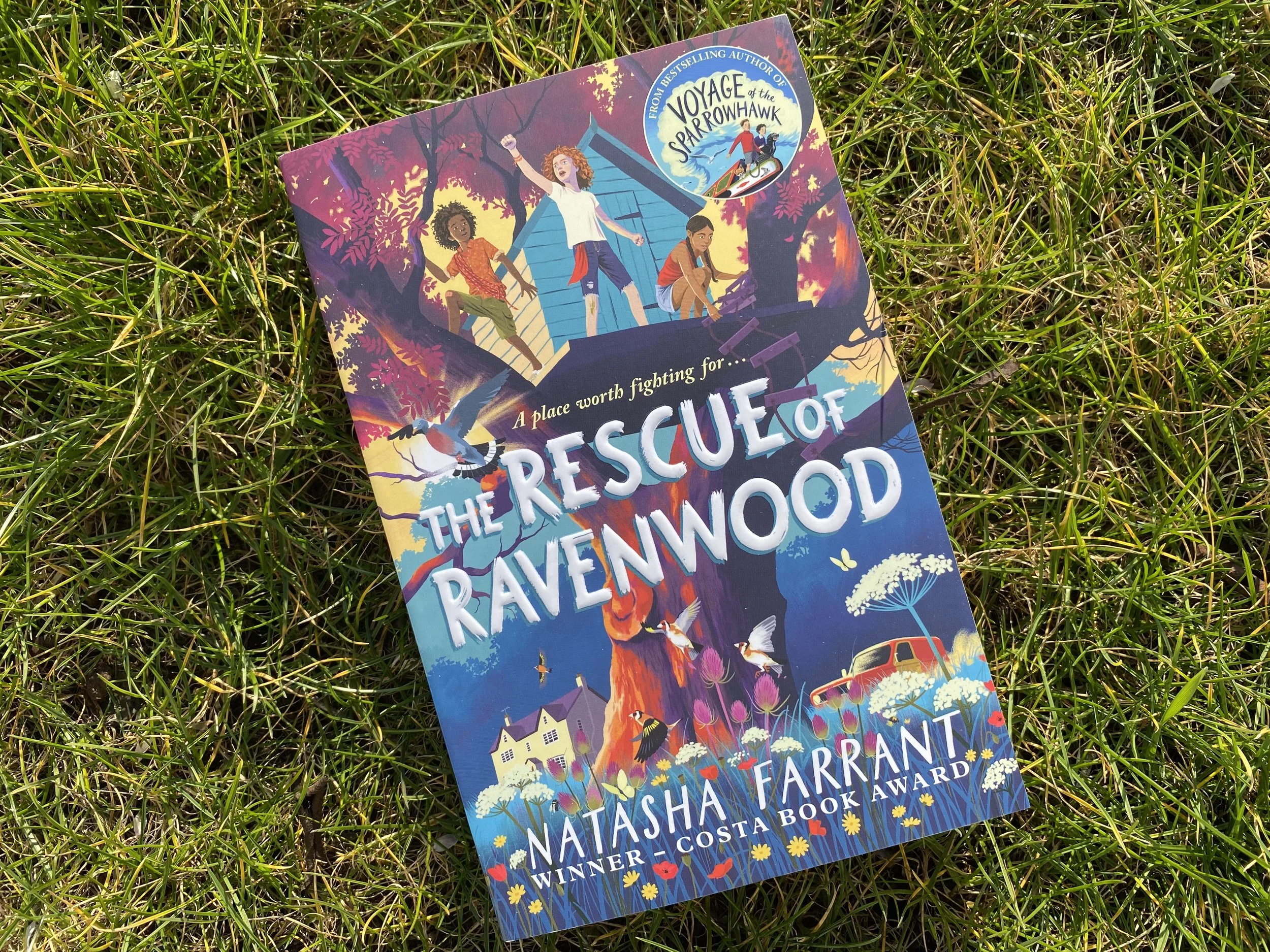
Ravenswood has been home to Bea and Raffy for as long as they can remember. To them, it’s perfect so when faced with the idea it could be sold, the children are determined to save it no matter what.
Natasha Farrant crafts the most beautiful stories which are full of heart and hope and in ‘The Rescue of Ravenswood’, she has captured the essence of the love of home and belonging, the topsy-turviness of family- however that is formed- and how special places can be.
Bold and brave, Bea is in her element at Ravenswood. However, she struggles with feelings of rejection by her parents, feeling she can never be the person they want her to be. Although not her ‘real’ sibling, Raffy and she are incredibly close, enjoying a special bond and balancing each other’s personalities. When Noa arrives, the dynamic between them changes and what was supposed to be their perfect summer seems threatened. Each character is full of personality and easy to engage and empathise with.
Ravenswood is special to the children in the way in which many people will be able to relate to the places in their lives, places which are worth fighting for and worth preserving for future generations. As the children bring everyone together to save their most precious place, certain truths come to light and ‘everything changes, but everything stays the same’.
There is so much to enjoy about this story. Natasha Farrant always offers something special and ‘The Rescue of Ravenswood’ is a real treasure.
The Rescue of Ravenswood Natasha Farrant
Faber ISBN: 978-0571348787
Originally reviewed for Reading Zone.
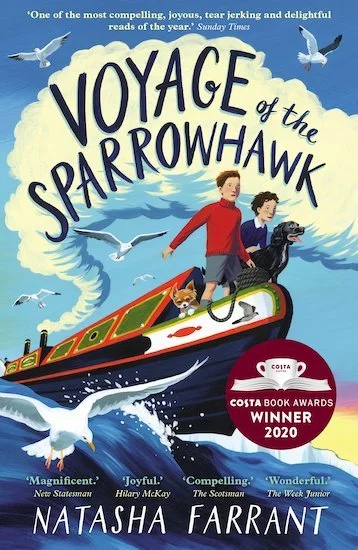
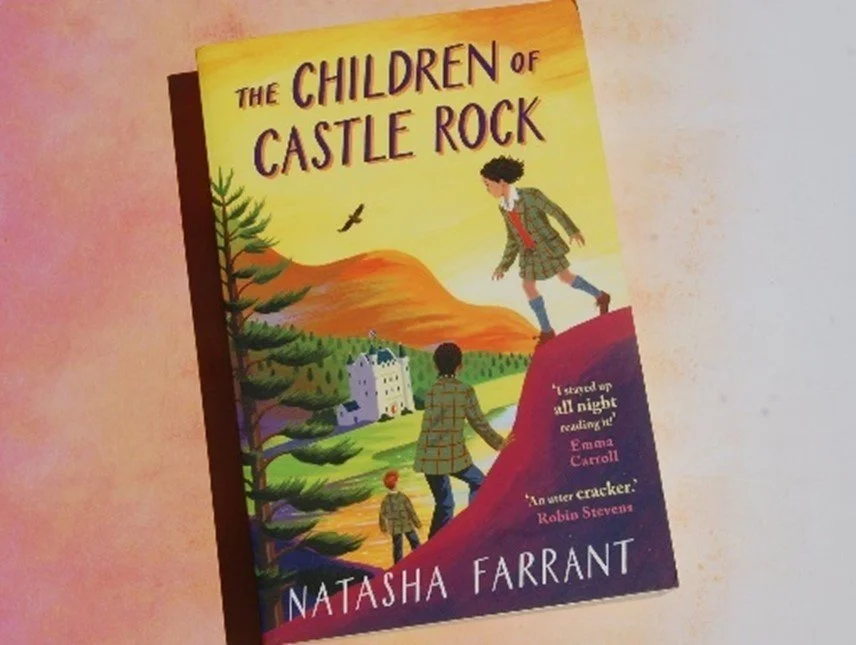
You can read my review of ‘Voyage of the Sparrowhawk’ here and ‘The Children of Castle Rock’ here.
Press Start!
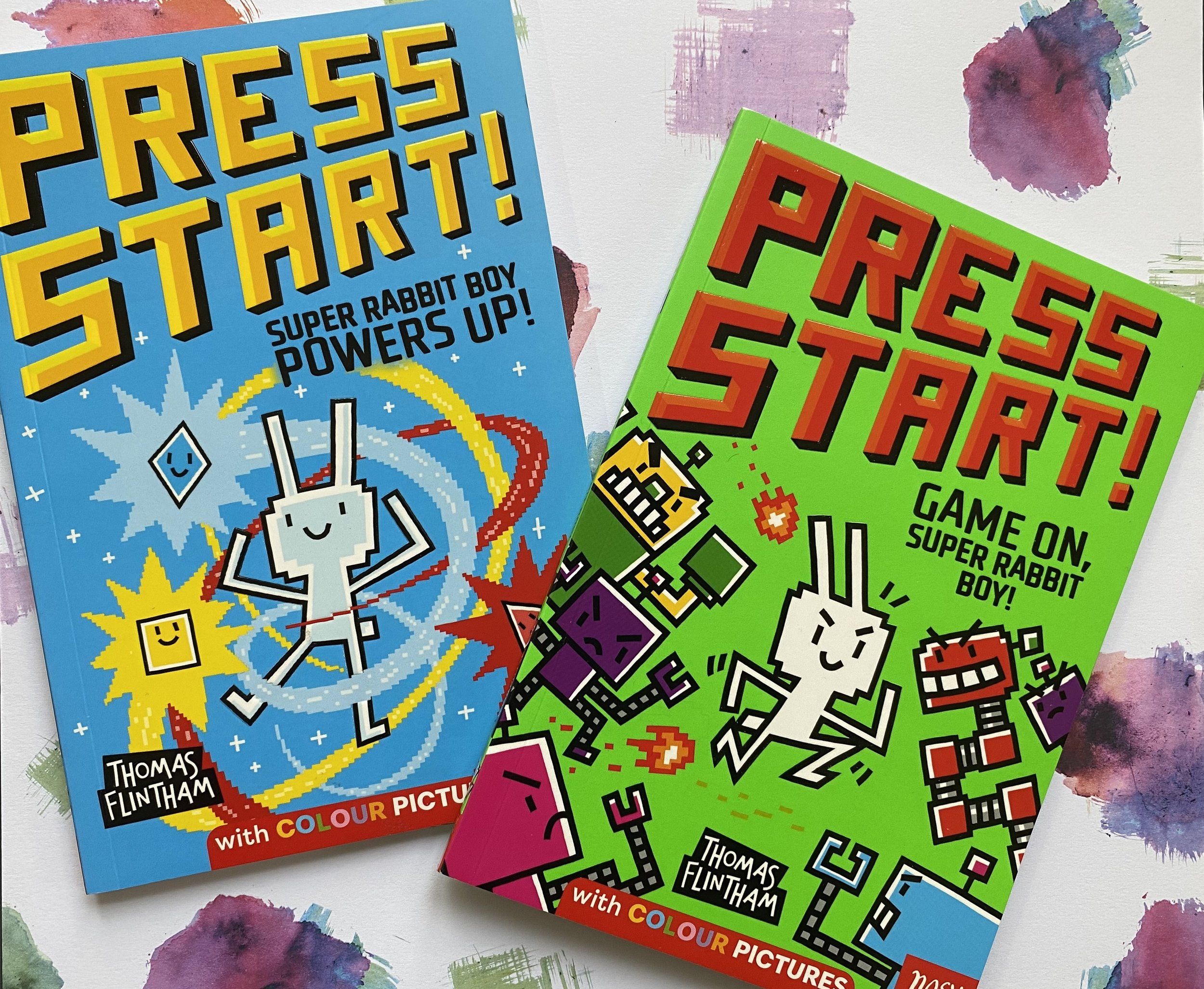
Sunny’s favourite video game is ‘Super Rabbit Boy’. In Animal Town, the characters live happily, singing and dancing the days away. However, when King Viking comes up with his No-Fun Plan and kidnaps Singing Dog, it is up to Super Rabbit Boy to rescue him. Can Sunny help him to complete his quest?
‘Game On, Super Rabbit Boy!’ is a first chapter book with brightly coloured illustrations, designed to look like those from a computer game and is sure to have young gamers hooked! Told through a mixture of sections of text and comic book like scenes with speech bubbles, the layout offers reading in small, achievable chunks whilst the illustrations do much to keep the plot moving. The sentence structures used are also relatively simple and although the action moves between the game, including a flashback, and Sunny playing it, the story line is easy to follow.
The story also shows the importance of perseverance as Sunny loses life after life until, with no lives left, he is finally victorious. The use of the present tense makes the action feel immediate and ultimately, happiness returns to Animal Town.
The fun continues in ‘Super Rabbit Boy Powers up!’ as, once again, Super Rabbit Boy sets off on a quest to save the day. As the adventure progresses, Sunny starts to find the game tricky and, although he initially rejected playing with his sister, saying the game is for one person, gradually his whole family becomes involved in playing with his sister, Rue, being the one to ‘stop and think’, solving the problem which the others were not able to. From then on, Sunny sees the value of teamwork and is happy to include his sister in his gaming.
I am not a ‘gamer’ in any way, shape or form, but have lived the experience through parenting. It seems to me that the technology used is older- of the Game Cube/ Game Boy era- and I wonder whether this has been chosen deliberately as gaming devices seem to change so quickly, but that these ‘retro’ devices seem to have a constant appeal- or perhaps I’m overthinking things! These stories are sure to grab the attention of younger readers who enjoy computer games, thrusting them into the challenges of Super Rabbit Boy’s quest and offering a little life lesson along the way! Great fun!
Press Start! Game On Super Rabbit Boy!
Thomas Flintham
Nosy Crow ISBN: 978-1839949180
Press Start! Super Rabbit Boy Powers Up!
Thomas Flintham
Nosy Crow ISBN: 978-1839949227
Big Feelings and what they tell us
Emotions are messages from your heart,
they tell you what you need.
Some of them are BIG feelings
and some are very small indeed.
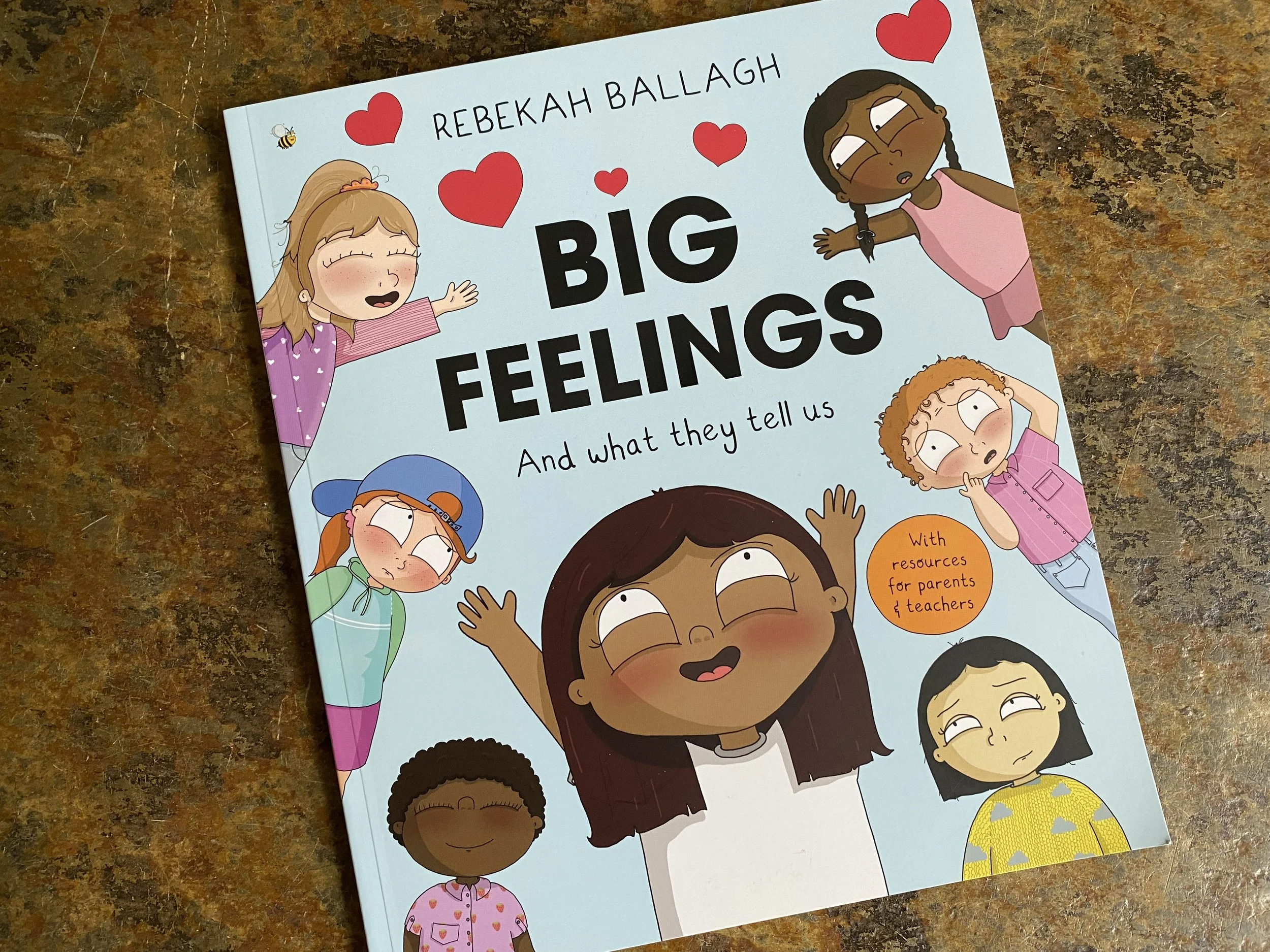
Told in rhyme, ‘Big Feelings and what they tell us’ explores different emotions, designed to help children learn how to identify and cope with a range of feelings. Different children are pictured experiencing reactions to a range of situations. These reactions are validated by the text which is reassuring -’It’s okay to feel disappointed when everything goes wrong’…’But it’s normal to notice things like that when you’re feeling worried’- before offering suggestions for how to cope with these feelings.
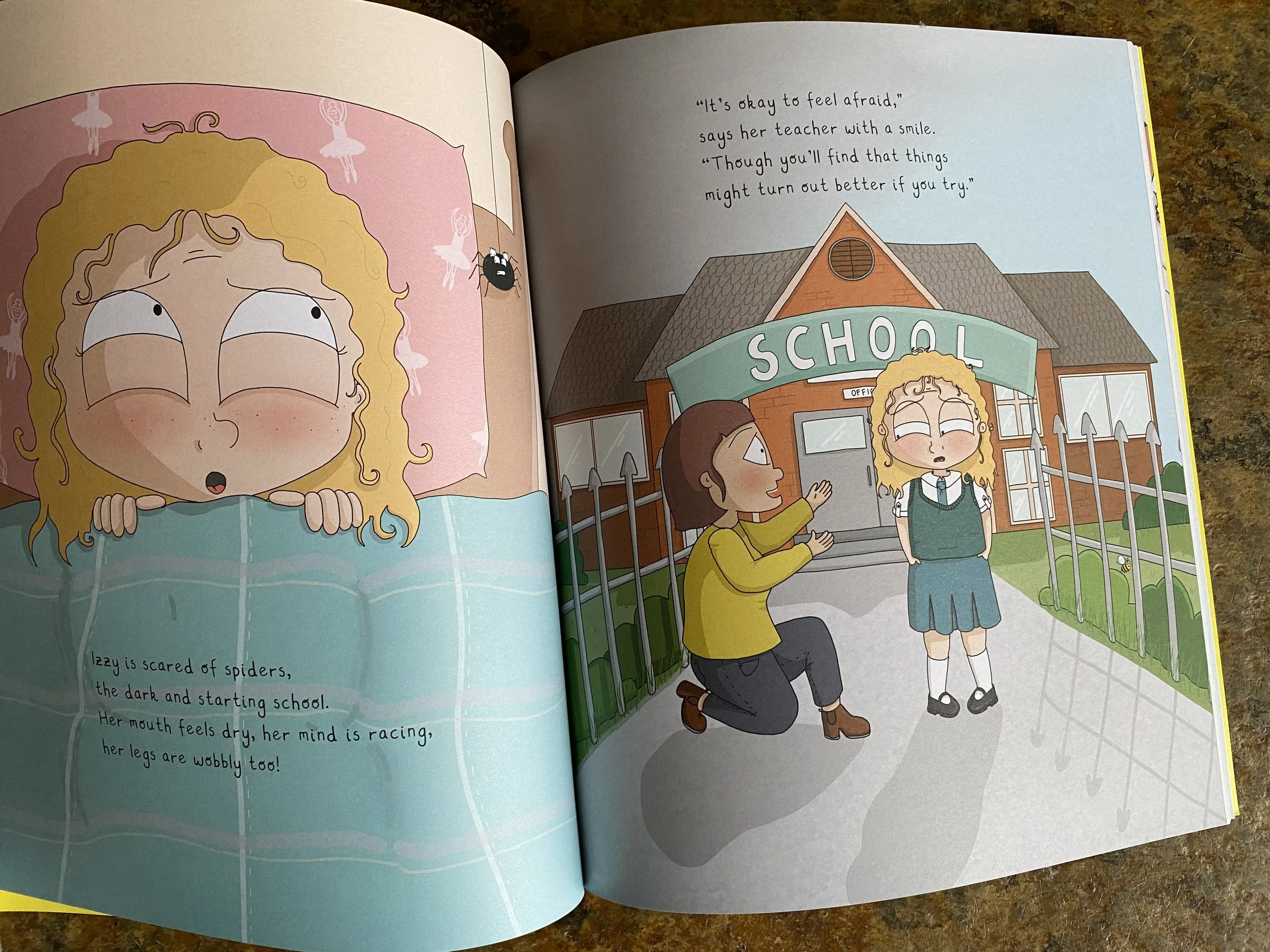
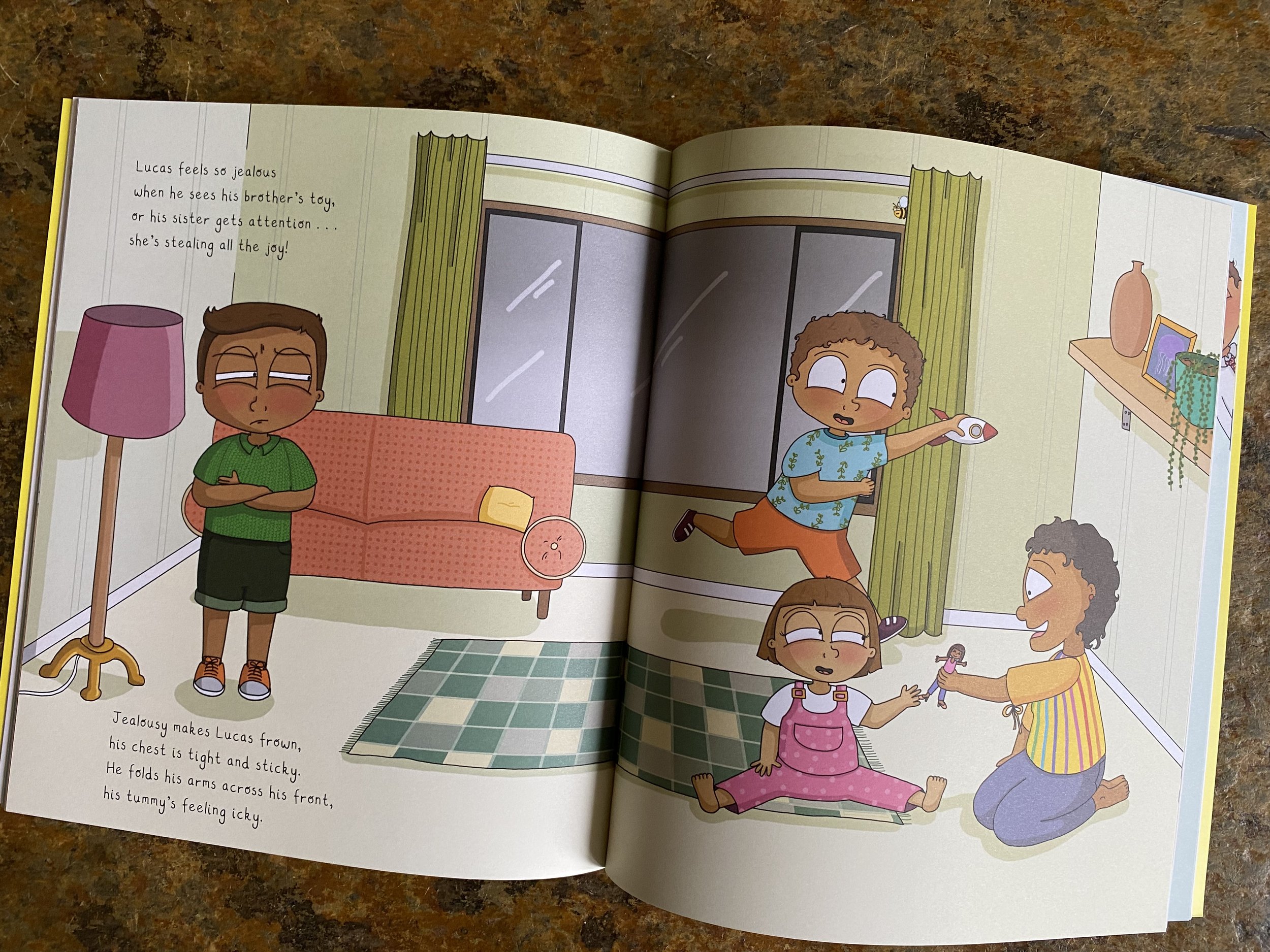
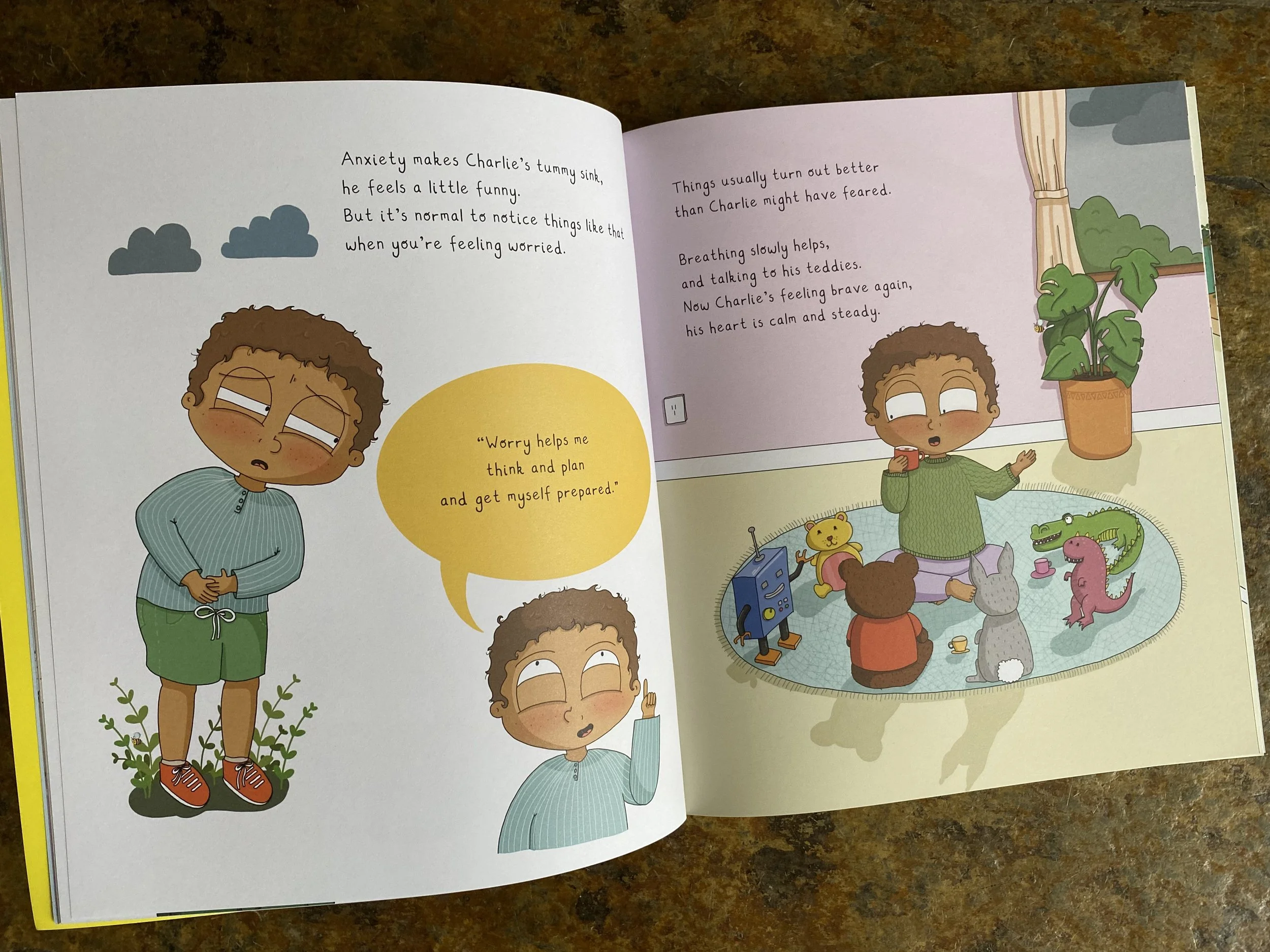
At the end of the book, there is a section of practical advice designed to support parents, carers and teachers. Many of the strategies suggested will be familiar to adults working in schools, but might be invaluable for use at home where adults might be struggling to cope with their children’s emotions or understand how to support them. The author has a background in counselling and the ideas offered are practical and fun.
A great deal is packed into this book and so it would be best used by selecting relevant pages as the need arises rather than reading this in one go. This would enable adults to focus on one feeling at a time, making it meaningful and relevant rather than overwhelming. The feelings wheel and feelings thermometers are particularly useful in supporting children with identifying their emotions, understanding them and coping with them.
A useful text not just for Children’s Mental Health Week, but all year round!
Big Feelings and what they tell us
Rebekah Ballagh
Allen and Unwin ISBN: 978-1761069482
Scary monsters…and Jennifer Killick
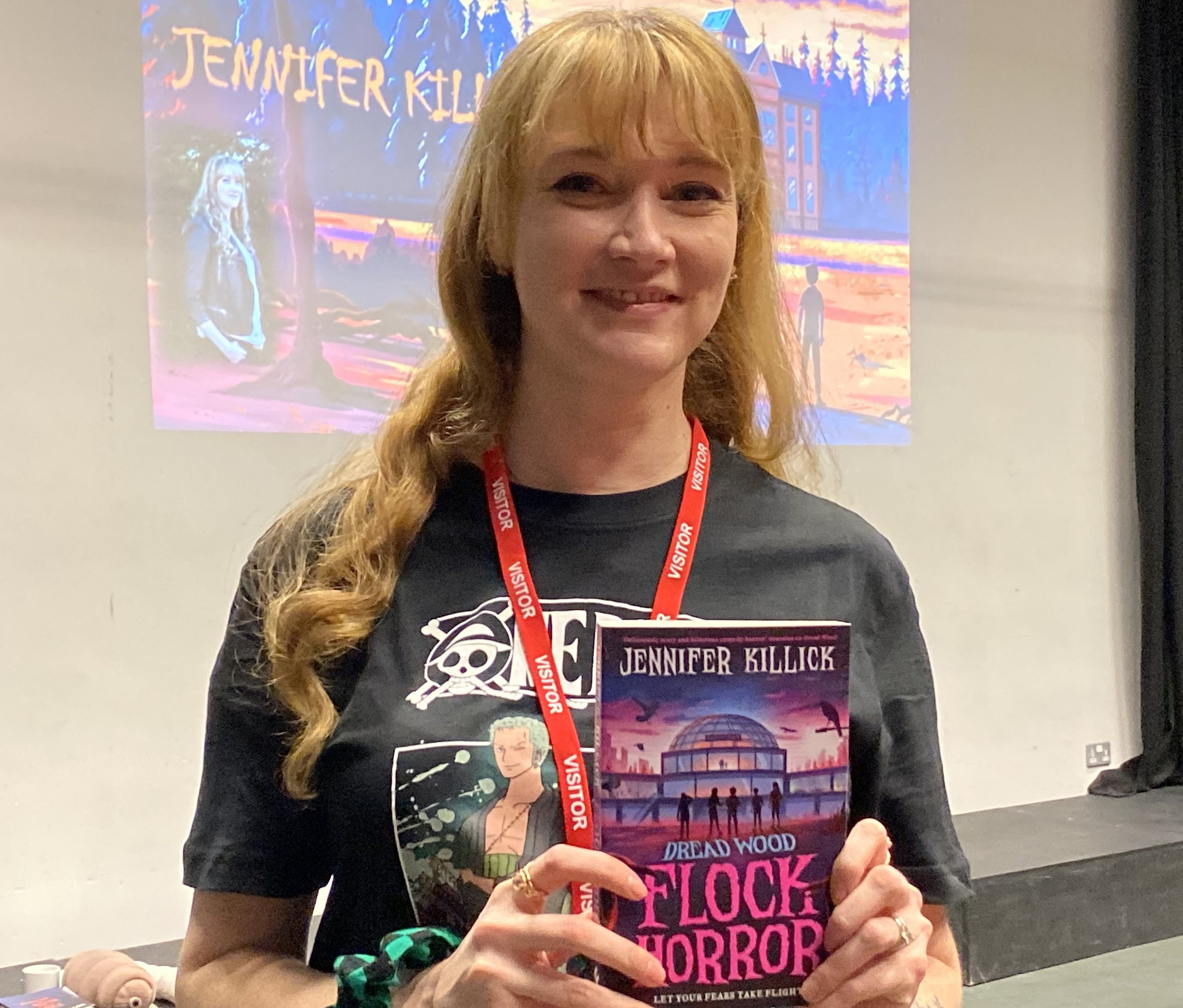
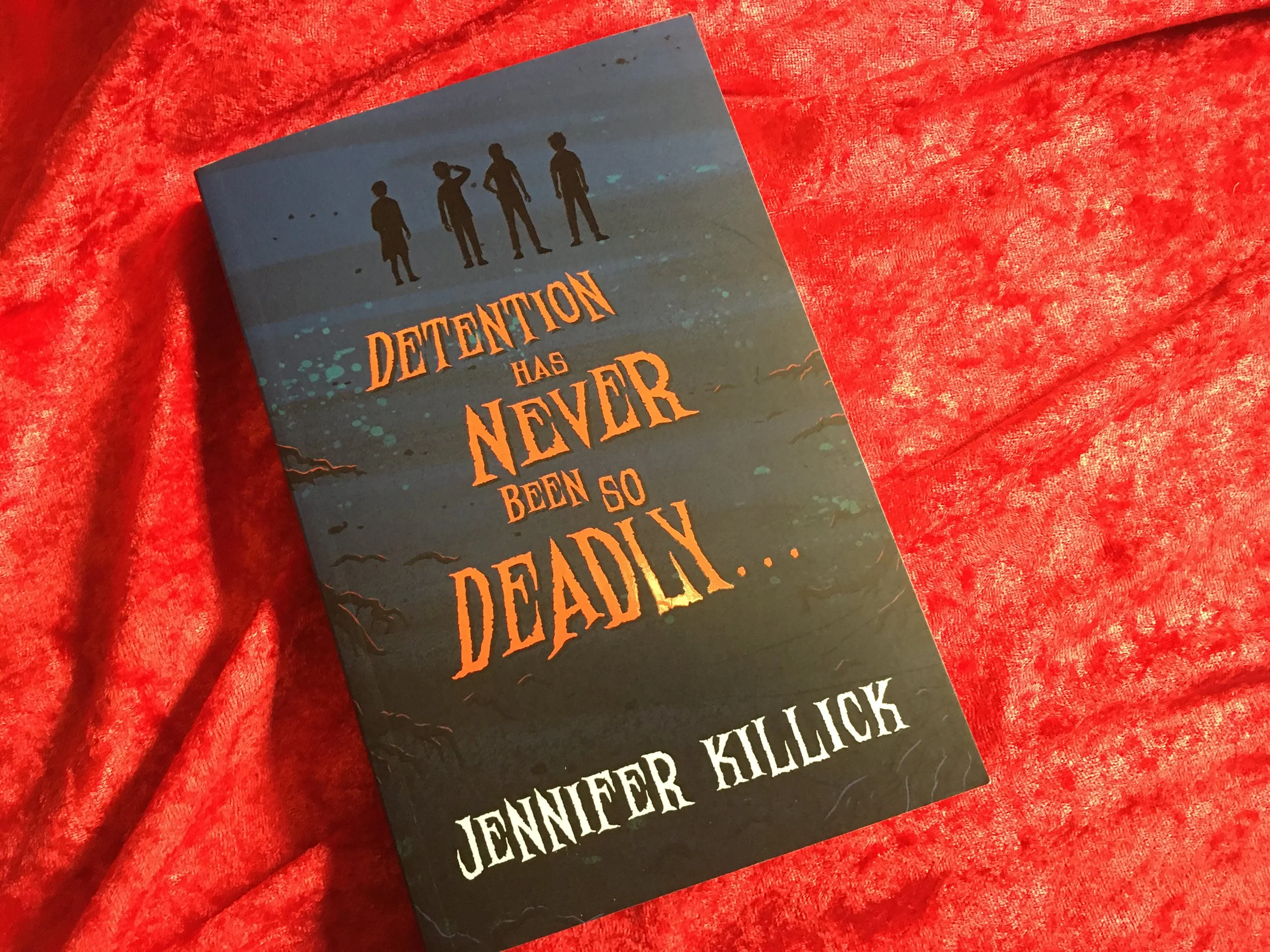
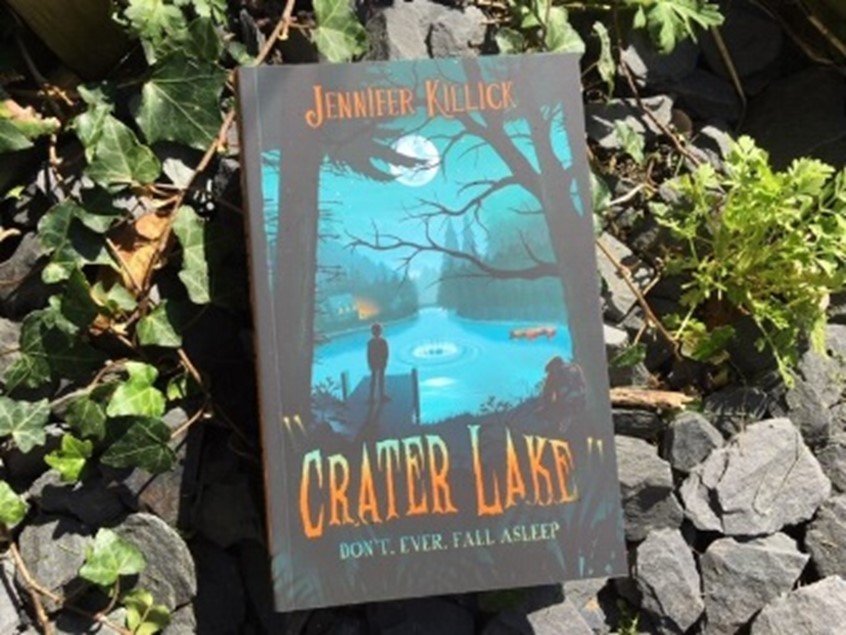
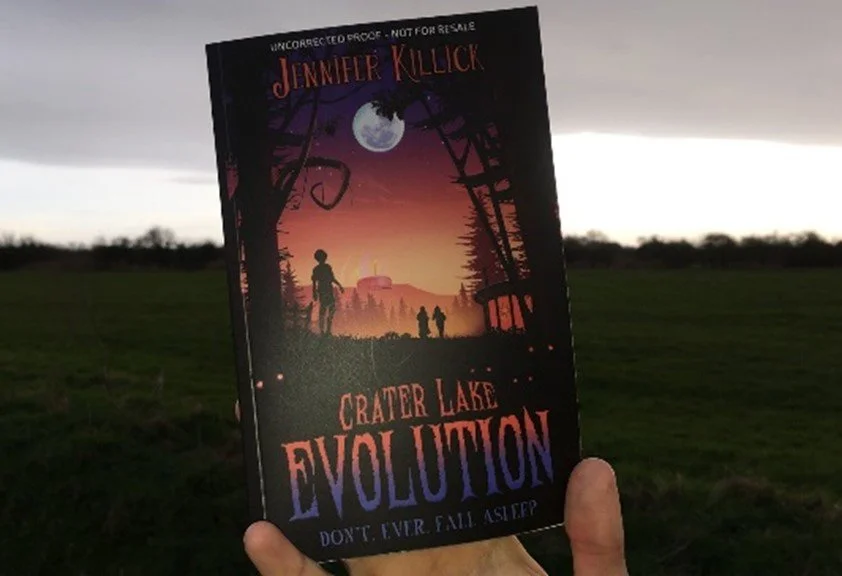
Yesterday, I joined an excited audience at Sidcot School to hear Jennifer Killick speak about her books. Although pathetic by nature and very easily scared, I love her ‘Crater Lake’ and ‘Dread Wood’ stories and know that children do too, finding them just scary enough and relating well to the characters in them.
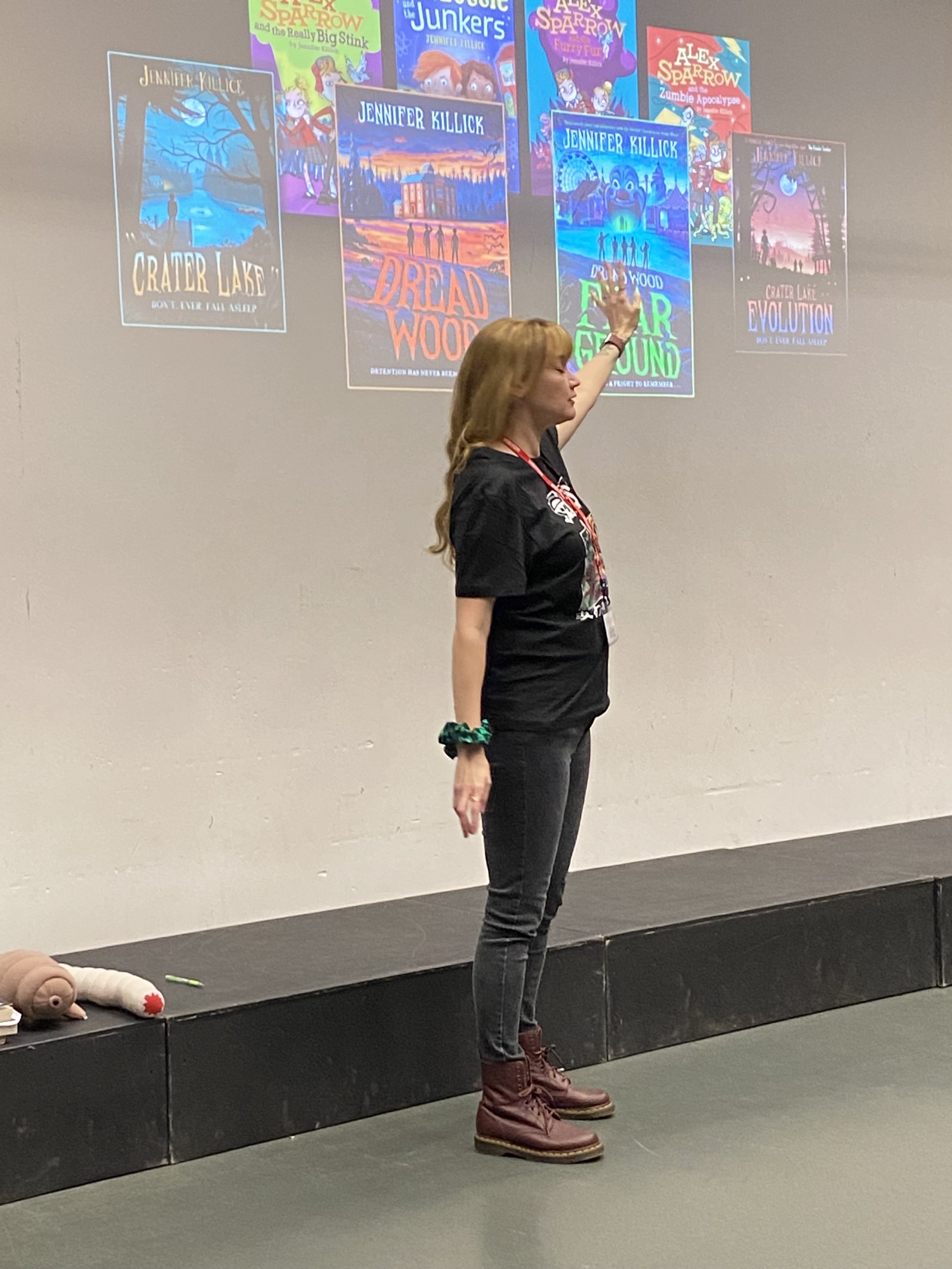
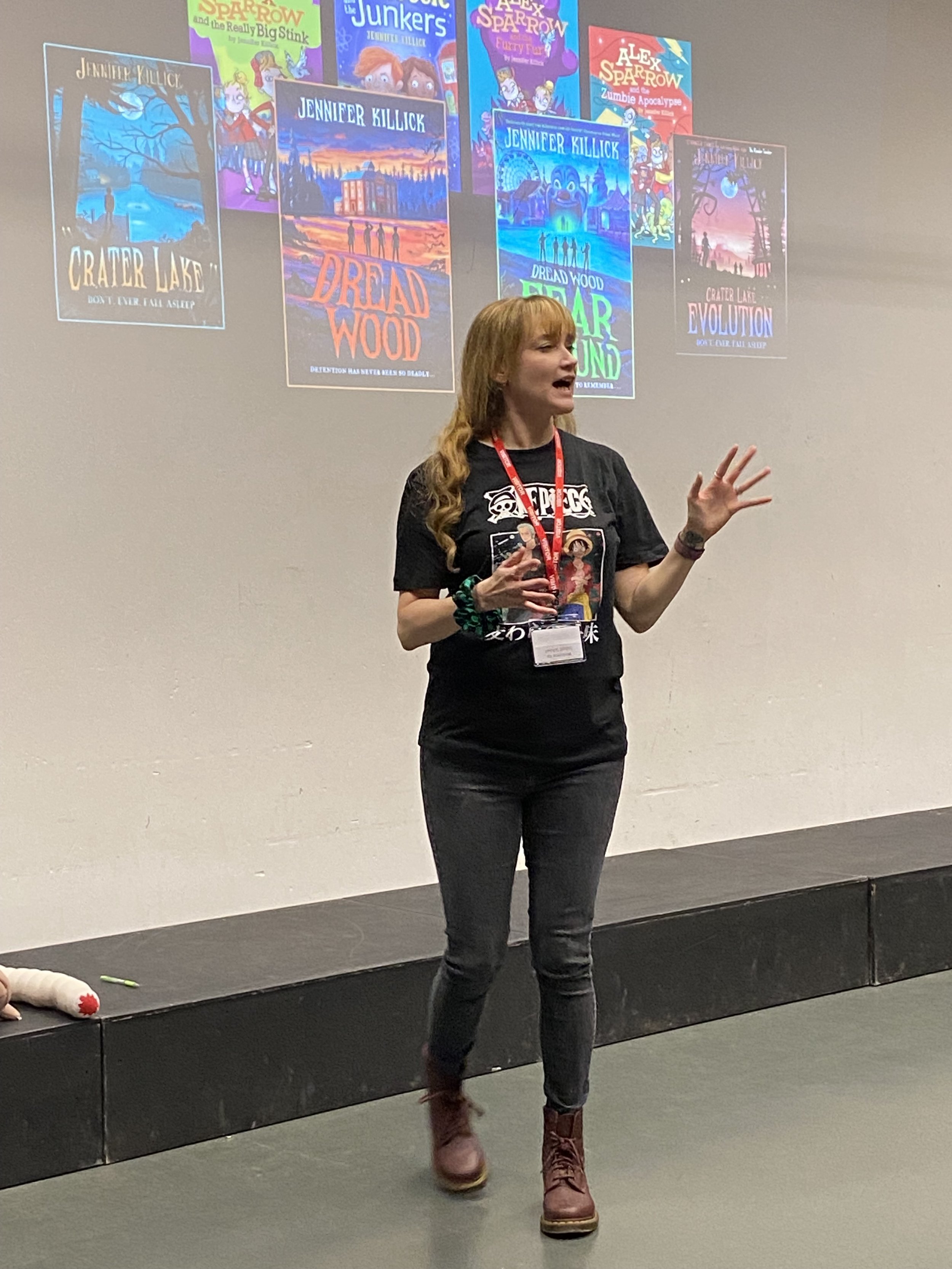
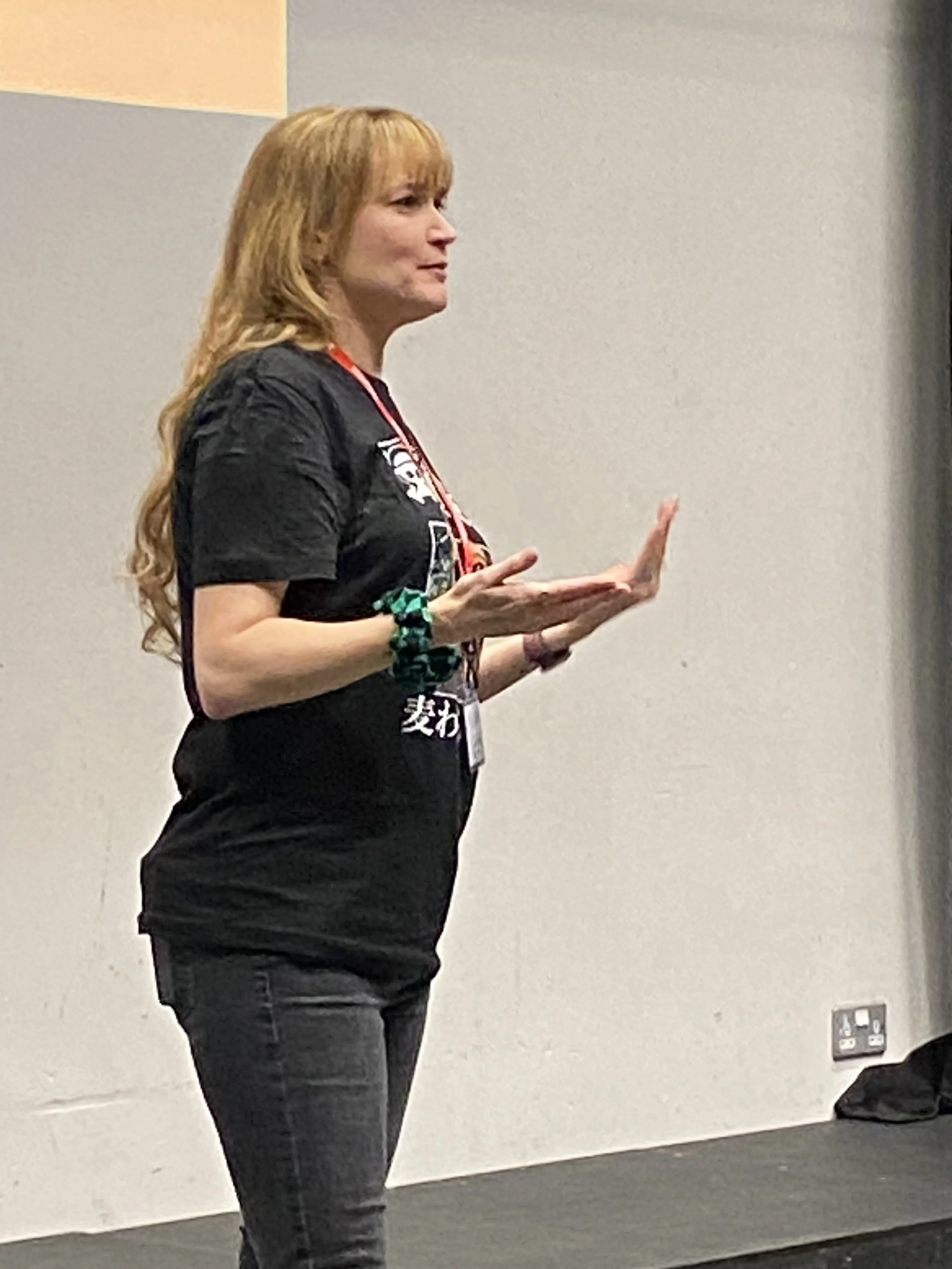
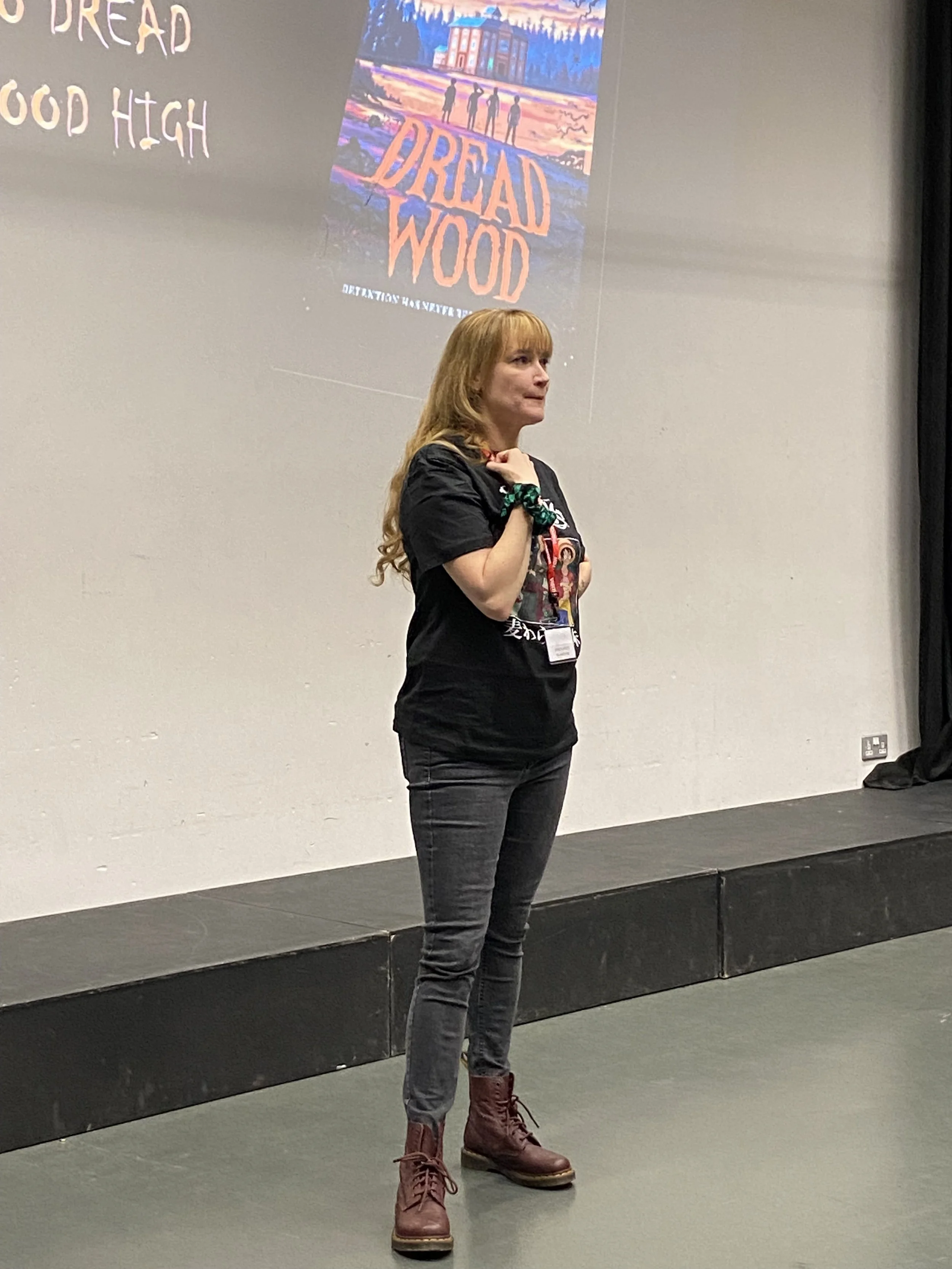
For someone with such a deliciously twisted and wicked imagination, Jennifer is a warm, lovely person, full of enthusiasm and energy. Her talk was the perfect mixture of interaction, inspiration and fun which keeps the audience engaged. She introduced everyone to ‘Geek, Robot, Overlord’, a game from ‘Crater Lake’ based on ‘Rock, Paper, Scissors’, and I could see children playing this in the signing queue at the end of the event.
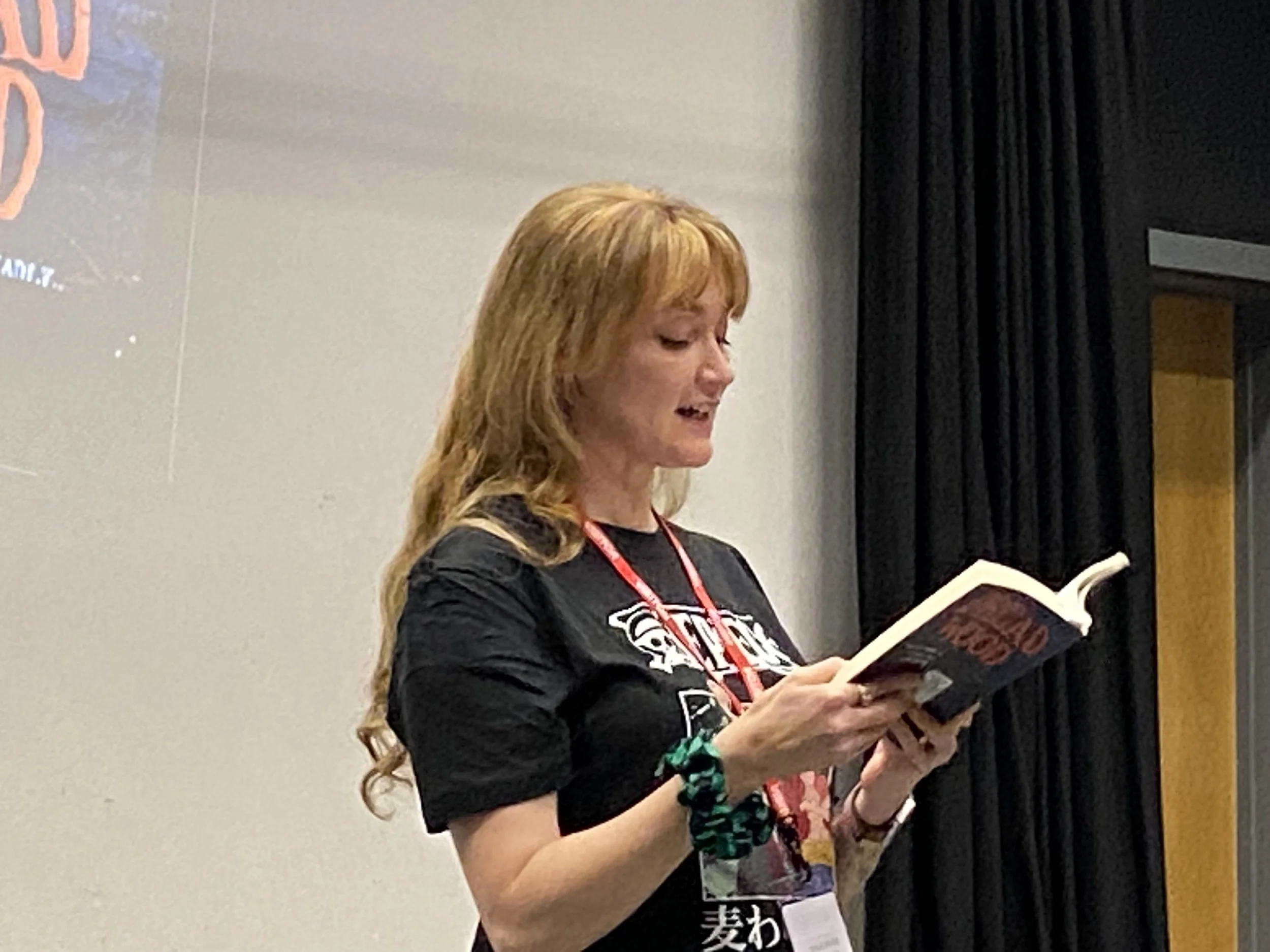
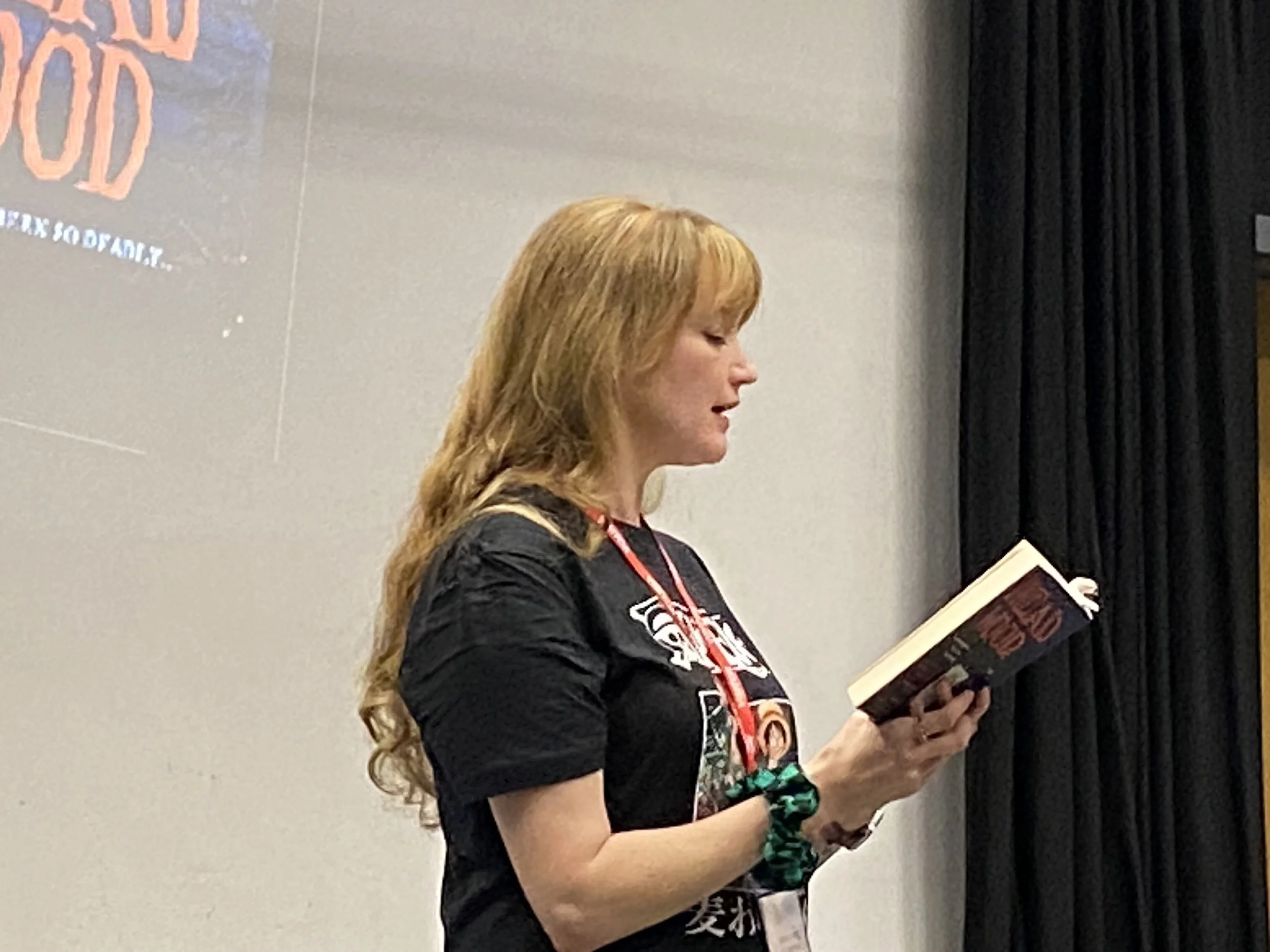

Jennifer treated us to a reading from ‘Dread Wood’ and even though I knew what was coming (having read the book!), I still jumped at the end! As she read, there was not a sound from the audience who were completely engrossed by the story. All too soon, the event was over and Jennifer was faced with a huge signing queue! Although book three of the ‘Dread Wood’ series is not yet released, Alistair from Books on the Hill in Clevedon had worked his magic once more and ‘Flock Horror’ was available (it’s so good!).

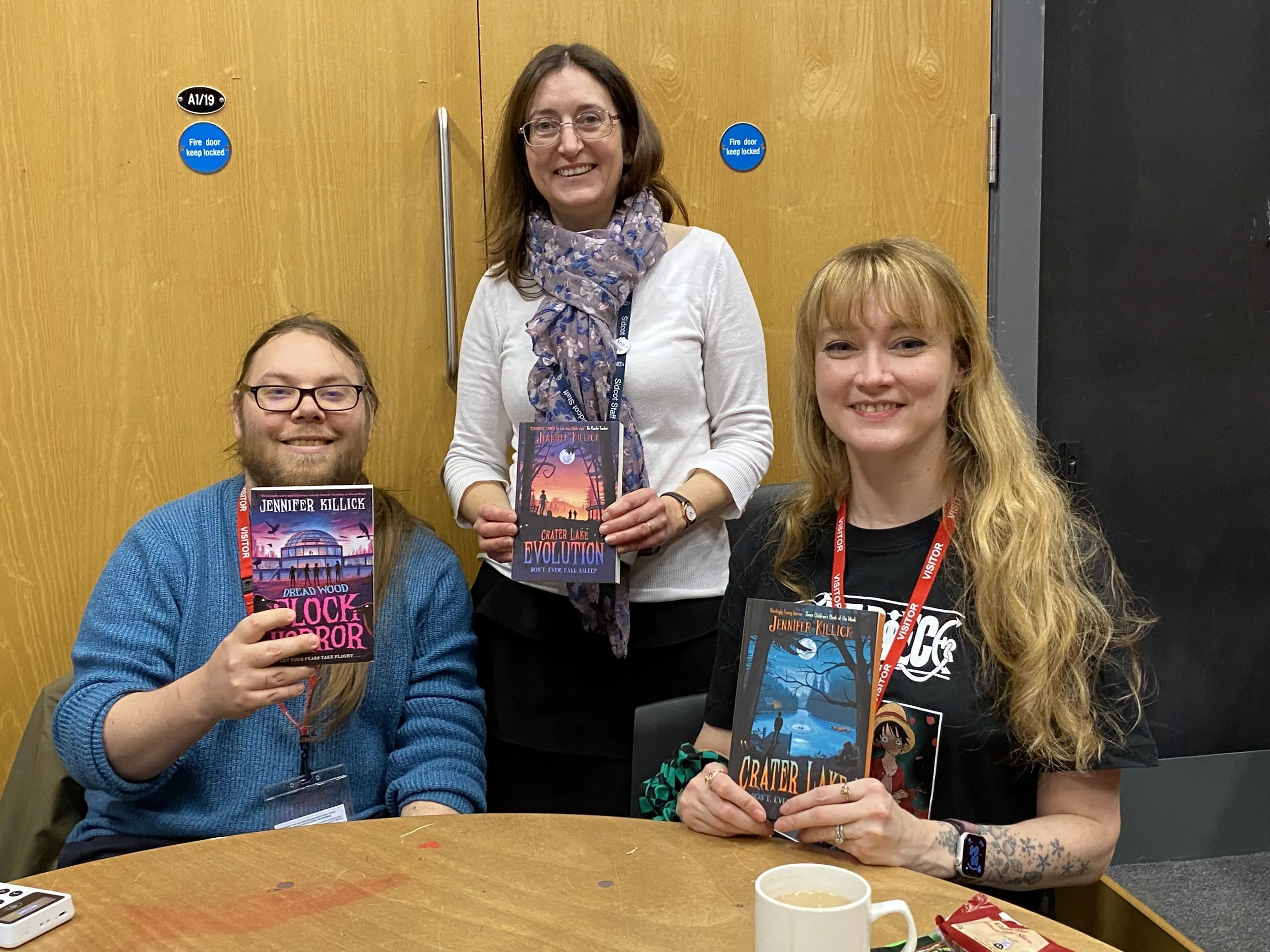
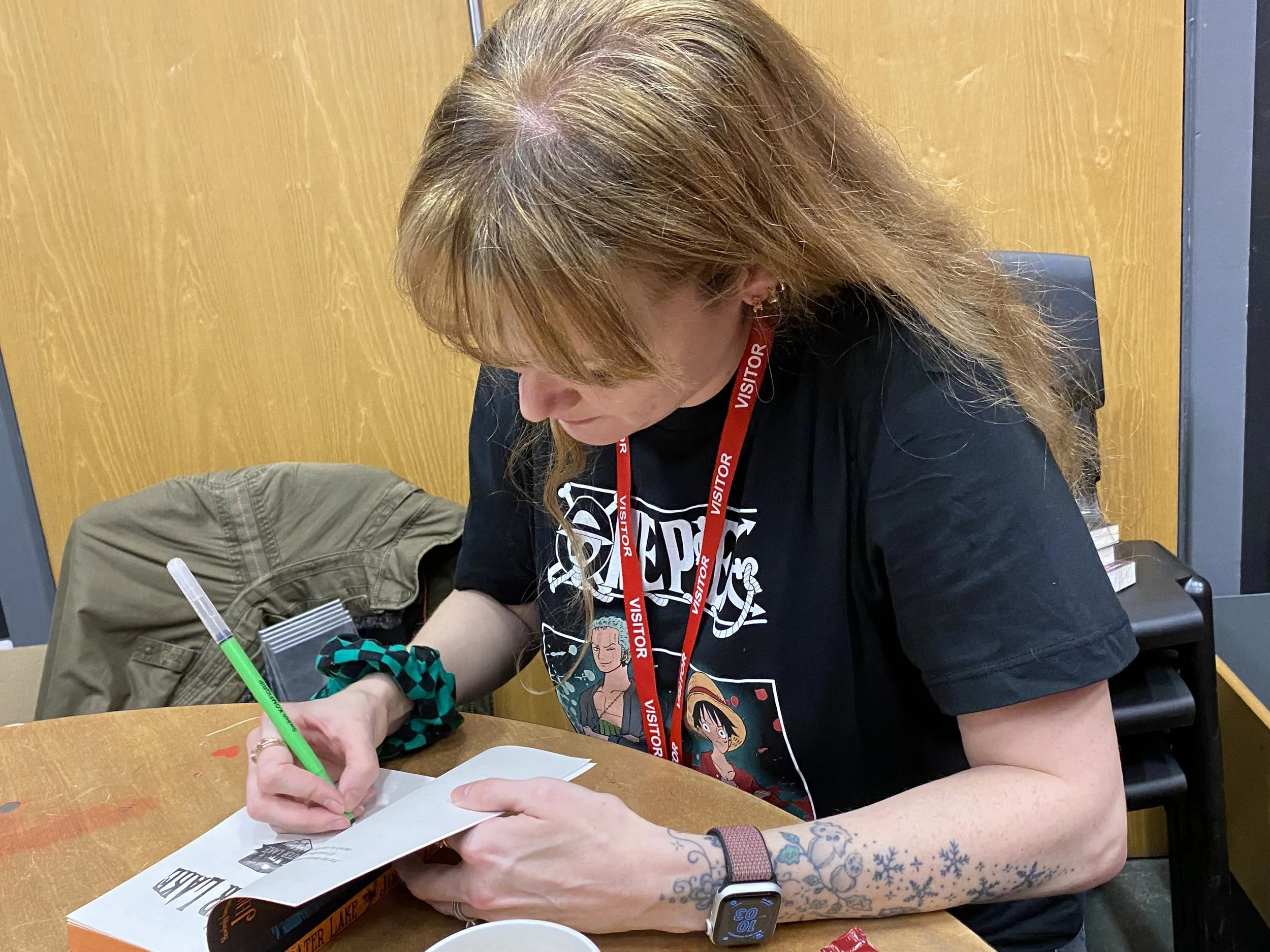
Thanks to Andrea and Bev at Sidcot for letting me join the event. ‘Flock Horror’ (Farshore ISBN: 978-0008538545) is out on the 2nd March- don’t miss it!
Blog Tour: Vita and the Gladiator
I love historical fiction and have been a great admirer of Ally Sherrick’s writing since reading her debut, ‘Black Powder’, a fabulous adventure set at the time of the Gunpowder Plot. Today, I am delighted to be taking part in the Blog Tour for her new book, ‘Vita and the Gladiator’, a thrilling adventure set in Roman London.
Daughter of a high-born Roman, Vita lives a life of luxury and privilege. She longs to write plays like those she sneaks off to watch at the Forum, but is destined to marry the man chosen for her. When her father is murdered, her life changes completely. Taken for a slave, Vita ends up working at the gladiators’ arena, sharing a cell with female gladiator, Brea and her wolf. Both are seeking justice from a common enemy and form an unlikely pact as they work together to defeat him.
Ally Sherrick writes brilliant historical fiction, balancing factual details with exciting, immersive adventure. Set in Roman London in 125 CE, ‘Vita and the Gladiators’ also offers a gripping murder mystery to solve as Vita pieces together the events surrounding her father’s death.
The story is rich in detail, vividly contrasting Vita’s former life as a magistrate’s daughter with being a slave working with the gladiators. Appropriate vocabulary and terminology is used in context, enriching the reader’s experience and understanding of the period. The scenes of the gladiators training and fighting are well developed, emphasising the blood-thirsty nature of these events and their cruelty as well as the fascination they held for audiences. The story also explores the treatment the army meted out to those they conquered.
‘Vita’ would work extremely well as a read aloud or as a key text to inspire work. Not only is the story bursting with details about the period, it offers much to discuss and many opportunities for writing in role, research, drama and role play. Above all, it is a compelling, immersive read, skilfully written and well researched with notes from the author at the end.
Vita and the Gladiator Ally Sherrick
Chicken House ISBN: 978-1913696535
Thank you to Chicken House for asking me to take part in this tour. Make sure you continue to follow the tour with Books for Topics and Miss Cleveland tomorrow!
Day 9 of the Hilda Blog Tour
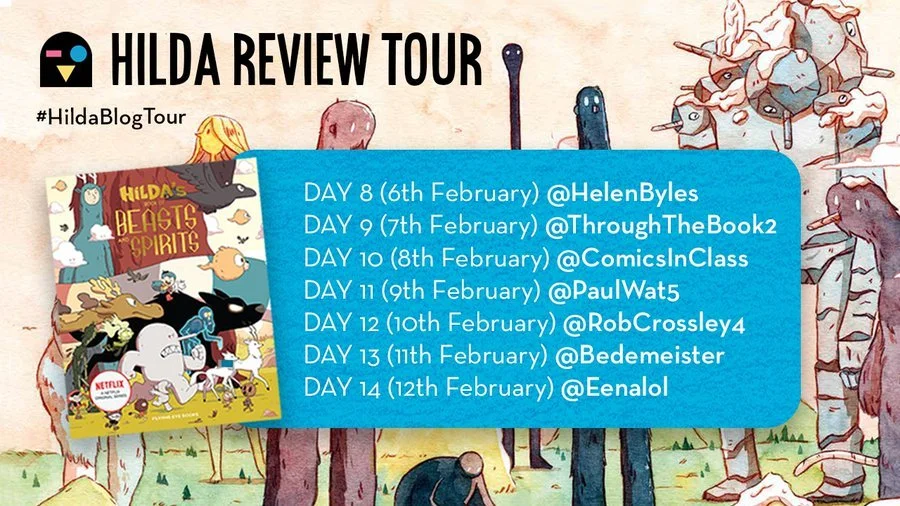
The Hilda Blog tour is well underway and I am delighted to be joining in for the Twitter leg of the tour! Hilda has long been a firm favourite in this house and in this book, the reader encounters all manner of beasts and spirits found in the city of Trolberg and the surrounding area.
The book is organised into six areas- Towering Terrors, Secretive Souls, Almost Human, Under the Water, Up in the Air and Below the Ground. Because Hilda has borrowed this book from the library so often, the librarian said she could keep it. To help any fellow adventurers, Hilda has added copious notes to the original text, adding plenty of details which the original author neglected to mention- or was unaware of.
Each section is full of annotated illustrations with Hilda’s notes and drawings added in blue ‘pen’. Although the book is obviously the perfect companion to the television series, there is plenty here to engage any reader whether familiar with the franchise or not. In fact, the book would make a great model for teachers wanting a text to inspire classes developing ideas for their own creatures which could then be developed into non-chronological reports. The contrast between the informal tone of Hilda’s notes and the ‘original’ text also makes an interesting point for discussion.
Endlessly entertaining and completely engrossing, ‘Hilda’s Book of Beasts and Spirits’ is an absolute winner! Every page is packed with details and the book closes with an index to support locating specific information.
Hilda’s Book of Beasts and Spirits
Flying Eye ISBN: 978-1911171584
