Reviews
There are so many incredible books available at the moment that it is impossible to read them all, no matter how hard I try! Here are my thoughts about some of the books I have read and how I think they could be used in school as well as Q and A sessions with authors and illustrators.
University of Cambridge: Build Your Own Solar System
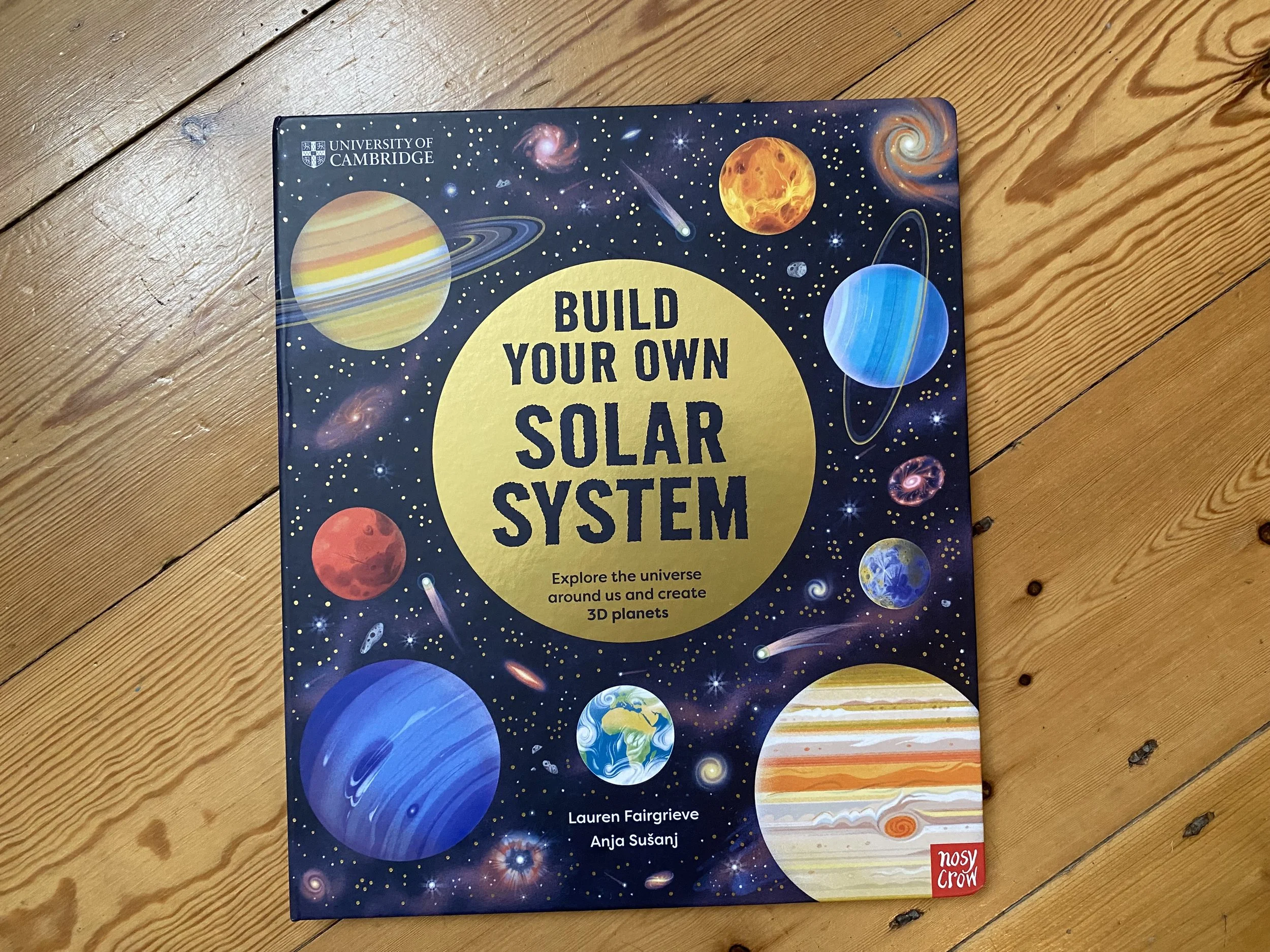
Beautifully presented and packed with information, ‘Build Your Own Solar System’ is another ingenious book from Nosy Crow which engages children through both reading and activity.
Starting with a section entitled ‘What is the Solar System?’, the book offers clear sections of carefully explained text which deepen the reader’s knowledge and understanding of the different planets and features which make up our solar system. Dramatic illustrations illuminate every page, drawing interest and helping to guide the reader to different sections.
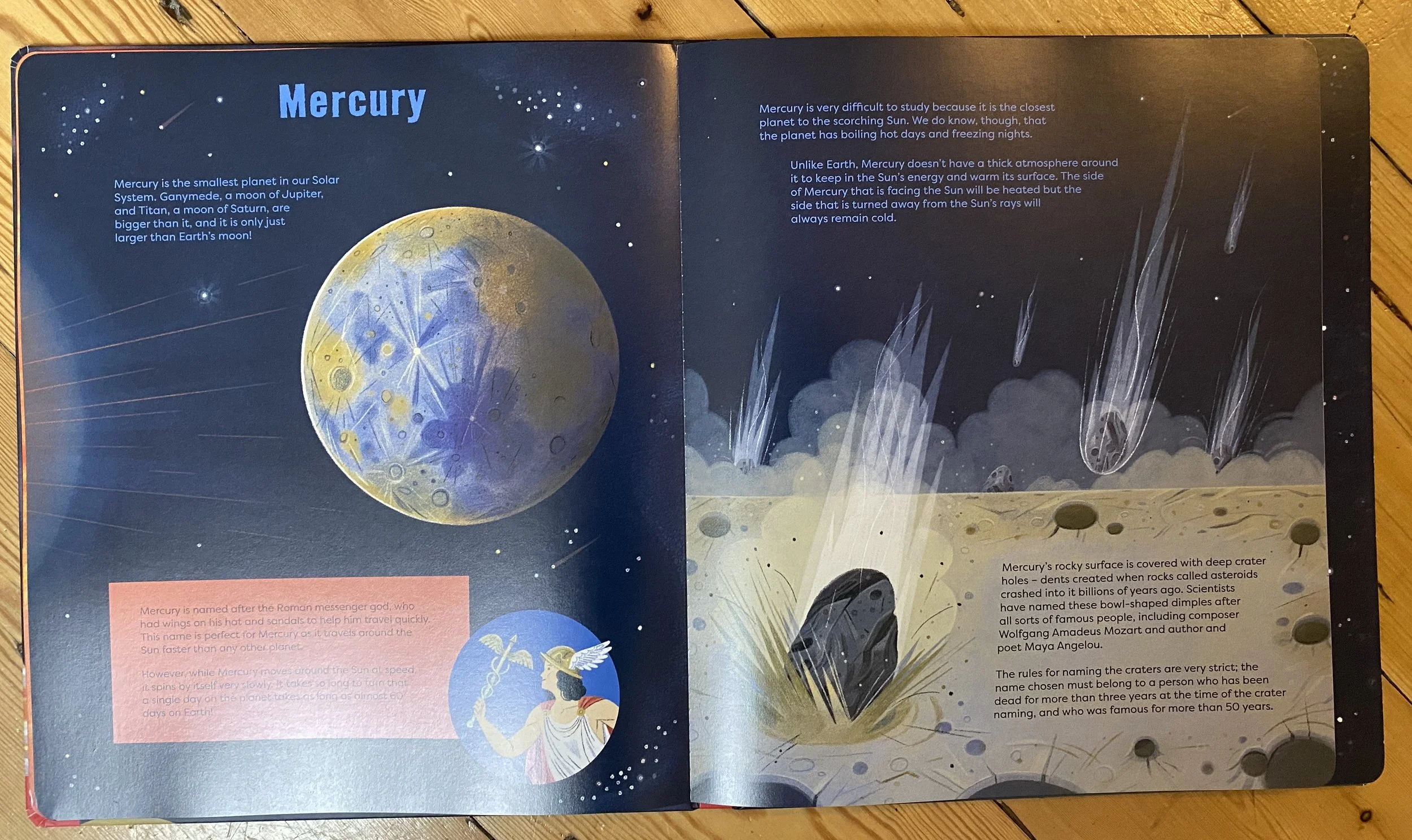
In addition to information about the planets, links are made to the gods and goddesses from mythology which gave them their names. Whilst many readers might be familiar with the fact that Venus is named after the Roman goddess of love and beauty, some might be surprised to learn that the tallest active volcano on Venus is named after Ma’at, the Egyptian goddess of balance, truth and justice. The role of key figures in the world of astronomy such as Abd al-Rahman al-Sufi and Galileo are also mentioned, encouraging those interested to find out more.
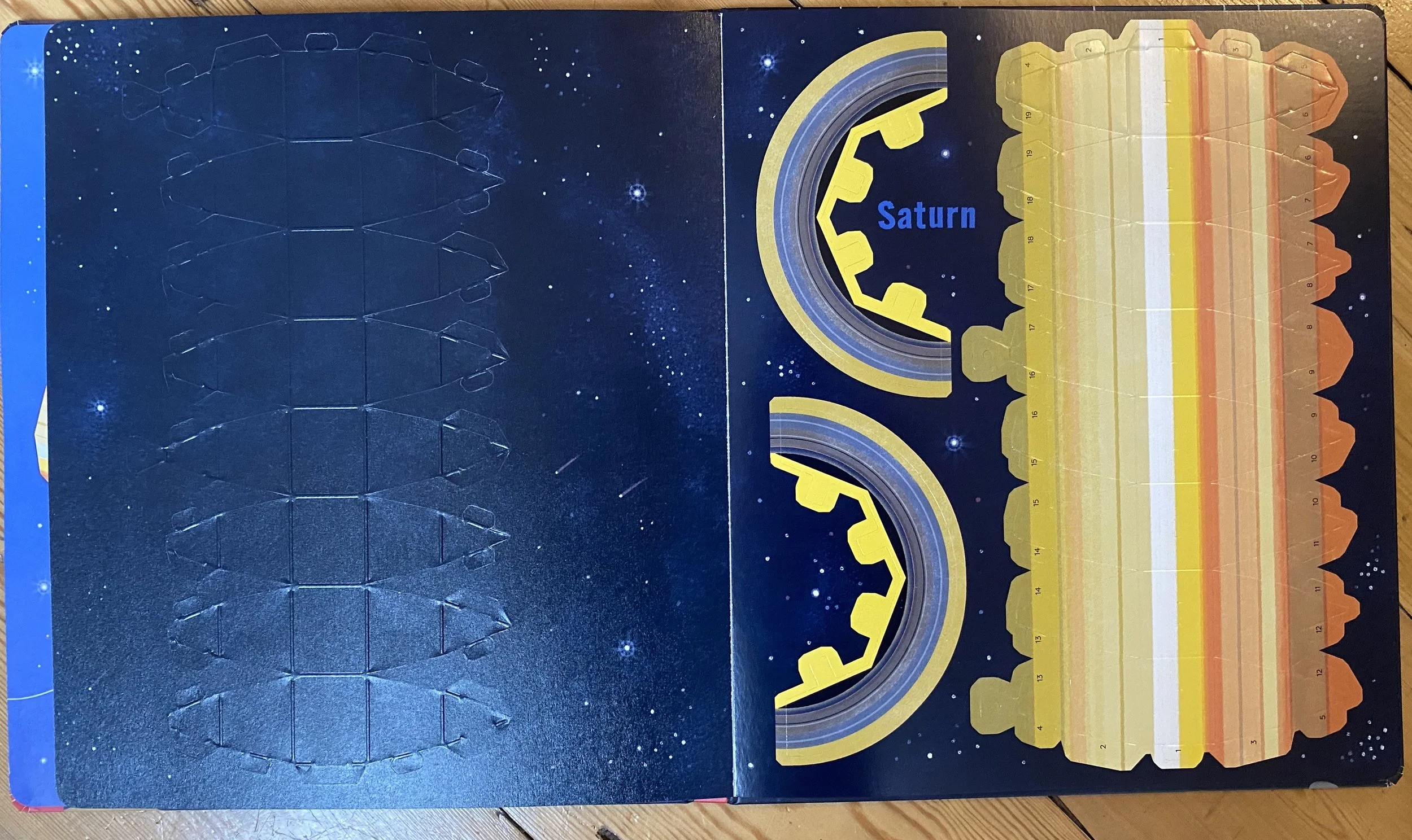
Perfect for enriching the Y5 Science programme of study of ‘Earth and Space’, the book not only offers a wealth of facts about our solar system, but allows children to create a model of each using the press outs in the end section and arranging them in order, reinforcing the learning from the text. There is a QR code to scan which offers step-by-step ‘how to’ videos for support if needed.
University of Cambridge: Build Your Own Solar System
Lauren Fairgrieve, illustrated by Anja Susanj
Nosy Crow ISBN: 978-1805132776
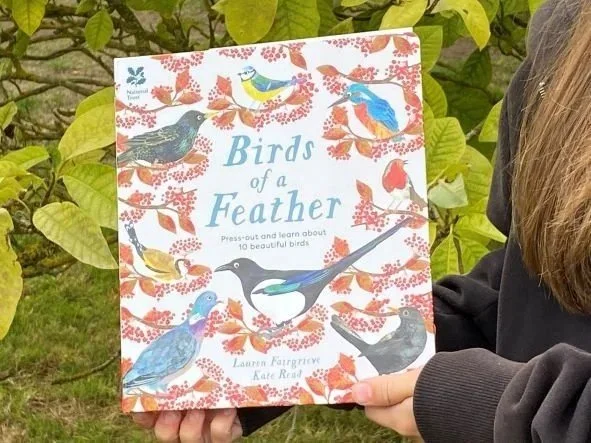
You can read my review of ‘Birds of a Feather’ also written by Lauren Fairgrieve here.
The Incredible Pop-Up Frog and other wetland creatures
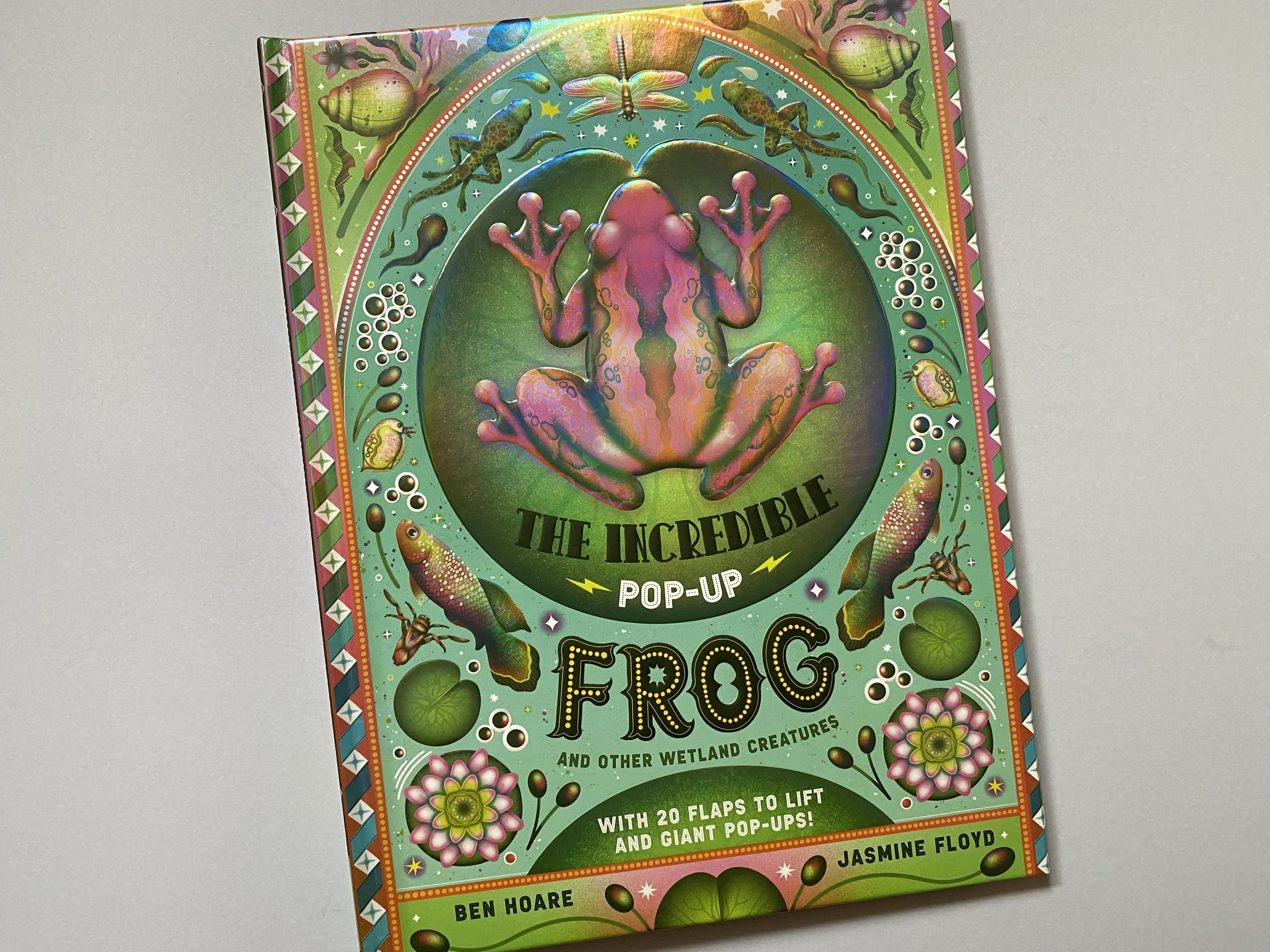
Beautifully presented and bursting with information, ‘The Incredible Pop-Up Frog and other wetland creatures’ is an absorbing read, with plenty of interactive elements to keep readers engaged.
A mixture of pop-ups, wheels, flaps to lift and tabs to pull allow readers to explore different wetland environments and the creatures which live there. Headings and side headings help readers to locate information which is presented in clearly written, well explained sections. This is one of those books which really has no upper age limit- there is plenty to fascinate everyone.
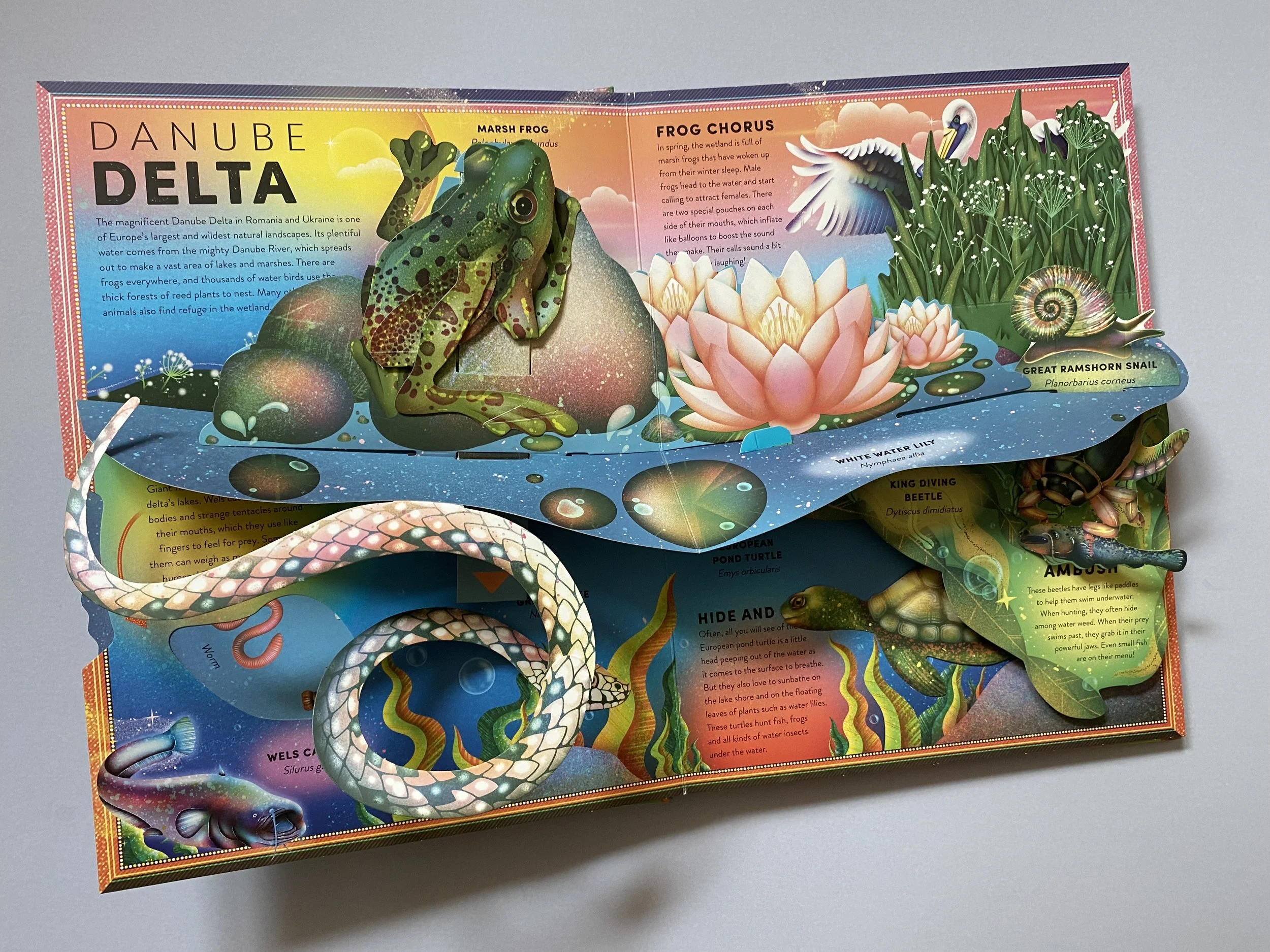
Teachers could take inspiration from the way food chains have been presented using a wheel which turns to show these links in five different locations, perhaps inspiring children to create their own in this way. Similarly, creating a fold out diagram like the one showing the life cycle of a frog is a far more appealing way of presenting this information than a simple drawing. There is plenty of information here which extends beyond the confines of the science curriculum, developing children’s knowledge and understanding in a very visual way.
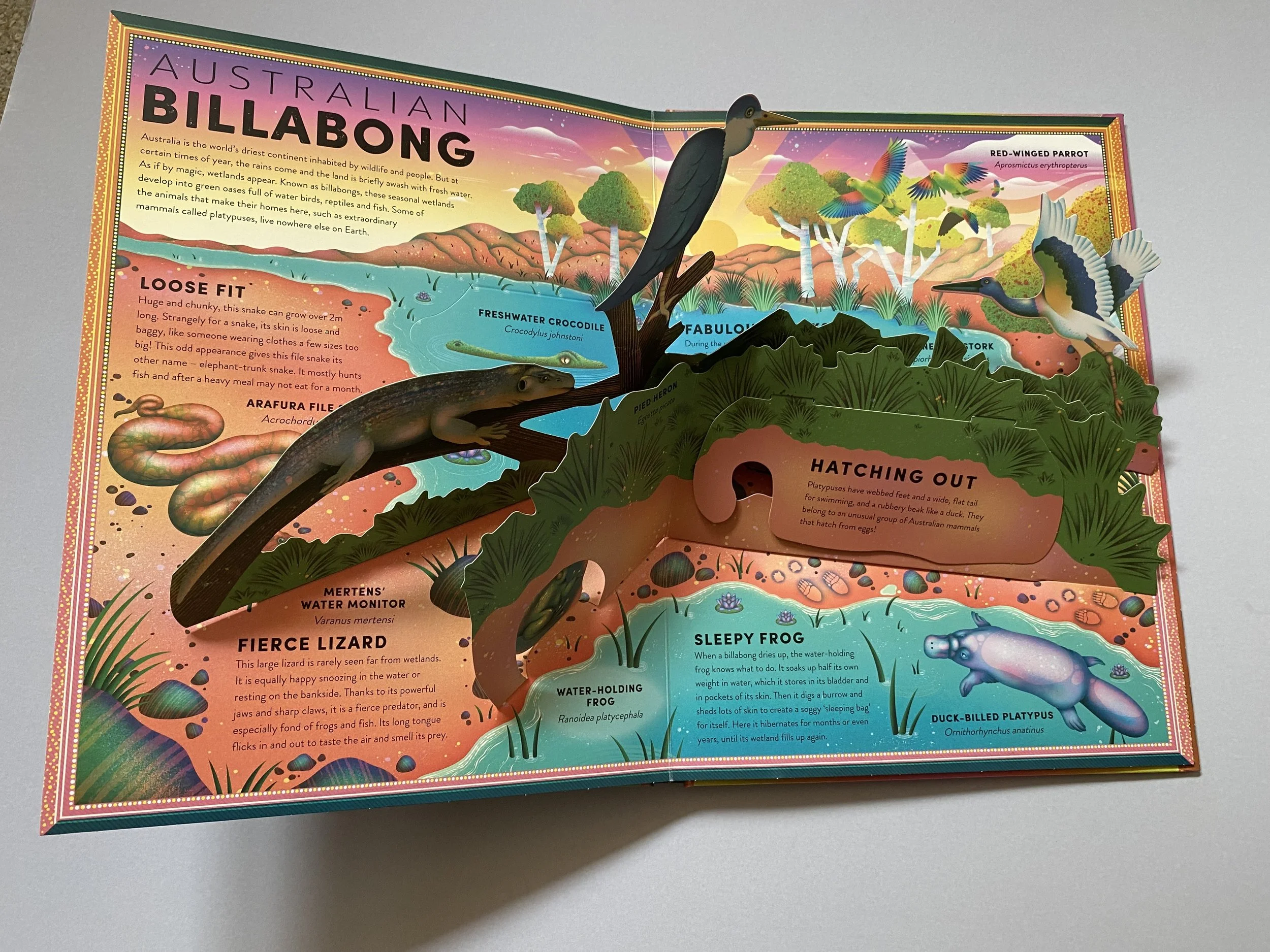
As well as focusing in on different locations from around the world and allowing readers to compare and contrast these, the book offers information about the different depth zones- the surface, the middle and the bottom of watery locations. The final page encourages readers to try creating their own wetland environment, something which could be done at home or at school and offer the opportunity for children to work scientifically, carefully observing nature and enjoying the benefits such activities can bring.
The Incredible Pop-Up Frog and other wetland creatures
Ben Hoare, illustrated by Jasmine Floyd
Templar ISBN: 978-1800788718
The Big Book of Useless Science Knowledge
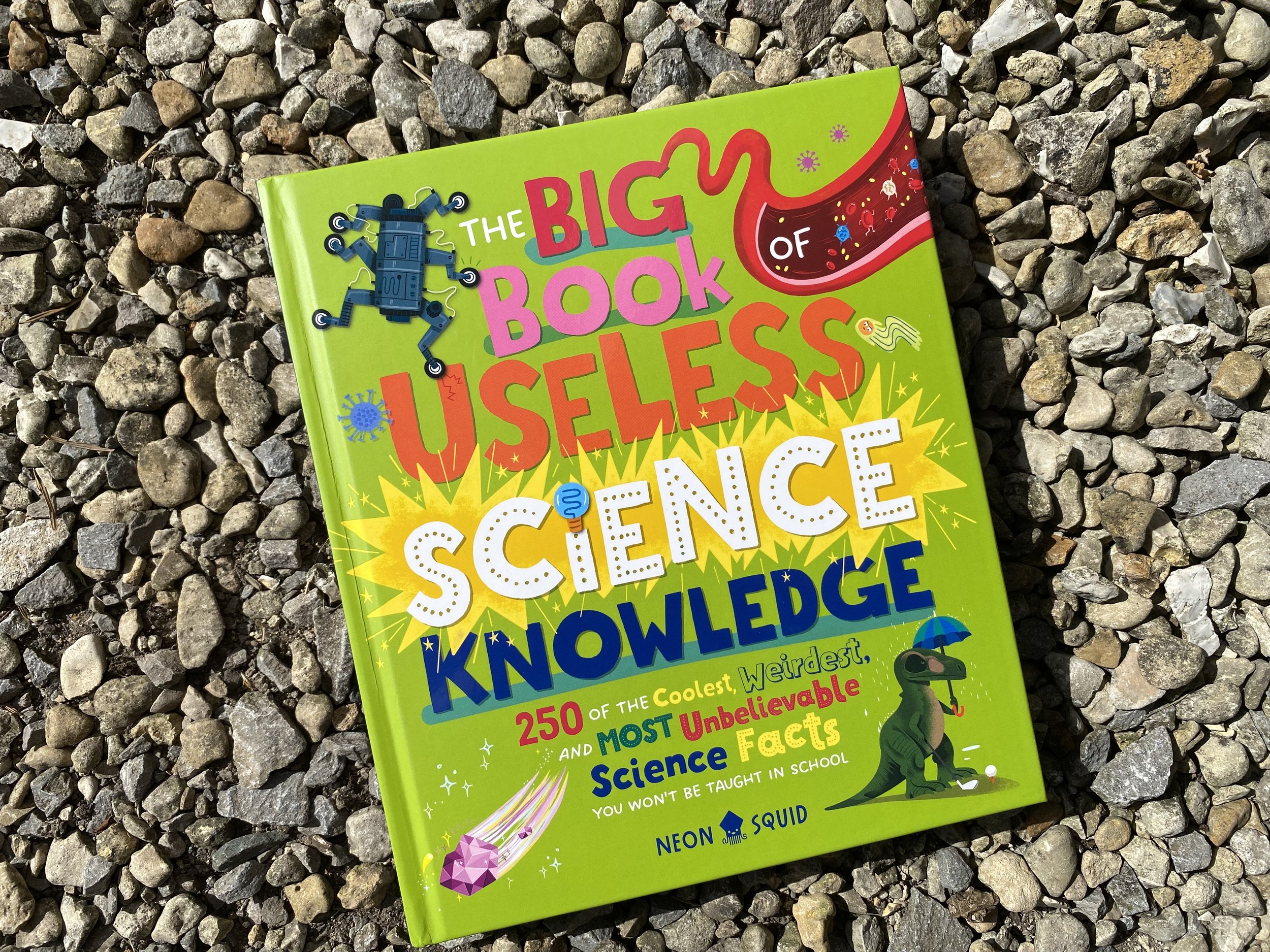
‘The Big Book of Useless Science Knowledge’ may be big and full of science knowledge, but it is far from useless! It is, in fact, jam-packed with nuggets of information and fascinating facts which are sure to intrigue and inspire readers!
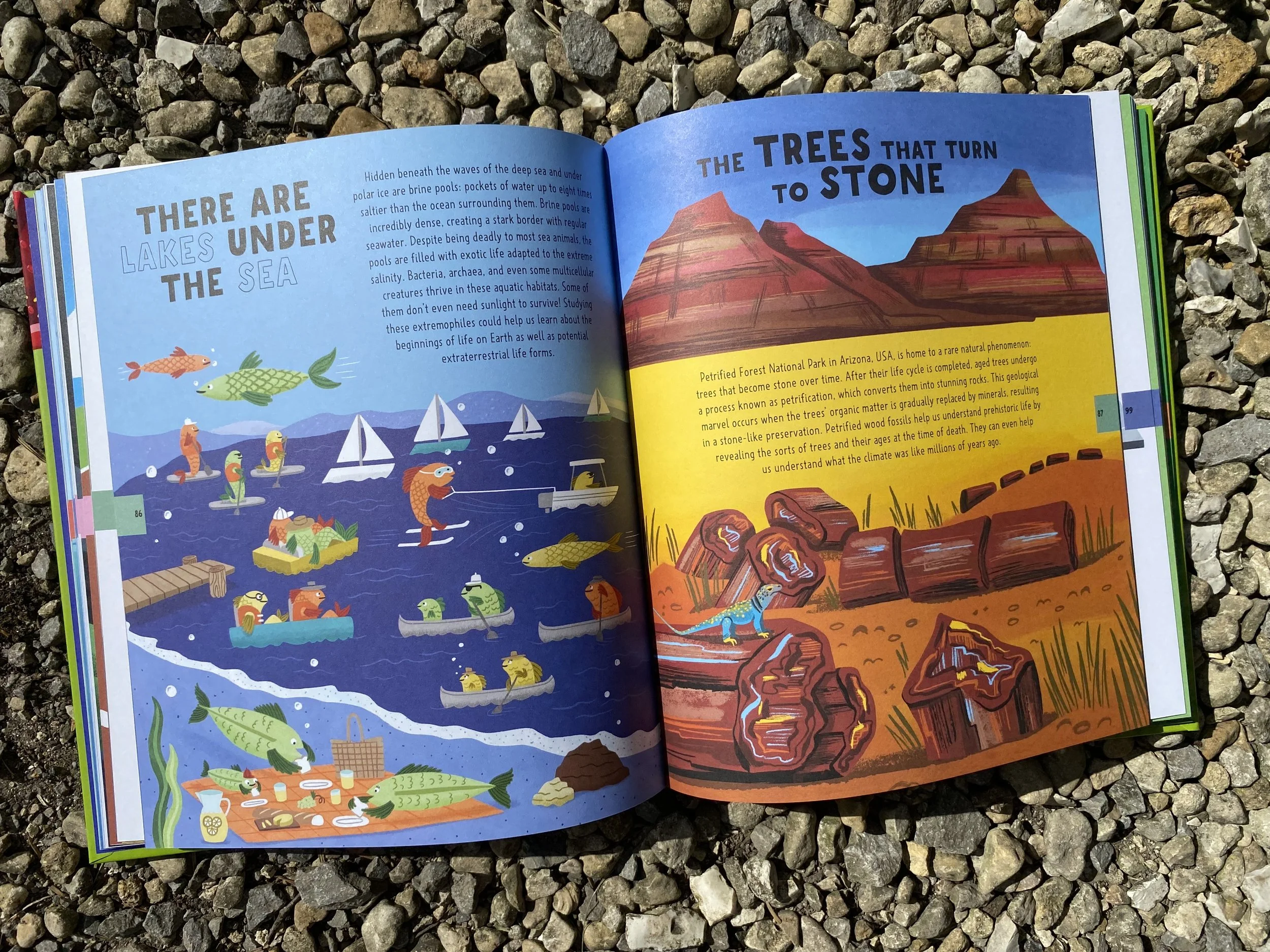
Divided into nine sections, the book tackles a wide range of scientific areas. In the Nature section, readers learn (amongst other things) about exploding fruit, ticklish rats and zombie ants. The information is clearly presented, using the appropriate scientific terminology where appropriate, yet adopting a light-hearted, ‘chatty’ tone, making it very easy to read. Each spread is full of attractive, generally humorous, illustrations, adding to the book’s appeal.
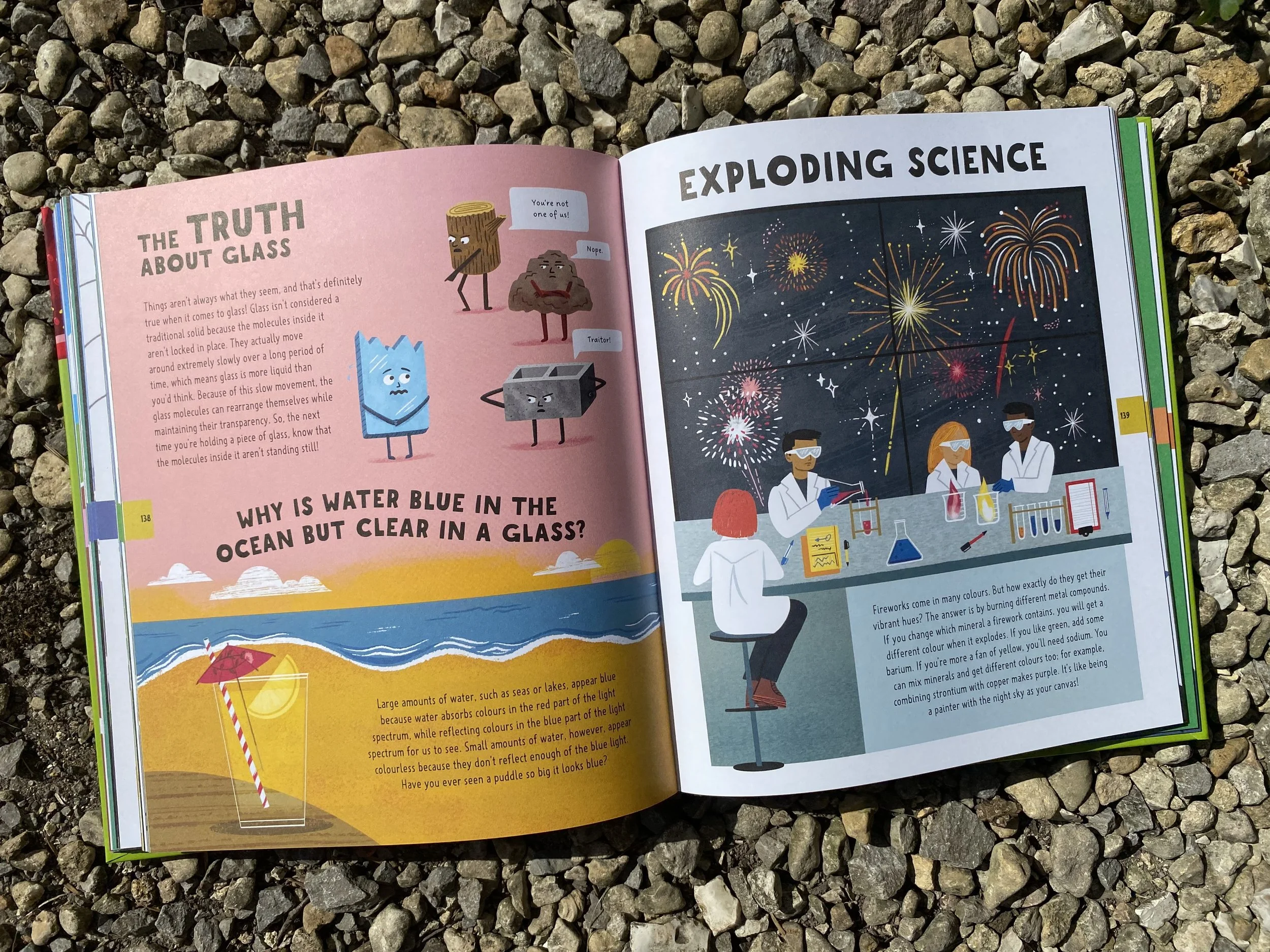
A page of introductions to the authors and illustrators show the wide range of people who have contributed to the information in the book and their backgrounds. Although it says on the cover that these are facts ‘you won’t be taught in school’, there is much here which could be used by teachers to enrich, or add interest to, the science curriculum. However, this is, above all, a book for browsing, enjoying, dipping in and out of, and impressing your friends by quoting the unbelievable- and useless?- facts that you have learned!
The Big Book of Useless Science Knowledge
various authors and illustrators
Neon Squid ISBN: 978-1838993405
About Time
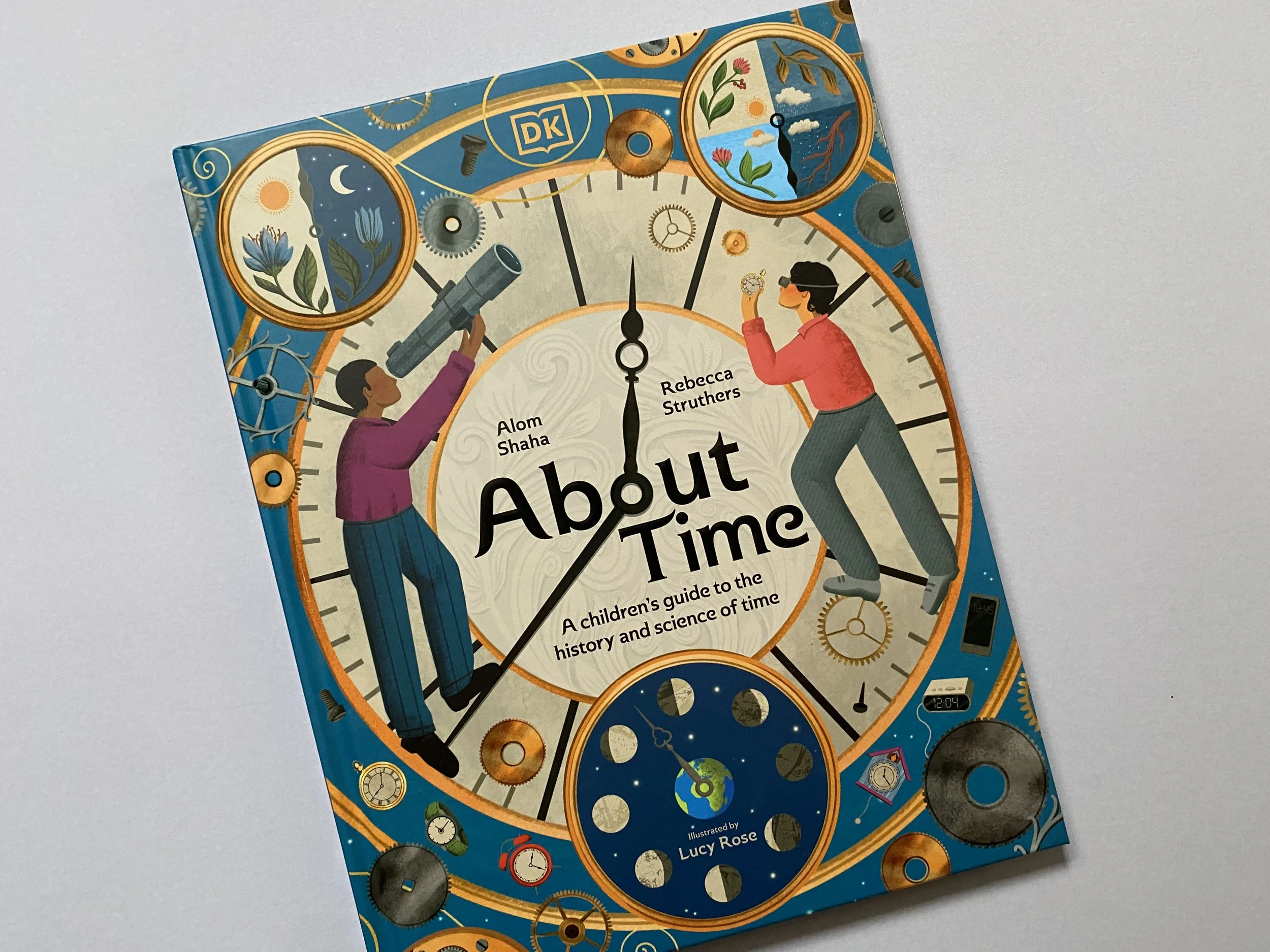
Beautifully presented and illustrated, ‘About Time: A Children’s Guide to the History and Science of Time’ is an utterly fascinating and engrossing read. Written by Rebecca Struthers, one of a very few watchmakers in the UK who make timepieces from scratch, and Alom Shaha, a teacher with a passion for science, it helps readers understand how clocks work and the various ways which humans have tried to measure time across the ages.
A clear contents and index both help the reader to locate specific information, but this is one of those factual books which, although a joy to browse through, is easily read from cover to cover. Starting with an explanation of what time is, the book moves on to how time is divided, exploring developments over time and calendars around the world.
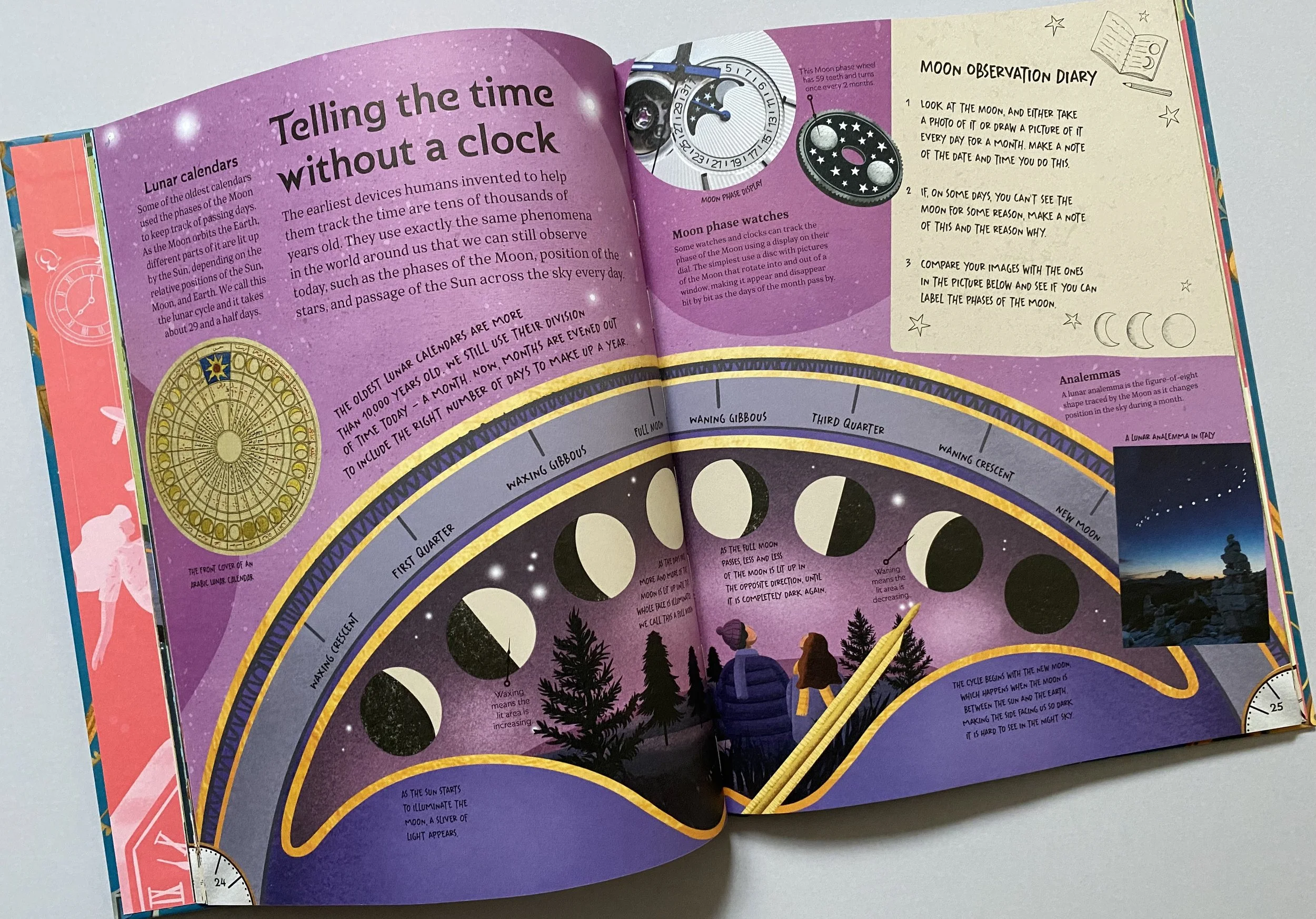
Looking at methods of telling time without a clock, the book offers instructions for making a sundial, a water clock and a sand timer, each carefully explained, to encourage children to engage with the subject further. Diagrams are used to clarify and explain the workings of clocks and watches, sure to tempt readers to deconstruct one and explore for themselves!
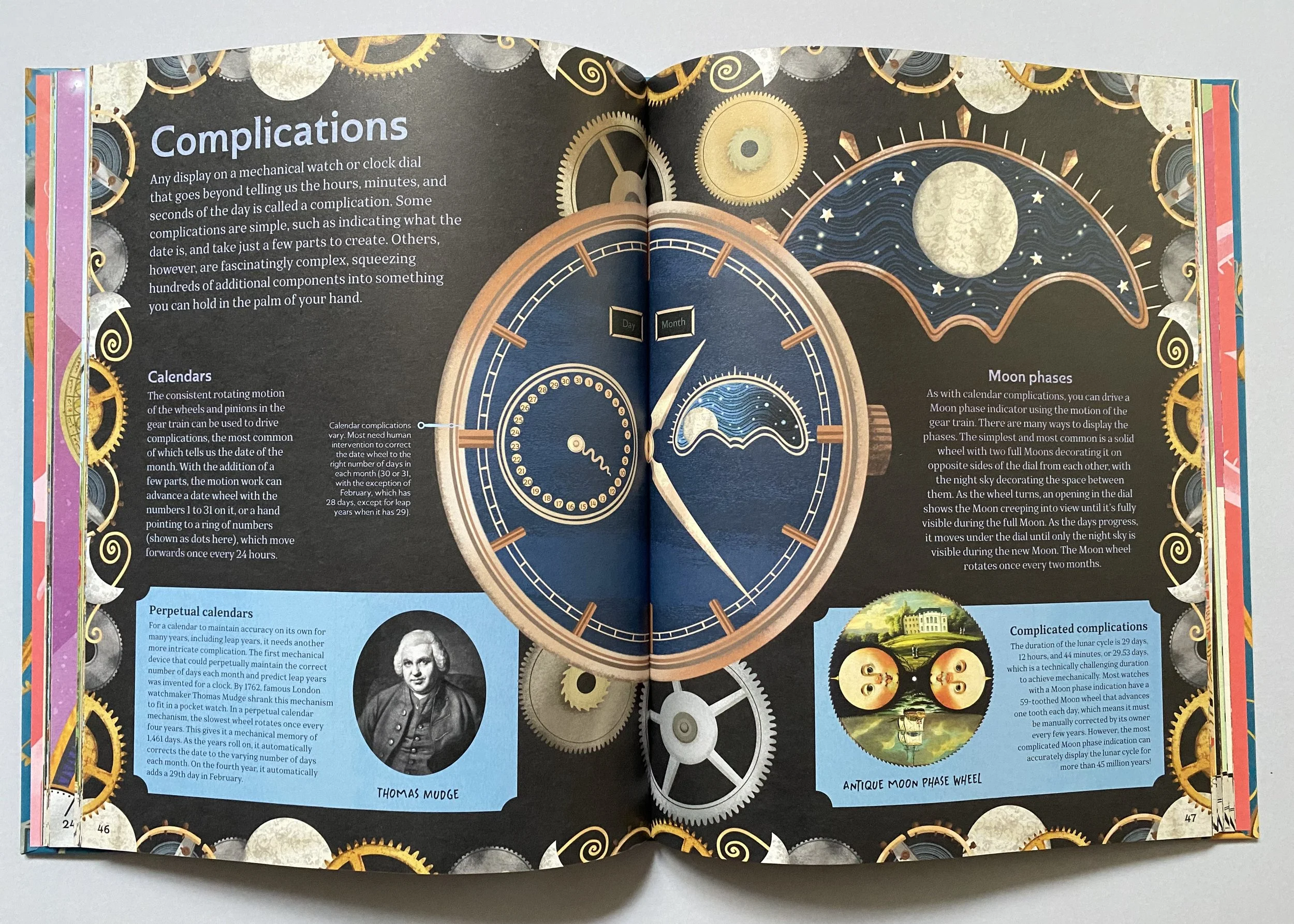
Information about past makers and contemporary artisans offers a fascinating look at the developments by designers, engineers and inventors from across the world and there is even some practical information about becoming a watchmaker. This is the first book I have seen devoted to horology, full of inspiration and information, and it is sure to pique interest and open up a new area of interest to anyone who reads it. There is also much here which will support and enrich the curriculum, making it a very useful text for teachers to have to hand as well.
About Time: A Children’s Guide to the History and Science of Time
Alom Shaha and Rebecca Struthers, illustrated by Lucy Rose
DK ISBN: 978-0241709320
Blog Tour: The Greatest Stuff on Earth
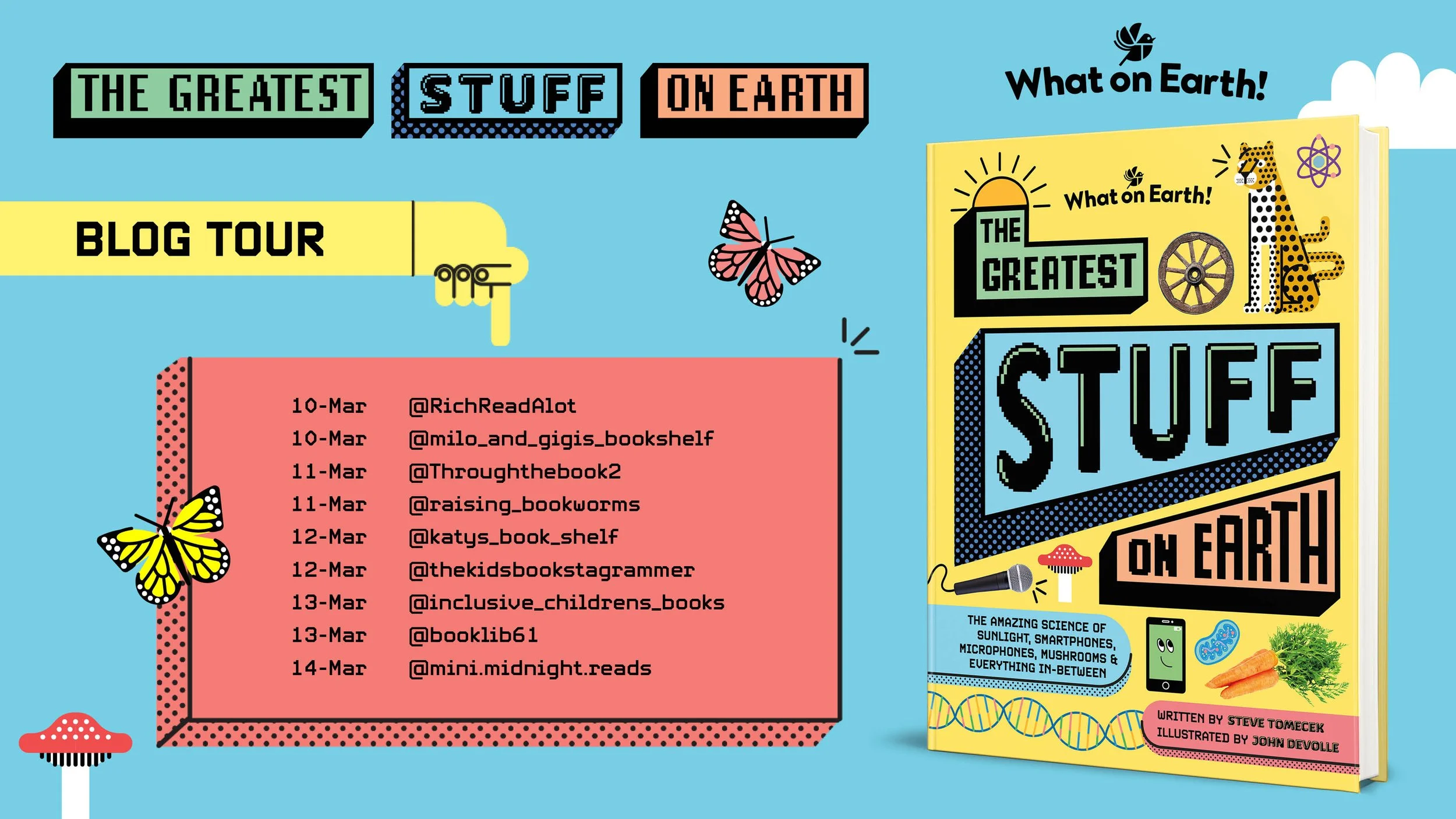
Today it’s my turn on the Blog Tour for ‘The Greatest Stuff on Earth’, an amazing look at the science behind lots of stuff we take for granted!
‘The Greatest Stuff on Earth’ is packed full of fascinating…stuff! Offering a light-hearted look at everything from aeroplanes to x-rays, this brightly coloured book is perfect for dipping in and out of.
Divided into ‘Stuff: The Basics’, ‘Nature Stuff’ and ‘Stuff Humans Make and Use’, there is a huge amount of information contained in these pages, accompanied by plenty of photographs, illustrations and diagrams. The author has a chatty, quirky style which is sure to engage young readers whilst offering clear and simple explanations about some quite complex topics.
In addition to a contents, an index and a glossary, there is also a section about the research for the book and selected sources used. The author explains some of the pitfalls of using websites for research, how he selects which to use and how he cross-references to his findings to ensure he is sharing reliable information. In addition to all the fascinating facts in the main text of the book, this section would make an excellent starting point for discussions with children about checking sources and verifying information.
A really enjoyable read!
The Greatest Stuff On Earth
Steve Tomecek, illustrated by John Devolle
What on Earth! ISBN: 978-1804661413
Many thanks to Laura for inviting me to take part in this Blog Tour. Make sure you have a look at the other stops!
The Bee Connection
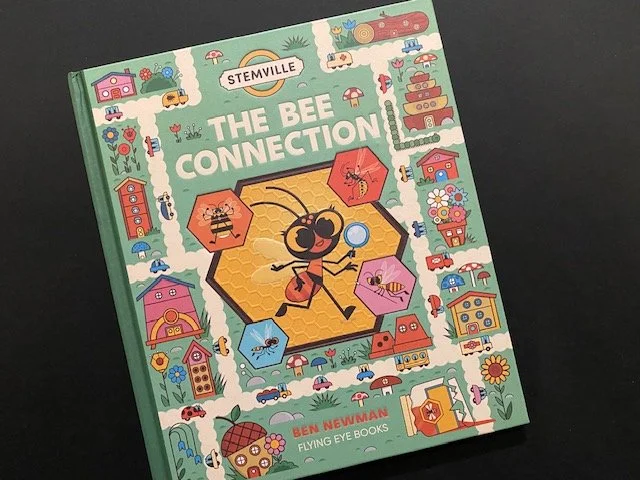
Meet Mason B. Chandler, owner of Stemville’s private detective agency. In her first case, Mason follows the clues to solve a sticky situation which has caused Bug Borough to come to a standstill. Not only does she reveal the truth about what happened, Mason introduces readers to the fascinating world of bees along the way.
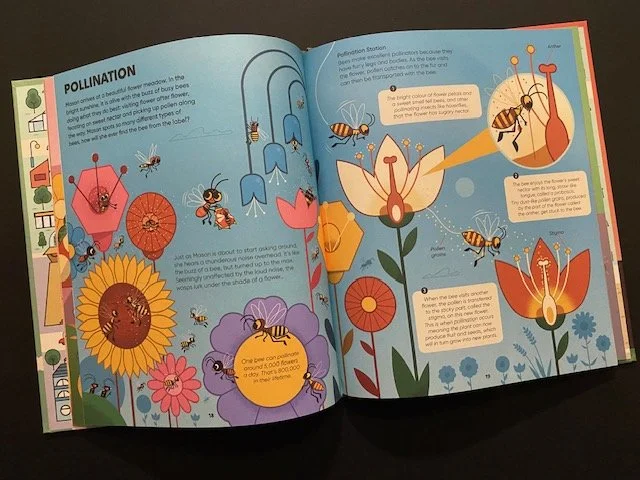
Combining story, information and appealing illustrations, ‘The Bee Connection’ is an absolute must-have for any curious nature lover, class bookshelf or library. There is a feeling of Richard Scarry’s ‘Busy World’ to some spreads, drawing the reader into Mason’s world and encouraging them to linger over each spread, absorbing the details whilst other pictures really help to support and explain the text.
Following Mason on her investigation, readers are encouraged to notice details and develop their factual knowledge of the different varieties of bees and their lifestyles. So much information is given, but in such a readable, easily digested style, brilliantly supported by the illustrations, that there is never a feeling of being over-loaded or overwhelmed by facts. Paragraphs, labelled diagrams, captions and short snippets of text keep the reader interested and attentive.
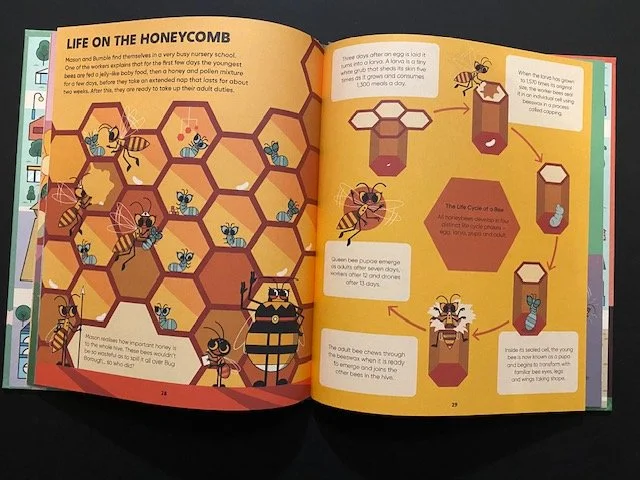
The book concludes with practical suggestions for how to be ‘bee friendly’, encouraging readers to value and look after these incredible creatures. These would be simple to follow at home or in school and the book would make an invaluable resource for teachers, supporting the science curriculum, developing interest in STEM subjects and modelling information writing as well as perhaps inspiring children to draw and design their own bee characters who might live in Bug Borough!
Anyone familiar with the very excellent ‘Professor Astro-Cat’ series will have high expectations of this - and they will not be disappointed. Informative and entertaining, ‘The Bee Connection’ is an bee-rilliant read!
STEMville: The Bee Connection
Ben Newman
Flying Eye Books ISBN: 978-1838741266
Published February 1st 2024
You can read my reviews of Professor Astro-Cat’s ‘Human Body Odyssey’ here and ‘Deep Sea Voyage’ here.
The Code of Life
All About Genes, DNA, Genetic Engineering, and Why You Are the Way You Are
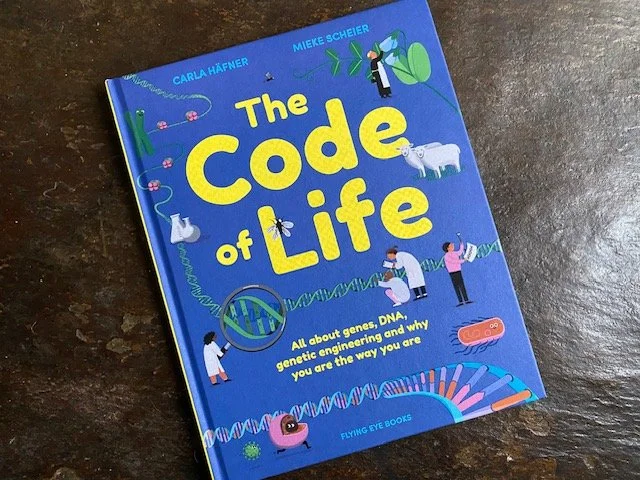
Completely fascinating, ‘The Code of Life’ had me absorbed from start to finish! This is not a subject I have any great knowledge of, or (if I am honest) any real interest in, and yet, I found myself actually understanding and enjoying learning about genetics and DNA. And that’s something I never thought would happen.
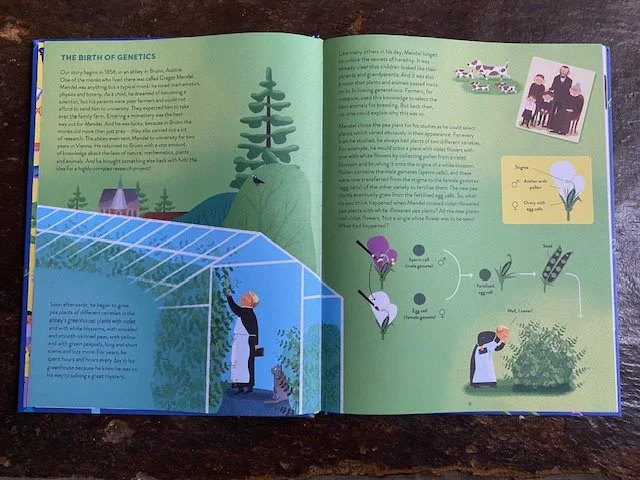
Starting with the work of Gregor Mendel, an Austrian monk, whose early experiments with pea plants led to his being known as ‘the father of genetics’, the book clearly explains the theory of genetics, what genes are and the importance of DNA- all in a manner which is easily understood and supported by examples, diagrams and illustrations. The work of different scientists and their discoveries is explored, but the book makes it clear that there is still so much more to learn, encouraging the reader to think about the possibility of solving future puzzles. Issues like cloning are also explored, with the example of Dolly the sheep used to consider the debate around this subject.
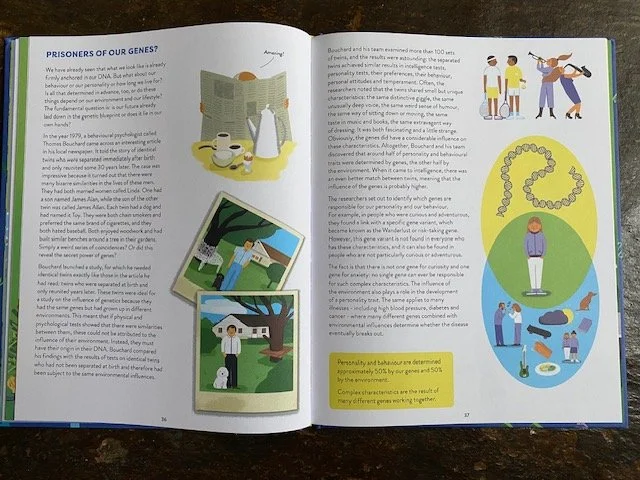
A fascinating read for anyone who is interested, ‘The Code of Life’ also supports the KS3 Genetics and evolution National Curriculum statements. Its clear explanations, the engaging style and tone of the writing and the plentiful illustrations which support the text make it an invaluable, accessible resource. There is even a page encouraging readers to conduct their own research, offering ideas for things to try- and the answers are also included!
The Code of Life: All About Genes, DNA, Genetic Engineering,
and Why You Are the Way You Are
Carla Häfner, illustrated by Mieke Scheier
Flying Eye Books ISBN: 978-1838741785
Thirty Trillion Cells
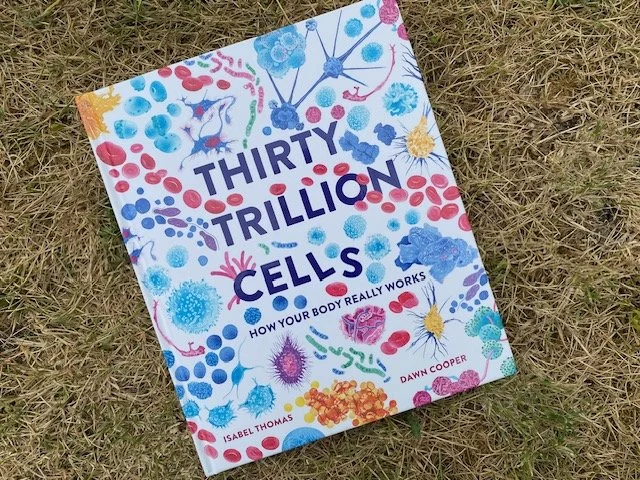
When it comes to answering the questions children love to ask, Isabel Thomas is the person with the answers! In this amazing book, she takes complex scientific concepts and presents them in an amusing, lively way which is accessible to all.
One of the things I love best about teaching is that you are constantly learning- not only in an effort to keep up with the constantly shifting curriculum, but because children are such wonderfully inquisitive beings who pose fabulous questions about everything and anything. And books like this are an essential ingredient in satisfying their insatiable curiosity! For the teacher without a science background, ‘Thirty Trillion Cells’ is an absolute God-send in helping them understand some of the concepts they are expected to teach!
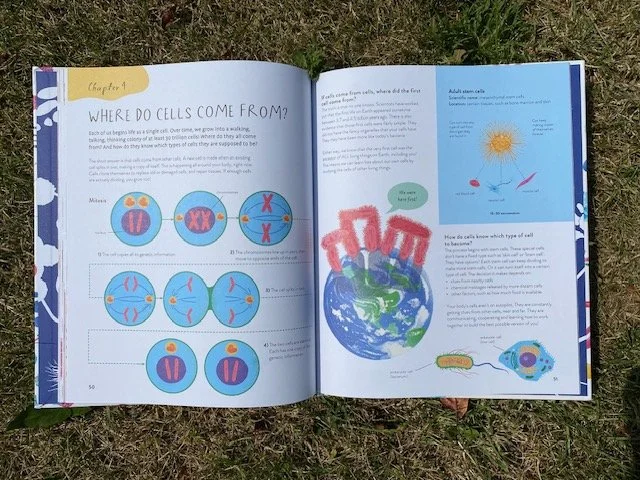
As one example, in Y6 children are expected to be able to identify and name the main parts of the human circulatory system, and describe the functions of the heart, blood vessels and blood. A double spread about blood cells clearly explains what blood does and explores the different types of cells it contains. Side headings and labelled diagrams are used to support the text, making it easily understood. This could easily be used for guided reading sessions to support learning across the curriculum or as part of the body of a science lesson.
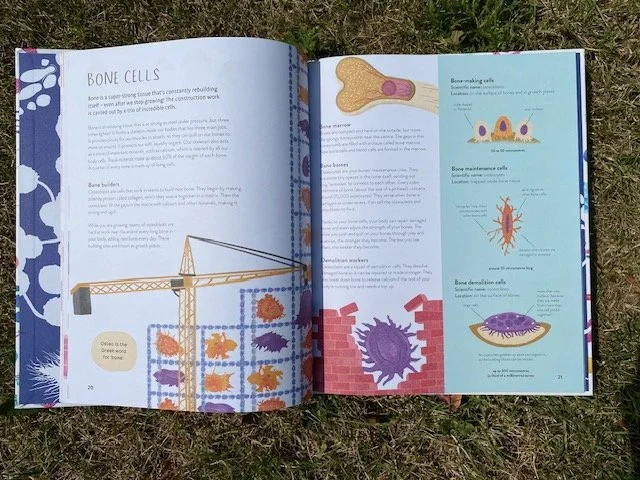
Scientific terms are used throughout the book, but these are also explained in very down to earth, child-friendly ways! The ciliated epithelial cells (hairy lining cells to you and me) in the tubes leading to your lungs form part of a ‘snot elevator’, ridding the respiratory system of all the tiny particles of pollution taken in with air. This is very easy- and yucky- to visualise, understand and remember! A glossary and comprehensive index make the book useful for locating specific information if used for research, but the book is perfect for browsing. There is so much to discover in these pages- learning without realising!
‘Thirty Trillion Cells’ is a brilliant read, combining informative and attractive illustrations with fascinating, clearly explained text.
Thirty Trillion Cells
Isabel Thomas, illustrated by Dawn Cooper
Welbeck Publishing ISBN: 978-1803380131
You can read my review of ‘Moth’ here.
Over the Rainbow
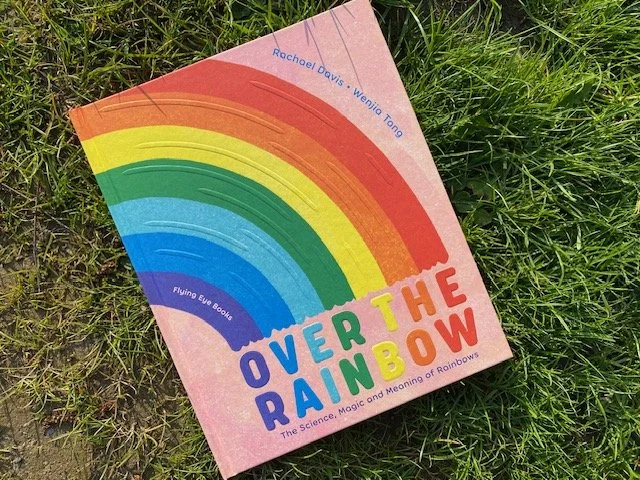
Everyone loves seeing a rainbow, arcing through the sky, and this lovely book encapsulates all the magic and joy of this sight, from the science behind it to the symbolism connected with it! Organised into five sections-The Science of Rainbows, Rare Rainbows, Rainbow Myths and Legends, Rainbows in the Arts and The Symbol of the Rainbow- a broad spectrum of information is covered with a clear contents, a glossary of terms and index to help the reader easily locate and understand everything included.

The book begins by offering ‘a close look at light’, using this as the basis to explain how rainbows are formed. Diagrams help to support the text and illustrate the facts as each idea is developed. Early thinkers from across the world are included, showing how human understanding of rainbows progressed and advanced to Newton’s experiments with prisms in 1666. Unusual rainbow formations are introduced and explained as well, making fascinating reading!
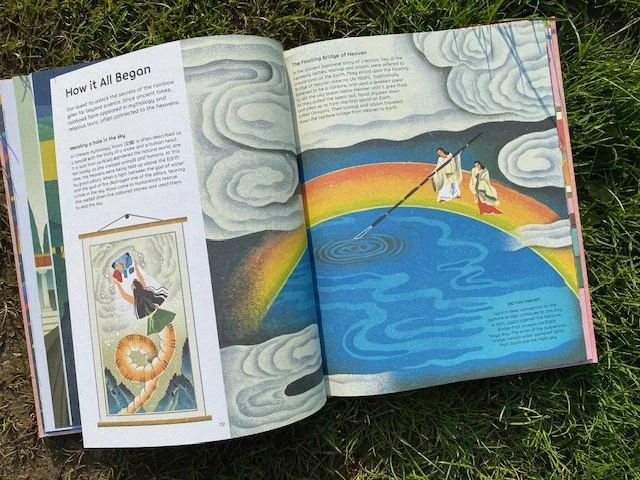
My favourite section is that which looks at the myths and legends connected with rainbows. Beautiful illustrations by Wenjia Tang capture moments from these stories whilst additional snippets of information are scattered throughout. The chapter devoted to the arts is also very interesting; however, it is a shame no poetry has been referenced! The book ends with how the rainbow has been used as a symbol in stories and society.
An excellent book for reading cover to cover, for browsing at leisure or for using as a tool for research, ‘Over the Rainbow’ would be a brilliant addition to any library or bookshelf!
Over the Rainbow: The Science, Magic and Meaning of Rainbows
Rachael Davis, illustrated by Wenjia Tang
Flying Eye Books ISBN: 978-1838740870
Scientists in the Wild: Galápagos
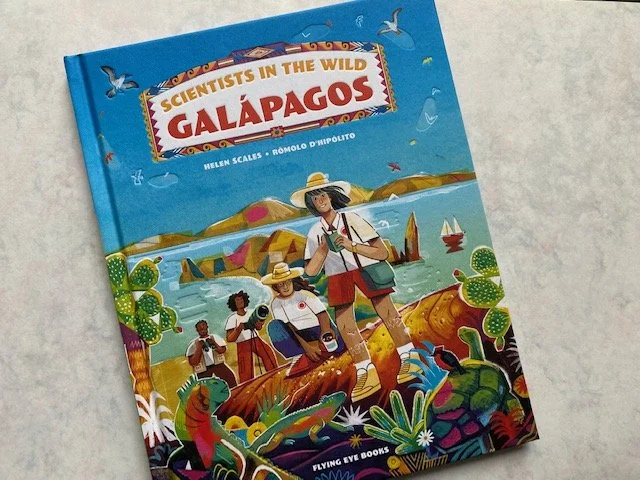
A team of scientists tasked with observing and protecting the islands’ wildlife set sail for the Galápagos Islands, a place like no other on Earth. This book follows their adventures as they work in the field, exploring all the wonders of this incredible archipelago.
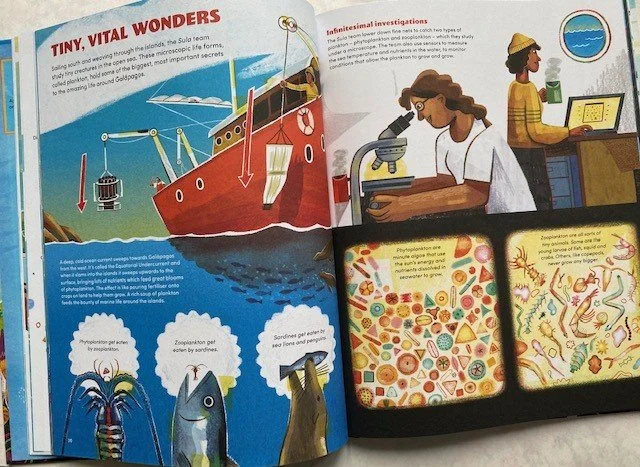
Starting with a map and a brief introduction to the islands, the scene is set for the introduction of the seven scientists from around the world who form the team on board the research ship ‘Sula’. The role of each is clearly explained, showing the range of expertise needed for the expedition and introducing the reader to a wide range of skilled jobs. A cross section of the Sula (the scientific name for the blue-footed booby, one of the birds of the Galápagos) and labelled diagrams of the diving equipment to be used help the reader to understand how the team will conduct their studies.
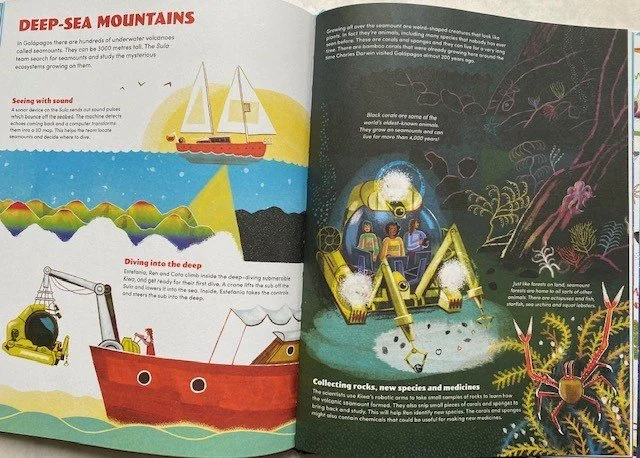
A spread offering a ‘Guide to Galápagos Life explains why the islands are so unique and, sadly, how close to extinction many of the species which inhabit the archipelago are. A key for identifying their status is included and used throughout the book as different species are introduced. The islands are then explored through the eyes of the research team as they pursue their fascinating mission, climbing volcanoes and diving the depths of the seas to gather the data they need.
This is a fascinating, highly engaging book which will be a welcome addition to school libraries and bookshelves as well as being an excellent text for inspiring young adventurers at home. From the arrival of Darwin and his discoveries to food chains, from evolutions and inheritance to volcanoes, from conservation to island habitats, there are so many ways in which this book would add to the primary curriculum. A glossary, contents and index help the reader navigate the text for research and each spread is beautifully illustrated, adding much to the reader’s enjoyment of the text.
Scientists in the Wild: Galápagos
Helen Scales, illustrated by Rômolo D'Hipólito
Flying Eye Books ISBN: 978-1838740931
Published on the 2nd March 2023
My Friend the Octopus
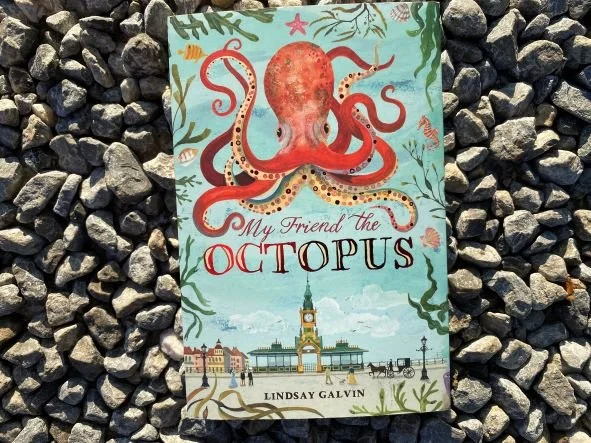
When her mother, a successful milliner, suddenly whisks Vinnie away from everything she knows in London to live in Brighton with her Aunt Bets, her world is turned upside down. The two have never been separated yet now her mother has travelled to Paris on business, leaving Vinnie to a very different life with far more freedom and many new experiences. Vinnie is particularly drawn to the aquarium where she is enchanted by the newest acquisition, a ‘rare gargantuan devil-fish’- a giant octopus. Through observation and patience, Vinnie gradually comes to know this creature, using her sketching skills to capture her unusual friend.
‘My Friend the Octopus’ is a fabulous, many layered story which is full of colour and historical detail. Set in Victorian times, the novel offers much to enjoy, both as a read aloud and as a key text to inspire work from a class, including the attitude of ‘collectors’ and animal well being, working conditions, the role of women and racism.
The aquarium shows the stark contrast between those who care for animals and are keen to learn about them and consider their well being and those who see them as possessions or as a way of making money. Along with Vinnie, Mr Lee, the aquarist in charge of the animals, and his nephew, Charlie, show patience and curiosity, a willingness to learn about the octopus whilst caring for it. For Captain Bickerstaff, the octopus is a ‘slippery beast’, a way to generate income for the aquarium. There is so much to discuss and explore here, considering how attitudes have (or have not) changed and no doubt inspiring a fascination for these amazing creatures to equal Vinnie’s.
Child labour during Victorian times is something children are regularly taught about, but which often focuses on chimney sweeps or factory workers. By introducing the girls caught in the fashion trade, Lindsay Galvin exposes the cruel conditions endured and the consequences of fulfilling the caprices for a certain style or trend. Parallels can be drawn with today’s ‘fast fashion’ and the exploitation of cheap labour to meet this demand.
The book is rich in historical details which make it a delight to read. The risqué nature of bathing and riding a bicycle show how women like Aunt Bets are enjoying new freedoms, but the story also exposes the frustrations of the rigid expectations for women at this time. Notes from the author at the end of the book allow the reader to learn more about some elements of the story and there is a recipe for ‘Petits Fours à thé’ which I have every intention of making when I have a moment!
At the heart of the story is Vinnie, who blossoms into believing in herself under the care and nurture of Aunt Bets who constantly encourages her to ‘get doing’- a positive message for all of us. Her friendships with Charlie and Temitayo are beautifully developed and each character has a fully developed personality and ‘story’ of their own. The ‘baddy’ is truly sinister- no one would want to meet him anywhere- making the twists of the plot full of tension.
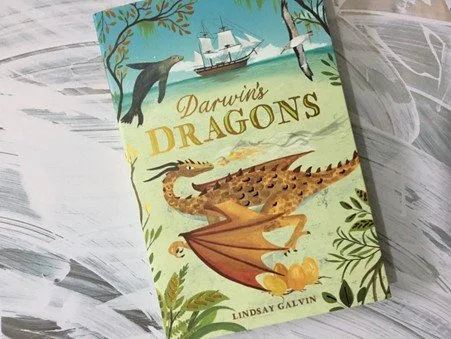
I really enjoyed ‘Darwin’s Dragons’ (and ‘The Secret Deep’), but in ‘My Friend the Octopus’, Lindsay Galvin has written an absolute treasure! The cover is beautifully illustrated with fold out flaps to explore, making an enticing start to an excellent book.
My Friend the Octopus Lindsay Galvin
Chicken House ISBN: 978-1913696405
You can read my review of ‘Darwin’s Dragons’ here and ‘The Secret Deep’ here.