
Rochester Cathedral
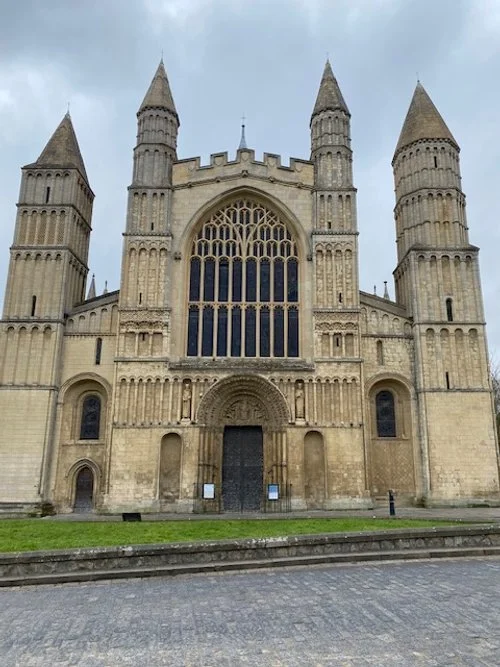
Originally founded in 604 by Pope Gregory I’s first missionaries to England, Rochester Cathedral is England’s second cathedral. Having been attacked by invaders and neglected by Odo, Bishop of Bayeaux, a new cathedral was constructed and consecrated in 1130, at a ceremony attended by King Henry I. However, it was the, looted during the siege of Rochester Castle in 1215 and then desecrated by Simon de Montfort’s forces in 1264. There was further suffering for the cathedral under Henry VIII, leading to its decline and worse followed when Parliamentary soldiers entered the building, adding to its destruction.
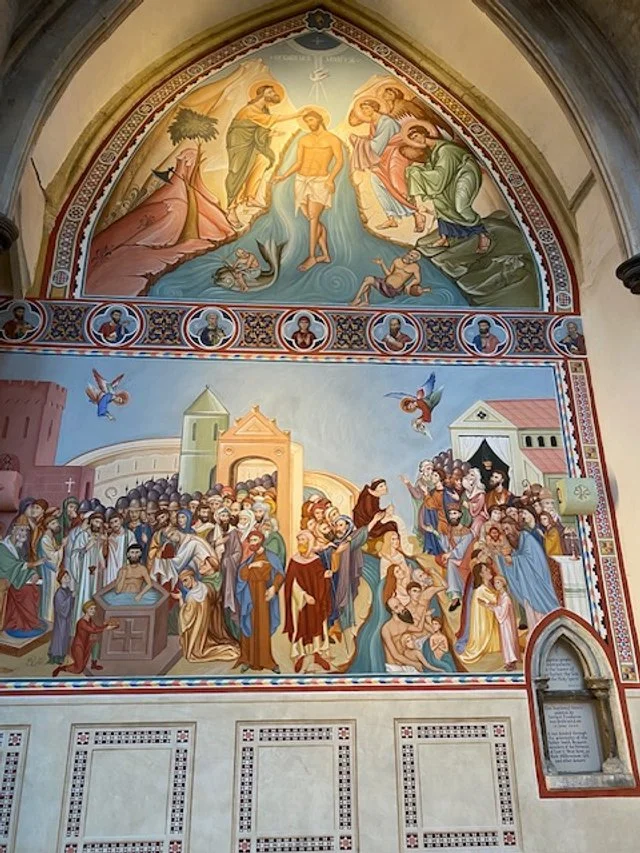
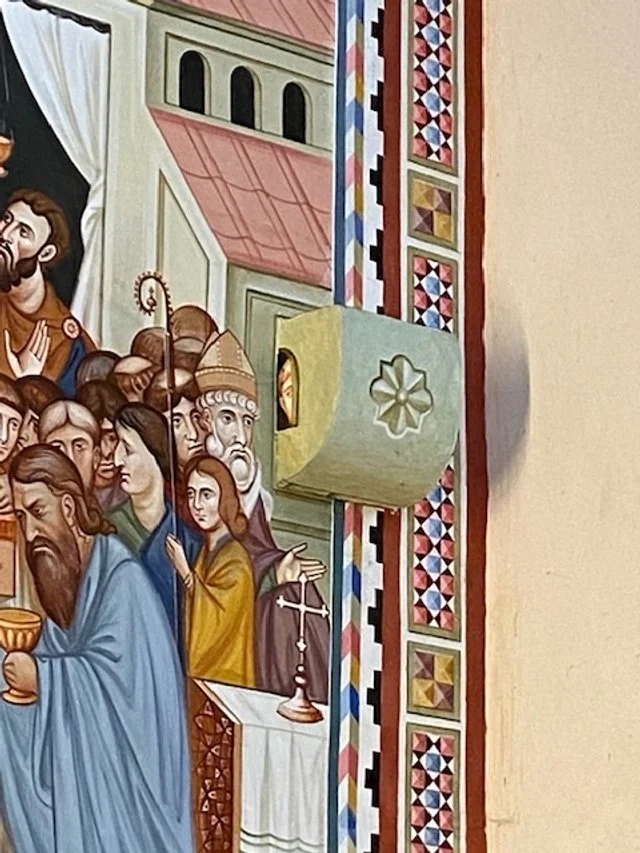
Today, the cathedral is a lovely place to visit, offering a friendly welcome and a calm space. On entering, you cannot fail to notice the vibrant fresco by Sergei Fyodorov, a Russian icon painter. It depicts Jesus’ baptism and the baptism of King Ethelbert by St Augustine. One of the lovely guides on hand to help pointed out the little face peeking through a tiny window which is believed to be the painter himself.
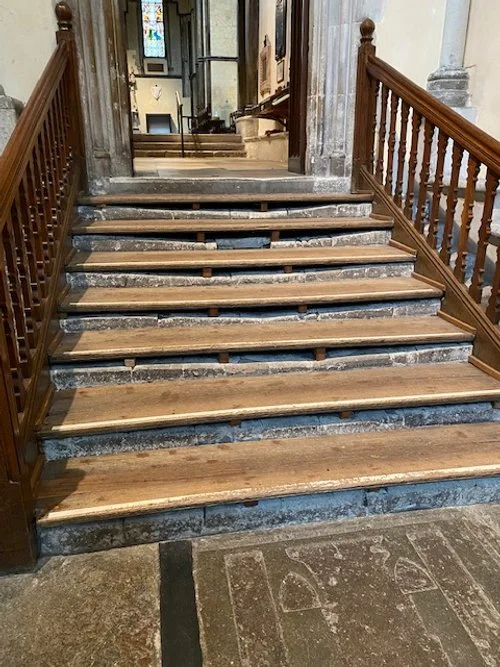
Worn away by centuries of visitors, the Pilgrims’ steps speak of the countless pilgrims who came to see the shrines of the saints once buried in the cathedral. A modern staircase has now been added to protect the original steps, but they can still be glimpsed through these. The Cathedral became a major place of pilgrimage in the 13th Century, following the death of William of Perth, a Scottish baker who was murdered nearby. His body was brought to the Cathedral and miracles were reported at his shrine, of which no trace remains today.
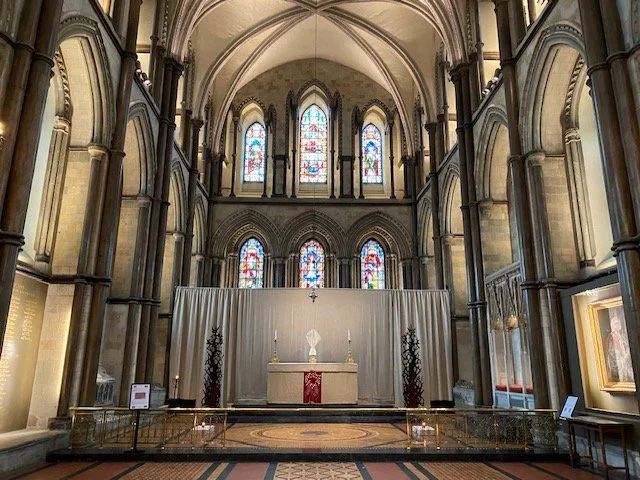
Film presentations offer insights into parts of the building and there is much to notice in this beautiful space, from the floor to the ceiling. The cathedral has such a calm, peaceful atmosphere and yet, is obviously at the heart of the local community.
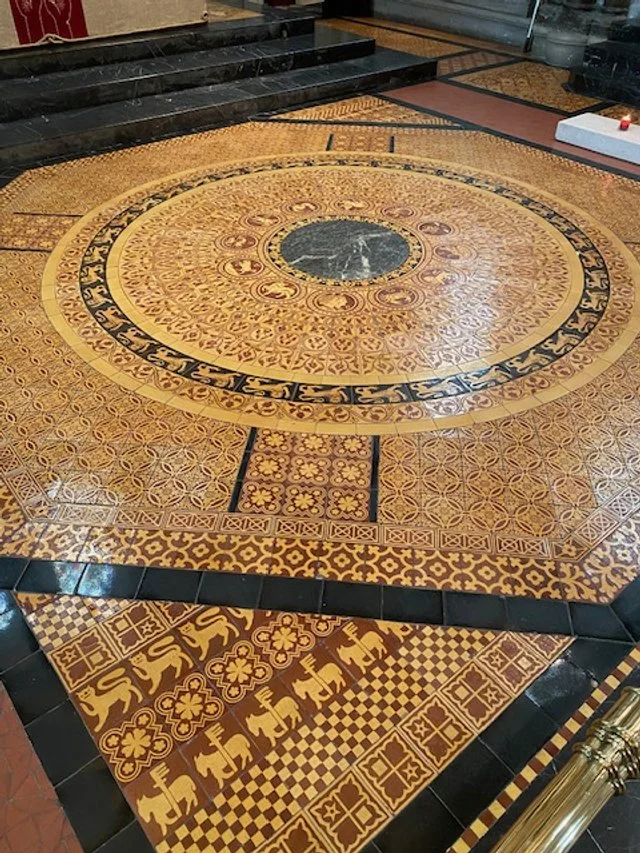
The Zodiac on the floor in front of the High Alter dates from the 1870s, the design symbolising the meeting of Heaven and Earth and the Chapter doorway, which once led to the Chapter House, is beautifully carved, one of the finest of its kind to survive.
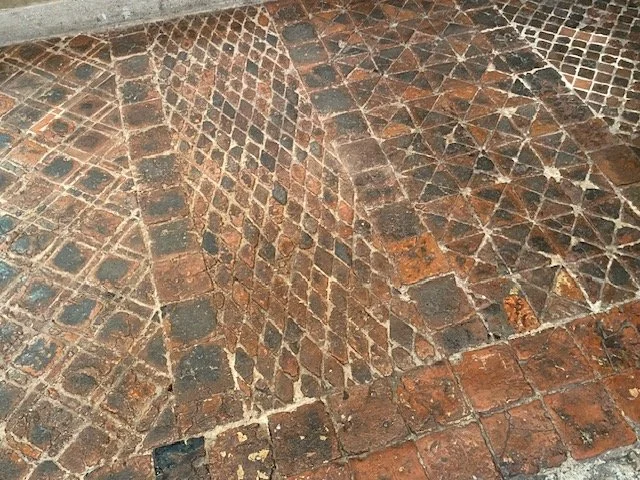
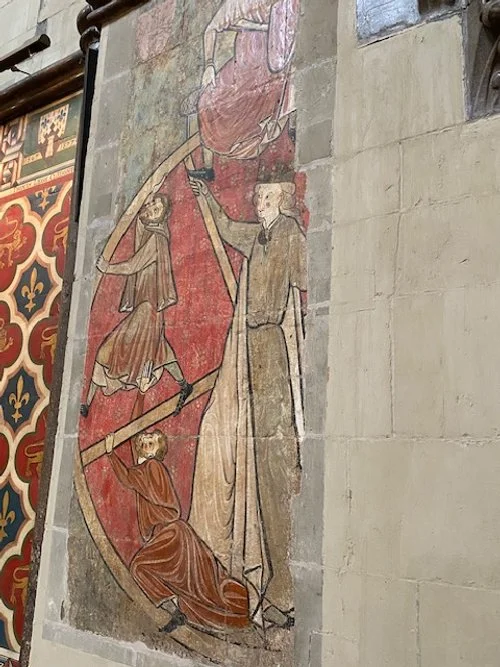
A fragment of a 13th century wall painting of a Wheel of Fortune is on the north wall of the quire. Fortuna, the figure at the centre, controls the ups and downs of life. The missing half was destroyed during Reformation, but this section survived because it was hidden behind a large piece of furniture. It was a common symbol in medieval times, showing that money and power cannot be relied on.
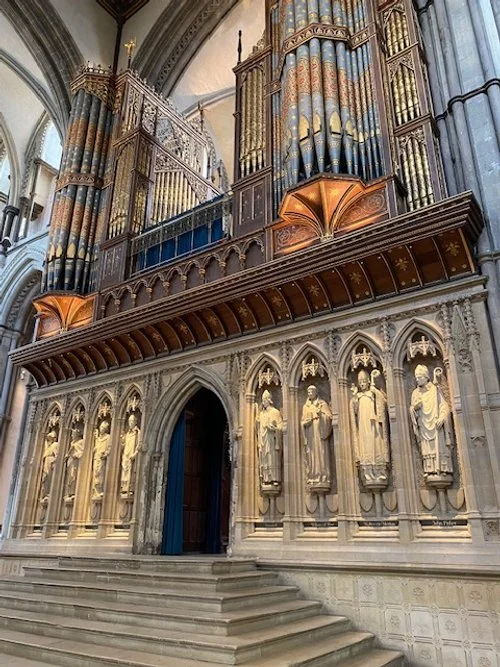
Beneath the beautiful pipes of the organ, there are statues of key figures from the history of the cathedral, including King Ethelbert and Bishop Gundulf.
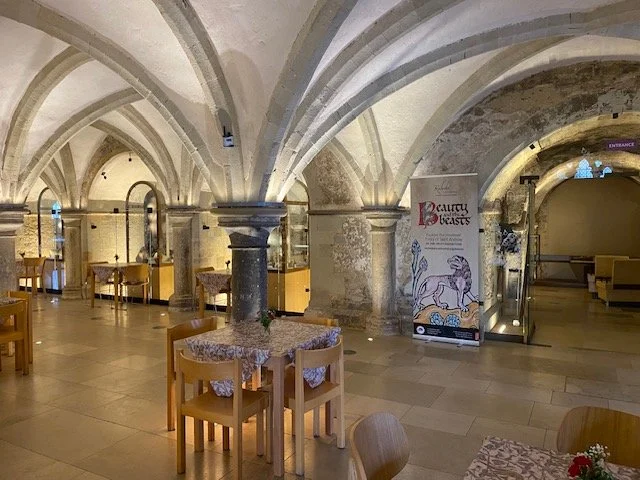
Beneath the cathedral, in the crypt, there is a lovely cafe, with friendly, helpful staff and tasty food. The crypt also houses Rochester’s Mystery Book Exhibition. Textus Roffensis is the only existing copy of the first code of English law. Written in Rochester during the early 1120s, it provides an invaluable insight into the lives of people in the early Medieval period. It has been described as one of the most important documents in English history and influenced the wording of Magna Carta of 1215.
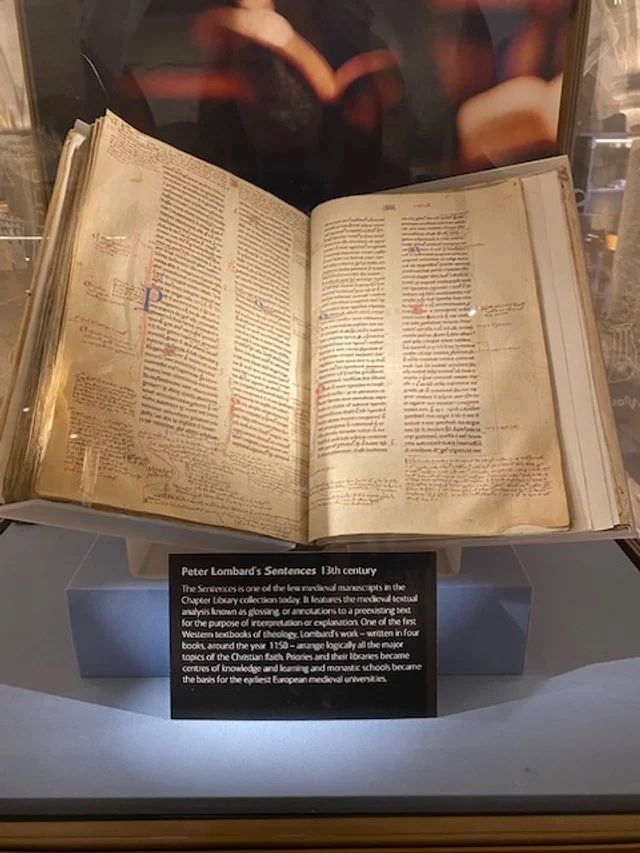
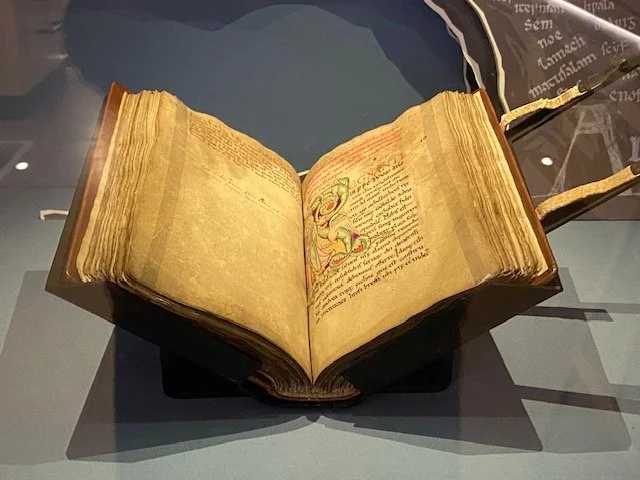
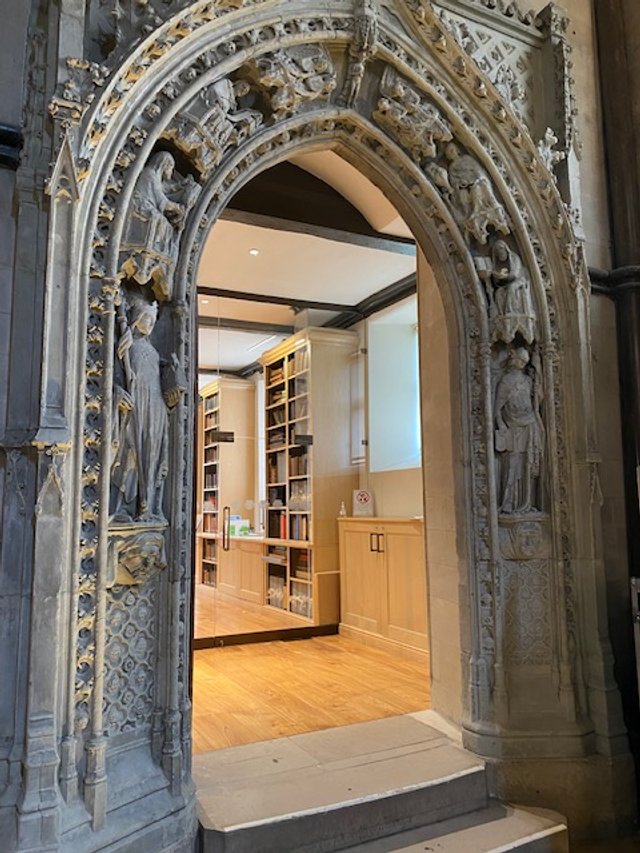
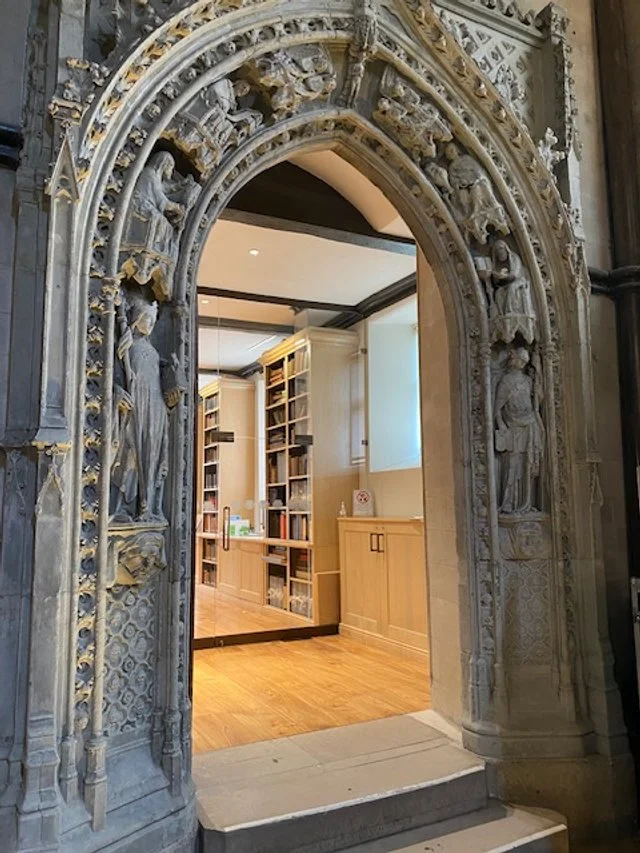
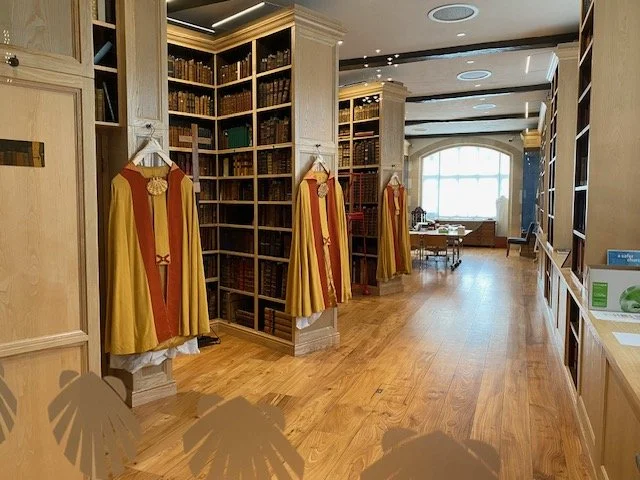
Sadly, the Cathedral library was closed when I visited. A tantalising glimpse through glass was all I got, but apparently it has an outstanding collection of rare and historic books, manuscripts, photographs and lantern slides, some dating from the 12th Century. The magnificent 14th century door is well worth pausing to look at as well.
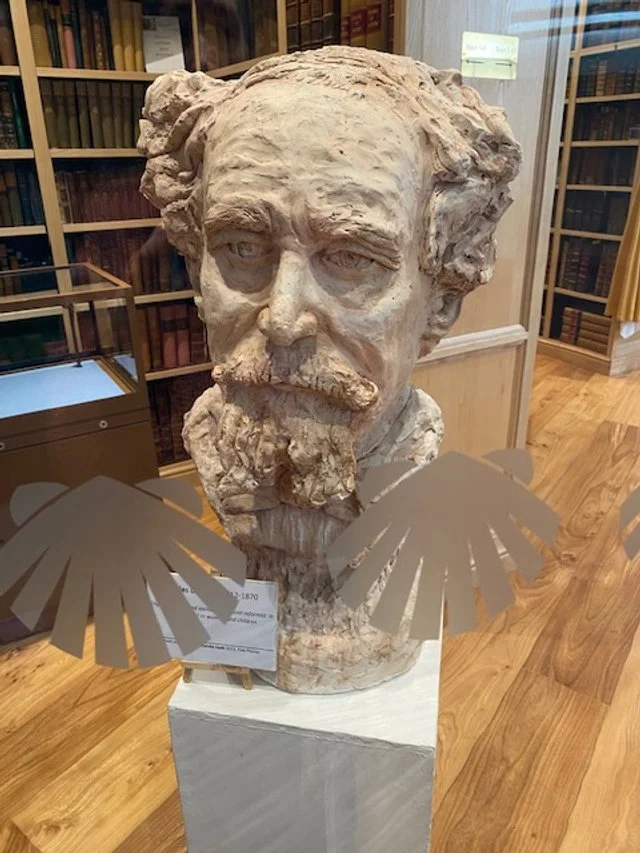
It was presumed that Dickens would be buried at Rochester Cathedral as he died at his nearby home, Gads Place. However, public opinion demanded that he should be buried at Westminster Abbey. A plaque in the nearby castle grounds commemorates this.

Rochester Cathedral is both beautiful and peaceful, a lovely place to spend some time wandering and wondering.
Rochester Cathedral,
The Precinct,
Rochester
ME1 1SX