Reviews
There are so many incredible books available at the moment that it is impossible to read them all, no matter how hard I try! Here are my thoughts about some of the books I have read and how I think they could be used in school as well as Q and A sessions with authors and illustrators.
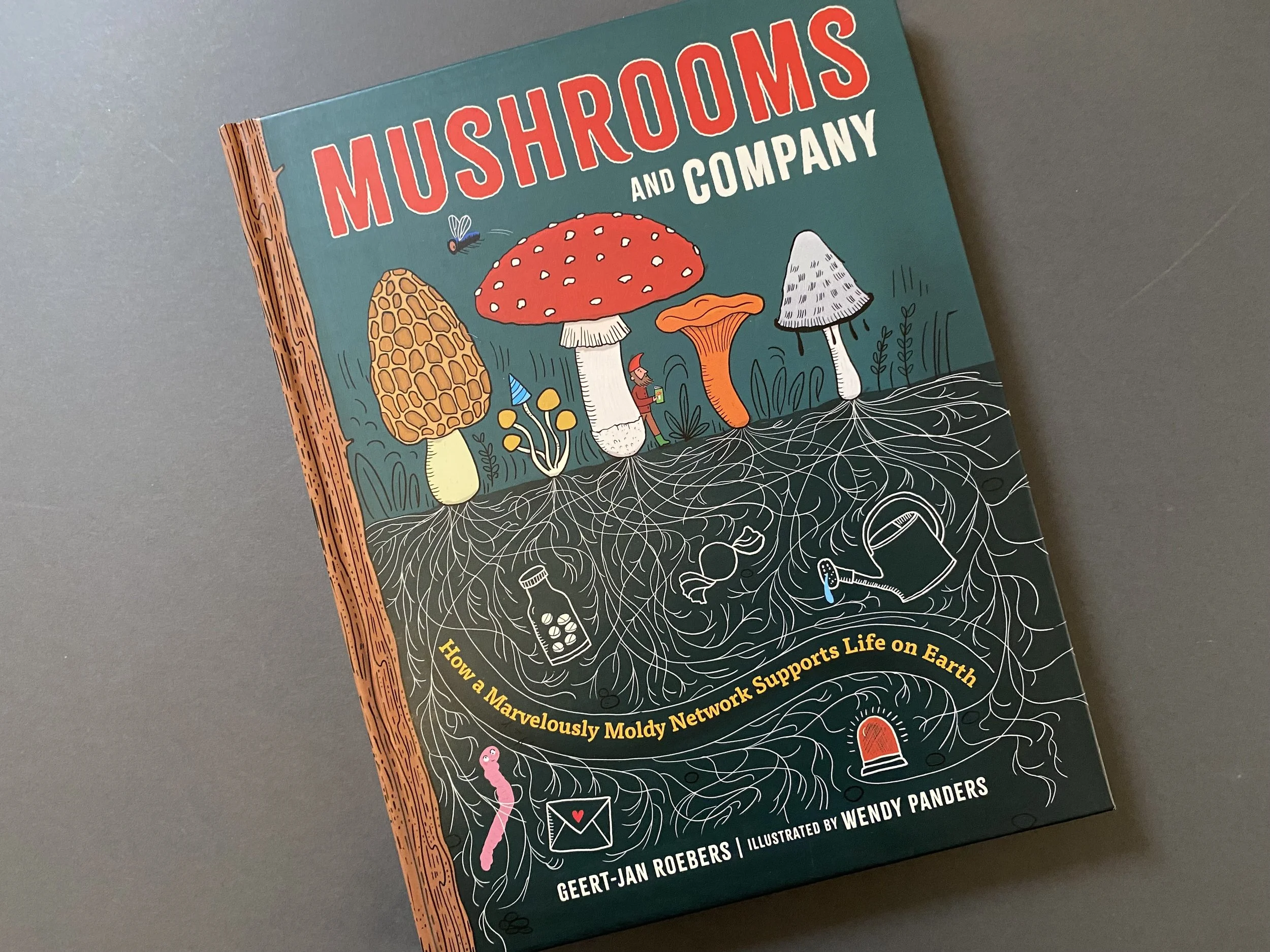
Mushrooms and Company
‘A mushroom is a nice detail in a forest, a decorative dwarf under the sturdy wooden giants.’
But, as this fascinating book proves, there is so much more to fungi than this! Crammed with information, it makes an absorbing read.
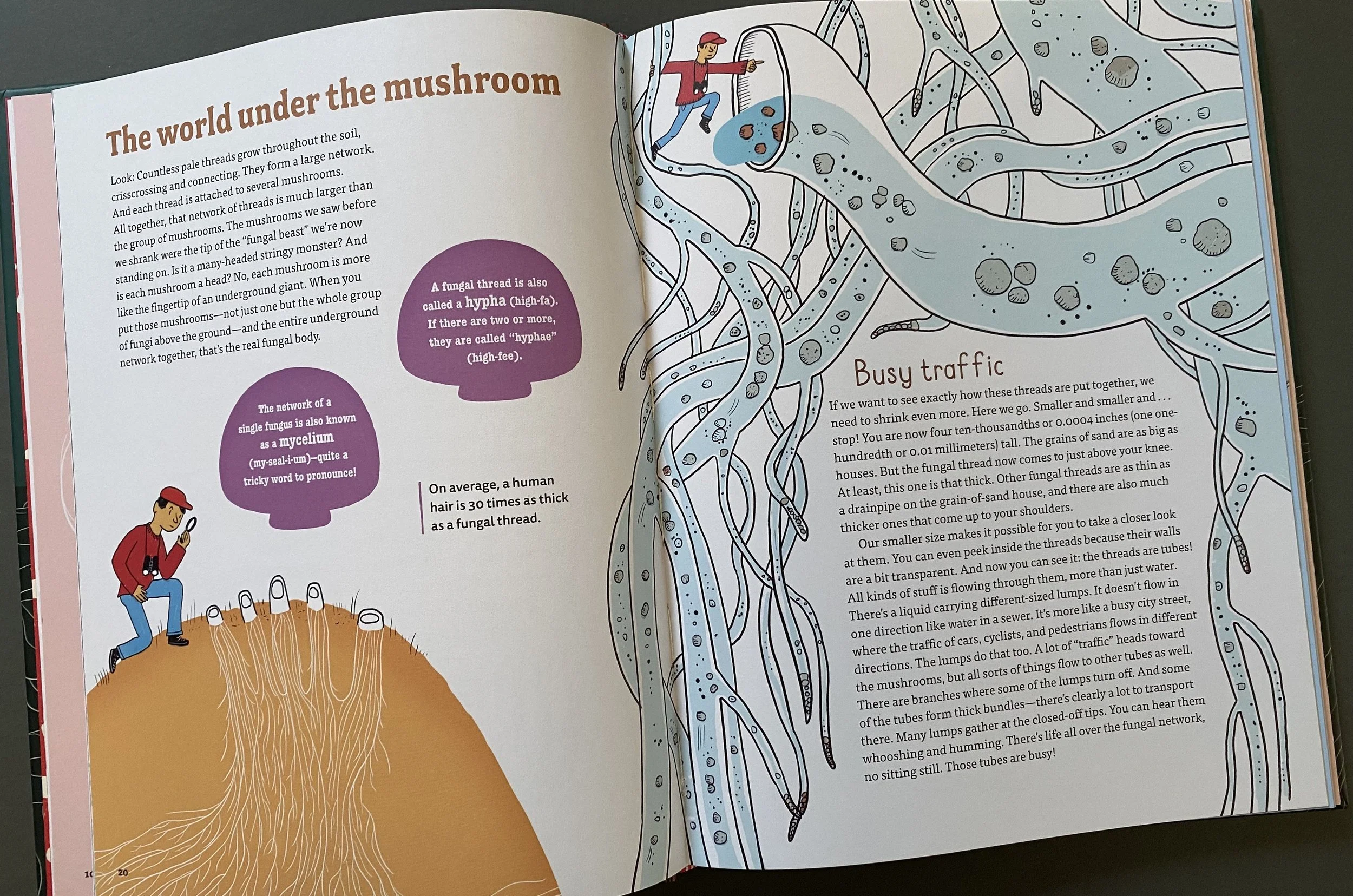
Translated from Dutch, the book does seem to be aimed at the American market, both in terms of spelling and content; however, this does little to detract from the content. The lively, informal style of delivery is very engaging and sure to fill the reader with a new found enthusiasm for mushroom and other fungi. Divided into seven sections, the book really does cover every aspect of this ‘Marvelously Moldy Network’, explaining just how important mushrooms are to everything! Photographs and cartoon style images mingle with detailed diagrams offer plenty of visual interest to support the text.
Mushrooms are not the only fungi celebrated in this book. Lichen, mildew, mould, yeasts, even truffles and the roles they play are all explored. The book closes with a section encouraging readers to get out and explore with wonderful world of fungi whilst reminding budding mycologists to leave tasting to the experts!
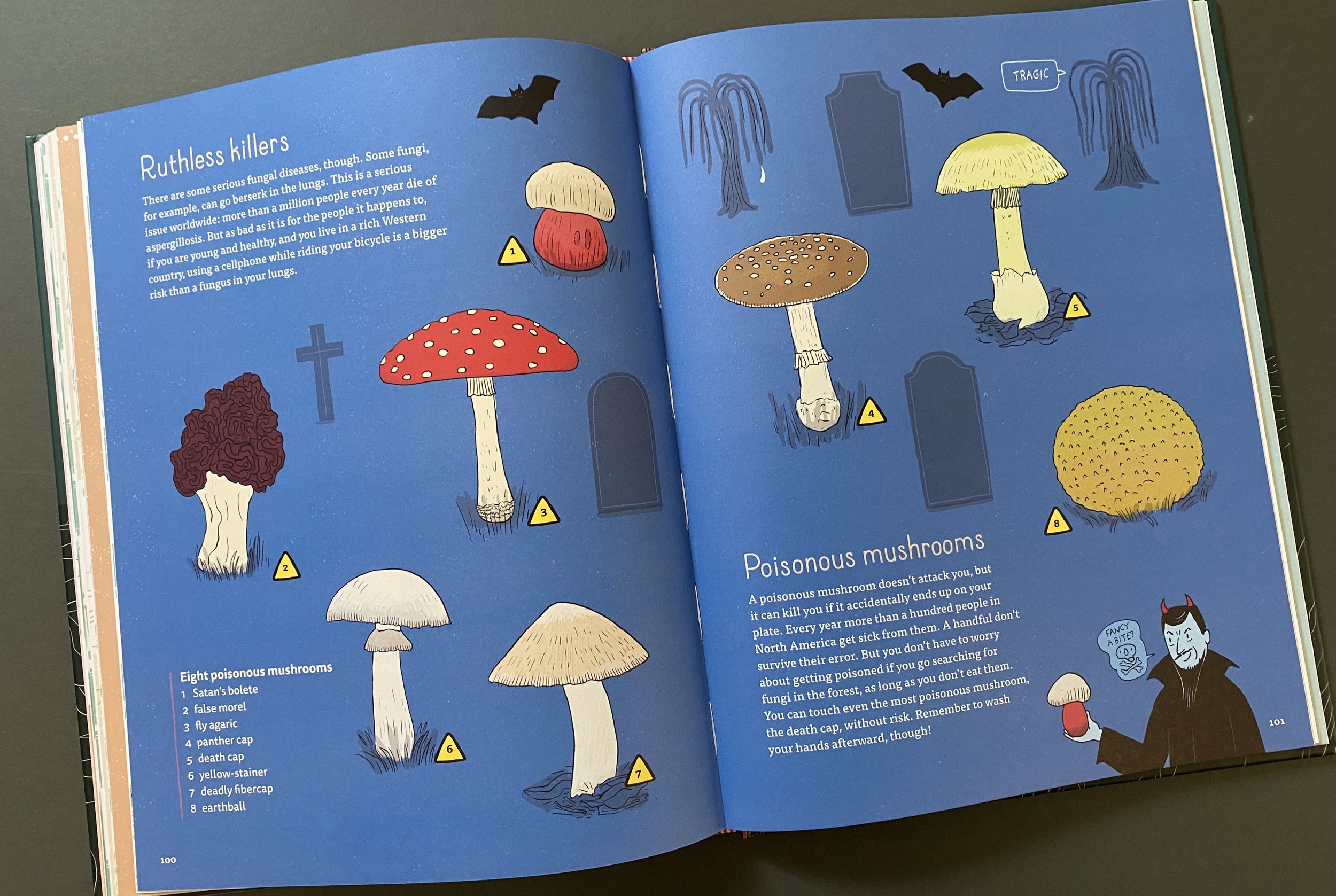
‘Mushrooms and Company’ is a thoroughly enjoyable and informative read!
Mushrooms and Company: How a Marvelously Moldy Network Supports Life on Earth
Geert-Jan Roebers, illustrated by Wendy Panders and translated by Michele Hutchison
Greystone Kids ISBN: 978-1778402227
Thank You, Old Oak
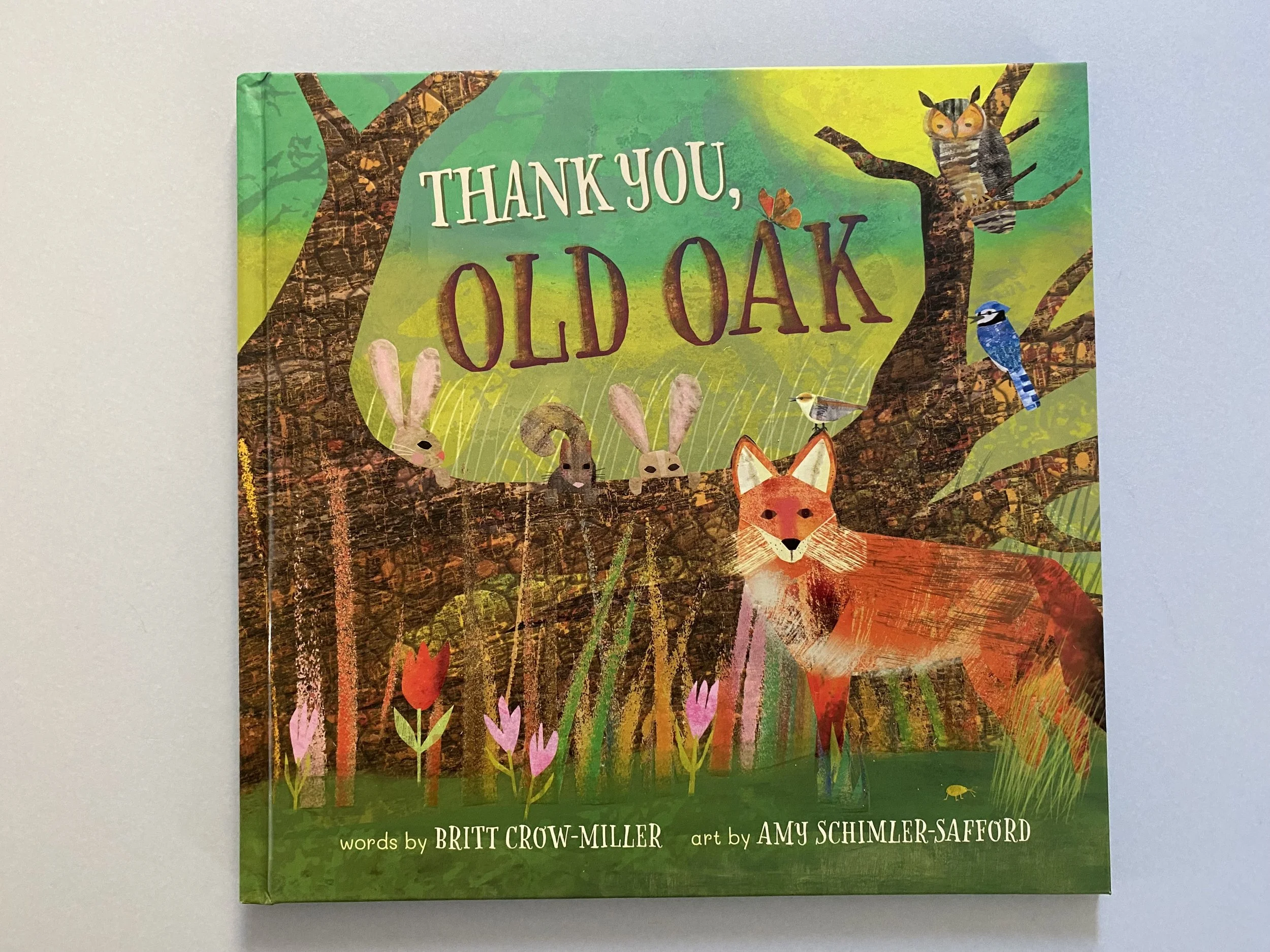
After 400 years, Old Oak finally falls to the forest floor. Creatures gather to give thanks for the many ways in which she helped them whilst she was standing. But, even now, Old Oak contributes to life in the forest in a variety of ways.
‘Thank You, Old Oak’ is a wonderful book, written in celebration of these incredible trees and shares much about the role they play in a forest ecosystem. The personification of Old Oak engages readers, encouraging them to empathise as her long life comes to an end and she is mourned by all the creatures who have benefitted from her presence over the years.
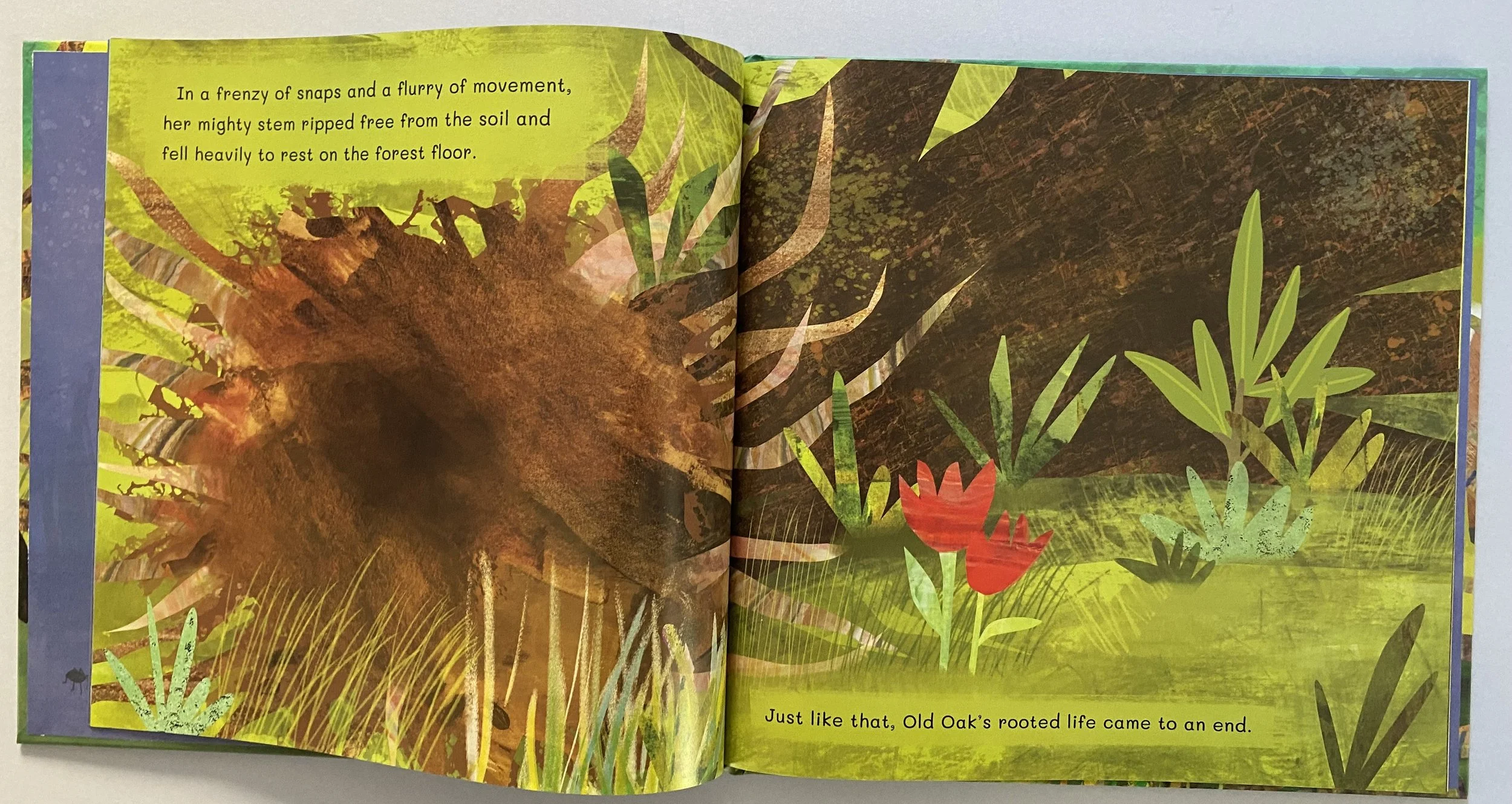
Although many of the animals and birds who gather round the fallen oak will be known to UK readers, some will be less familiar, encouraging discussion about native and non-native species as well as the importance of oak trees around the world.
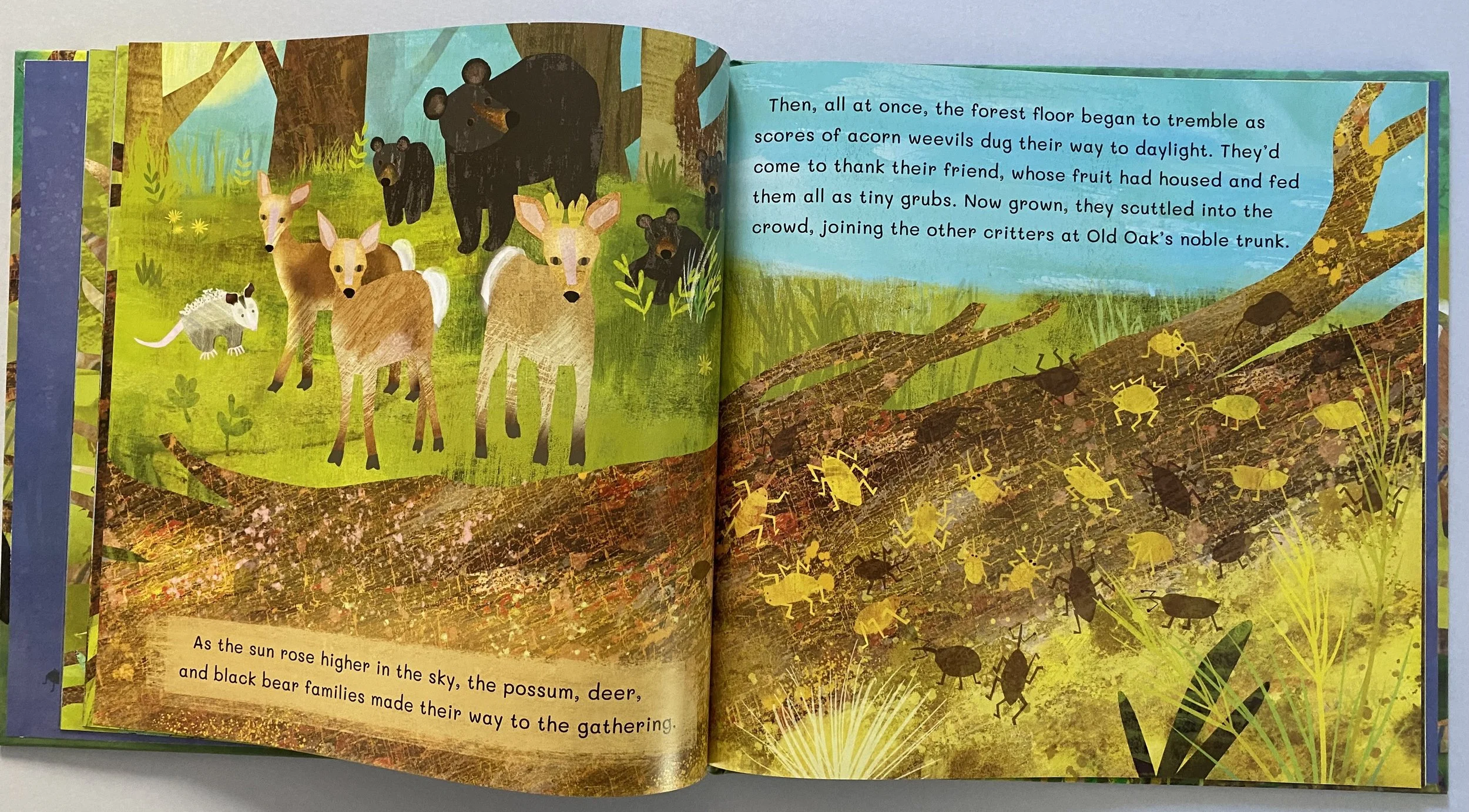
The story ends on a note of joy as Old Oak’s legacy- healthy oak seedlings- are beginning to grow. Factual information about oak trees and how to read tree rings is included at the end of the book which will hopefully spark children’s interest and encourage them to learn more about these incredible trees. It would make an excellent book to share with a KS1 class with its colourful, collaged illustrations sure to engage and add to their enjoyment of the story.
Thank You, Old Oak
Britt Crow-Miller, illustrated by Amy Schimler-Safford
Barefoot Books ISBN: 978-8888596579
Small, Shiny Dung Beetle
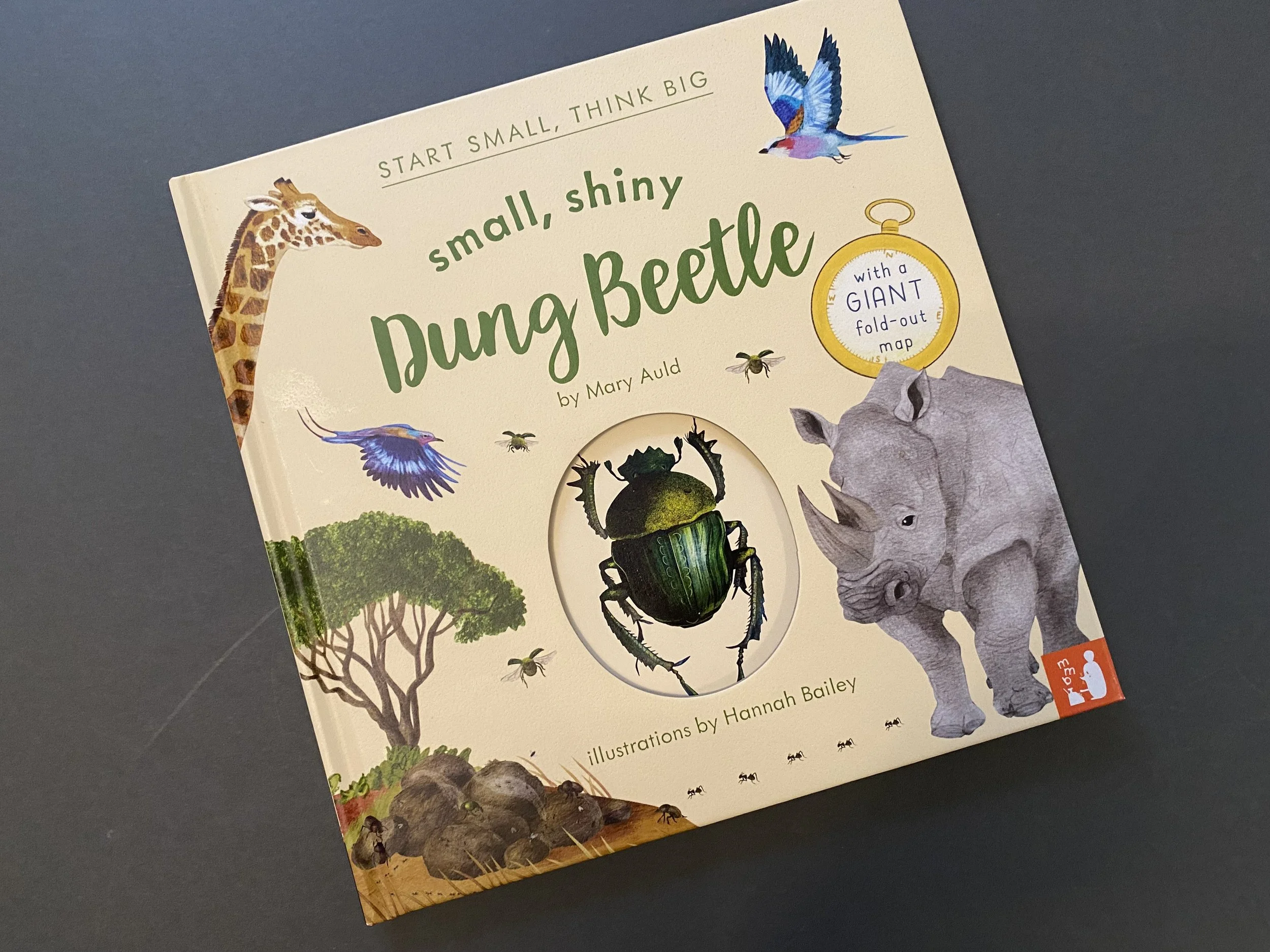
The latest in the ‘Start Small, Think Big’ series focuses on the fascinating life of the dung beetle, Garreta nitens. Perfect for sparking the curiosity of young readers, a great deal of information is packed into this attractive book in a very accessible and engaging way.
Each page begins with a direct narrative from the female dung beetle who tells her story. Presented in bold type it highlights a key event which is then expanded on below, allowing newly confident readers to share the reading and learning experience as necessary. More confident - or perhaps older- readers can then discover more by reading further captions and labels. Attractive, colourful illustrations accompany the text and are full of details to enjoy.
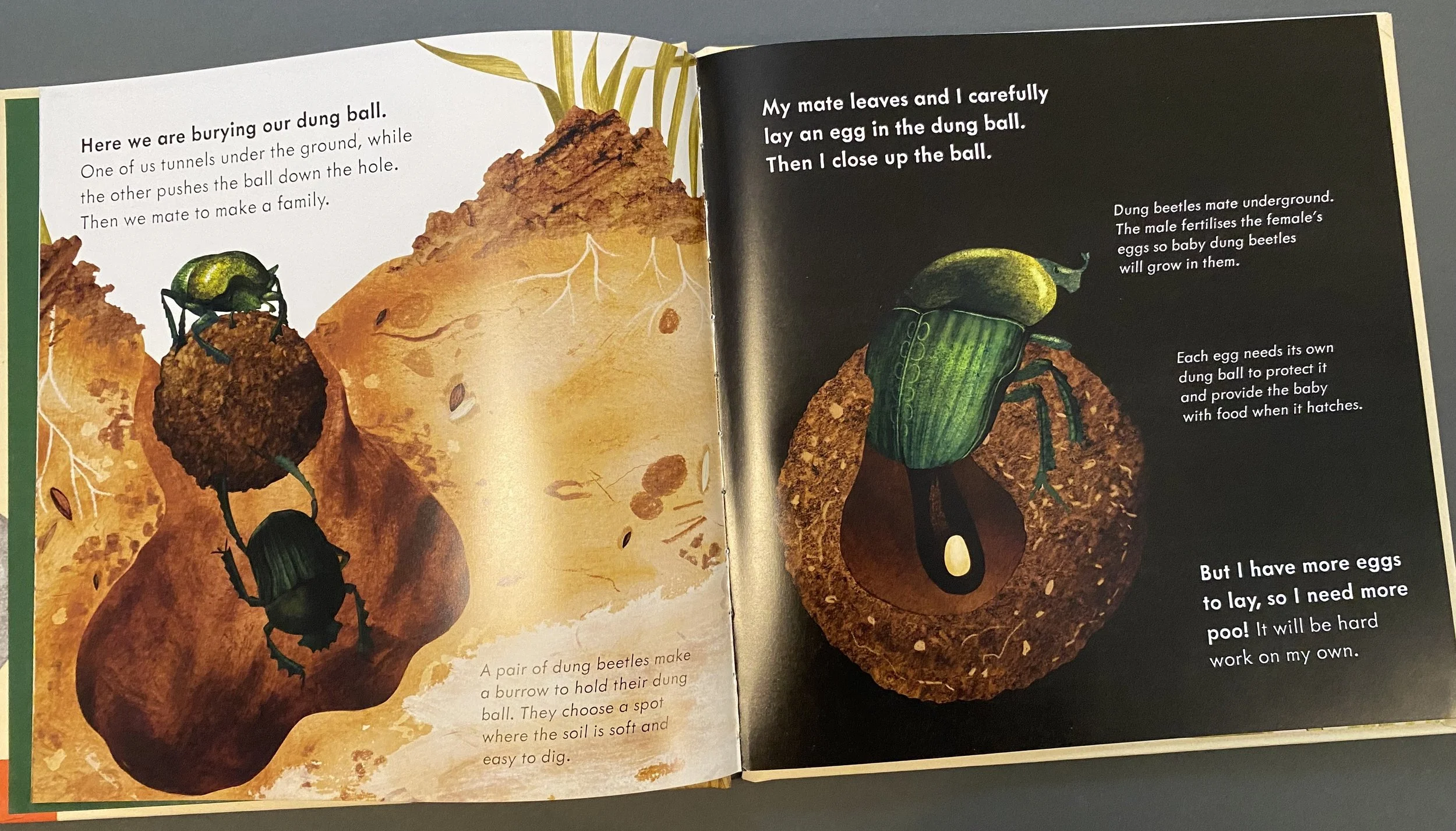
Through looking at the example of the dung beetle, the book covers areas of the science curriculum such as life cycles, food chains and habitats, enriching learning through offering a different example to those children might usually be presented with- the caterpillar, butterfly, frog etc. The vital role of the dung beetle in their ecosystem is also explored and reference is made to the ancient Egyptian belief about Khepri, the god often depicted as a dung beetle, pushing the sun across the sky as a dung beetle pushes its ball of dung.
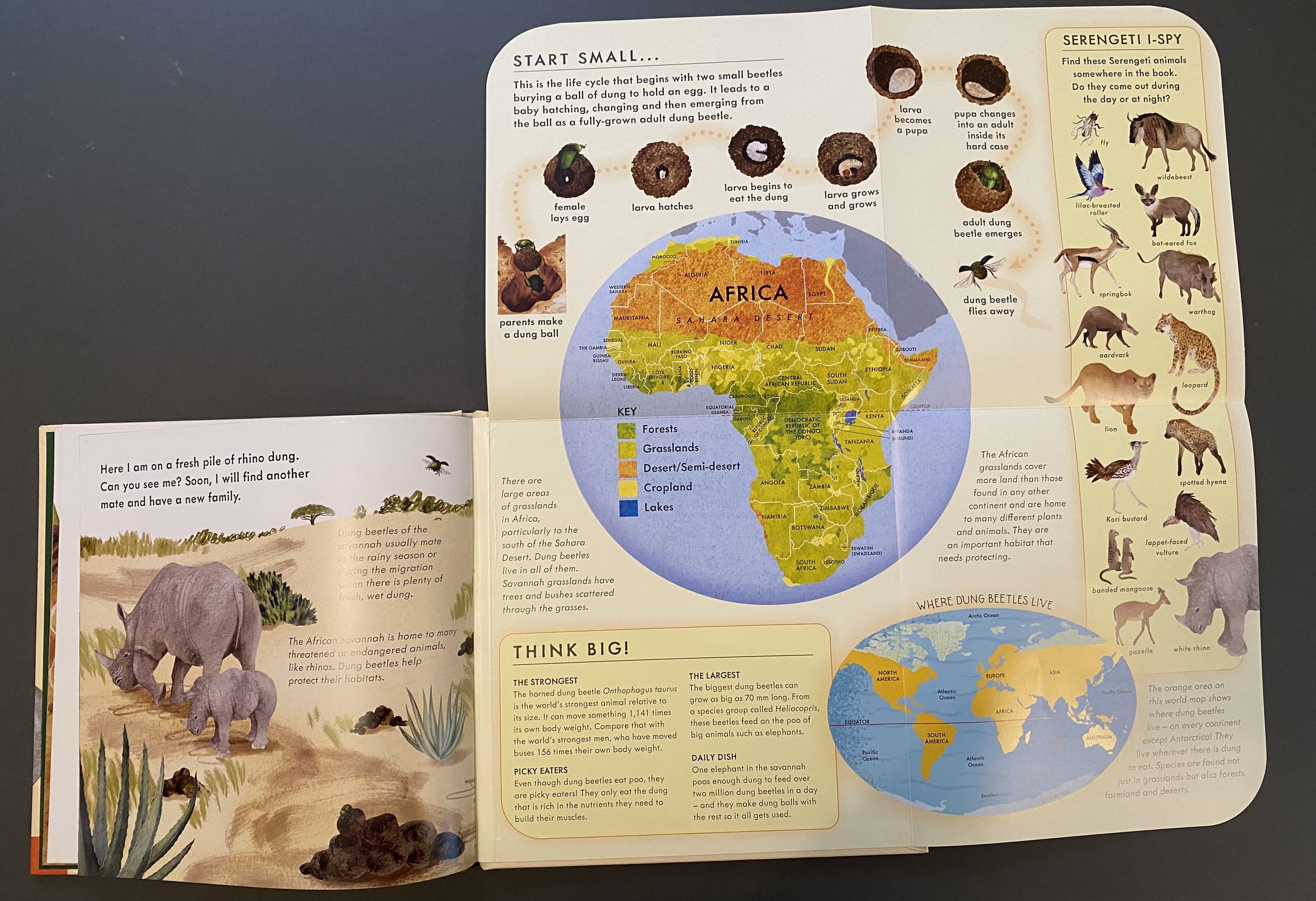
As with the other titles in this series, the book ends with a fold out poster, summarising much of the information and showing a map of Africa. This also includes a ‘Serengeti I-Spy’, with animals for children to hunt for, encouraging children to further engage with their reading and look closely. Beautifully presented, the book is designed to withstand repeated readings and would make an excellent addition to any bookshelf, not only for KS1, but also offering support to older children who are less confident readers.
Small, Shiny Dung Beetle
Mary Auld, illustrated by Hannah Bailey
Mama Makes Books ISBN: 978-1916780149
You can read my review of ‘Flying, Fluffy Seed’ here, ‘Small, Speckled Egg’/ ‘Little, Brown Nut’ here and ‘Small, Sparkling Raindrop’ here.



The Incredible Pop-Up Frog and other wetland creatures
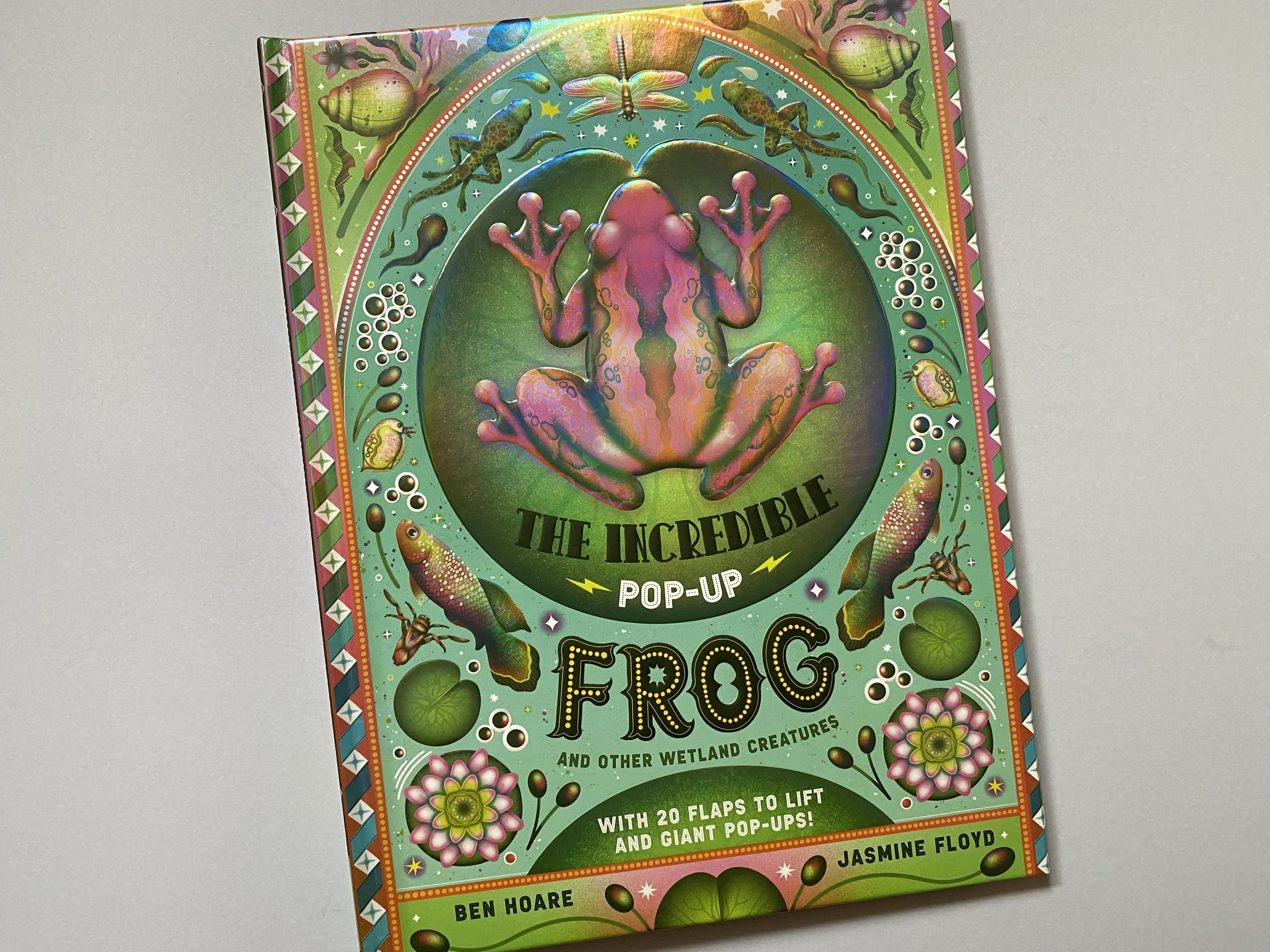
Beautifully presented and bursting with information, ‘The Incredible Pop-Up Frog and other wetland creatures’ is an absorbing read, with plenty of interactive elements to keep readers engaged.
A mixture of pop-ups, wheels, flaps to lift and tabs to pull allow readers to explore different wetland environments and the creatures which live there. Headings and side headings help readers to locate information which is presented in clearly written, well explained sections. This is one of those books which really has no upper age limit- there is plenty to fascinate everyone.
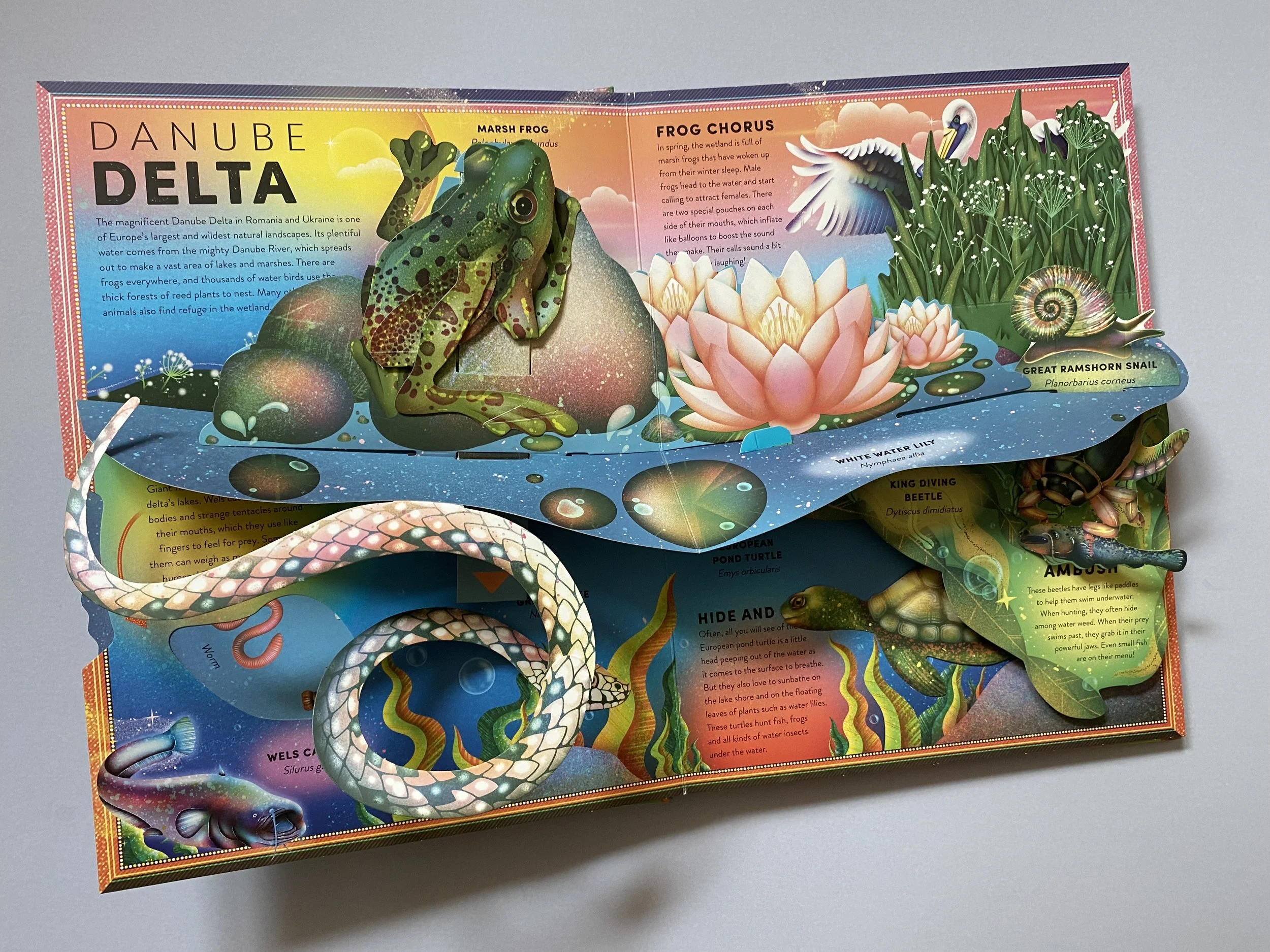
Teachers could take inspiration from the way food chains have been presented using a wheel which turns to show these links in five different locations, perhaps inspiring children to create their own in this way. Similarly, creating a fold out diagram like the one showing the life cycle of a frog is a far more appealing way of presenting this information than a simple drawing. There is plenty of information here which extends beyond the confines of the science curriculum, developing children’s knowledge and understanding in a very visual way.
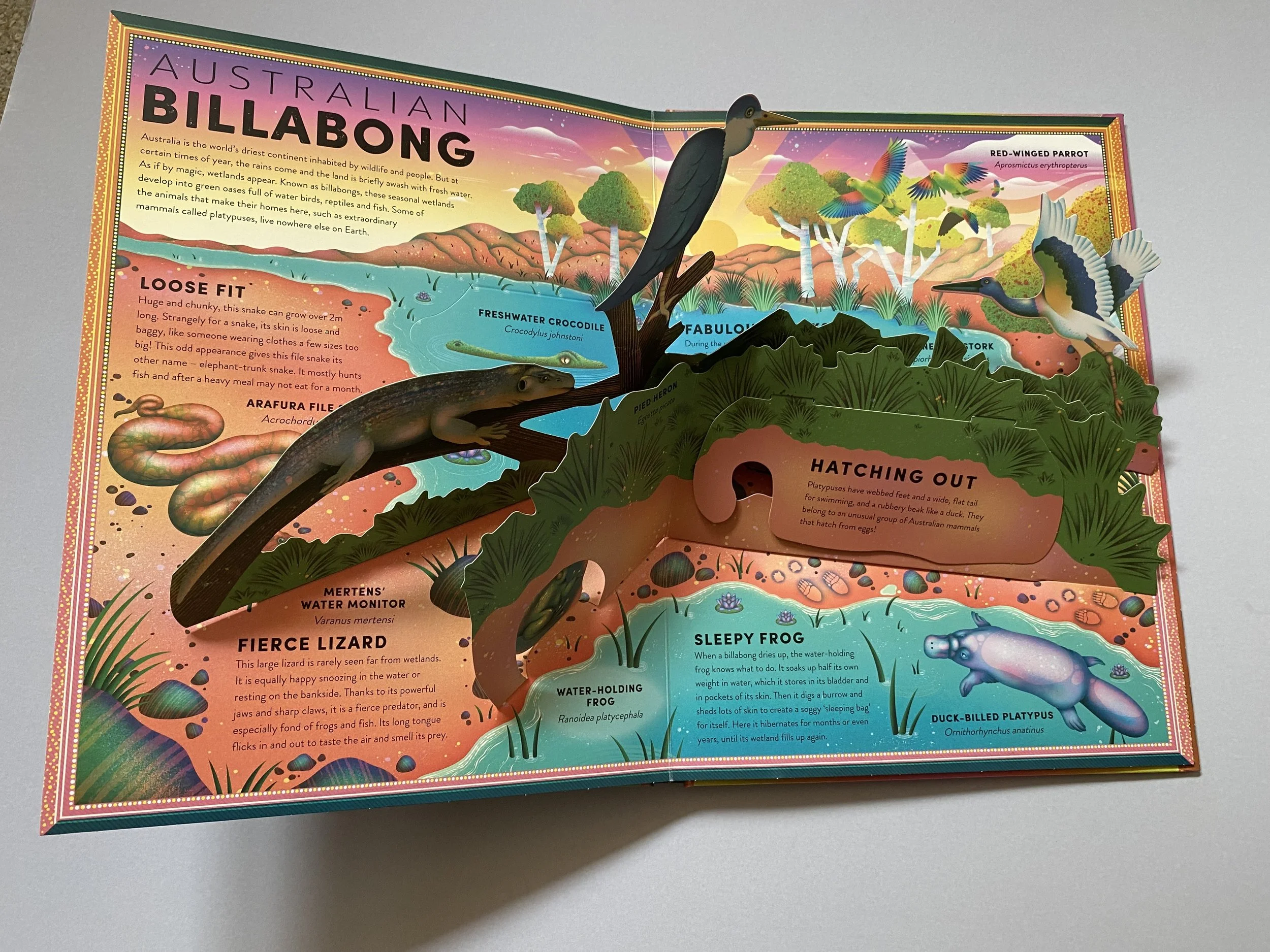
As well as focusing in on different locations from around the world and allowing readers to compare and contrast these, the book offers information about the different depth zones- the surface, the middle and the bottom of watery locations. The final page encourages readers to try creating their own wetland environment, something which could be done at home or at school and offer the opportunity for children to work scientifically, carefully observing nature and enjoying the benefits such activities can bring.
The Incredible Pop-Up Frog and other wetland creatures
Ben Hoare, illustrated by Jasmine Floyd
Templar ISBN: 978-1800788718
Frog: A Story of Life on Earth
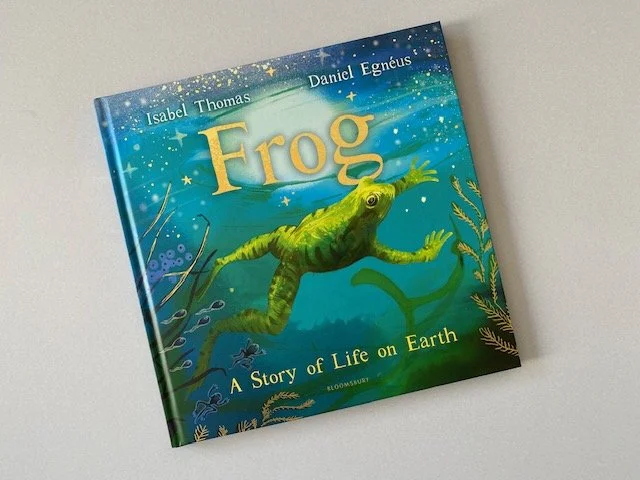
Isabel Thomas is a complete master at understanding the kind of questions little ones love to ask - and then offering carefully constructed and satisfying answers. Initially, ‘Frog’ appears to be a book about life cycles- and yet is so much more!
It starts with a child, a curious child whose understanding of the life cycle of a frog leads them to pose a problematic question: if frogs come from eggs and eggs come from frogs, where did the first frog come from?
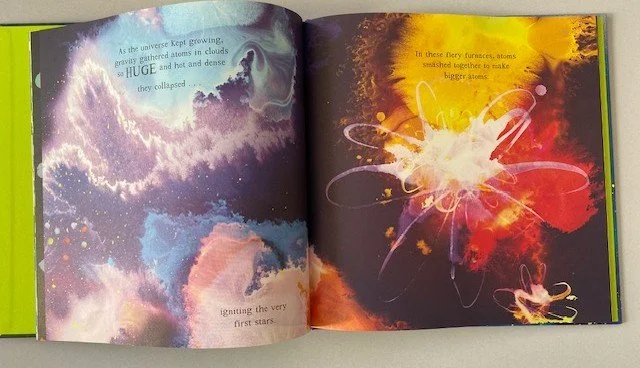
From the Big Bang through the development of the planets to the development of the first animals, readers are taken on a journey to the gradual evolution of creatures in the water leading to the development of amphibians, including the very first frogs. Each spread is beautifully illustrated, perfect for enquiring minds, whilst the text is well pitched for young readers.
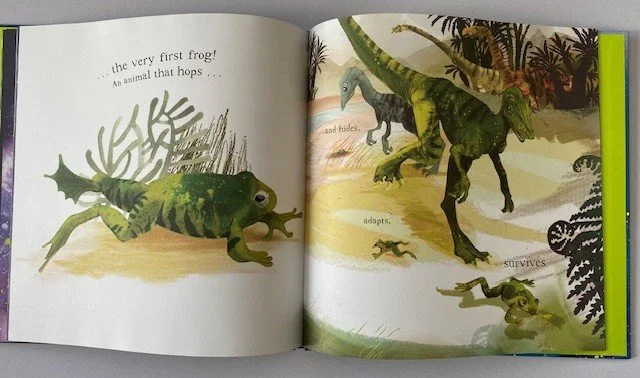
At the end of the book, there is a more text heavy explanation, offering more detail, perhaps to deepen the understanding of older readers or to support adults sharing this with young children. Isabel Thomas’s infectious enthusiasm for her subject clearly comes through on every page, sure to inspire a new generation of science lovers.
Frog: A Story of Life on Earth
Isabel Thomas, illustrated by Daniel Egneus
Bloomsbury ISBN: 978-1526600752
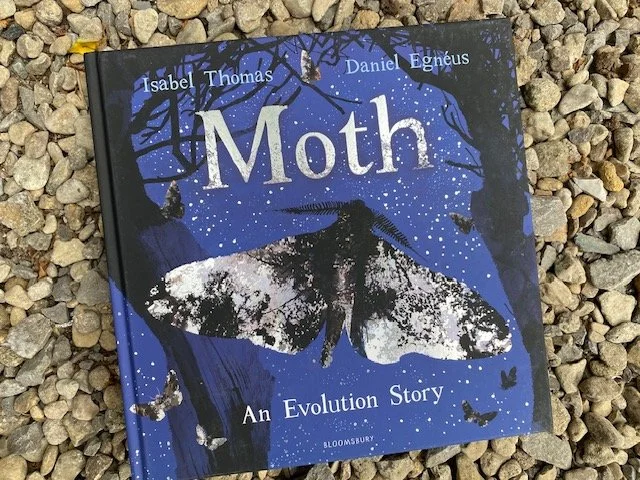
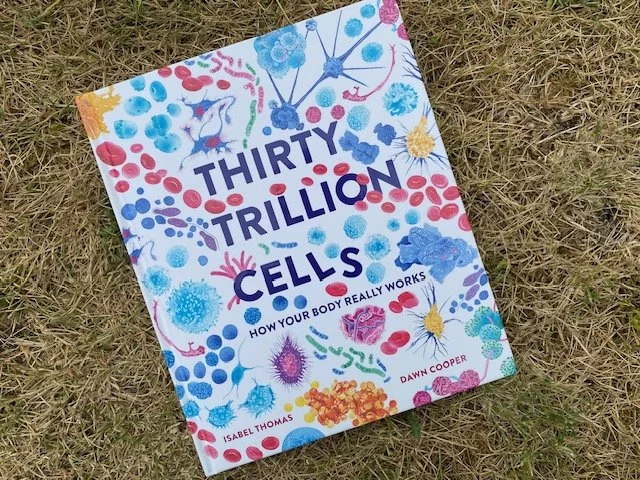
You can read my review of ‘Moth’ here and ‘Thirty Trillion Cells’ here.
The Water Flower: The Journey of a Lotus Seed
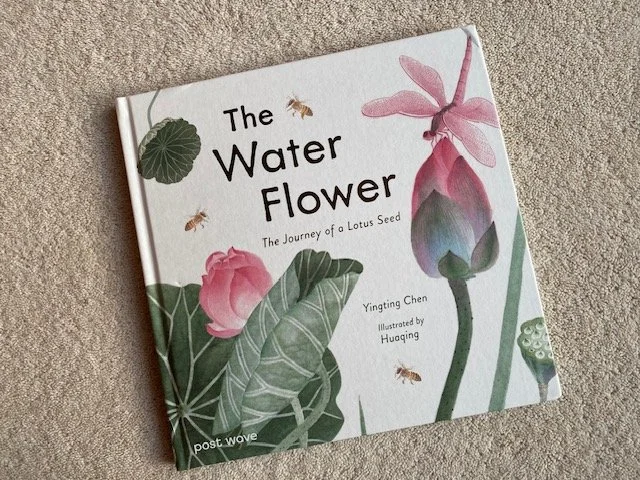
Describing the development of a lotus from its seed through flowering to releasing new seeds, ‘The Water Flower’ beautifully describes the life cycle of this remarkable plant.
Step by step, the development of the lotus is carefully explained with delicate, annotated illustrations supporting understanding at each stage. The main narrative text tells the flower’s story whilst smaller print sections add detail, using and explaining the technical terms for plant’s parts and functions.
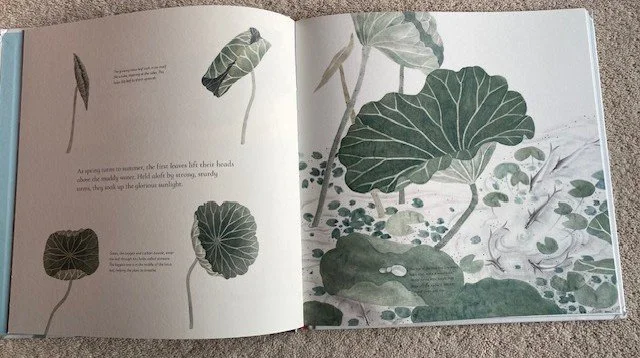
The life cycle of flowering plants and identifying and explaining the function of their parts forms part of the science curriculum at KS2 and this book offers a wonderful opportunity of enriching children’s experience by exploring a plant which might not be familiar to them. It offers the opportunity to consider how these plants have adapted to their environment and to compare them to others, broadening their understanding and applying their knowledge. For the curious child, it would make the perfect starting point for further investigation and discovery, perhaps of the flower’s symbolism and importance in some cultures.
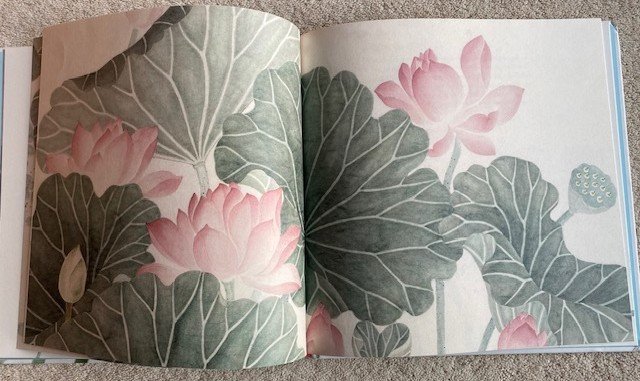
Subtle, muted colours enhance the delicate nature of these blooms, captured in these beautiful illustrations, making the book a real pleasure to linger over and offering much to learn and much to enjoy.
The Water Flower
Yingting Chen, illustrated by Huaqing
Post Wave ISBN: 978-1836270188
Fluffy, Flying Seed
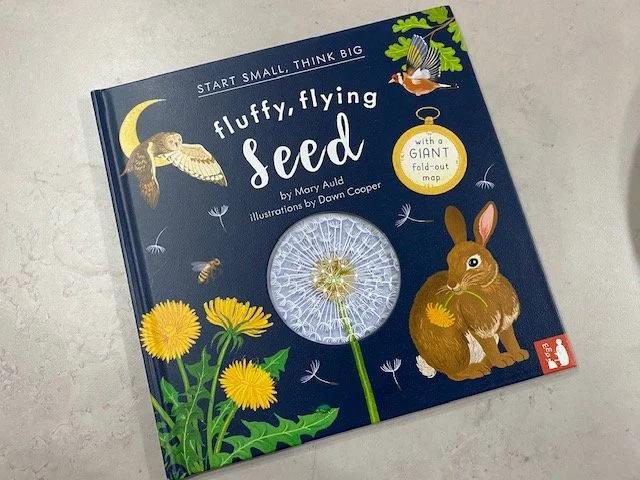
Starting with a tiny dandelion seed floating on the wind, ‘Fluffy, Flying Seed’ shows the lifecycle of a plant, both through the seed’s own narrative and facts.
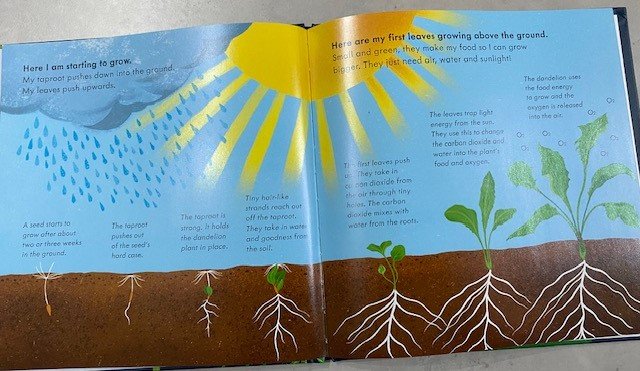
The latest in the ‘Start Small, Think Big’ series, the book is perfectly pitched to encourage curiosity in the natural world and help young readers discover more about the world around them. A fold out map at the end of the book shows the regions across the world where dandelions grow and includes a meadow i-spy for children to enjoy.
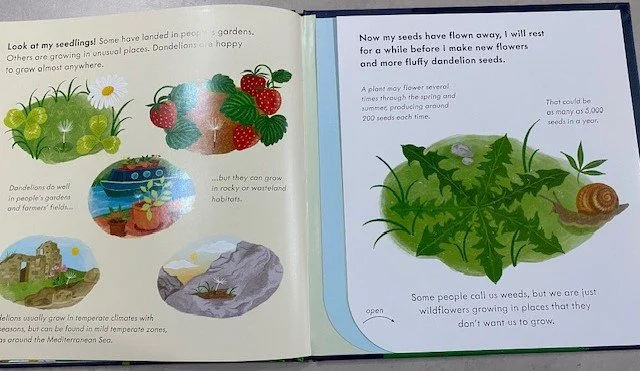
Text at two levels allows children to independently read the narrative and be supported, if need be, with the factual content, making the book perfect for both home and school. Covering various topics from the science curriculum, the explanations are clear and concise, using the correct technical terms. It is an engaging and enjoyable read, full of delightful illustrations- a lovely addition to any bookshelf!
Fluffy, Flying Seed
Mary Auld, illustrated by Dawn Cooper
Mama Makes Books ISBN: 978-1916780071
You can read my reviews of ‘Small, Speckled Egg’ and ‘Little, Brown Nut’ here.
We are the Wibbly! A Tadpole’s Tail

Happy in the Wibbly with the other eggs, one tiny creature is enjoying a relaxing life. Suddenly, things start changing. First, all the Wibbly friends grow tails and become tadpoles. Next, they have burst out of the Wibbly, then grown legs, then arms…and all the while, the tiny creature is reluctantly keeping up on this journey from spawn to frog!
This is one of those wonderful books which works in so many ways! ‘We are the Wibbly’, apart from having an excellent title, offers a really entertaining look at the life cycle of a frog, clearly showing each stage of development, making it an excellent teaching tool!
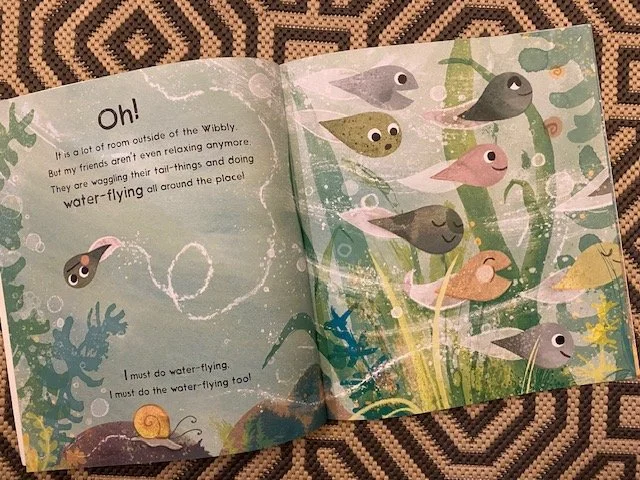
However, the reluctance of this one little egg to grow up and the anxiety and pressure it feels at having to keep up with the others, also makes this a reassuring story to share with little ones experiencing the same emotions. Unwilling to leave the Wibbly, the mass of frogspawn it shares with its fellows, the little frog-to-be is horrified by change in the others, the filled with self-doubt as it is left behind. Then, no sooner had it become ‘longish’ like the others than they were all bursting from the Wibbly and water-flying, causing yet more feelings of anxiety and confusion. The beauty of the way in which this story is presented is that it could also be read with older children experiencing similar emotions, allowing them to distance themselves whilst discussing the content, perhaps in relation to younger children, and allowing them to explore ways of coping with these feelings. Indeed, there are days when I think ‘Oh my crikeys!’ at just how fast time is passing and how much things are changing!
There will be people who are not fans of the use (or misuse!) of grammar to express the little creature’s thoughts, but this just adds to the charm of the story! It also lends itself quite brilliantly to being the basis for a fun lesson about the use of subject-verb agreement in ‘standard’ English by playing with, and creating, sentences which defy the rules as well as those which conform.
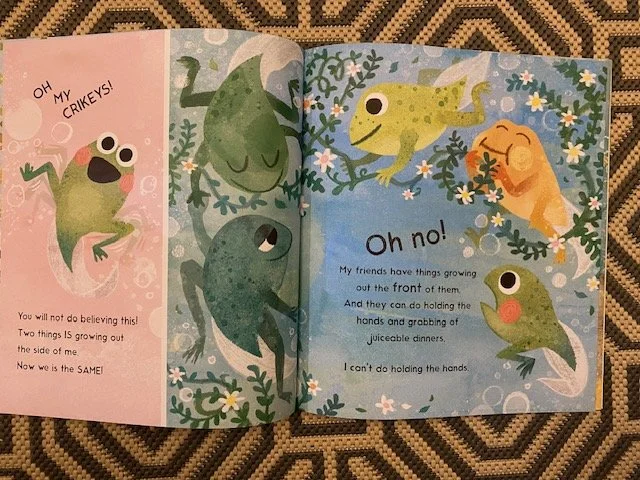
The illustrations are just wonderful. Full of colour and energy, they capture the contrast between little creature’s reactions to its changing circumstances and those of its fellows, offering much to discuss. Children could write from the viewpoint of one of the other tadpoles, showing how their experiences differ.
Hilarious and heartwarming!
We are the Wibbly! A Tadpole’s Tail
Sarah Tagholm, illustrated by Jane McGuinness
Bloomsbury ISBN: 978-1526627346
Published 28th March 2024
Blog Tour: Start Small Think Big
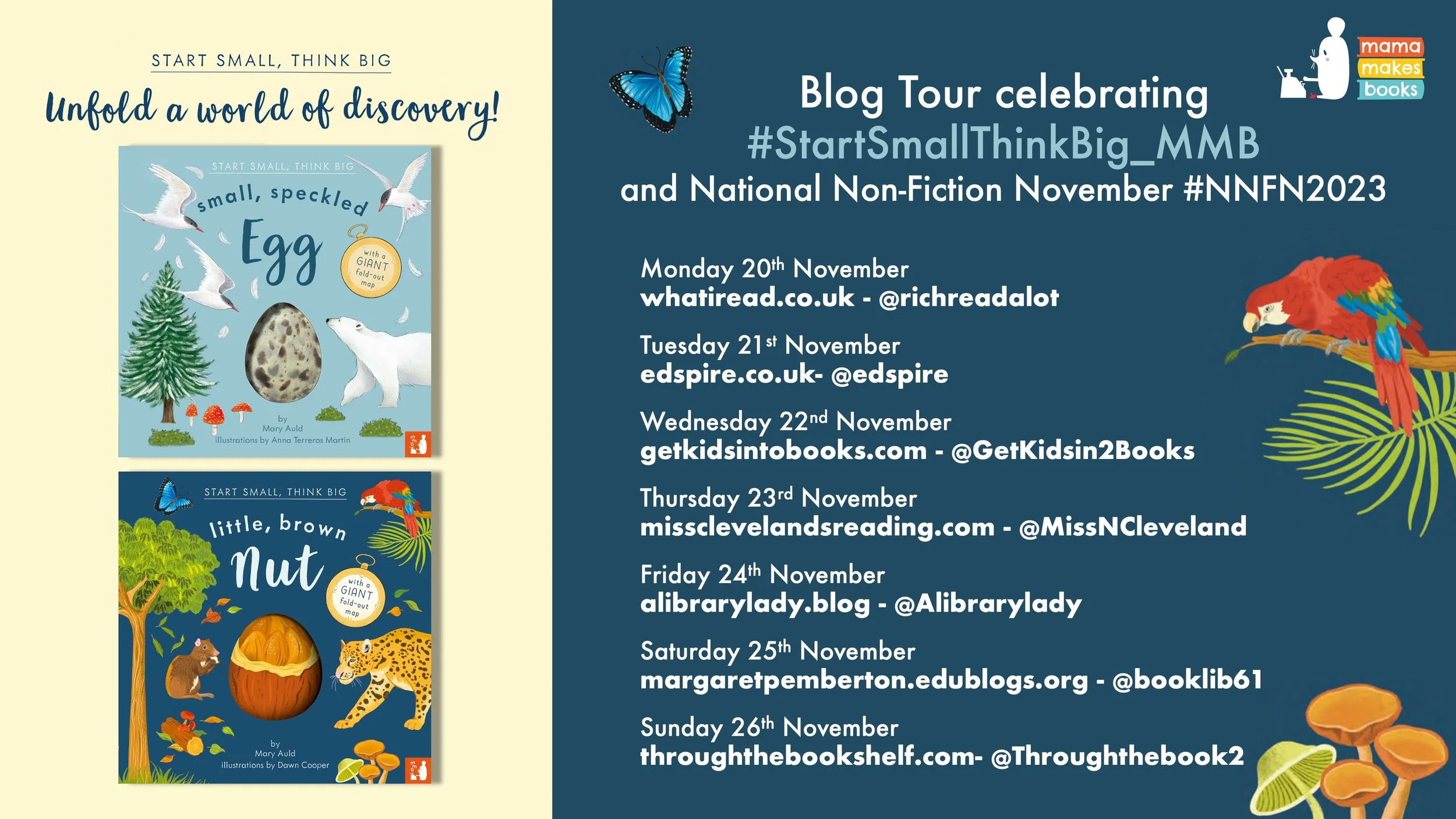
I am delighted to be taking part in Blog Tour which celebrates not only lovely books, but also National Non-Fiction November! ‘Start Small, Think Big’ is a fabulous series which is designed to engage and inspire young readers- and they certainly do!
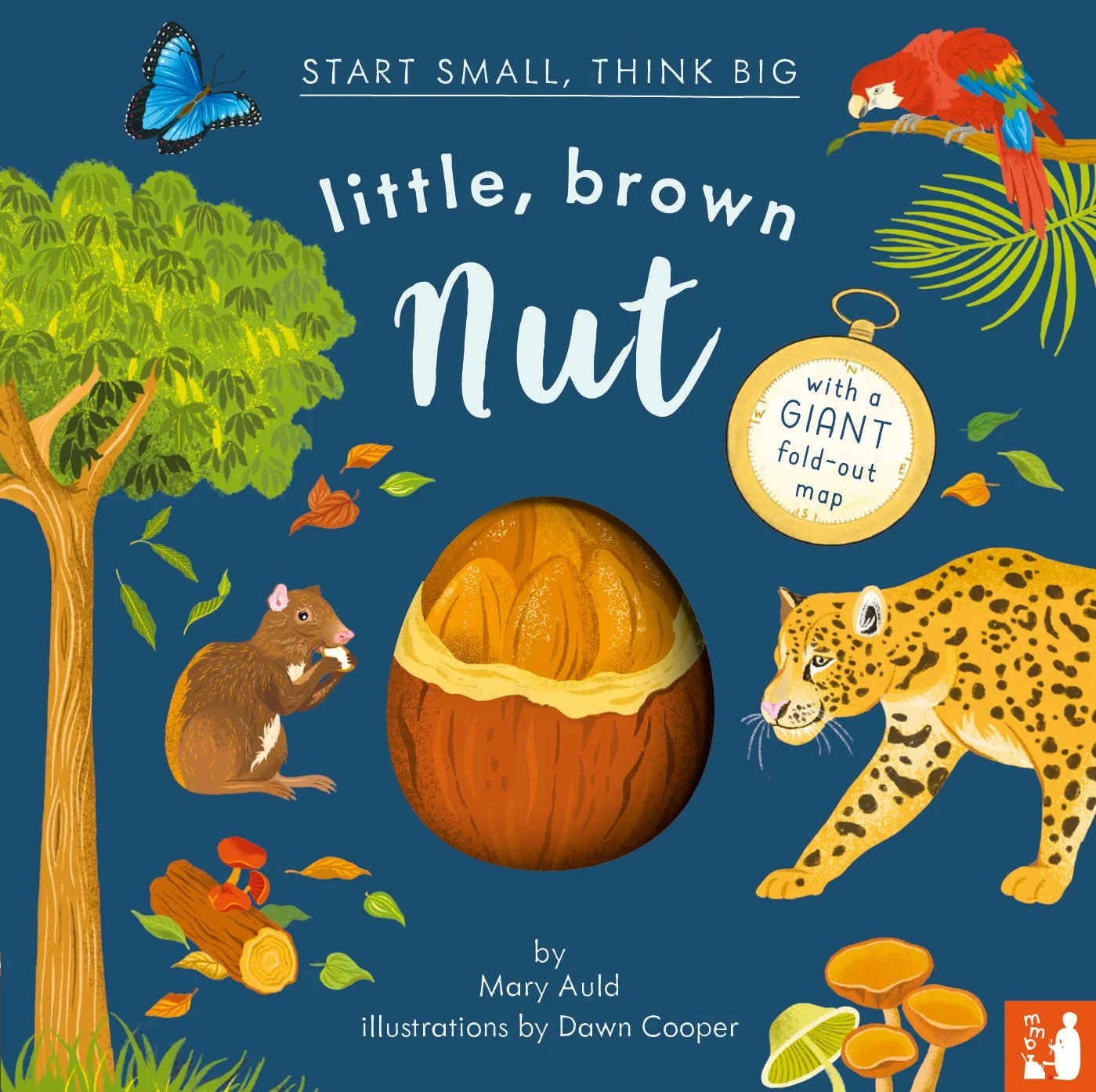
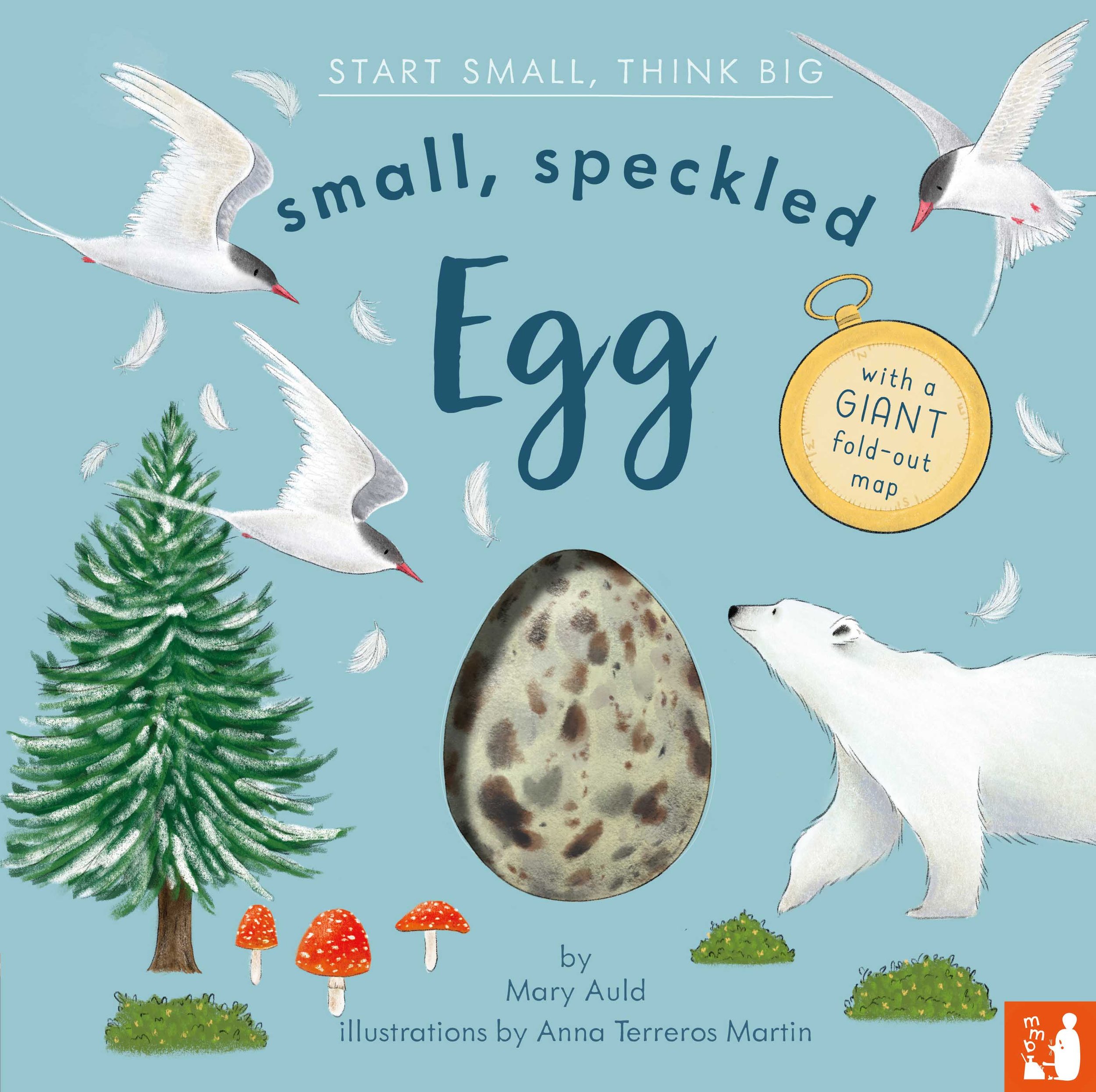
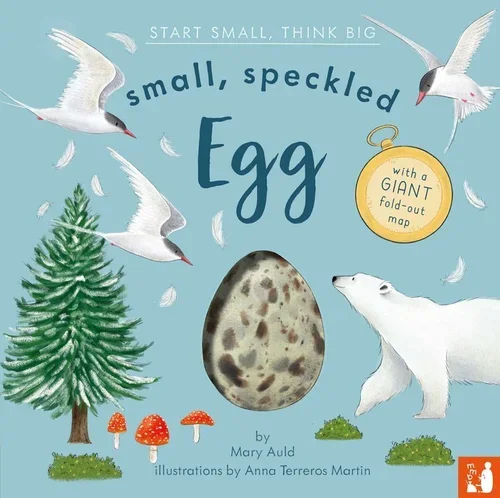
‘Small, Speckled Egg’ follows the life cycle of the Arctic tern. The egg can be seen through the die-cut on the cover, engaging youngest readers from the outset. A clever mix of simple, easy to read text and more detailed information allows the book to be read and shared in different ways. This offers a text which can both support emergent readers and offer more challenge for those who need it, making it the perfect accompaniment for teaching parts of the KS1 Science or Geography curriculum. The same format is used for ‘Little, Brown Nut’ just as successfully.
Neither book shies away from using the ‘technical’ vocabulary connected with its subject, which is clearly explained and used. Thus the reader learns about the ‘agouti’, what ‘photosynthesis’ is and how long it takes the seed to ‘germinate’. All the information is supported by engaging illustrations, offering plenty of detail. A fold-out page at the end of the book offers a useful pictorial summary of the life cycle, a map of the world/ country relating to the topic, an I-Spy section and a ‘Think Big!’ fact box which includes additional information.
There is so much to learn and enjoy packed into each of these books, showing how essential high quality non-fiction texts are for young children to feed and inspire their natural curiosity about the world around them. The fact that these also offer plenty to interest older children- and adults- make them perfect for sharing and encouraging discussion with others.
Start Small, Think Big: Small, Speckled Egg
Mary Auld, illustrated by Anna Terreros Martin
Mama Makes Books ISBN: 978-1739774875
Start Small, Think Big: Little, Brown Nut
Mary Auld, illustrated by Dawn Cooper
Mama Makes Books ISBN: 978-1739774882
Many thanks to the team at Mama Makes Books for inviting me to take part in this Blog Tour!
Within my Branches
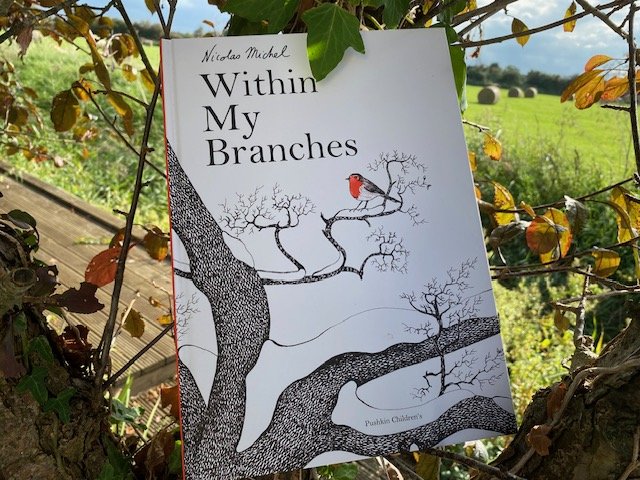
This beautiful book follows the life of a single tree, from acorn to mighty oak and the fate that befalls it at the hands of men. Red text on stark white pages tells the story accompanied by gorgeous black and white illustrations, making the book a thing of beauty to be lingered over again and again.
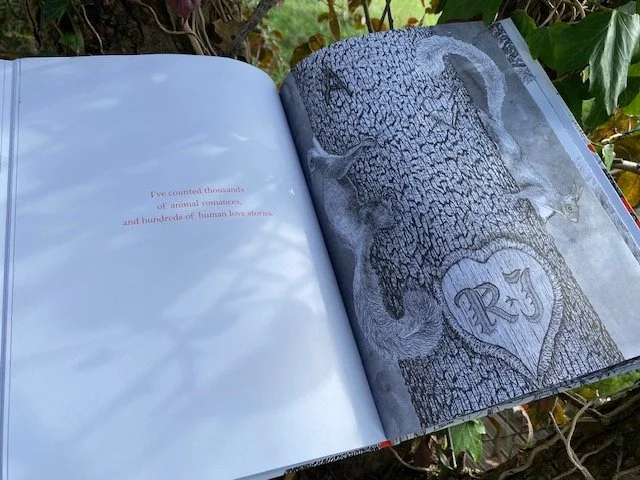
The book celebrates the tree’s role in nature, the many creatures and birds it shelters and feeds, the many seeds it scatters which in turn grow to be trees as the world changes around it. Steadfast through storms, it is man’s actions which ultimately topple it, launching the tree into a new, unfamiliar life on the seas, carrying adventurers on their journeys.
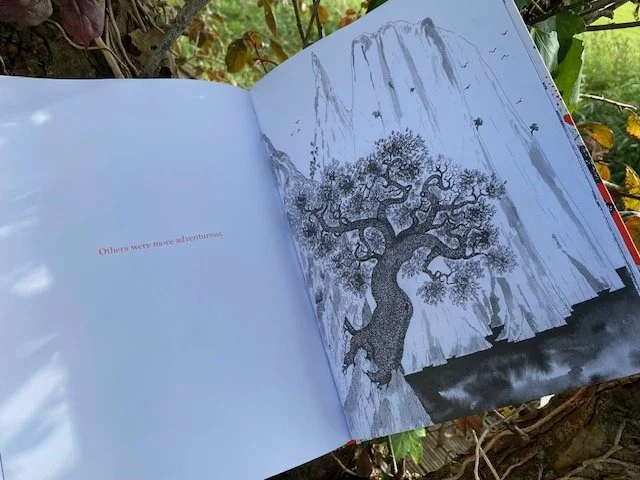
The illustrations are just beautiful. The endpapers show the acorn’s germination as it grows to a small sapling, spreading its leaves to the light and each picture tells a story of its own, offering much to discuss and explore. It is a very special book, focusing attention on the beauty of trees and the essential role they play in our world.
Within My Branches Nicolas Michel
Pushkin Press ISBN: 978-1782694083