Reviews
There are so many incredible books available at the moment that it is impossible to read them all, no matter how hard I try! Here are my thoughts about some of the books I have read and how I think they could be used in school as well as Q and A sessions with authors and illustrators.
Frog: A Story of Life on Earth
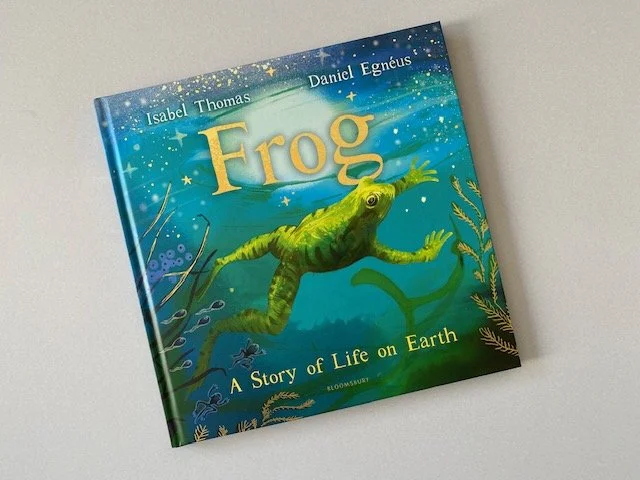
Isabel Thomas is a complete master at understanding the kind of questions little ones love to ask - and then offering carefully constructed and satisfying answers. Initially, ‘Frog’ appears to be a book about life cycles- and yet is so much more!
It starts with a child, a curious child whose understanding of the life cycle of a frog leads them to pose a problematic question: if frogs come from eggs and eggs come from frogs, where did the first frog come from?
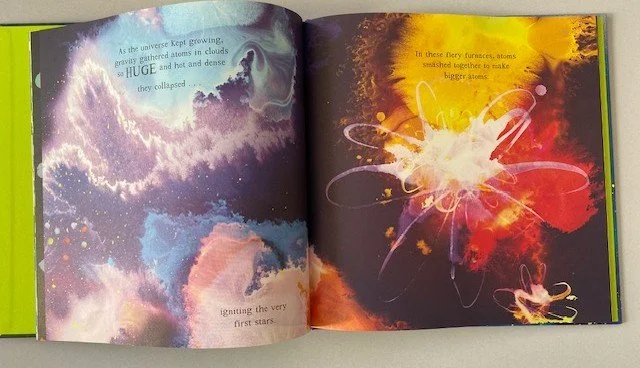
From the Big Bang through the development of the planets to the development of the first animals, readers are taken on a journey to the gradual evolution of creatures in the water leading to the development of amphibians, including the very first frogs. Each spread is beautifully illustrated, perfect for enquiring minds, whilst the text is well pitched for young readers.
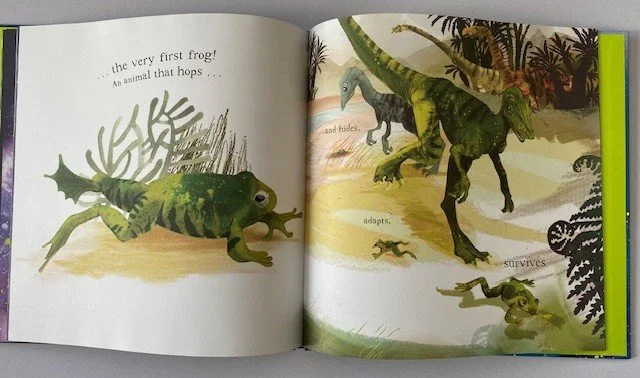
At the end of the book, there is a more text heavy explanation, offering more detail, perhaps to deepen the understanding of older readers or to support adults sharing this with young children. Isabel Thomas’s infectious enthusiasm for her subject clearly comes through on every page, sure to inspire a new generation of science lovers.
Frog: A Story of Life on Earth
Isabel Thomas, illustrated by Daniel Egneus
Bloomsbury ISBN: 978-1526600752
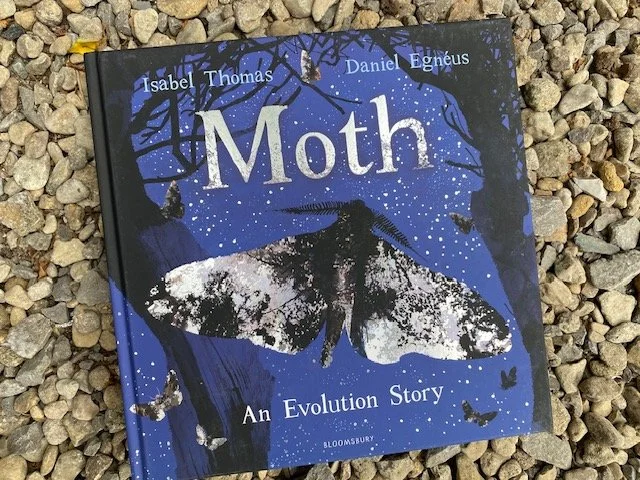
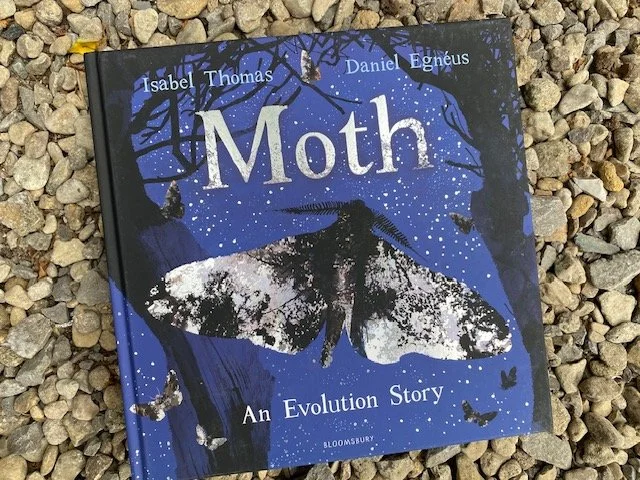
You can read my review of ‘Moth’ here and ‘Thirty Trillion Cells’ here.
Thirty Trillion Cells
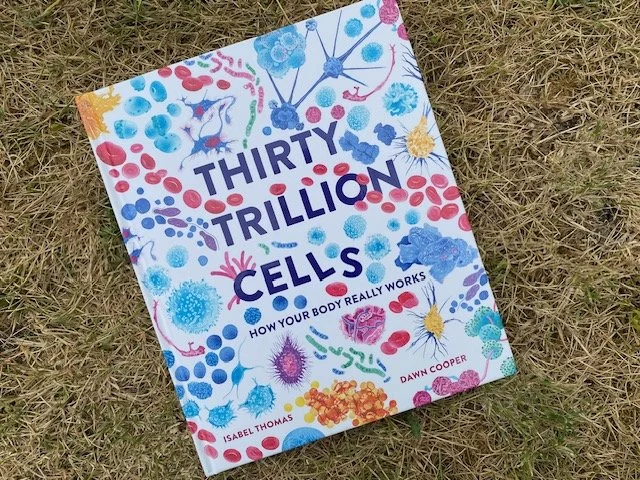
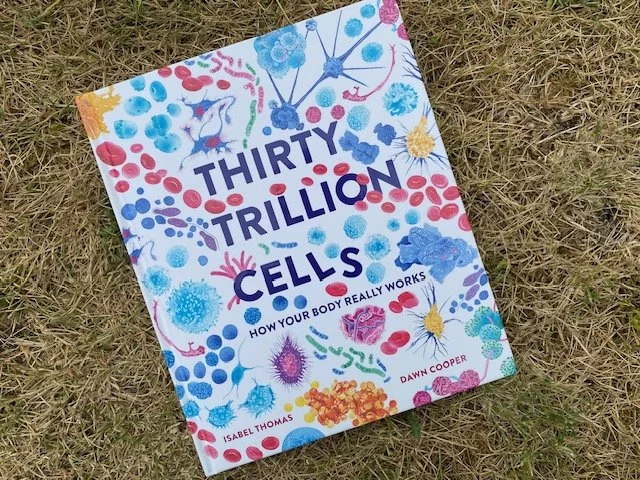
When it comes to answering the questions children love to ask, Isabel Thomas is the person with the answers! In this amazing book, she takes complex scientific concepts and presents them in an amusing, lively way which is accessible to all.
One of the things I love best about teaching is that you are constantly learning- not only in an effort to keep up with the constantly shifting curriculum, but because children are such wonderfully inquisitive beings who pose fabulous questions about everything and anything. And books like this are an essential ingredient in satisfying their insatiable curiosity! For the teacher without a science background, ‘Thirty Trillion Cells’ is an absolute God-send in helping them understand some of the concepts they are expected to teach!
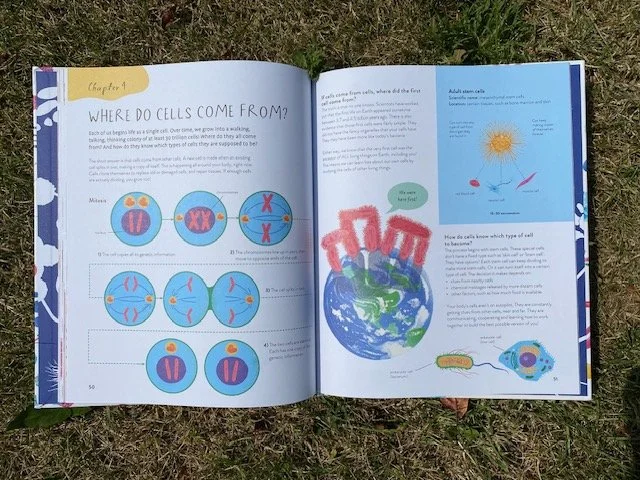
As one example, in Y6 children are expected to be able to identify and name the main parts of the human circulatory system, and describe the functions of the heart, blood vessels and blood. A double spread about blood cells clearly explains what blood does and explores the different types of cells it contains. Side headings and labelled diagrams are used to support the text, making it easily understood. This could easily be used for guided reading sessions to support learning across the curriculum or as part of the body of a science lesson.
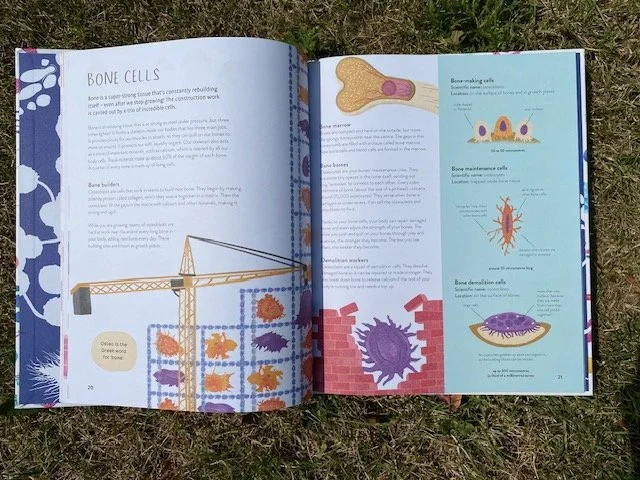
Scientific terms are used throughout the book, but these are also explained in very down to earth, child-friendly ways! The ciliated epithelial cells (hairy lining cells to you and me) in the tubes leading to your lungs form part of a ‘snot elevator’, ridding the respiratory system of all the tiny particles of pollution taken in with air. This is very easy- and yucky- to visualise, understand and remember! A glossary and comprehensive index make the book useful for locating specific information if used for research, but the book is perfect for browsing. There is so much to discover in these pages- learning without realising!
‘Thirty Trillion Cells’ is a brilliant read, combining informative and attractive illustrations with fascinating, clearly explained text.
Thirty Trillion Cells
Isabel Thomas, illustrated by Dawn Cooper
Welbeck Publishing ISBN: 978-1803380131
You can read my review of ‘Moth’ here.